Product Reviews · Forestry Equipment
Logset 10H Harvester Review: Built for Heavy Timber
Affiliate Disclosure: Worksite Safety Hub may earn a commission if you make a qualifying purchase through links in this article. This does not automatically increase the price you pay.
A heavy stem changes the rhythm of a harvesting job. The carrier must provide a stable working base, the crane must position the head, and the feeding and cutting systems must turn the tree into the required timber assortment. The Logset 10H forestry harvester was developed around that demanding relationship between machine, head and wood.
Period Logset literature positions the original 10H for heavy final felling. Its appeal comes from a coordinated package: a substantial wheeled carrier, a high-torque engine, a parallel crane and separate working-pump capacity for harvesting functions. For professional buyers, those design choices deserve attention alongside the specific equipment fitted to a used machine.
The advertised example examined here is a 2007 machine whose photographs show a six-wheel layout and a head marked Log Max 7000. This review separates historical manufacturer information from seller statements and photographic observations. It is a researched buying guide, without a personal inspection or operating test.
EXPLORE THIS LOGSET 10H HARVESTER
Logset 10H: Heavy-Duty Mechanized Forestry Harvesting
The original 10H belongs to a purpose-built harvester range that Logset differentiated by working role. Its period catalogue places the 10H at the heavy-timber end of that range. That gives a useful starting point for evaluating its suitability: a machine intended to handle substantial stems needs to be assessed as a complete harvesting system.
In a single-grip harvesting workflow, the head grips and fells the tree, feeds the stem through delimbing equipment, measures it and cross-cuts the required lengths. Log Max describes these functions in its manufacturer guidance. The installed head, saw, measuring system and calibration determine the practical processing envelope of a particular machine.
The model name therefore introduces the carrier’s design role; the machine’s current equipment establishes the job it can undertake. Confirming both is the foundation of a useful high-value machinery enquiry.
Machine Design and Forestry Engineering
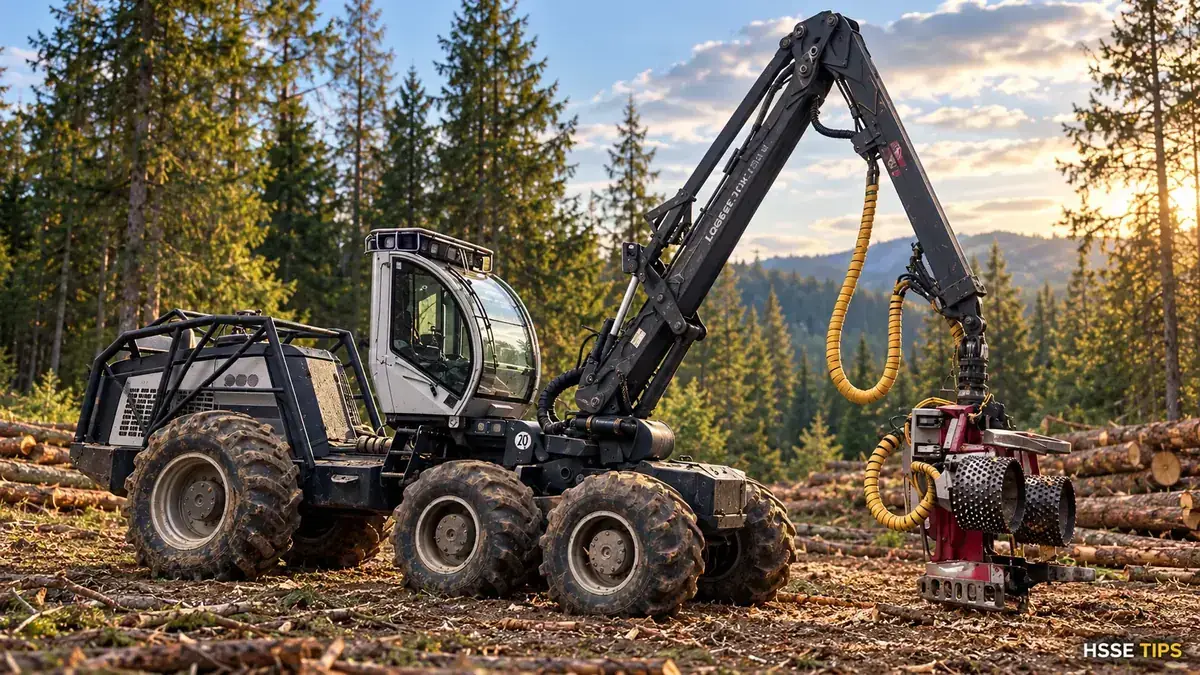
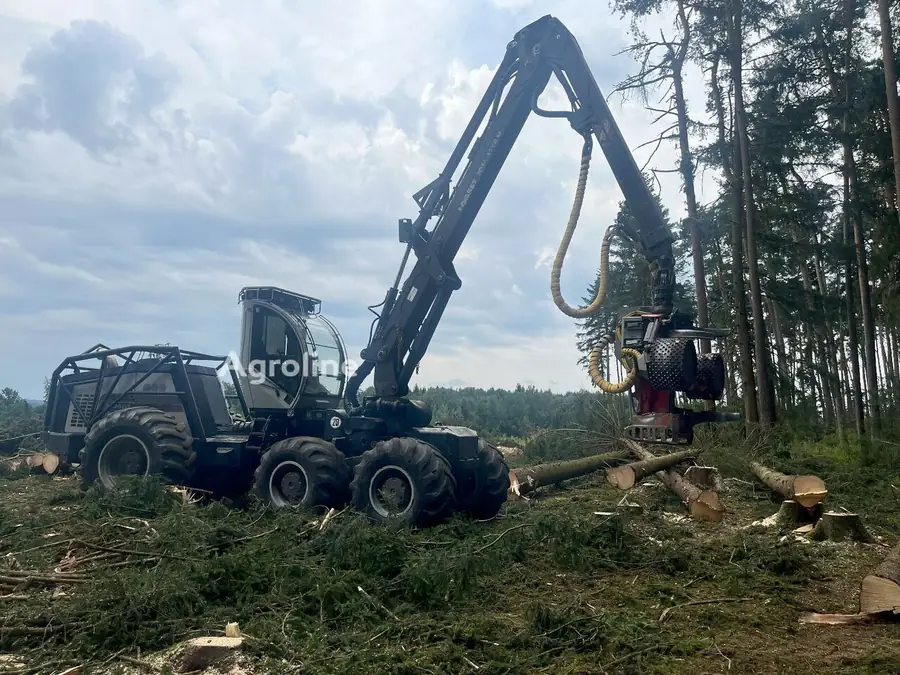
The seller gallery shows paired front wheels and larger individual rear wheels, matching a six-wheel configuration. The silver-grey cab has a curved front glazing profile, while a dark protective framework surrounds the rear engine housing. A long dark crane and yellow spiral-protected hoses give the machine a distinctive working silhouette.
For historical reference, Logset’s original 10H sheet lists a 7,700 mm length, 2,990–3,070 mm width and 3,850 mm height. It gives an own weight starting at 22,000 kg and 730 mm ground clearance. These are brochure values for the model, not measured transport dimensions or a weighing result for this offer.
This distinction matters when arranging transport. Tyres, traction equipment, the attached head and the position in which the crane is secured all need to be included in the transport survey. Use the actual machine’s dimensions and axle loads when selecting a low-loader or planning a route.
Engine, Powertrain and Mobility
The period technical sheet specifies a Sisu 84 CTA engine, 220 kW and 1,300 Nm, with hydrostatic-mechanical transmission. These figures explain the original 10H’s engineering background. The seller has not provided an engine code or power figure in the reviewed text, so the fitted engine and transmission should be matched to their plates and records.
In forestry work, the relationship between engine output and hydraulic demand is more informative than a horsepower figure alone. Crane movement and stem processing can call for power together. The original design’s pump arrangement is relevant because a productive working cycle involves coordinated functions rather than one isolated maximum.
The visible wheel layout does not independently establish which axles are driven or how traction controls are configured. Ask for the drive specification and a demonstration of its normal functions. No fuel-use, production-per-hour or hill-climbing result for this machine was supplied, so those should be evaluated against a defined operating task.
Boom, Crane and Working Reach
Logset’s original 10H sheet lists the Loglift L280V crane with an 11 m reach and a 280 kNm lifting moment. Those are historical model specifications. The advertisement confirms a crane and shows a parallel-link boom, but its precise model and approved reach require the actual crane plate or documentation.
Reach is useful when planning where a carrier can stand and which stems it can access from that position. It should be considered alongside lifting geometry, the installed head’s mass and the tree being handled. A maximum reach figure is not a load rating at every point in the working envelope.
For an inspection, ask the seller to identify the crane, supplied extensions and load information. A competent demonstration can then show how the boom, rotator and head work together within the approved limits. This connects the brochure’s design concept to the machine being offered.
Harvester Head and Timber Processing
The gallery includes a close-up with a readable Log Max 7000 marking. That is a photographic identification, rather than a model stated in the advertisement text. Obtain the head’s serial plate to confirm its full version, build date and equipment.
This is an important configuration detail. The original Logset sheet lists Logset head options, but those options do not describe every head that may have been installed during a machine’s working life. Log Max’s own history confirms the 7000 as a longstanding model designation; later 7000C, Twin and XT specifications should not automatically be assigned to this head.
The working photographs show a processing-head arrangement with toothed feeding surfaces and delimbing equipment. The exact roller and motor package, saw unit, permitted cutting diameter and processing limits need the matching manual. There is no basis here for publishing a maximum diameter taken from a different 7000 variant.
For the buyer, the useful test is a representative stem processed to an agreed cutting specification. Ask to see feeding, delimbing, measurement and cross-cutting demonstrated by a competent operator, with the resulting logs checked against the required assortment. This evaluates the combined installation rather than just its model labels.
DISCOVER THE HARVESTING EQUIPMENT
Hydraulic System and Machine Controls
The original 10H sheet lists hydraulic flow of 190 + 140 l/min at 1,000 r/min. Logset’s period range literature explains the use of two working pumps to support head and crane functions together. Treat these as design references until the fitted pumps and their settings are documented.
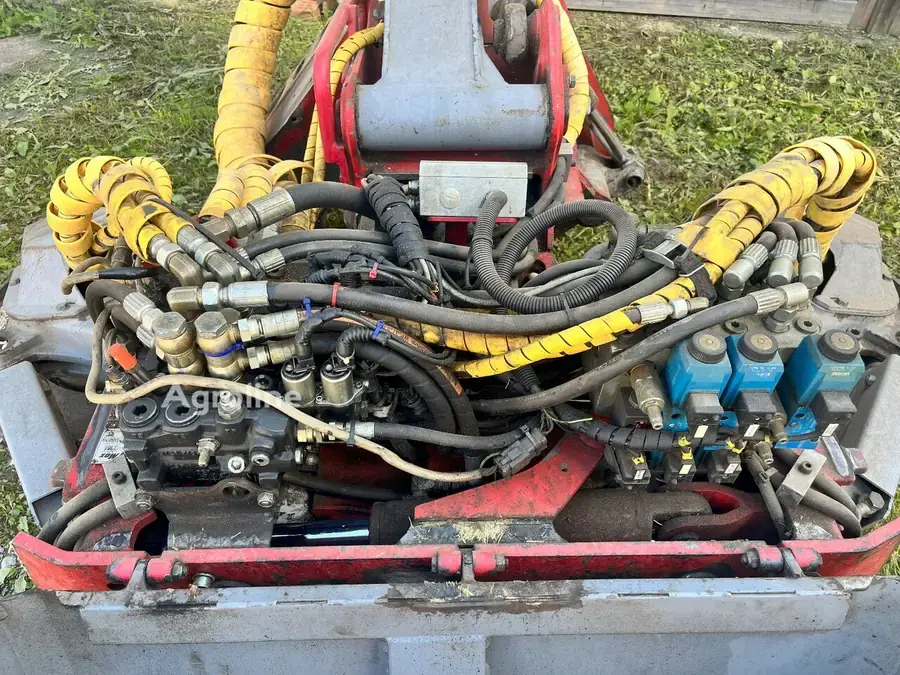
The seller gallery includes hydraulic-component photographs and an operator display, but a photograph does not establish a flow test or software version. Request hydraulic maintenance records, the control-system identity and the measuring-system manual. The historical catalogue mentions Motomit or Dasa measuring arrangements; it does not prove which system this machine now uses.
For timber businesses, measurement deserves particular attention. Ask how the installed system is calibrated, how cutting instructions are entered, and what production information it can supply. The right questions concern the installed version and the buyer’s reporting needs, rather than assuming current Logset software is fitted to a 2007 machine.
Operator Cabin and Working Environment
Cabin photographs show a Logset-branded seat, armrest controls, a mounted display and extensive glazing. These observations help buyers understand the working position without assigning seat adjustments, noise ratings or comfort options that the listing does not confirm.
Logset’s historical range brochure describes operator-specific settings and automatic air conditioning as part of its cabin concept. Confirm the actual equipment and its operation during viewing. Seat support, control positioning, demisting, climate control and clear sightlines all deserve a practical check with the intended operator.
A useful inspection also follows the operator’s routine: entering the cab, checking the working area, monitoring the head and leaving the machine for approved daily maintenance. Ask for the supplied manuals and familiarisation arrangements, especially where the carrier and head use different manufacturers’ documentation.
Terrain Applications and Mobility
Some listing photographs show over-tyre traction equipment, and the seller says tyre chains and bogie tracks are included in the price. Those accessories form part of the proposed scope of supply; confirm exactly which sets accompany the selected machine and their compatibility with the fitted tyres.
Traction accessories do not create a universal slope rating. Site suitability depends on ground bearing conditions, surface roughness, weather, tree size and the approved machine limits. HSE guidance specifically treats steep-ground work as a combination of such factors, rather than gradient alone.
The original 10H’s heavy-timber role may suit final-felling operations with appropriate access and ground conditions. A thinning application needs a separate assessment of stand spacing, machine width, head size and the harvesting plan. The model’s ability to process timber should not be confused with suitability for every stand.
Safety and Operational Considerations
Use trained, competent operators and the instructions for the actual carrier, crane and head. Plan exclusion zones for felling, processing, crane movement and chainshot, with communications and access controls suited to the site. The current FISA mechanical-harvesting guidance is a useful reference alongside manufacturer requirements and applicable local rules.
During inspection, identify the fitted protective glazing, emergency stops, access arrangements, guards and any fire-protection equipment from the machine’s documents. Visible rear framework is a photographic observation; it does not establish a particular cab-protection certification.
Maintenance and blockage work require the manufacturer’s isolation procedures, attention to stored hydraulic energy and approved support arrangements. Our hydraulic leak safety guide provides relevant background for the maintenance team. This review is a purchasing guide, not an operating procedure.
Forestry Applications and Ideal Buyers
Final-felling contractors may find the 10H’s original heavy-timber design relevant where the verified crane and head package matches the trees and working conditions. The decision should start with a stand profile and harvesting specification.
Commercial logging businesses and forest managers can evaluate how the harvester fits the extraction stage. Log placement, assortment separation, forwarder access and landing arrangements influence the wider operation. Cutting capacity is only one part of that planning.
Forestry fleets and machinery buyers should connect the configuration with service support. Logset maintains a parts and service network, while Log Max provides head-specific documentation and support routes. Confirm serial-specific parts supply, local assistance and the terms available for this particular used machine.
For a different working-head arrangement, our Silvatec Sleipner Mountaineer F/B review explains the distinction between a feller-buncher setup and a processing-head package. These are different forestry roles, not interchangeable machine descriptions.
Logset 10H Technical Specifications
The table distinguishes the original model’s published references from the advertised machine. Brochure values should be confirmed against this machine’s build and installed equipment.
| Item | Source-qualified information |
|---|---|
| Identity | Logset 10H; seller: 2007, used; no GTE variant claimed |
| Hours | Seller lists 15,700 h; confirm current reading |
| Wheel configuration | Six wheels visible; marketplace lists three axles; driven-axle specification not established |
| Engine reference | Original brochure: Sisu 84 CTA, 220 kW, 1,300 Nm; fitted engine to confirm |
| Transmission reference | Original brochure: hydrostatic-mechanical; actual drive equipment to confirm |
| Dimensions reference | Original brochure: L 7,700 mm × W 2,990–3,070 mm × H 3,850 mm |
| Clearance reference | Original brochure: 730 mm; actual clearance depends on configuration |
| Weight distinction | Original brochure: own weight from 22,000 kg. Listing: 27,000 kg net. Photographed plate: 27,000 kg permissible total; actual operating mass to confirm |
| Crane reference | Original brochure: Loglift L280V, 11 m, 280 kNm; installed crane identity and reach to confirm |
| Head observation | Photographed marking: Log Max 7000; exact version and serial to confirm |
| Cutting and feeding | No installed cutting-diameter limit or complete roller specification verified |
| Hydraulic reference | Original brochure: 190 + 140 l/min at 1,000 r/min; fitted pumps/settings to confirm |
| Controls and cabin | Seat, armrest controls and mounted display visible; exact measuring system, climate equipment and protection certification to confirm |
| Traction accessories | Seller says tyre chains and bogie tracks included; confirm sets and fitment |
VIEW MACHINE DETAILS & AVAILABILITY
Current Seller Offer — Verified 23 October 2026
Advertised machine location: Velyki Luchky, Zakarpattia Oblast, Ukraine. The linked offer is reference PF50963. It provides a seller contact but no named trading business in the information reviewed.
The used machine is advertised as a 2007 Logset 10H with 15,700 operating hours, at €80,000 net and €96,000 gross. Confirm the current meter reading, final invoice and applicable tax treatment before agreeing a purchase.
The seller describes good working condition, available technical documentation and a price including tyre chains and bogie tracks. The description also states that two units are available. These are seller statements, not an independent condition assessment or a guarantee of current stock. Establish which machine, head and accessories the quotation covers.
Weight clarification: the marketplace labels 27,000 kg as net weight. The photographed machine plate shows 27,000 kg as permissible total weight. That plate value does not verify actual operating mass; request the relevant records or a current weighing result for transport planning.
Delivery: Delivery destinations, shipping arrangements, and applicable transport terms were not specified in the information reviewed. Prospective buyers should confirm these details directly with the seller.
Export services, loading assistance, transport documentation, warranty terms and payment arrangements were not confirmed. Request an itemised quotation for the exact scope of supply and your transport route. Last verified: 23 October 2026. The advertisement was accessible on that date; current availability requires seller confirmation.
CHECK THE SELLER’S CURRENT OFFER
Questions Buyers Should Ask Before Contacting the Seller
- Machine identity: request a clear serial plate, engine plate, build record and current hours for the exact unit being quoted.
- Working package: confirm crane model, reach, load information, Log Max head version, serial number, saw unit, roller package and measuring controls.
- Maintenance: ask for service history, hydraulic records, head maintenance documents and details of completed work.
- Inspection and support: agree a competent inspection and representative demonstration; confirm manuals, parts availability, diagnostic support and any written warranty.
- Transport and payment: establish actual dimensions, weight, accessory inclusion, loading method, destination services, transport costs, documentation and payment stages.
Buyer FAQs
What is the Logset 10H forestry harvester?
A purpose-built forestry harvester. Period manufacturer literature positions the original 10H for heavy final felling; the installed head and controls determine its current processing capability.
Can it be used for thinning as well as final felling?
Final felling is its documented original role. Assess any thinning task against stand spacing, access width, head size, ground conditions and the approved configuration.
What engine and transmission does it use?
The original 10H sheet lists a Sisu 84 CTA, 220 kW, 1,300 Nm and hydrostatic-mechanical transmission. The offered machine’s fitted engine and drive specification require plate and record confirmation.
Which harvesting head is pictured?
A close-up carries a Log Max 7000 marking. Confirm its full variant and serial number before applying cutting, feed-system or measuring specifications.
What is the crane reach?
Original model literature lists an 11 m Loglift L280V configuration. The seller does not identify the fitted crane model or reach in the reviewed text; confirm these from its documentation.
Where is the advertised machine and what does it cost?
Velyki Luchky, Zakarpattia Oblast, Ukraine. On 23 October 2026, the offer displayed €80,000 net and €96,000 gross.
Does the seller provide shipping or export services?
No delivery destinations or export-service terms were specified. Ask the seller to confirm the available transport, loading, documentation and costs for your route.
How can I enquire about the Logset 10H?
Use an offer button in this review and quote PF50963. Confirm current availability, the exact machine, head, accessories, hours and final price.
Photographs and Video
The seller’s machine gallery and current offer includes 20 photographs covering the exterior, traction equipment, head, cab, instruments, hydraulic components and identification details. Two original advertiser images are included in this article with source branding retained.
No exact-machine official or seller video was verified in the sources reviewed. Request a current demonstration of the selected machine and head. Later eight-wheel 10H GTE footage should be clearly identified as a different configuration if used for broader model context.
Sources and Editorial Method
Research checked 23 October 2026. Historical manufacturer specifications, seller claims and observations from the advertised photographs are identified separately. No first-hand inspection, operating test, production result or ownership experience is claimed.
- Exact Logset 10H offer PF50963 and seller gallery — dated offer and photographic identification.
- Logset-authored HARVESTER 10H brochure, archived by DirectIndustry — original model role and technical references.
- Logset-authored Harvesters & Heads catalogue — historical cabin, controls and range context.
- Log Max manufacturer history and manufacturer FAQs — model identity, processing functions and support documentation.
- Logset service and parts — current manufacturer support routes; individual machine coverage requires confirmation.
- HSE steep-ground working guidance and FISA mechanical-harvesting guidance — operational planning context.
Final Verdict
The original Logset 10H presents a clear forestry proposition: a substantial wheeled carrier developed for heavy timber, with engine, crane and hydraulic capacity considered as one working system. The advertised photographs add a specific point of interest in the Log Max 7000-marked head and included traction accessories described by the seller.
For a professional buyer, the next step is to connect those features to the actual stand and timber specification. Confirm the crane, head version, service records and measured transport details, then arrange a representative inspection and demonstration. That turns a promising model into a properly defined equipment enquiry.
CONTACT THE SELLER ABOUT THIS LOGSET 10H
Join the Conversation
What matters most to you in a heavy-duty forestry harvester—cutting capability, crane reach, operator comfort or service support? Share your thoughts in the comments below.
Your experience matters
Share your thoughts on this page
Have a question, a useful experience or a suggestion? Add your input below.
Comments are public. Keep them respectful and relevant. Do not share contact details, confidential information or emergency reports.
Comments on this page
Loading comments…