Process Safety · Lesson 34 · 8 min read
The Right Hose on Paper Can Be the Wrong Hose in Service
A replacement hose can arrive with the correct purchase description, look familiar and fit the connection, yet still contain the wrong construction material. The critical question is not only what was ordered. It is whether the actual assembly released for installation meets the approved service specification. For hazardous transfers, that link between equipment and evidence is a containment barrier.
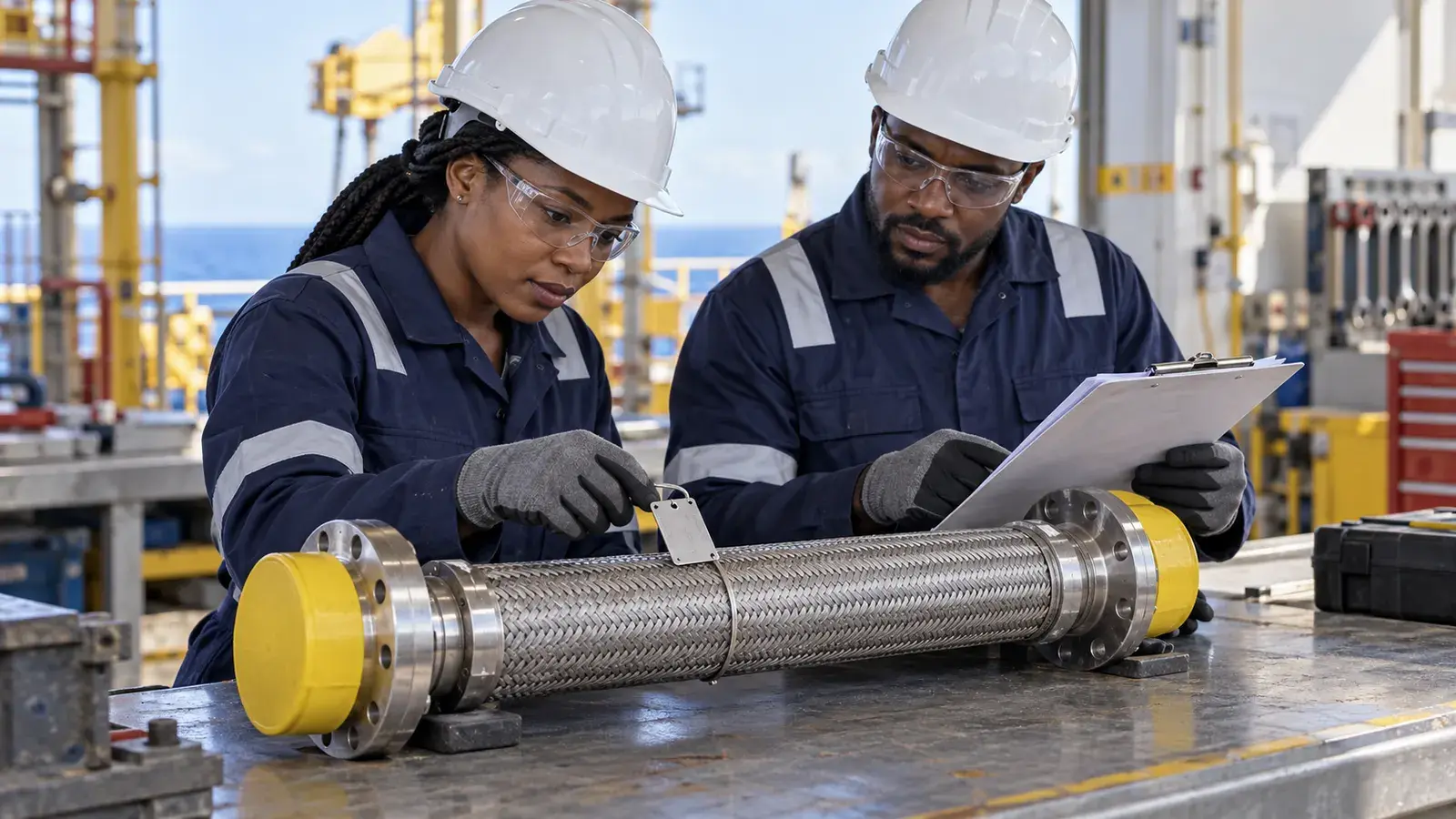
How a material mismatch becomes a release
A flexible hose is an assembly: liner, reinforcement, end fittings and other components must work together in the intended service. A suitable liner does not establish that the reinforcement is suitable. Chemical exposure, permeation and the external environment can create a degradation mechanism that a familiar appearance does not reveal.
The CSB investigated a chlorine-transfer hose rupture at DPC Enterprises near Festus, Missouri, on 14 August 2002. Testing identified stainless-steel structural braid where the specified material was Hastelloy C-276. Chlorine permeating the liner, together with atmospheric moisture, corroded the unsuitable braid. Weakened reinforcement then failed under operating pressure and repeated bending. This is a specific chlorine-service mechanism, not a claim that stainless steel is unsuitable for every hose application. [1]
The certificate-to-component gap
CSB found that shipping documentation identified the specified alloy even though the failed hose contained a different one. The two braiding materials looked alike. Consequently, visual comparison and apparently correct paperwork did not establish the material actually supplied. The report explains that positive materials identification could distinguish those particular metallic braids. It also cautions that the technique is not suitable for every hose construction. [1]
The operational lesson is to ask what each record demonstrates. A purchase order records intent. A certificate makes a claim about an identified item. Receiving acceptance must connect that claim to the physical assembly. Where material identity is critical, competent personnel should define the verification method and acceptance evidence; an operator should not improvise a test or assume a generic instrument answers every compatibility question.
Hypothetical FPSO example
Hypothetical example—not a documented incident: An FPSO receives a replacement hose for a chemical-transfer skid. The purchase description is correct and the fittings match. However, the assembly tag cannot be reconciled with the certificate supplied in the delivery pack. The next transfer is needed before a weather window closes.
The team holds the unverified assembly out of service and refers the discrepancy to the responsible technical authority and supplier. They establish which evidence belongs to which item before authorising installation. They do not connect the hose and use the first transfer as an acceptance test. No particular chemical, alloy requirement or numerical operating limit is implied by this scenario.
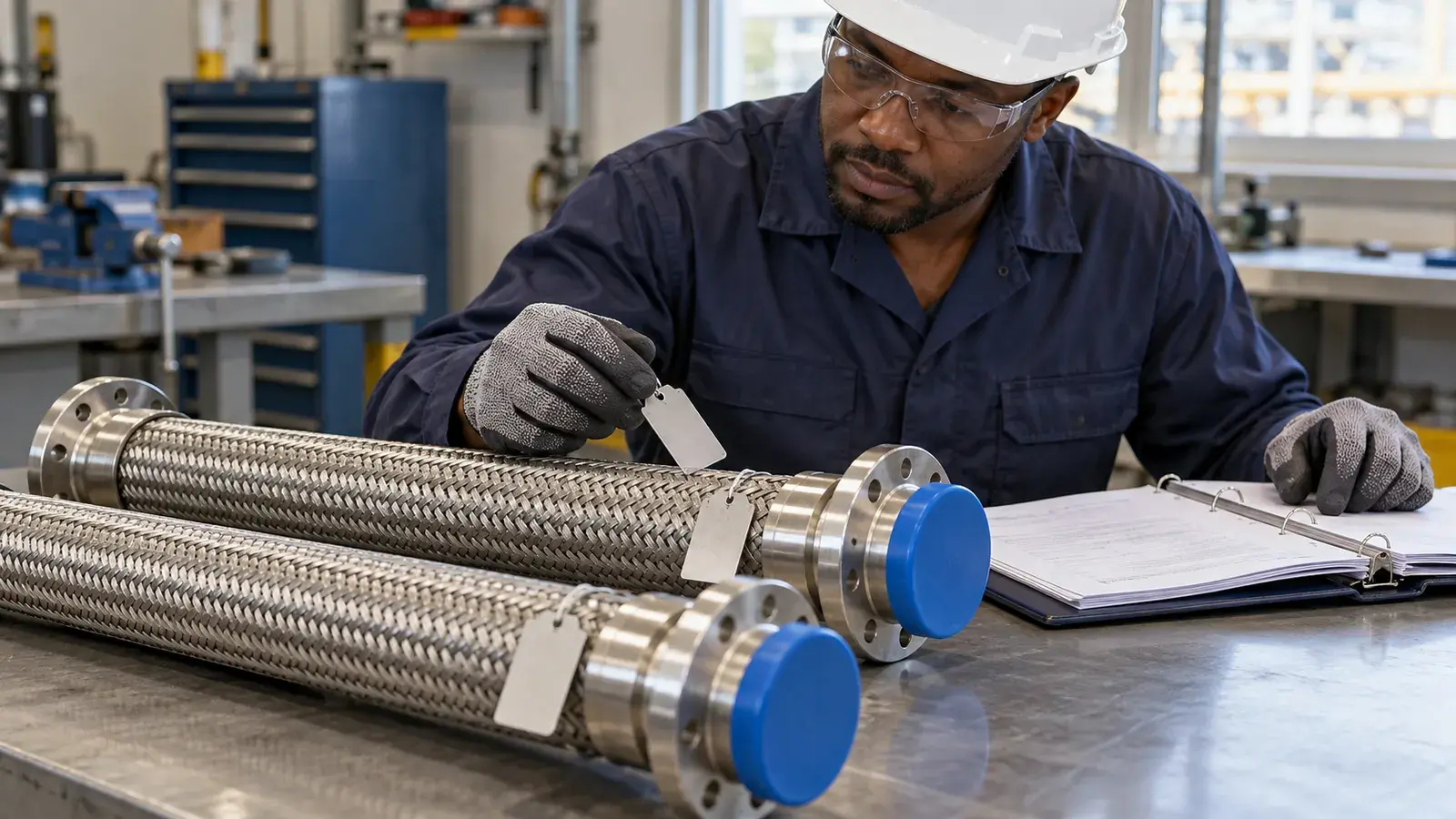
Accept the complete assembly for its actual duty
WorkSafe Victoria's flexible-hose guidance recommends risk-based selection covering the full operating range, materials compatibility, intended service, fittings and environmental exposure. It also recommends identification, a hose register, pre-use inspection and maintenance informed by relevant standards or manufacturer specifications. These principles help make suitability visible across procurement, stores, maintenance and operations. [2]
Translate that guidance into a practical acceptance conversation: Which approved duty is this hose intended for? Which assembly identifier links the records? Have the fittings and reinforcement been included in the assessment? Who has authority to release it? Record unresolved questions rather than passing them to the next shift as verbal reassurance. An inspection sticker without a traceable technical basis cannot answer them.
Leadership owns the supply-chain barrier
OSHA's process-safety standard includes quality-assurance provisions addressing suitability of fabricated equipment, correct installation and maintenance materials or spare parts suitable for the process application. It defines replacement in kind by satisfaction of the design specification—not by physical resemblance. These are U.S. regulatory provisions for covered processes, not an assertion that they automatically govern every offshore installation. [3]
For site leaders, the useful application is clear ownership. Procurement needs an approved specification; receiving personnel need an achievable acceptance process; maintenance needs a release decision; operations needs confidence that the installed item is the accepted one. If no role owns the interfaces, each team may assume another has completed verification. Review exceptions and substitutions through the installation's approved technical and change-control arrangements.
Do not let one defect meet another weak barrier
Material assurance prevents the initiating failure; emergency isolation limits consequences if containment is lost. CSB's chlorine-transfer bulletin contrasts releases with different shutdown outcomes and stresses detection, testing and maintenance. At DPC, shutdown equipment did not isolate the release effectively. A fitted shutdown device is not evidence of its readiness. [4]
Before a hazardous transfer, confirm the approved readiness checks and response responsibilities. If leakage or an abnormal condition occurs, follow the site emergency procedure and withdraw as required. Do not approach a suspected leak to identify material, tighten fittings or attempt an improvised repair.
Three practical actions for today's team
- Choose one safety-critical replacement hose and trace the approved specification, physical identifier and acceptance evidence through to the installed location.
- Hold unresolved identity or compatibility discrepancies out of service; obtain an authorised technical disposition before use.
- Confirm the transfer's approved isolation and emergency-response arrangements, including current evidence for credited shutdown functions.
Official incident-learning video
The CSB video Emergency Preparedness: Findings from CSB Accident Investigations includes the DPC investigation. Its broader focus is emergency preparedness, supporting the consequence-control discussion above; it is not a hose-selection or materials-testing tutorial.
Watch on the official USCSB YouTube channel if the embedded player is unavailable.
Team discussion question
Which hazardous-service hose on our installation has the weakest link between its certificate and its physical identity—and who will resolve that gap before the next transfer?
Continue the learning
Separate material verification from verifying the receiving tank and connection. Then review mechanical-integrity evidence and reverse-flow protection for the complete transfer system.
Verified primary sources
Sources checked on 16 October 2026. This is general learning, not an equipment approval, test method or substitute for site procedures. Apply the approved engineering basis and requirements relevant to your installation.
- CSB: DPC Enterprises chlorine release investigation report (May 2003), especially hose failure and materials verification
- WorkSafe Victoria: Safe selection and use of flexible hose assemblies (19 May 2020)
- OSHA: 29 CFR 1910.119, definition of replacement in kind and mechanical-integrity quality assurance
- CSB: Emergency Shutdown Systems for Chlorine Transfer (June 2007)
- CSB: official Emergency Preparedness video page (9 June 2009)
Your experience matters
Share your thoughts on this page
Have a question, a useful experience or a suggestion? Add your input below.
Comments are public. Keep them respectful and relevant. Do not share contact details, confidential information or emergency reports.
Comments on this page
Loading comments…