Health · Laboratory Biosafety · 10 min read
Unknown Cause, Controlled Response: Laboratory Biosafety Lessons from WHO’s Irkutsk Alert
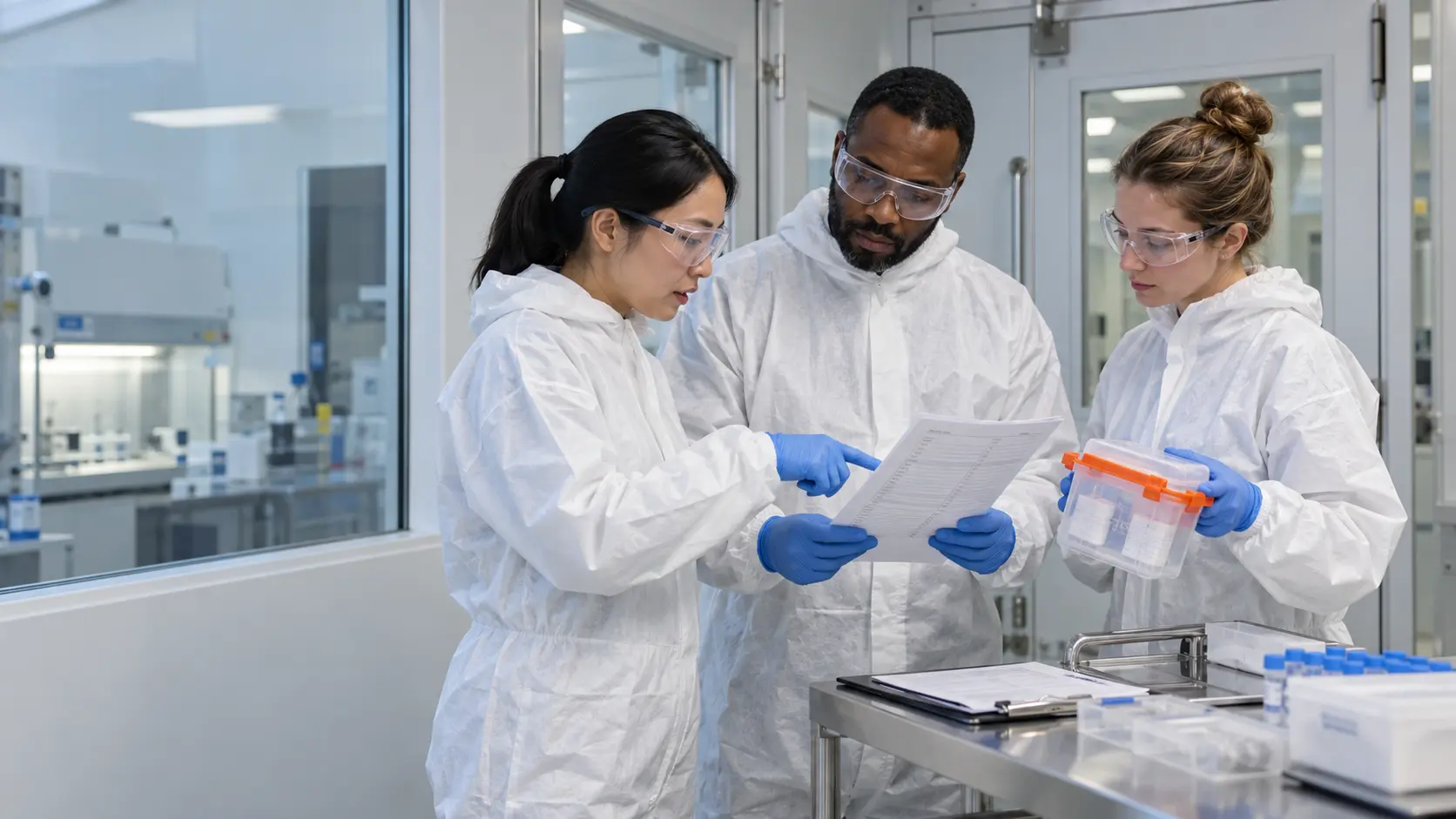
When the cause of a severe illness is unknown, uncertainty must not become either panic or permission to wait. The safest response is disciplined: protect people, preserve evidence, reconstruct possible exposures, test broadly, communicate verified facts and keep the risk assessment open until the evidence supports closure.
What WHO reported
On 10 October 2026, the World Health Organization published a Disease Outbreak News notice concerning the death of an employee of the Irkutsk Anti-Plague Research Institute of Siberia and the Far East in the Russian Federation.
WHO said the individual was hospitalized with severe pneumonia on 29 September and died on 2 October. Early media reports suspected pneumonic plague and suggested occupational exposure in a laboratory setting. Those claims were serious enough to require verification, but they were not confirmation.
Russian authorities told WHO that no recent plague case had been registered in Irkutsk Oblast, that no laboratory biosafety or biosecurity incident had been identified, and that testing of the worker and contacts found no plague or other tested high-threat pathogen. Authorities classified the death as pneumonia of undetermined etiology.
WHO reported no evidence of ongoing transmission associated with the event. All identified contacts remained asymptomatic during medical follow-up and tested negative for the pathogens under investigation. More than 5,500 laboratory tests were reportedly completed during the response.
What remains uncertain
The causative agent responsible for the fatal illness has not been identified. WHO therefore said it could not independently determine whether the reported monitoring period was sufficient to exclude every plausible cause. It also stated that a laboratory-associated exposure cannot be fully excluded at this stage.
This distinction is essential. The available information does not establish plague, a laboratory leak or person-to-person transmission. It also does not establish the cause of death. A responsible HSSE summary must hold both facts at once: there is no confirmed high-threat pathogen or ongoing transmission, and an important diagnostic uncertainty remains.
Why the event matters to HSSE teams
The event illustrates a challenge that extends beyond high-containment research. Hospitals, diagnostic laboratories, universities, veterinary facilities, waste operations, emergency services and industrial sites may all face an illness or exposure whose cause is not immediately known.
The quality of the first response determines whether the organization protects people and preserves the evidence needed to understand what happened. Premature reassurance can close the investigation too early. Speculation can create fear, stigma and misinformation. The correct operating position is controlled uncertainty.
Seven practical controls for an unexplained laboratory illness
- Act on symptoms and exposure potential, not on a confirmed label. Establish safe clinical referral, appropriate separation and infection-prevention measures while diagnosis is still developing.
- Reconstruct the exposure window quickly. Review tasks, agents, cultures, specimens, animals, equipment, waste, maintenance, spills, sharps events, respiratory-protection use, access records and unusual deviations before memories and records degrade.
- Preserve specimens and records. Protect the chain of custody for clinical and environmental samples. Secure batch records, equipment logs, access data, training records, incident reports and relevant communications.
- Use a tiered testing strategy. Test against the credible differential diagnosis, retain material for confirmatory work and involve competent reference laboratories when local capability or confidence is limited.
- Define contact categories. Separate close clinical contacts, workplace contacts and people with no plausible exposure pathway. Apply monitoring and work restrictions according to risk, public-health direction and the organism under consideration.
- Protect responders and investigators. Risk-assess sampling, transport, decontamination, waste handling and post-event inspection. Do not create a second exposure while investigating the first.
- Keep the assessment open. State what evidence would justify escalation, extension of monitoring or closure. Negative tests reduce some possibilities; they do not automatically identify the true cause.
Biosafety and biosecurity must be routine
WHO recalled the importance of robust biosafety, biosecurity and infection-prevention practices for laboratories handling potentially hazardous biological agents. It emphasized that this advice is precautionary and does not imply that a laboratory-associated infection occurred in Irkutsk.
For laboratory managers, routine controls should include agent-specific risk assessment, validated containment, competent supervision, safe work methods, suitable PPE and respiratory protection where required, exposure reporting, medical support, vaccination where appropriate, inventory control, waste treatment, emergency exercises and independent review of unusual events.
Biosecurity protects agents, information and facilities against loss, theft, misuse or unauthorized access. Biosafety protects people and the environment against unintentional exposure or release. Strong laboratories manage both without allowing one to obscure the other.
How to communicate without creating harm
Risk communication is a control. During an uncertain event, publish a short verified record that separates four things:
- Confirmed: the observed illness, dates, response actions and verified test results.
- Not confirmed: suspected organisms, exposure routes or reported secondary cases.
- Still under investigation: the causative agent, source and mode of exposure.
- What happens next: further testing, reference review, monitoring and the trigger for an update.
Avoid naming an unconfirmed disease as if it were established. Protect medical confidentiality. Correct false reports quickly, but do not overstate certainty while important evidence is missing.
Questions leaders should ask now
- Can every laboratory worker report a possible exposure or unusual illness immediately and without fear?
- Who has authority to pause work, secure the area and initiate medical referral outside normal hours?
- Can we reconstruct who handled a specimen, agent or waste stream during a defined exposure window?
- Which reference laboratory would confirm an unexpected or high-consequence result?
- How are clinical specimens preserved when the first test panel is negative?
- Are contractor, cleaner, maintenance and waste-handler exposures included in the investigation plan?
- What evidence determines when contact monitoring starts, changes or ends?
- Who communicates verified facts to workers, public-health authorities and affected families?
Video note
No directly relevant authoritative and embeddable video explaining this newly published WHO event notice was identified at publication. Unrelated footage has not been added. The WHO notice and Laboratory Biosafety Manual linked below provide the verified technical basis.
Authoritative sources
- WHO — Pneumonia of undetermined etiology, Russian FederationPublished 10 October 2026
- Rospotrebnadzor — Preventive measures completed in IrkutskOfficial national authority update referenced by WHO
- WHO — Laboratory Biosafety Manual, fourth editionInternational laboratory biosafety guidance
Your experience matters
Share your thoughts on this page
Have a question, a useful experience or a suggestion? Add your input below.
Comments are public. Keep them respectful and relevant. Do not share contact details, confidential information or emergency reports.
Comments on this page
Loading comments…