Environment · 8 min read
Spill Preparedness That Works Before the First Drop
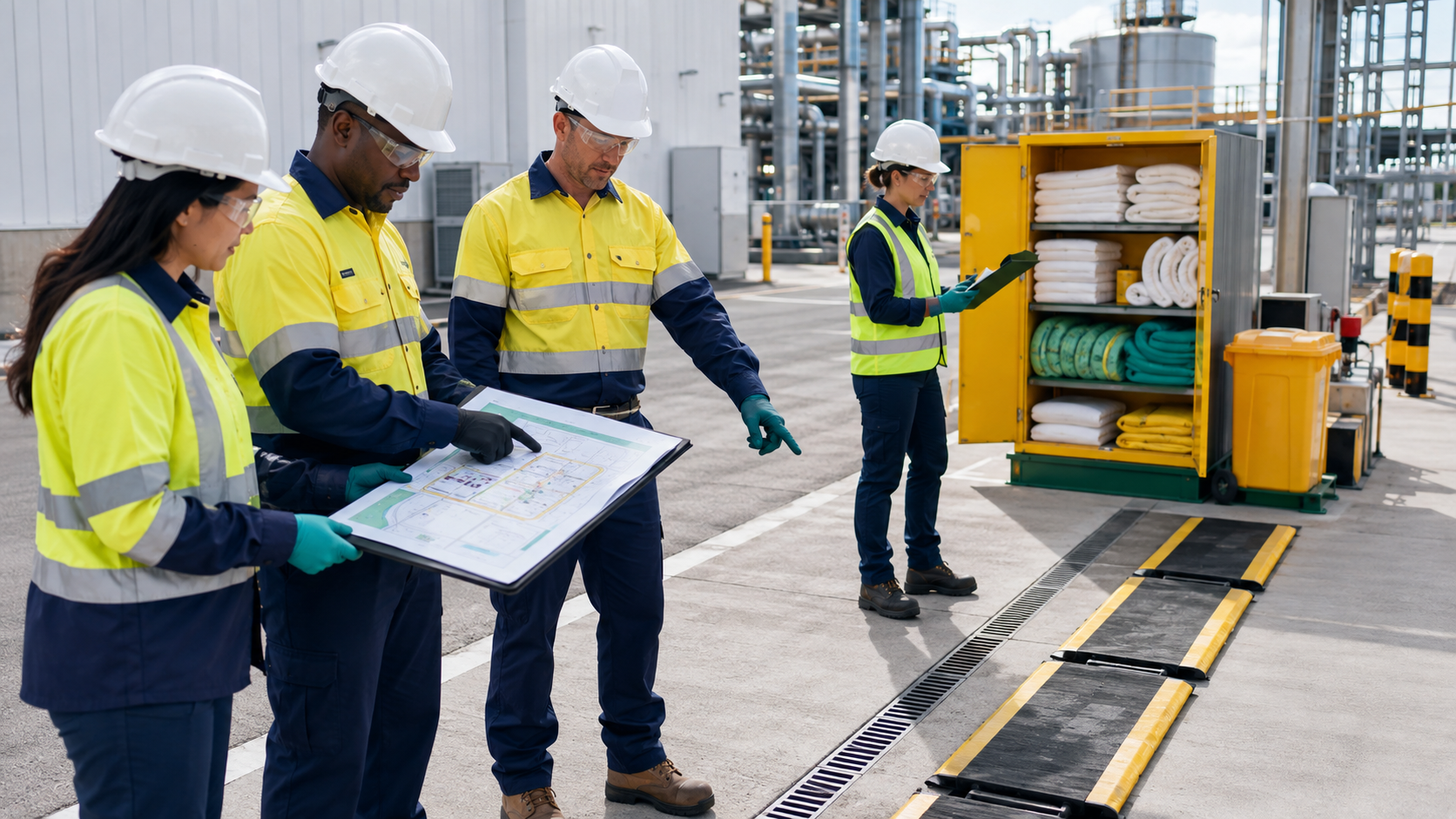
How environmental teams can turn spill plans, drainage knowledge, equipment readiness and realistic exercises into dependable pollution-prevention controls.
Preparedness begins with prevention
A spill-response plan is important, but the strongest environmental performance begins before anything is released. Equipment integrity, suitable containment, careful work planning and competent supervision reduce the likelihood that a loss will occur. Preparedness then provides a second layer: if a control weakens, people recognise the change early, protect themselves, raise the alarm and prevent the material from travelling beyond the immediate area.
This distinction matters because response equipment alone can create false confidence. A cabinet may be full, yet located too far from the task. Drain covers may be available, but the team may not know which drains lead to surface water. Contact numbers may be written in a plan that contractors cannot access. A dependable system connects the written arrangement to the real worksite, the likely materials, the surrounding environment and the people expected to act.
Understand the material and the pathway
Planning should identify what could be released, its relevant hazards, the credible quantity and the conditions that might make control more difficult. The assessment should also trace where the material could travel. Hardstanding, slopes, open channels, drainage systems, soil, groundwater, nearby watercourses and weather conditions can turn a small local loss into a wider environmental event. The useful question is not only what might leak, but what could be affected next.
Current drainage drawings are valuable, but they should be checked against field conditions. Temporary hoses, blocked channels, construction changes and open drain points can alter the expected route. Walkdowns help teams find these differences before a task begins. Sensitive receptors, isolation points and approved containment locations should be clear enough for the work party and response team to recognise without searching through several documents during an abnormal situation.
- Identify materials, credible release points and environmental receptors during task planning.
- Verify drainage routes and isolation points through a field walkdown where practicable.
- Consider how rain, wind, tide, traffic or simultaneous work could change the pathway.
- Escalate uncertain drainage information before work rather than relying on assumptions.
Match equipment to the credible scenario
Response materials should be suitable for the substance and the environment in which they may be used. Absorbents, drain protection, temporary containment and recovery equipment are not interchangeable for every product or location. Selection should follow competent environmental and safety advice, applicable site procedures and the substance information available to the organisation. People should never improvise with incompatible materials or enter an unsafe area simply to protect property or the environment.
Readiness also depends on condition and access. Equipment should be clearly identified, protected from deterioration and inspected at a defined frequency. Access must remain unobstructed, including during deliveries, maintenance and construction. After any use, the stock should be replenished and the waste or recovered material managed through the approved route. An inspection record is useful only when defects lead to timely correction.
- Locate suitable response equipment close enough to credible release points without placing it inside the hazard area.
- Protect drains and sensitive pathways before higher-risk transfer or maintenance work begins.
- Assign ownership for inspections, replenishment and disposal of used response materials.
- Keep emergency access, isolation controls and communication routes available throughout the task.
Give people clear priorities and authority
Workers need a simple response sequence that puts personal safety first. The immediate priorities are to recognise the release, warn others, stop work, raise the alarm and follow the approved site response. Stopping the source or protecting a drain should occur only when the person is authorised, trained, correctly equipped and able to act without entering danger. Larger or uncertain events belong with the designated response team and relevant external support arrangements.
Roles should be clear across employees, contractors, control rooms, supervisors, security, environmental specialists and emergency responders. Everyone does not need the same technical detail, but each person must know how to report, what information to provide and who coordinates the next steps. Early, accurate reporting is more useful than delayed certainty. Location, material, visible pathway and immediate conditions can help competent responders choose a proportionate action.
Exercise the interfaces, not just the equipment
A useful exercise tests decisions and communication as well as physical deployment. Scenarios can ask whether the first observer knows the reporting route, whether the control room can locate the correct drainage information, whether response equipment is accessible and whether contractors understand their role. Exercises should remain safe, planned and proportionate; the goal is to expose gaps without creating a real release or unnecessary risk.
Observers should record what helped, what delayed the response and which assumptions failed. A missed call, an outdated map or an inaccessible cabinet may be a more important lesson than the speed of placing an absorbent. Corrective actions need an owner, target date and verification step. Repeating a short drill after improvements confirms whether the system has genuinely changed rather than merely updating the written plan.
- Run brief scenario discussions during toolbox talks as well as periodic practical exercises.
- Include realistic interfaces such as shift handover, contractor work and changing weather.
- Record learning without blame and correct weaknesses before the next high-risk task.
- Share relevant lessons across similar work areas while protecting sensitive information.
Use every inspection and near miss to improve
Environmental assurance should look for weak signals: recurring drips, stained surfaces, damaged bunds, open drains, incomplete labels, depleted response stock and repeated housekeeping concerns. These conditions reveal how well prevention and preparedness are functioning during ordinary work. Trends can guide maintenance priorities, redesign of transfer points, improved storage or changes to supervision and competency arrangements.
Leaders strengthen the system by visiting the worksite and asking practical questions. Where would this material travel? Which drain needs protection? Who makes the call? What prevents a response person from entering danger? The answers show whether the plan is understood and usable. Spill preparedness is mature when prevention, early detection, safe escalation and continual improvement operate as one system—not when a document and equipment cabinet simply exist.
Global Partnership on Marine Litter · UN Environment Programme
Daily HSSE updates
Subscribe for practical HSSE updates.
Subscribe for the daily message, selected HSSE news and occasional new-resource alerts from Worksite Safety Hub.