Environment · 6 min read
Waste Is a Health and Safety Issue — Not Just an Environmental Problem
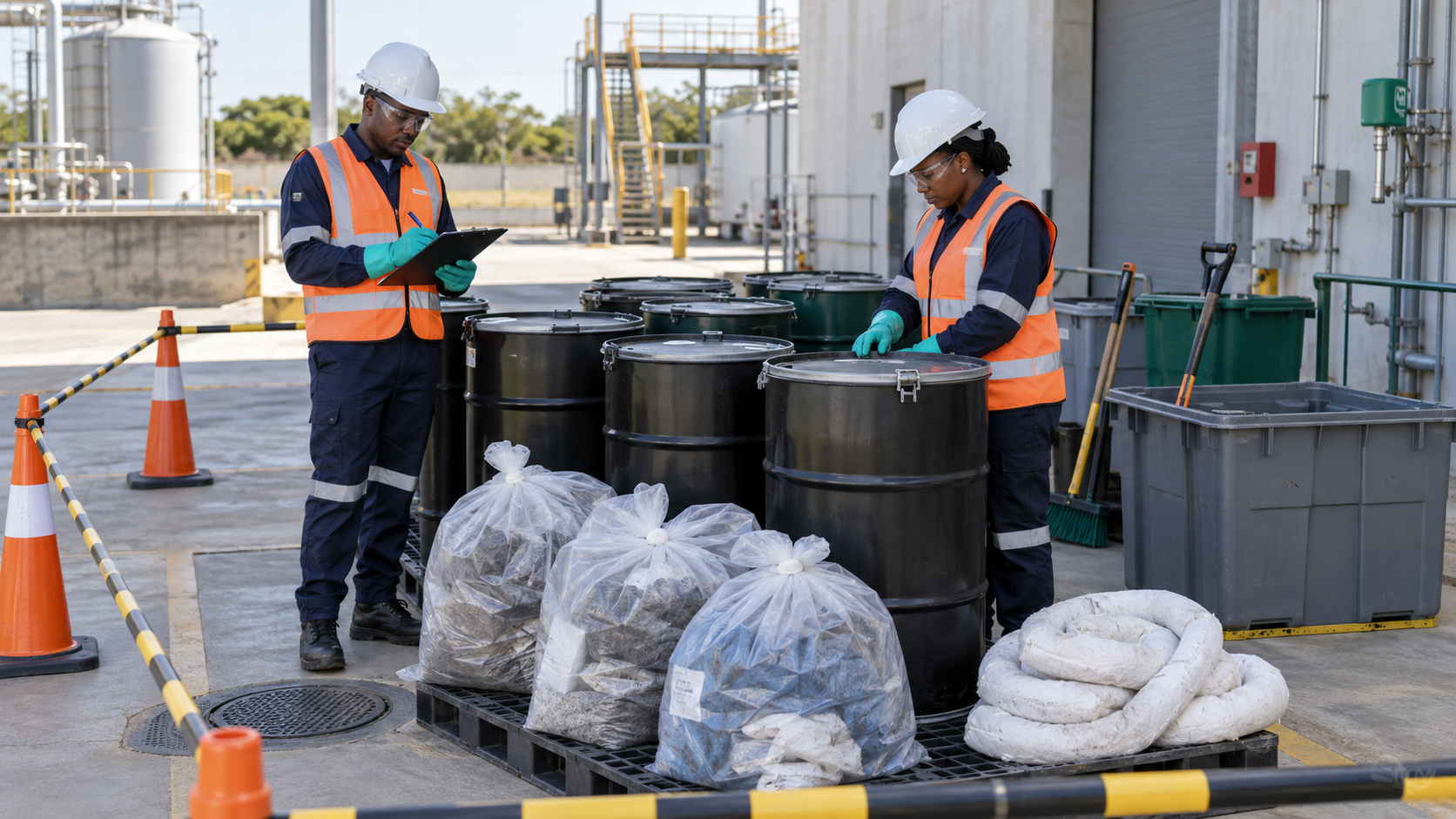
Poorly managed waste can injure workers, contaminate water, obstruct drainage, attract disease vectors and create harmful smoke when burned.
When waste becomes a hazard
Waste management is often treated only as an environmental subject. Yet poorly managed waste can also cut, infect, poison, burn or obstruct. It can contaminate soil and water, block drainage, attract pests and leave hazardous residues in discarded containers.
A dirty environment can quickly become an unhealthy environment. That makes World Cleanup Day relevant to operations teams, occupational health personnel, safety professionals and community leaders as well as environmental specialists.
Open burning is not waste management
When a pile of rubbish is burned, the waste disappears from sight but not from the environment. It changes form. Smoke, fine particles and other pollutants replace the visible pile and can affect workers and surrounding communities.
Use approved collection and treatment routes. Never assume that ‘out of sight’ means ‘out of risk,’ especially when plastics, treated materials, chemicals or unknown wastes are present.
Protect the people doing the cleaning
Volunteers should never be encouraged to grab unidentified waste blindly. Depending on the location, waste may contain broken glass, sharps, chemicals, contaminated materials, unstable objects or biological hazards.
Plan cleanup work with the same discipline applied to any task. Assess the area, traffic, heat, manual handling, equipment, emergency arrangements and final disposal route before collection begins.
- Provide suitable gloves, footwear, tools and supervision based on the assessment.
- Separate people from moving vehicles and operating equipment.
- Use safe lifting methods and arrange hydration and rest.
- Stop and escalate unidentified chemicals, medical waste, sharps or suspected hazardous materials.
- Never enter drains, tanks or confined spaces during an informal cleanup.
Moving waste is not the end
Placing waste into a bag only changes its location. The material still requires segregation, secure storage, transport and an approved recovery, treatment or disposal route.
Confirm capacity before the campaign begins and record the handover. A cleanup that leaves bags beside a road or mixes hazardous material with general waste has shifted the problem rather than solved it.
Health, safety and environment belong together
A successful environmental activity should not create an injury or exposure. Ask four questions: What can hurt people? What can harm the environment? Which controls are required? Where will the collected waste finally go?
Answering all four protects volunteers, workers, communities and ecosystems alike.
Sources
- United Nations — World Cleanup DayPublished Current observance information; accessed 17 September 2026
- UNEP — Global Waste Management Outlook 2024Published 2024
- WHO — Solid waste and healthPublished Current health guidance; accessed 17 September 2026
Daily HSSE updates
Subscribe for practical HSSE updates.
Subscribe for the daily message, selected HSSE news and occasional new-resource alerts from Worksite Safety Hub.