Environment · 8 min read
Biodiversity Before Ground Is Broken
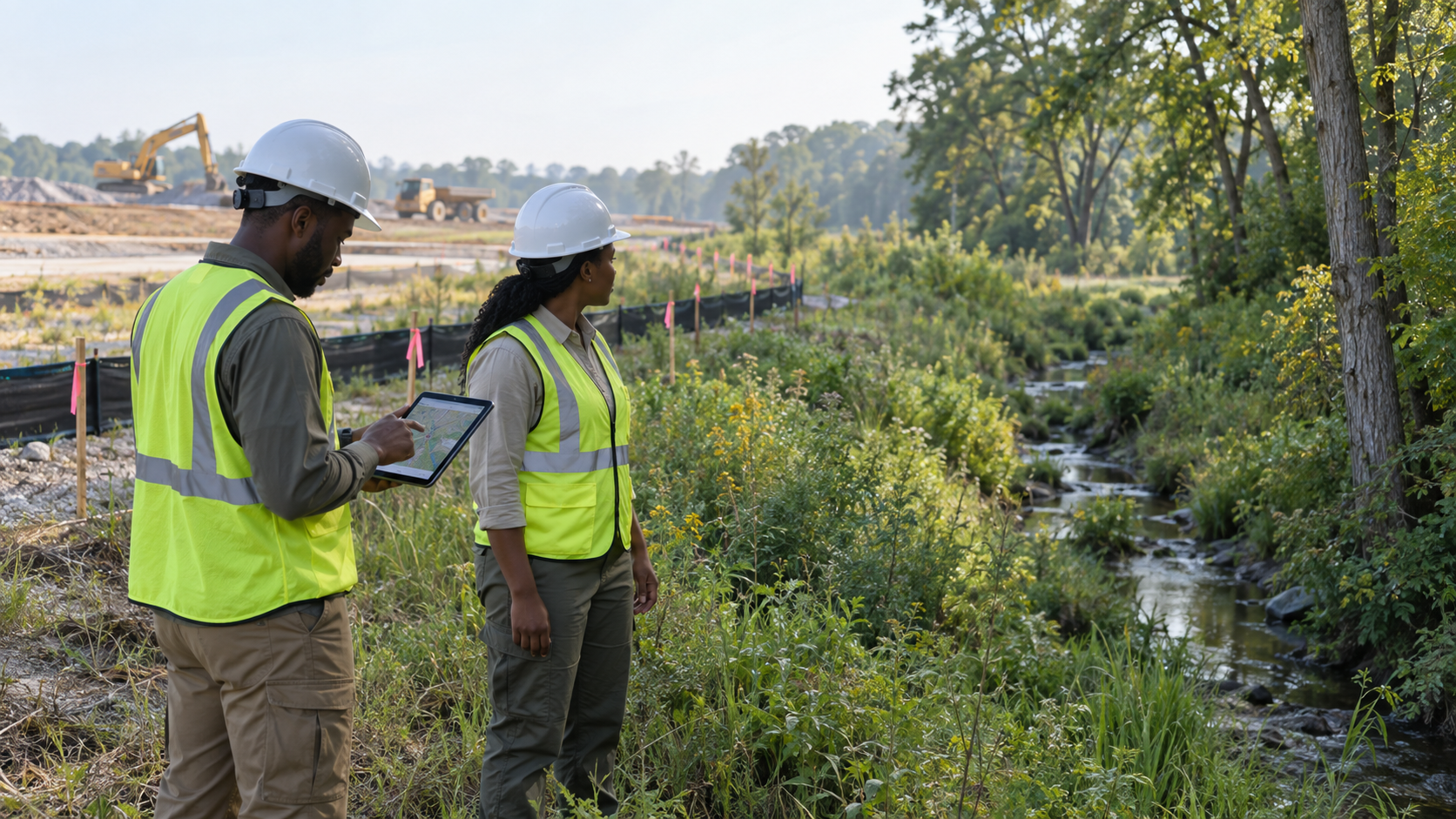
A practical method for finding ecological constraints early, translating them into work controls and verifying that construction and maintenance protect habitats beyond the marked footprint.
Biodiversity risk starts before machinery arrives
A project can stay inside its surveyed boundary and still affect nature outside it. Clearing may remove shelter or fragment a movement route; noise and lighting can alter animal behaviour; sediment can travel through a drainage line; and an apparently empty laydown area may support seasonal plants, nesting birds or small wetlands. Once mobilisation begins, options narrow and pressure to keep the programme moving can turn an avoidable impact into an emergency decision.
The strongest control is therefore early understanding. Biodiversity should be considered while routes, footprints, work methods and schedules can still change. This does not mean treating every patch of vegetation as identical or attempting to make field teams act as ecologists. It means using competent information to identify what matters, designing around it where practicable and giving the work party clear boundaries and stop triggers.
Build a credible baseline
Start with the environmental setting, not only the plot plan. Review available surveys, maps, permits, seasonal information, drainage connections and records from regulators, landowners and local communities. Then verify the site at an appropriate time with competent ecological support. A desk review may miss a newly formed wet area, a changed access route or species activity that appears only during part of the year.
The baseline should distinguish confirmed features from uncertainty. It may identify sensitive habitat, watercourses, breeding or roosting locations, invasive species, wildlife corridors and areas that require further survey before disturbance. Record the evidence, date, coverage and limitations so later decisions do not give an old or incomplete survey more confidence than it deserves. If the work scope, season or site condition changes, revisit the assessment.
- Map ecological features together with drainage, access and the full temporary-work footprint.
- Identify legal, permit, landowner and organisational biodiversity requirements.
- Use competent surveys suited to the location, species and season.
- Keep uncertainty visible and define what must be checked before work proceeds.
Apply the mitigation hierarchy while choices remain
Avoidance usually provides the clearest and most dependable result. Moving a road, narrowing a work area, retaining mature trees or scheduling outside a sensitive period may prevent the impact entirely. Where avoidance is not reasonably achievable, reduce disturbance through setbacks, shorter durations, quieter methods, controlled lighting, erosion protection and restoration of temporary areas. Restoration or offsetting should not be used to excuse damage that could have been avoided through design.
Choices should consider indirect and cumulative effects. A small crossing may open access for later disturbance; several temporary clearings may disconnect a habitat; or drainage from multiple work fronts may affect one downstream wetland. Design reviews should ask what the feature does within the wider landscape, not merely how many square metres lie inside the fence. Record the selected measure, its owner and the evidence used to judge that it will work.
Turn specialist findings into field controls
A technical report protects nothing if the work party cannot translate it into the next safe action. Mark approved boundaries on current drawings and in the field, using durable barriers or signs that remain understandable in poor weather and changing shifts. Brief operators, contractors and supervisors on why the boundary exists, which activities are restricted and who can authorise a change. The briefing should cover access, material storage, refuelling, lighting, noise, waste, vegetation removal and water control where relevant.
Pre-start checks should confirm that the marked footprint matches the approved plan and that protective measures are installed before plant enters. Sensitive work may need an ecological clerk of works or other competent observer, but that role does not replace line accountability. The supervisor still controls the job, and every worker needs authority to stop if an unmarked habitat feature, animal, nest, burrow or unexpected water pathway is found.
- Show exclusion zones, retained features and approved routes on one current field plan.
- Install protection before clearing, excavation, access construction or material delivery.
- Define stop-work and escalation triggers for unexpected ecological findings.
- Control night lighting, noise, dust, sediment and spills at source.
Manage discovery without improvisation
Unexpected wildlife or habitat evidence should trigger a calm, planned response. Stop the affected activity, keep people and equipment at a suitable distance, protect the area from further disturbance and contact the designated environmental role. Workers should not capture, move, feed or disturb wildlife unless an approved plan and competent authority specifically allow it. Photographs and location details can support assessment, but they should be handled carefully where sensitive species information could create additional risk.
The response should determine whether the finding changes the approved method, boundary, schedule or permit conditions. Any revised control must be communicated to all affected parties and reflected in current documents before restart. Treating a discovery as an inconvenience to be moved out of the way can create legal, ethical and operational consequences; treating it as new site information allows the team to make a defensible decision.
Verify outcomes through the work lifecycle
Inspection should look beyond whether a barrier is still standing. Check for encroachment, vegetation damage, wildlife trapping hazards, blocked movement routes, sediment escape, altered drainage, invasive-species spread and ineffective reinstatement. Use photographs from fixed points, mapped observations and agreed indicators where they help show change over time. Findings need owners and completion dates, especially when a temporary measure must remain effective between shifts or through heavy weather.
At demobilisation, remove temporary hazards, restore disturbed ground using the approved method and confirm that drainage and habitat connections remain functional. Continue monitoring for as long as the risk and commitments require. Close-out should capture what was found, which controls worked and what should change in future design or contractor requirements. Good biodiversity management is not measured by the absence of complaints; it is demonstrated by evidence that important features were understood, protected and left able to function.
Nature Positive by 2030: the race is on! · WWF
Daily HSSE updates
Subscribe for practical HSSE updates.
Subscribe for the daily message, selected HSSE news and occasional new-resource alerts from Worksite Safety Hub.