Safety · HSSE Watch
Bax Crossing Report: Prepare Drivers for the Whole Route
Published
Incident: 13 July 2025. RAIB report publication: 9 November 2026. Article/source review: 9 November 2026.
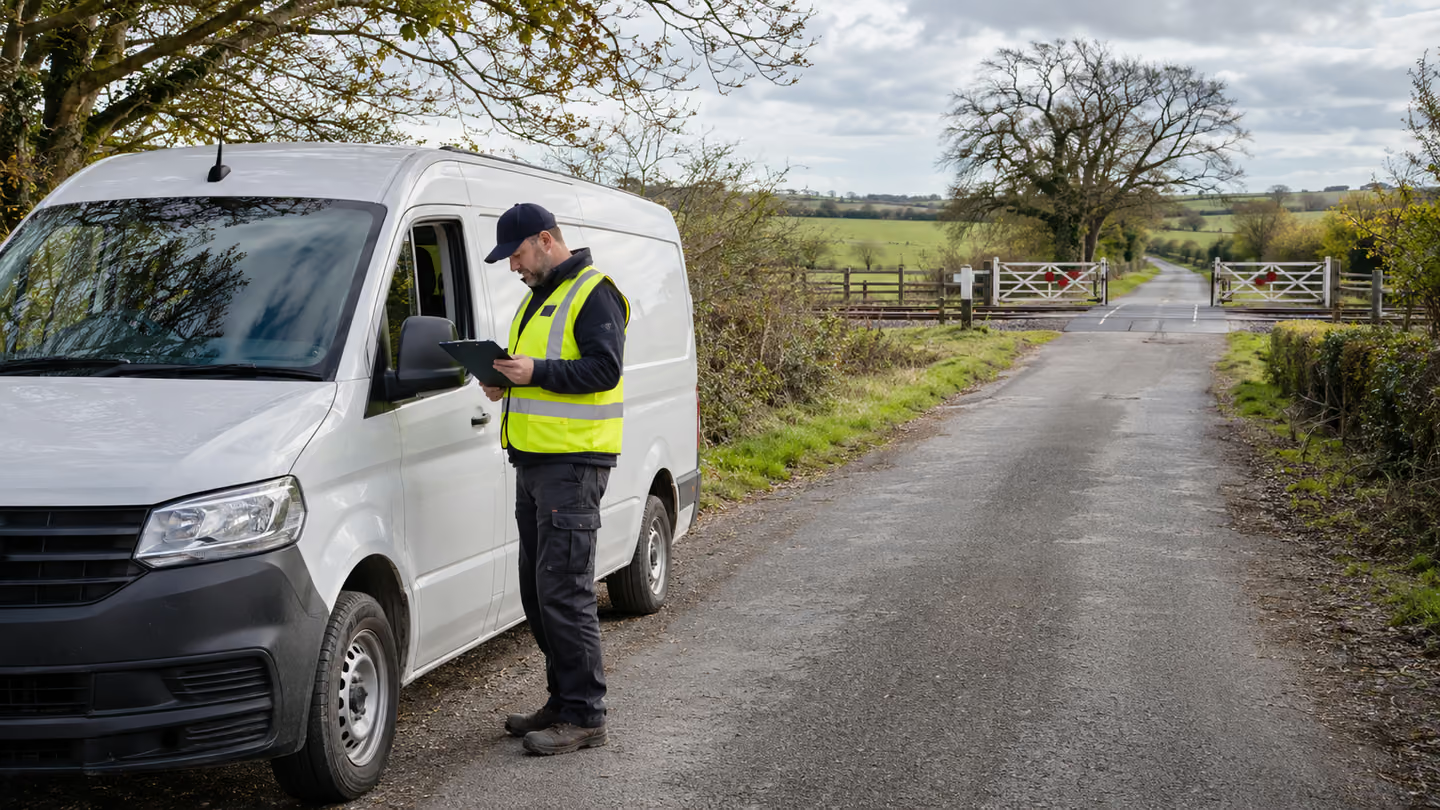
The last part of a delivery can contain the least familiar hazard. A route that looks straightforward on a navigation screen may include a private railway crossing requiring a procedure the driver has never encountered.
New report, earlier accident
RAIB published Report 12/2026 on 9 November 2026. The collision happened at around 12:42 on 13 July 2025 at Bax user worked crossing near Teynham, Kent. A passenger train struck a stationary delivery van, fatally injuring its driver.
RAIB found that the green miniature stop light almost certainly led the driver to believe entry was safe after opening the entry gate, although the exit gate remained closed. The investigation identified ineffective guidance from signs and absent road markings, as well as driver training and guidance that had not prepared the driver to use the crossing safely.
The report makes four recommendations addressing crossing design, the legal and road-user guidance framework, guidance for organisations engaging drivers, and the authorised-user concept. These are investigation recommendations, not confirmation that all changes have been implemented. RAIB’s role is safety improvement, not assigning liability.
The wider lesson: assess the complete journey
The following employer checks are Worksite Safety Hub’s practical interpretation. They do not replace railway instructions or crossing-specific authorisation. The lesson is not simply “pay more attention”. Delivery planning, customer access information, training and interface design must account for unfamiliar users.
A reassuring signal can be misunderstood if the person has not been prepared for the complete sequence of a task. Ask whether information tells the driver enough to recognise the type of crossing, understand the applicable instructions and decide not to proceed when uncertain.
Practical controls for delivery and contractor teams
- Find route interfaces before dispatch. Ask customers and site contacts about private crossings and unusual access arrangements. Make the information available before the driver reaches a constrained stopping point.
- Give drivers a safe uncertainty route. Define how to stop in a safe place, contact dispatch and obtain competent advice without delivery-pressure penalties. Do not tell a driver to improvise a crossing procedure or follow another vehicle.
- Include self-employed and subcontracted drivers. Check that important access information survives the handover between the customer, logistics company, dispatcher and individual driver. A commercial boundary should not become an information gap.
- Use crossing-specific instructions. Generic road-driving competence is not proof of readiness for every private crossing. Follow railway signs, restrictions and authorised arrangements. If instructions are unclear or appear inconsistent, do not enter; escalate through the appropriate contact.
- Review the system, not just the individual. Examine route data, site booking instructions, training examples and the pressure created by schedules. Where the organisation controls access, involve the railway duty holder in reviewing safer arrangements.
A useful assurance test
Choose one rural or unfamiliar delivery route and trace the information reaching the driver. What does the customer know? What does dispatch know? What is visible to the driver before arrival? Ask a new or substitute driver to explain the escalation process without prompting.
Close the gaps with better information and workable arrangements. Do not modify railway infrastructure, signs or crossing equipment yourself. Changes require the appropriate duty holders and approvals.
Toolbox questions
- Which routes include access hazards absent from ordinary navigation guidance?
- Can a driver refuse uncertain access without being pressed to complete the delivery?
- Are customer and contractor instructions consistent?
Key takeaway
Prepare the driver for the whole route, including the customer’s access. A green indication is not a substitute for understanding and following the full applicable crossing procedure.
Video availability
No directly relevant authoritative embeddable video was verified for this new development. The linked primary written sources provide the dated evidence; unrelated footage has not been added.
Sources and dates
- RAIB Report 12/2026: Bax crossing, published 9 November 2026 ↗Primary source; publication dates and limitations are distinguished in the article.
- RAIB release and findings summary, 9 November 2026 ↗Primary source; publication dates and limitations are distinguished in the article.
Sources checked 9 November 2026. Source statements and original practical applications are distinguished above. Always consult current official advice and applicable local requirements.
Share the lesson
Open the separate 9:16 Pinterest poster
Illustrative planning scene, not an actual incident or a technical procedure. HSSE TIPS branding appears only in the designed poster footer.
Your experience matters
Share your thoughts on this page
Have a question, a useful experience or a suggestion? Add your input below.
Comments are public. Keep them respectful and relevant. Do not share contact details, confidential information or emergency reports.
Comments on this page
Loading comments…