Product Reviews · Offshore Marine Equipment · 6 min read
Offshore AHTS Vessel Review: Plan Your Next Marine Support Purchase
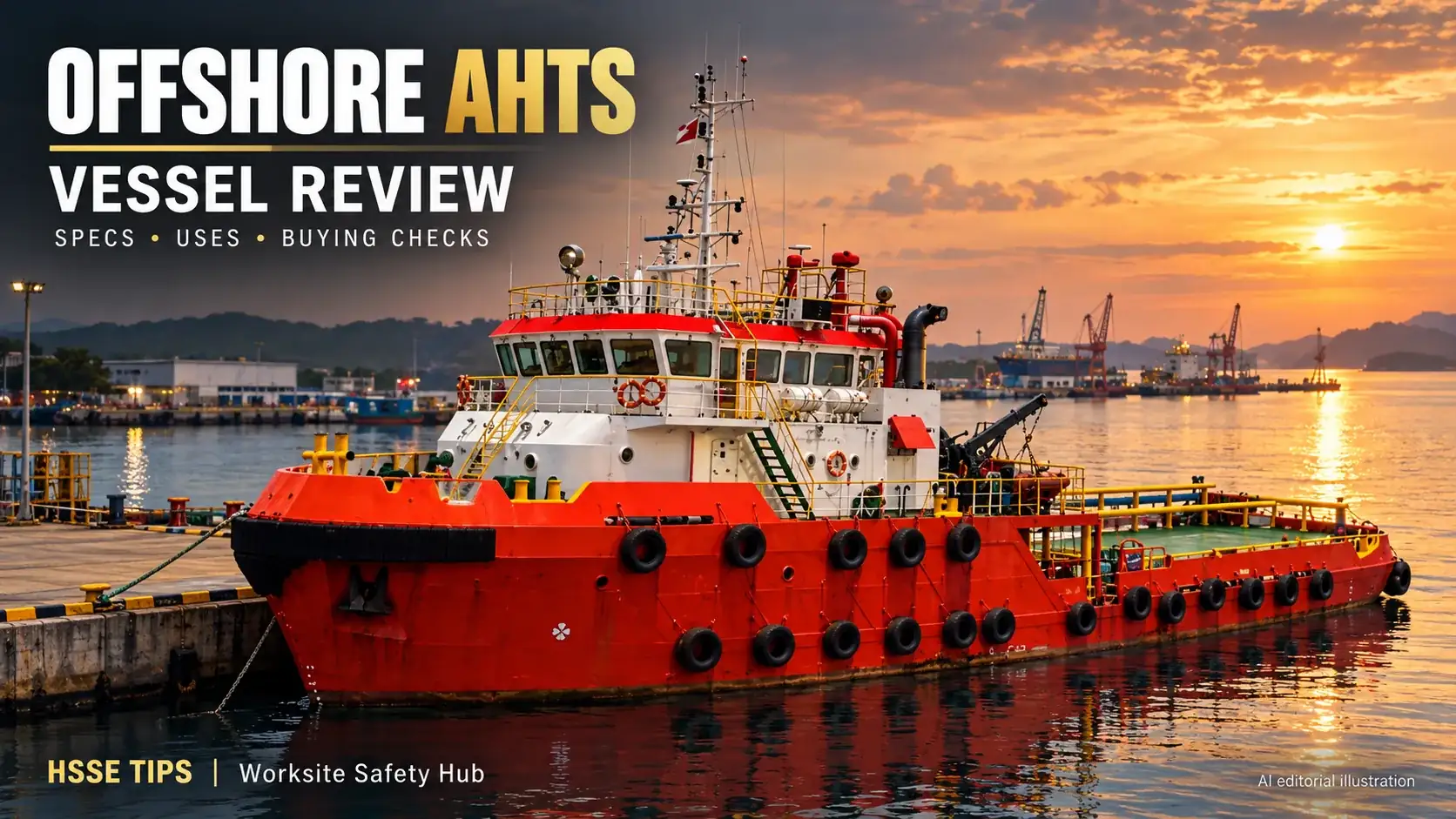
Your next offshore vessel needs to fit the mission, not just the berth. Anchor handling, towing and supply work each bring their own equipment, deck and operating requirements. This AHTS offer provides a specific vessel to discuss around a clear project brief.
The broker’s detailed particulars describe a 42 m vessel with 4,000 BHP and 52.35-tonne bollard pull. Use these seller figures to begin the enquiry, then request the documents and survey evidence needed to assess the proposed job.
Review method: a desk-based assessment of Autoline FJ44173, its seller photographs, marine-operator category information and IMO guidance. We have not boarded, operated or independently surveyed this vessel. Seller figures and documentary status remain subject to confirmation.
Offshore AHTS offer at a glance
| Advertised title | Yamaha Offshore – AHTS; used vessel |
|---|---|
| Asking price | On request |
| Build information | Detailed particulars: 2009 / China; listing year field: 2010 — confirm records |
| Dimensions | 42 m overall length / 10 m breadth / 4.6 m depth / 3.6 m draught |
| Main machinery | Seller-described 2 × Mitsubishi S80-MPTK / total 4,000 BHP / twin screw |
| Bollard pull | 52.35 metric tonnes; request test certificate and conditions |
| Deck figures | 100 m² clear space / 5 t/m² stated deck loading; confirm total cargo and stability limits |
| Accommodation | 18 persons; verify approved complement and arrangement |
| Seller-described flag / class | Palau / RINA AHTS unrestricted navigation; obtain current status documents |
| Vessel area / broker | North Europe / Automor, Mortrans-Bolid contact, Frankfurt am Main |
| Offer reference | Autoline FJ44173 |
The stated vessel area is separate from the broker’s German office. Confirm the current port, inspection access and delivery arrangements. Ask the broker to reconcile the build-year entries with the construction and registration documents.
What is an AHTS vessel intended to do?
AHTS means Anchor Handling Tug Supply. Marine operator DP World describes the category as supporting anchor deployment and recovery, and transporting supplies, equipment, fuel, water and personnel for offshore work.
That is category context. The offered vessel’s suitability depends on its actual equipment, approved loading conditions, crew, certificates and project requirements. Build the purchase enquiry around the intended operation and ask the broker to return evidence specific to that job.
Towing and anchor-handling enquiries
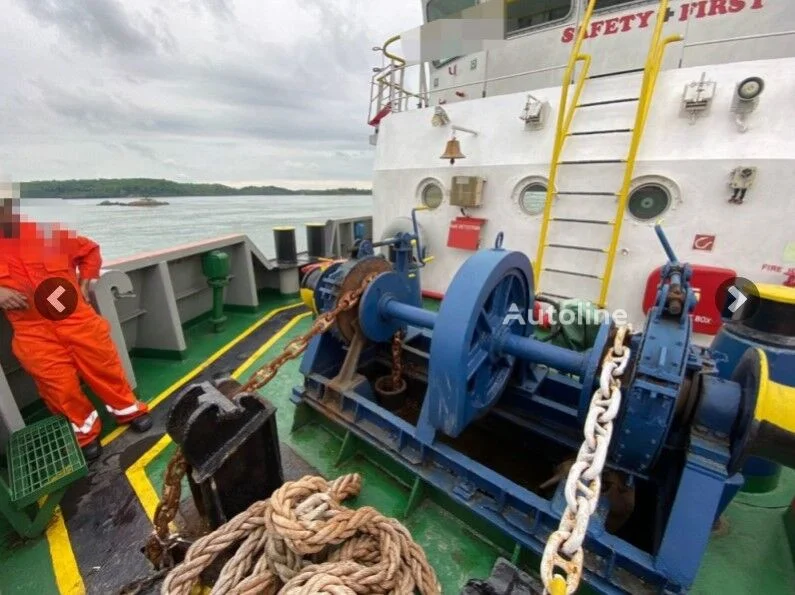
Start with the proposed tow or anchor-handling scope, water depth, route and environmental conditions. Request the applicable bollard-pull test, winch data, certified equipment ratings, brake-holding figures and towing arrangement.
Engine output and bollard pull describe different things. Neither figure alone establishes an acceptable operation. Have qualified marine personnel assess the complete vessel, equipment and operational plan.
Supply and deck-work enquiries
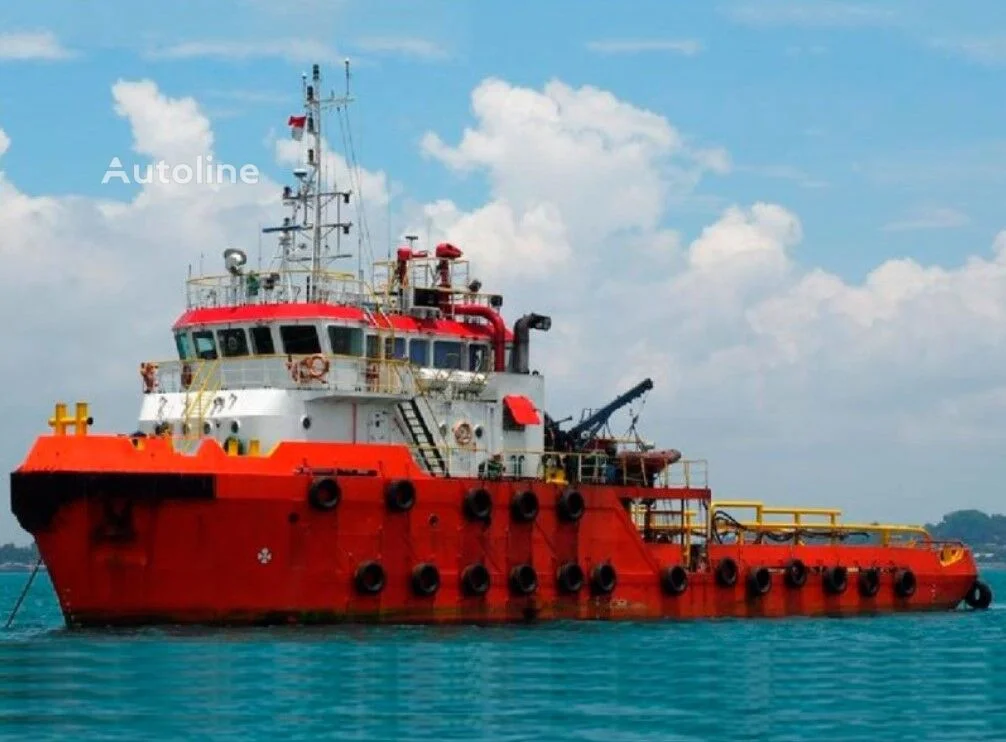
The photographs show a forward superstructure and working area aft. Ask for a general arrangement, usable deck dimensions, cargo limits, securing arrangements and crane documentation for the proposed load.
A deck pressure rating is not a total cargo allowance. Evaluate local loading, weight distribution, tank conditions and stability together. Request approved loading information rather than multiplying deck area by a stated pressure figure to infer payload.
A clear machinery and survey brief
Ask for the installed main-engine identities, gearbox and shaft-line details, machinery hours, service history and overhaul records. Include the auxiliary machinery, steering, electrical distribution, fuel systems and bow-thruster arrangements in the survey scope.
A dated machinery demonstration, sea-trial plan and independent survey help turn a sales description into an assessable purchase package. Agree what will be tested, which records will be supplied and how acceptance findings will be handled.
The seller reports deck, component, accommodation and bridge work in 2024. Request its itemised scope, invoices and acceptance records as part of the vessel’s maintenance history.
Seller-listed safety equipment: verify the fitted package
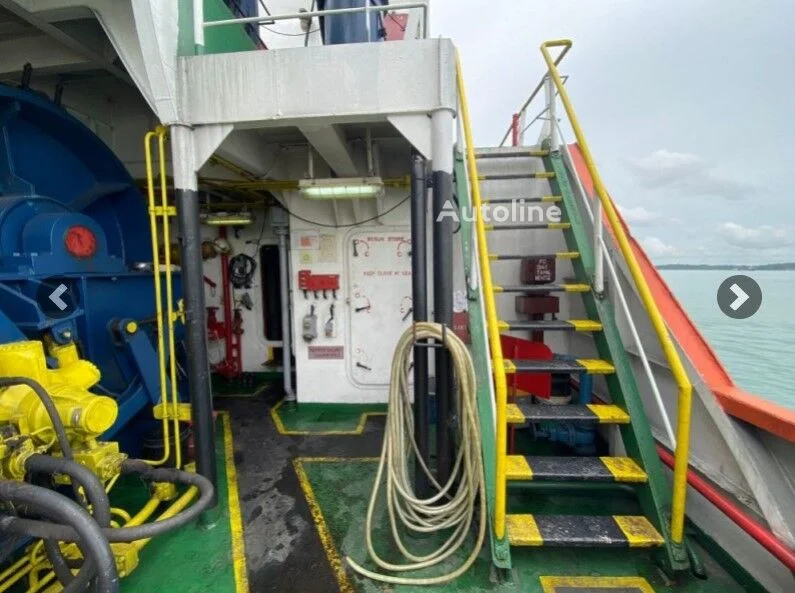
The particulars describe external fire pumps and monitors, emergency firefighting equipment, navigation and radio systems, life rafts, a rescue boat and an EPIRB. These give buyers specific handover subjects to discuss.
Request the current equipment inventory, servicing records, test results and applicable certificates. Confirm the approved operating area and complement, and have competent personnel assess the fitted systems against the intended work.
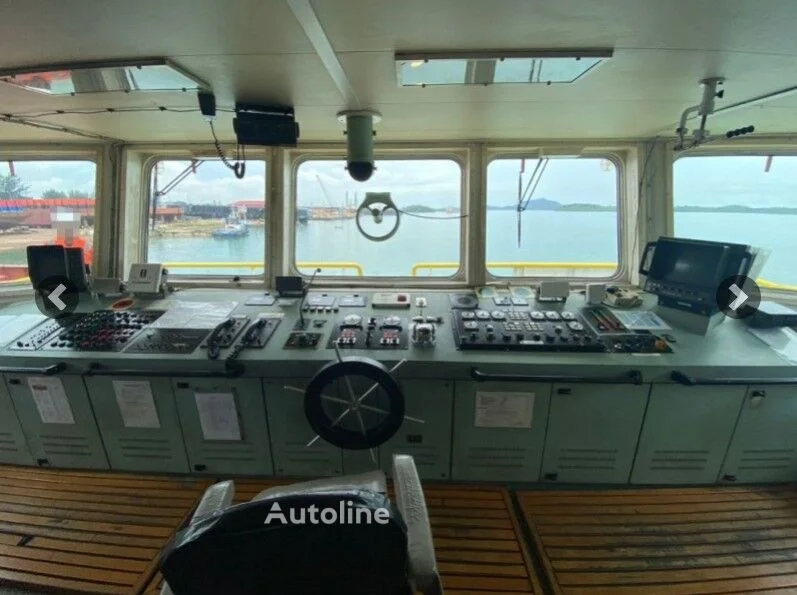
For bridge equipment, include chart/software status, radio documentation, power arrangements, alarms and crew familiarisation. The actual console photograph helps show the layout; it does not establish equipment function or approval.
Current IMO references for the purchase enquiry
IMO reports that SOLAS regulation II-1/3-13, in force from 1 January 2026, addresses onboard lifting appliances and anchor-handling winches, including inspection, testing and maintenance. Its related guidelines are MSC.1/Circ.1662 and MSC.1/Circ.1663.
Ask the flag administration, class society and surveyor to establish applicability and the required records for this vessel and its equipment. A seller’s stated class notation is not a substitute for current class status and survey documentation.
IMO’s safe-mooring resources also cover equipment selection, inspection and maintenance. Request certified towing/mooring arrangements and line/fitting records, and include them in the operational assessment.
Watch a separate anchor-handling reference
Watch Maersk Supply Service’s “Anchor handling timelapse”, filmed aboard Maersk Tender. This separate operator video provides general visual context. It is not a demonstration of the advertised vessel, confirmation of its capabilities or operating instruction. Request a current video of the exact vessel from the broker.
Buying checks before agreeing a price
- Identity and title: vessel name, IMO/official number, builder, construction date, ownership and registration records.
- Class and surveys: current class status, conditions/recommendations, statutory certificates and survey schedule.
- Working capability: approved loading/stability information, documented bollard pull and certified deck-equipment limits.
- Condition: independent survey, machinery history, hull records and an agreed sea-trial/acceptance scope.
- Safety systems: current equipment inventory, inspection and servicing records, tests and applicable manuals.
- Commercial scope: price, included equipment, delivery port, preparation, spares, insurance and transfer arrangements.
For an offshore contractor, a useful mission brief states the work type, intended operating area, tow/load requirements, project dates and personnel. That lets the broker respond to the intended job instead of providing only a general sales description.
Our view
This offer gives buyers detailed particulars and actual exterior, machinery-area and bridge photographs. It provides a useful starting point for a mission-based broker enquiry.
Confirm the vessel’s identity and documentary status, match its approved limits to the work and arrange a competent survey. A written proposal that includes the supplied equipment, acceptance scope and delivery responsibilities supports a clearer purchasing decision.
Frequently asked questions
Is a purchase price published?
The reviewed offer is priced on request. Ask for a quotation identifying the vessel and complete supplied package.
Does “Yamaha Offshore” identify the engine maker?
It is the listing label. Confirm the actual machinery from the engine plates and vessel documents.
Can deck cargo be calculated from the area rating alone?
No. Use the approved total cargo, local-loading and stability limits for the intended loading condition.
Is the reference video the advertised vessel?
No. It shows a separate operator’s vessel. Request a dated demonstration of the actual offer.
Sources and editorial information
- Autoline seller particulars and photographs — reviewed 14 October 2026.
- DP World AHTS category information — separate operator reference.
- IMO 2026 rule update — lifting-appliance and anchor-handling-winch context.
- IMO safe-mooring resources.
- Maersk Supply Service’s anchor-handling timelapse — separate vessel reference.
Confirm current availability, condition, vessel documentation and supplied terms directly with the broker.
Explore more equipment reviews
HSSE TIPS — Worksite Safety Hub
Every Task. Every Person. Home Safe.
Your experience matters
Share your thoughts on this page
Have a question, a useful experience or a suggestion? Add your input below.
Comments are public. Keep them respectful and relevant. Do not share contact details, confidential information or emergency reports.
Comments on this page
Loading comments…