Product Reviews · Safety footwear · 9 min read
UMBURLLY High-Top Safety Shoes Review: Stylish Protection or Unverified Claims?
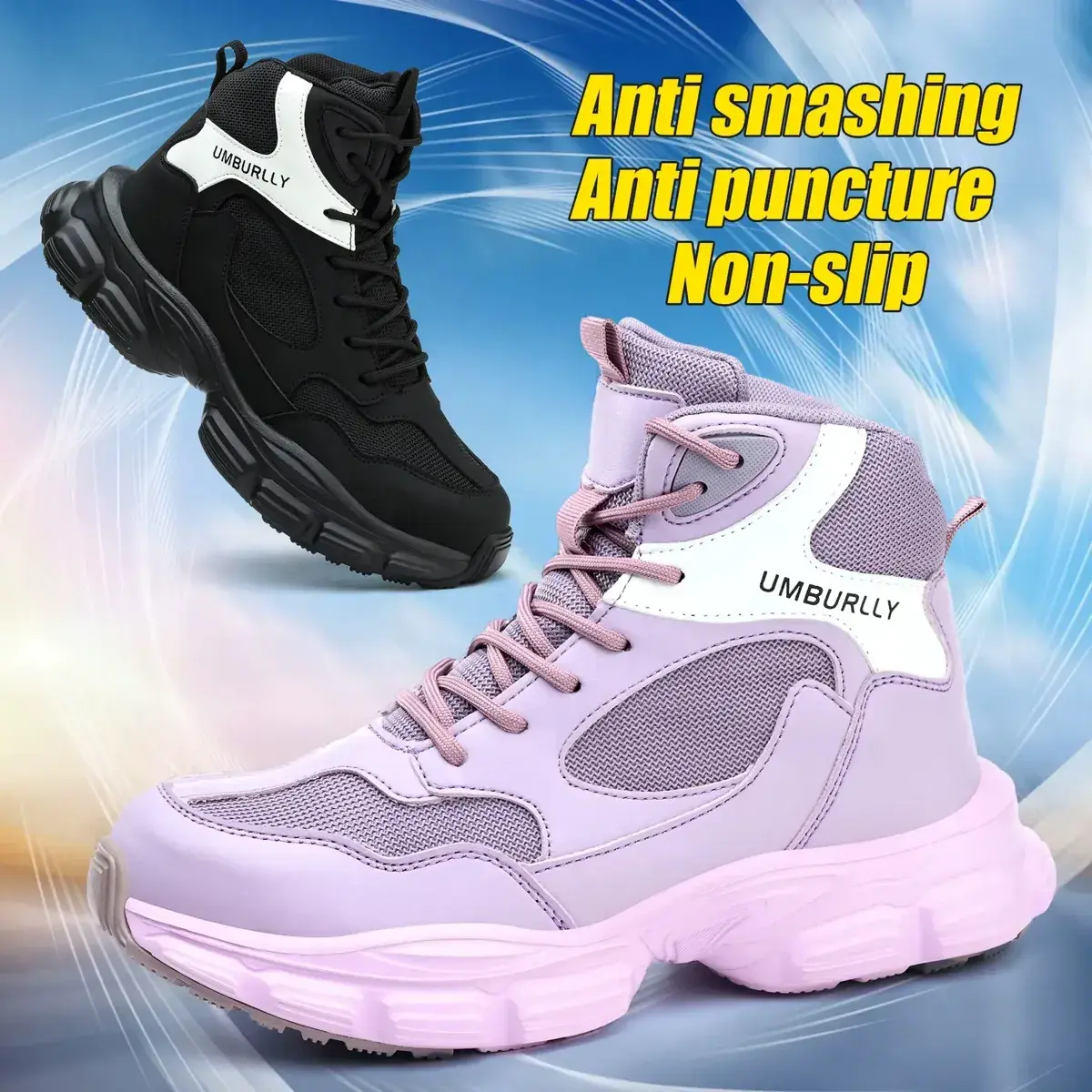
The black and lilac colourways pair a trainer-like profile with claims of a steel toe, puncture-resistant midsole and slip-resistant sole. The design may appeal to people who dislike conventional work boots. Protection, however, depends on the exact tested shoe—not on a hammer graphic or a photograph.
An attractive high-top work-shoe candidate for buyers who want a softer, athletic look, provided the exact delivered pair has independently verifiable protection appropriate to the job. The supplied images show appealing black and lilac options, but no legible certification label, test report or model-specific declaration. Until those are checked, we cannot recommend them as compliant protective footwear for a site that requires a defined rating.
Design and the pictured variants
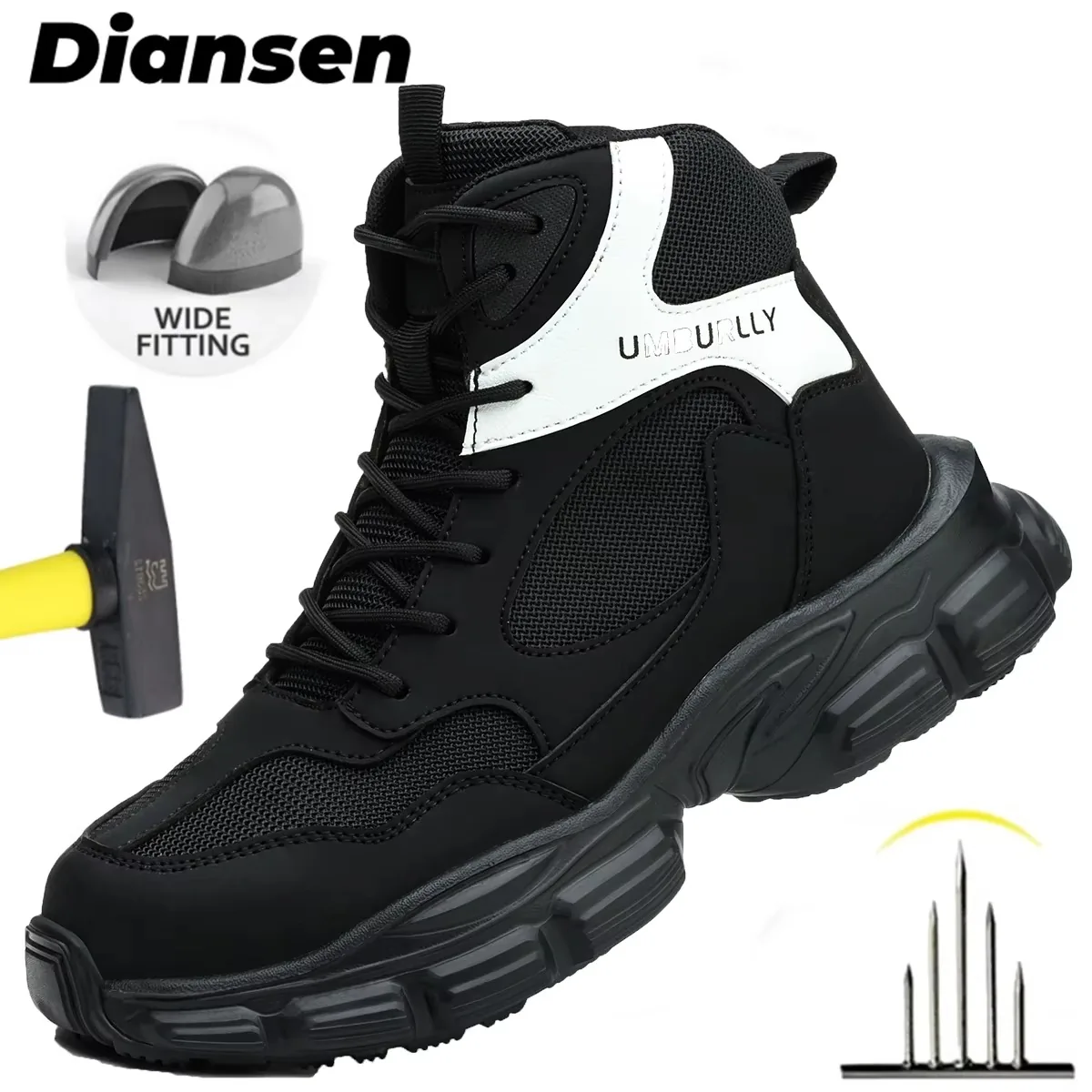
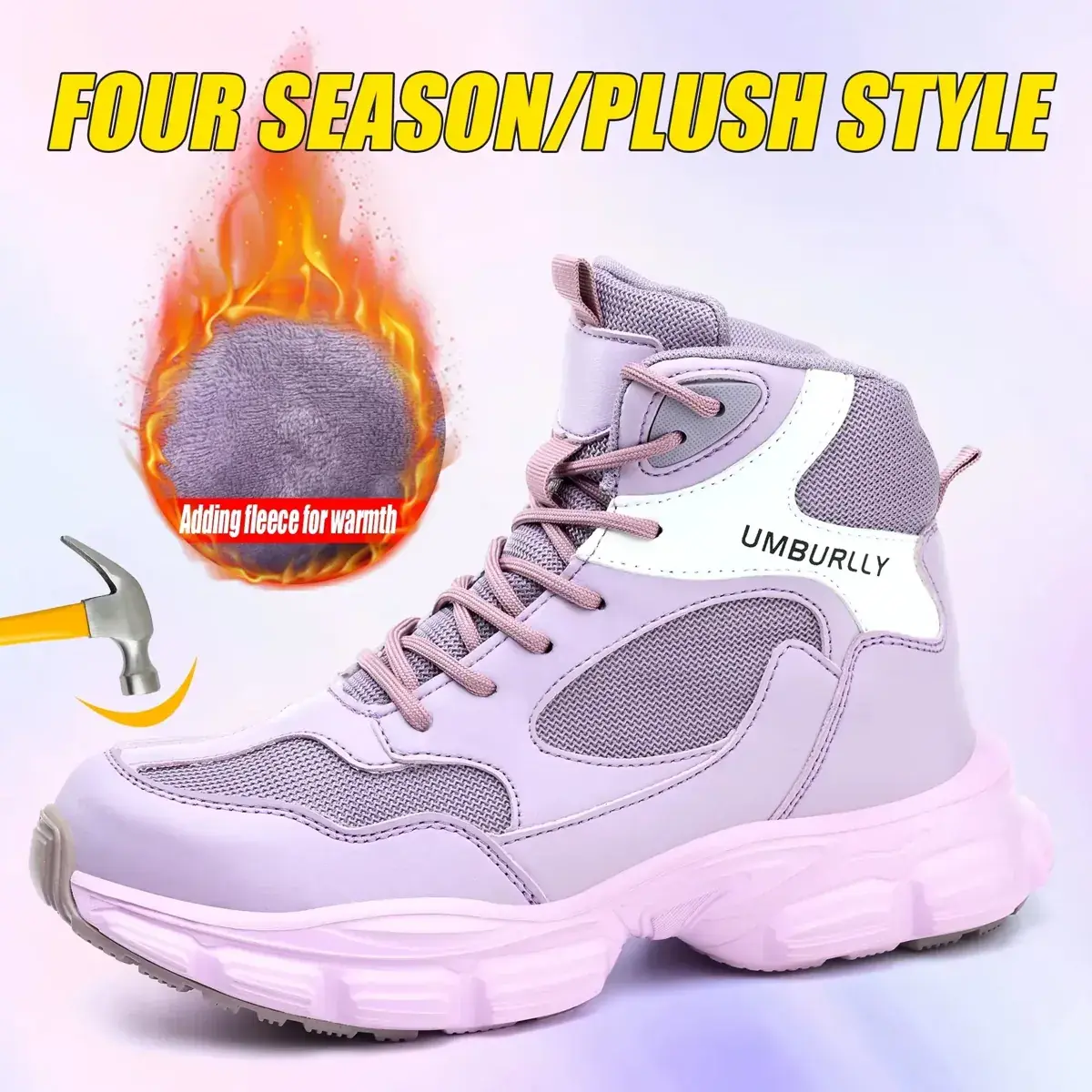
The photos show a lace-up upper, padded collar, pull tab and chunky patterned outsole. The lilac shoe has mesh-like panels and a visible white trim; a black version is shown in separate promotional material. UMBURLLY is printed on the shoe, while one black-shoe graphic carries a “Diansen” heading. That mixed branding is a reason to verify the actual seller, model marking and delivered colourway, not proof that the items are identical.
A further graphic advertises a “four season/plush style,” apparently an optional warmer lining. A plush lining could feel different in hot weather or with thick socks; confirm whether it is the selected option. Product photos cannot establish breathability, long-shift comfort, weight or true sizing.
What the protection graphics claim
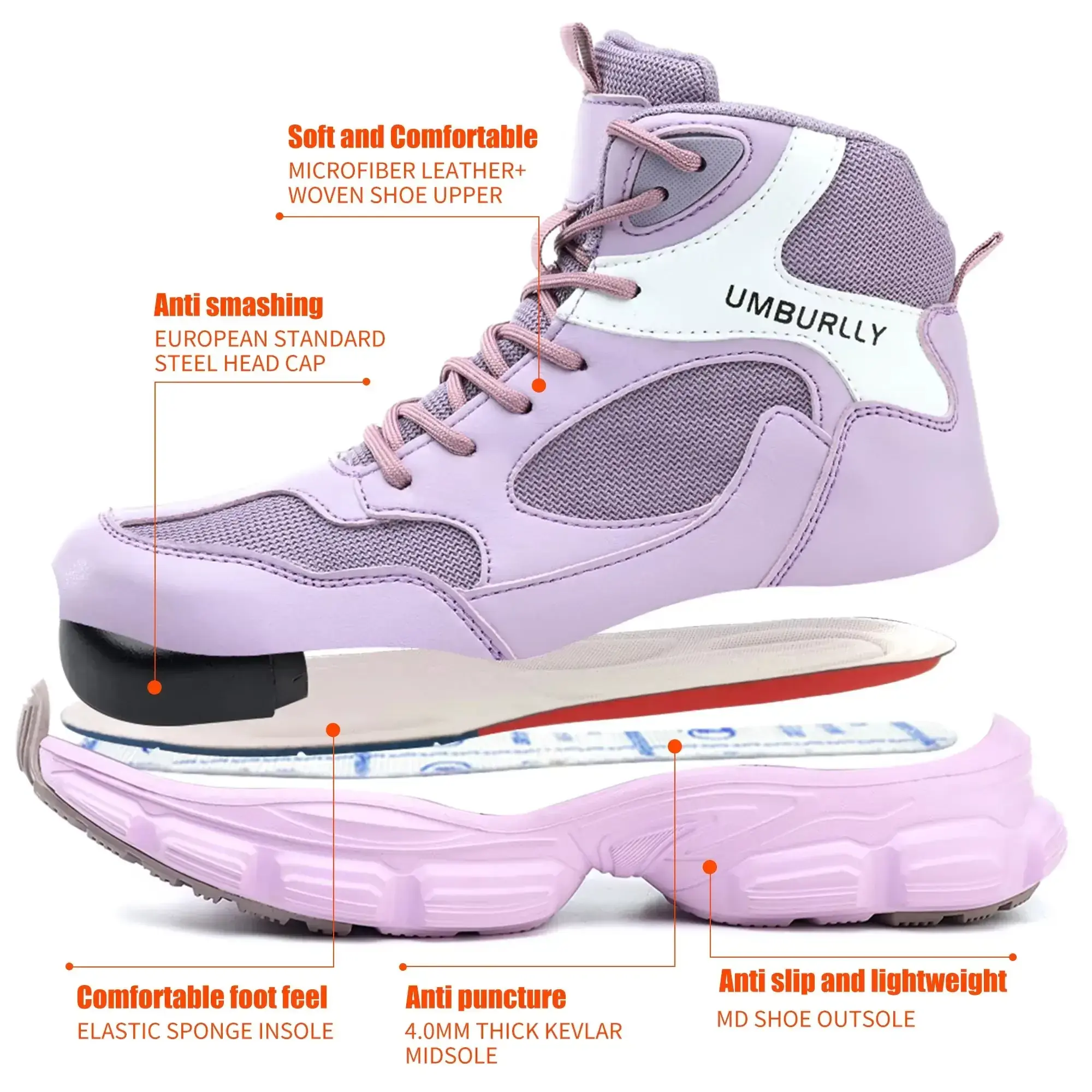
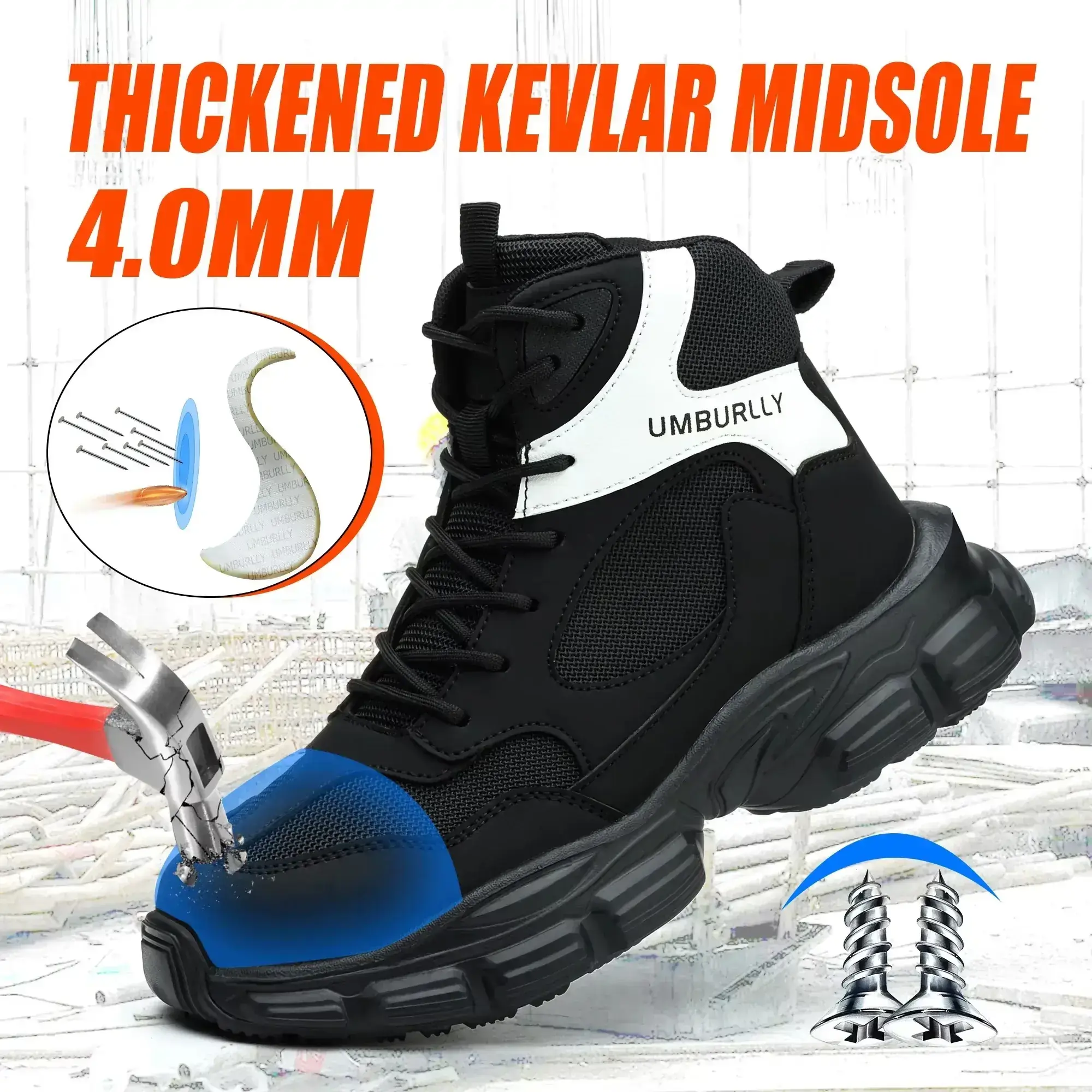
A cutaway graphic describes a steel toe cap, a puncture-resistant “Kevlar” midsole and a slip-resistant outsole. Another specifies a “4.0 mm thick Kevlar midsole.” These are supplier claims, not independently verified construction details. The hammer and sharp-object pictures are demonstrations in promotional artwork; they provide no measured impact, compression or penetration result.
What matters on a worksite
ISO 20345 sets basic and optional requirements for safety footwear, including mechanical and slip-related properties. The relevant protection category and any additional markings should be identifiable for the exact shoe, supported by the applicable declaration and test documentation. Do not infer an S1, S1P, S3, SR or other rating from advertising terms such as “anti-smashing,” “anti-puncture” or “non-slip.”
The appropriate footwear depends on the hazards: falling objects, sharp objects underfoot, wet or oily floors, electrical risks, hot surfaces and chemical exposure require different properties. The UK's HSE guidance advises selecting footwear for the actual risks and conditions. These photos do not establish waterproofing, chemical resistance, electrical hazard protection, heat resistance or metatarsal protection.
A high-top collar covers more of the ankle than a low-cut trainer, but it does not by itself prove ankle-impact protection. The pictured flex test may illustrate a soft sole; it cannot establish sustained comfort, grip or durability.

Fit and everyday trade-offs
The padded, sports-shoe profile may suit someone who moves between warehouse aisles, light maintenance and general tasks, once the protection rating is confirmed. The high upper and chunky outsole could feel bulky to some wearers. Check internal length and width in millimetres against your foot measurements, allow for the socks you actually wear, and confirm return terms before ordering. Photos cannot tell whether the toe cap leaves enough room or whether the outsole grips your workplace surfaces.
Buying checklist
- Confirm the chosen option's exact brand, model, colour, lining, size and whether black and lilac pairs have the same protective construction.
- Request clear photos of the inside label and outsole marking, the applicable standard and classification, a model-specific declaration, and a credible test report.
- Match the documented toe, penetration, slip and other properties to your employer's approved-footwear requirements and the actual hazards.
- Review recent buyer photos, size feedback, shipping, taxes and return terms for your location.
- On arrival, inspect stitching, sole bond, cap position and fit. Do not wear a questionable pair in a hazardous area while resolving a protection claim.
The affiliate short link did not expose a stable destination page or playable product video to our review tools. The live listing may change; compare it carefully with these photos before buying.
Our review basis
Assessment dated 25 September 2026. We examined six supplied seller images and checked general footwear-selection guidance from ISO and HSE. We did not buy or test the footwear, verify a model-specific certificate, or confirm the destination's current options. No video of this exact item could be reliably accessed or authenticated for inclusion; an unrelated safety-shoe video would be misleading.
Your experience matters
Share your thoughts on this page
Have a question, a useful experience or a suggestion? Add your input below.
Comments are public. Keep them respectful and relevant. Do not share contact details, confidential information or emergency reports.
Comments on this page
Loading comments…