Product Reviews · Tugboats & Harbour Support · 6 min read
15.7m Tugboat Review: Explore a Twin-Engine Harbour Workboat
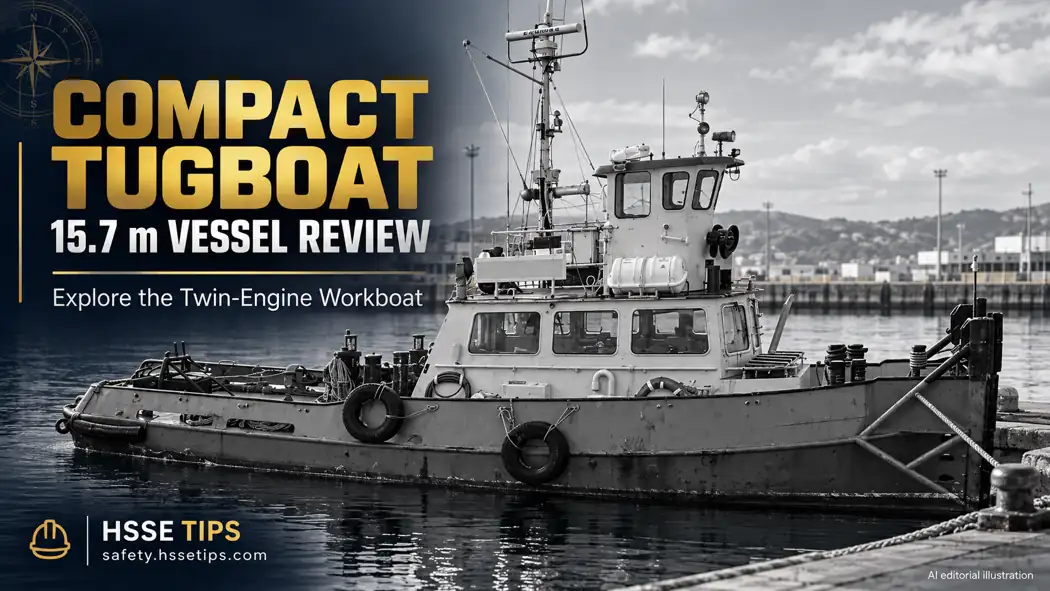
Bring the job into focus before you bring a tug into your fleet. The tow, working area, crew and deck equipment all belong in the same purchasing conversation. This compact vessel offers a defined set of seller-listed particulars to explore against that brief.
Advertised as “Tub boat / Schlepper” by Bosch Baumaschinen, the offer combines twin diesel propulsion with towing equipment and crew accommodation. The German word Schlepper means tug in this context; use the seller’s reference ID2241 when making an enquiry.
Review method: desk-based assessment of Autoline XN24744 and Bosch Baumaschinen’s matching ID2241 page. We have not boarded, surveyed or operated the vessel. Published particulars are seller claims, including the dates attached to historical records. Separate classification-society material explains bollard-pull evidence.
The advertised vessel at a glance
| Seller / references | Bosch Baumaschinen GmbH / ID2241 / Autoline XN24744 |
|---|---|
| Listing location / price | Metten, Germany / price on request |
| Length / beam | 15.7 m / 4.90 m |
| Maximum aft draught | 2.30 m, as advertised |
| Listed main engines | Two Caterpillar 3408TA engines, rated by the English seller text at 365 bhp each |
| Propulsion arrangement | Two propellers in fixed nozzles |
| Seller-stated bollard pull | 11 tons; request the supporting test documentation |
| Towing equipment | Hydraulic towing winch and towing hook |
| Auxiliaries | Two Perkins sets, listed at 32 kW, 220/380 V, 50 Hz |
| Tank capacities | Fuel: 9 m³; fresh water: 2 m³ |
| Crew accommodation | Two bunk-bed cabins, sleeping four |
The marketplace year field is 1983; the seller description gives construction in Holland in 1982 and a rebuild in 2000. Ask for the vessel identity, build records and rebuild documentation to establish the applicable dates.
Why this tug is worth a focused enquiry
A compact vessel brief for harbour work
The dimensions provide an initial basis for discussing a berth, access route and working area. Send the supplier your intended operating location, water-depth information and the task you want the vessel to perform.
For a towage enquiry, describe the object to be moved, its dimensions, loading and connection arrangements. Include the expected working distances and environmental conditions. Have a competent marine professional assess the vessel and the proposed operation together.
That approach makes the enquiry specific. Instead of asking whether a tug is “powerful enough,” you can request the performance evidence, equipment ratings and authorised operating scope relevant to your job.
Twin-engine propulsion with a defined equipment discussion
The engine and propeller particulars give the machinery specialist a useful starting point. Request identification plates, transmission and steering details, service records and current running hours for each engine.
Agree an inspection and demonstration that covers the applicable propulsion and steering functions. Ask the surveyor to define the scope and conditions, and include the results in the handover record.
Towing equipment to assess as a complete system
Ask for the winch and hook identification, ratings, maintenance records and applicable instructions. Have a competent specialist assess the arrangements, foundations, controls and any release functions fitted to the vessel.
The stated pulling figure should be supported by the relevant test evidence. Tasneef’s bollard-pull rules explain a controlled measurement and resulting statement. Use that as general technical context, then ask your surveyor what evidence is appropriate for this tug and proposed service.
Onboard power, accommodation and the operating routine
For the auxiliary sets, request the installed ratings, service history and electrical-system information. Have a qualified specialist compare the available supply with the loads required by your planned operation.
For the accommodation, ask for current interior photos and a viewing. Discuss the intended crew arrangement, facilities and familiarisation needs with the operator and relevant authority. The listed sleeping spaces are a starting point for that conversation, not a statement of approved manning.
Include the operating profile in your brief: working periods, berth arrangements, replenishment and maintenance access. Ask the supplier for the information needed to develop a practical handover and support plan.
Read the dated particulars as service history
The seller describes fewer than 9,000 engine hours as of September 2020 and a June 2020 dry-docking. Its reported work includes propeller and shaft servicing, engine exhaust and fire-line work, fenders, a bilge pump, electrical-cabinet checks and hull preparation and painting.
Request the underlying work records, survey reports and subsequent maintenance history, together with dated current readings. Have a marine surveyor assess the vessel as it stands today and identify the appropriate inspections and tests for the planned purchase.
Confirm today’s certificate and operating scope
The description refers to harbour service and operations within 20 nautical miles of a safe haven. It quotes a trade-certificate validity date of 9 July 2025, with annual inspections.
Request the latest certificate, endorsements and survey status, and have the issuing authority confirm the currently authorised service and operating area. The published date is a historical reference; the present position needs current documents.
For the intended work, include towing equipment, stability information, navigation and communications, fire and bilge systems, lifesaving appliances and crew arrangements in the agreed assessment. Let the surveyor and relevant authority define the applicable requirements.
Actual photograph and video availability
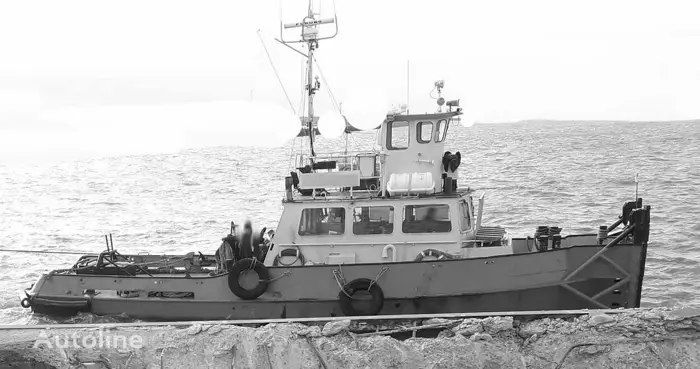
The image above is the single seller photograph available in the reviewed listing. It shows the vessel’s general profile, superstructure, working decks and fenders.
No verified vessel-specific video was located in the reviewed sources. Request a dated walkaround covering the vessel identifier, decks, wheelhouse, accommodation and machinery spaces. Arrange any machinery demonstration or trial through competent personnel and the relevant parties.
OPEN THE LISTING AND REQUEST CURRENT PHOTOS & VIDEO →
Request a quotation for your intended operation
Ask the seller to confirm availability, the exact vessel identity and viewing berth. The listed seller location is a contact reference; obtain the physical inspection and collection details before arranging attendance.
Request a written inventory of supplied equipment, records, manuals, spares and loose items. Agree inspection access, preparation, handover responsibilities and commercial terms. If relocation is required, have competent maritime specialists plan it using current vessel information and the necessary approvals and insurance arrangements.
Our view: a defined starting point for a workboat purchase
This offer gives prospective tug buyers a published machinery and towing-equipment package to explore. Its practical value for your operation will become clearer when those particulars are connected with a current survey, document review and task-specific assessment.
Start with a precise operating brief and request a proposal tied to the identified vessel. That creates a useful basis for deciding how the tug could fit your fleet following the appropriate checks and approvals.
Frequently asked questions
What information helps the seller respond?
Your intended task, tow details, operating area, desired handover location and preferred inspection arrangements. Include both seller and marketplace references.
How should towing capability be assessed?
Have a competent marine professional review documented performance, the equipment and stability information, and the proposed operation together.
What should the final proposal identify?
The exact vessel, current documents, included equipment, agreed inspection and demonstration, preparation, handover and delivery responsibilities.
Sources and editorial information
- Autoline XN24744 — linked seller offer and photograph.
- Bosch Baumaschinen ID2241: Tug boat / Schlepper — matching vessel particulars and dated service/certificate descriptions.
- Tasneef bollard-pull certification rules — general technical reference, not certification of this vessel.
Reviewed 15 October 2026. Confirm current availability, particulars, price and terms directly with the seller. This review adds original enquiry and survey-planning guidance from published material without claiming hands-on inspection or current operating approval.
Explore more vessel and equipment reviews →
HSSE TIPS — Worksite Safety Hub
Every Task. Every Person. Home Safe.
Your experience matters
Share your thoughts on this page
Have a question, a useful experience or a suggestion? Add your input below.
Comments are public. Keep them respectful and relevant. Do not share contact details, confidential information or emergency reports.
Comments on this page
Loading comments…