Product Reviews · Dredging & Marine Equipment · 6 min read
Transea Split Barge Review: Capacity and Planning for Dredging Projects
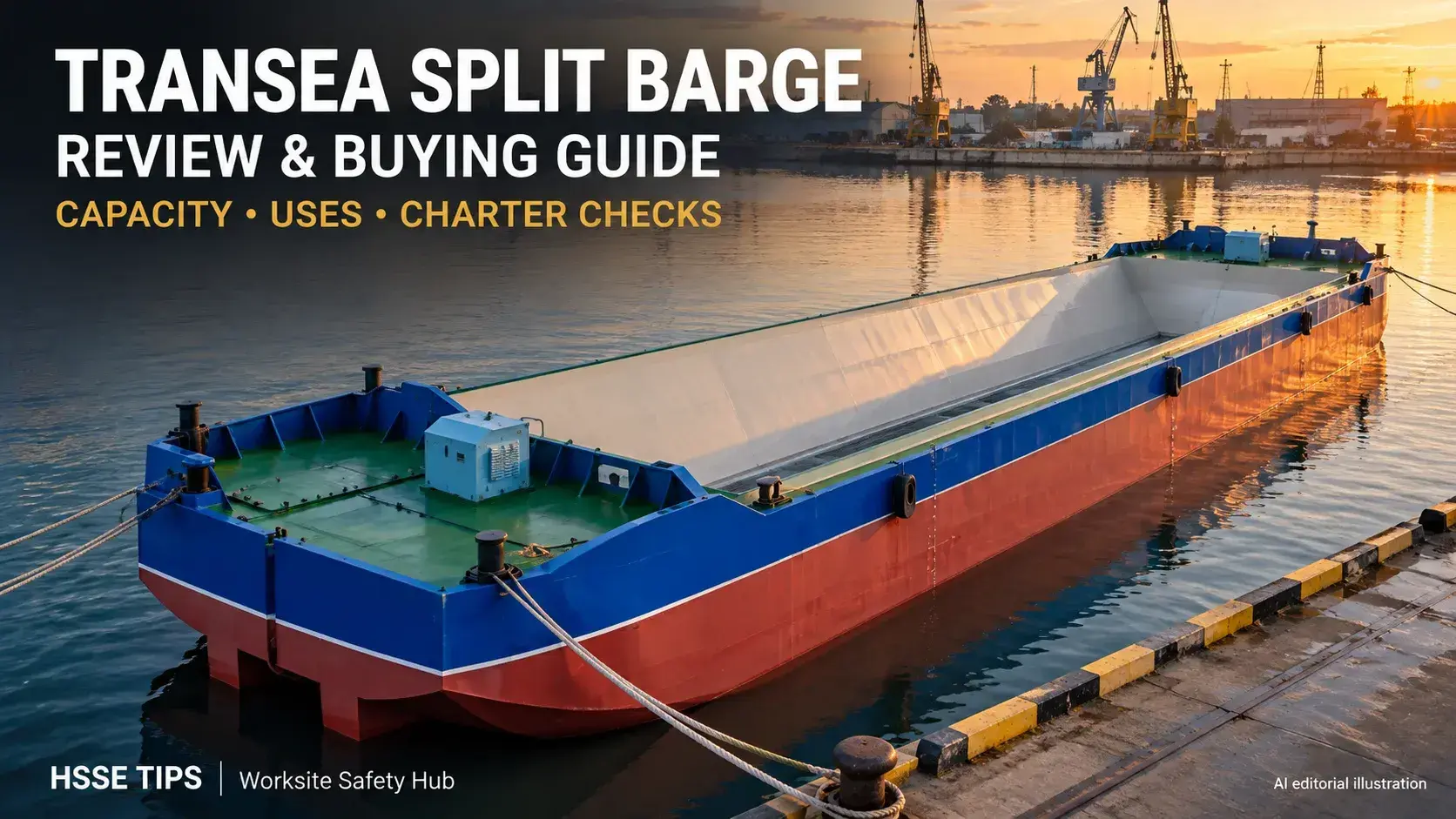
A dredging project needs more than a place to put the material. It needs a complete loading, transport and discharge plan. This Transea split-barge offer gives marine contractors a specific vessel to discuss around that work cycle.
The advertised 600 m³ hopper and 1,100-tonne capacity provide a starting point for a project enquiry. Match the confirmed vessel limits to your material, route and authorised discharge arrangement before deciding on purchase or charter.
Review method: a desk-based assessment of the Autoline offer and supplied images, Hatz engine information and separate split-barge technical references. We have not boarded, operated or independently surveyed the vessel. Seller descriptions, specification-image entries and manufacturer references are identified separately.
Transea split-barge offer at a glance
| Advertised vessel | Transea split barge / 2023 |
|---|---|
| Seller-described condition | New and unused; confirm delivery and commissioning records |
| Commercial offer | Sale or charter / price on request |
| Seller-listed capacity | 1,100 metric tonnes and 600 m³; confirm loading conditions and approved limits |
| Seller-sheet dimensions | Length 51.0 m / breadth 10.0 m / depth 3.90 m / draught 3.10 m |
| Seller-sheet control description | Unmanned remote-control split barge; confirm fitted system and operating arrangements |
| Seller-described power pack | Hatz 4H50TICD / Stage V; supplied sheet shows 55 kW |
| Seller-stated vessel area | East Mediterranean; confirm exact port and inspection access |
| Broker / office | Automor, contact Mortrans-Bolid / Frankfurt am Main, Germany |
| Offer reference | Autoline FE44173 |
Use approved drawings and loading documentation for mobilisation planning. The dimensions above come from the supplied specification image. Ask the broker to confirm the delivery port and vessel identity before arranging a survey or quotation.
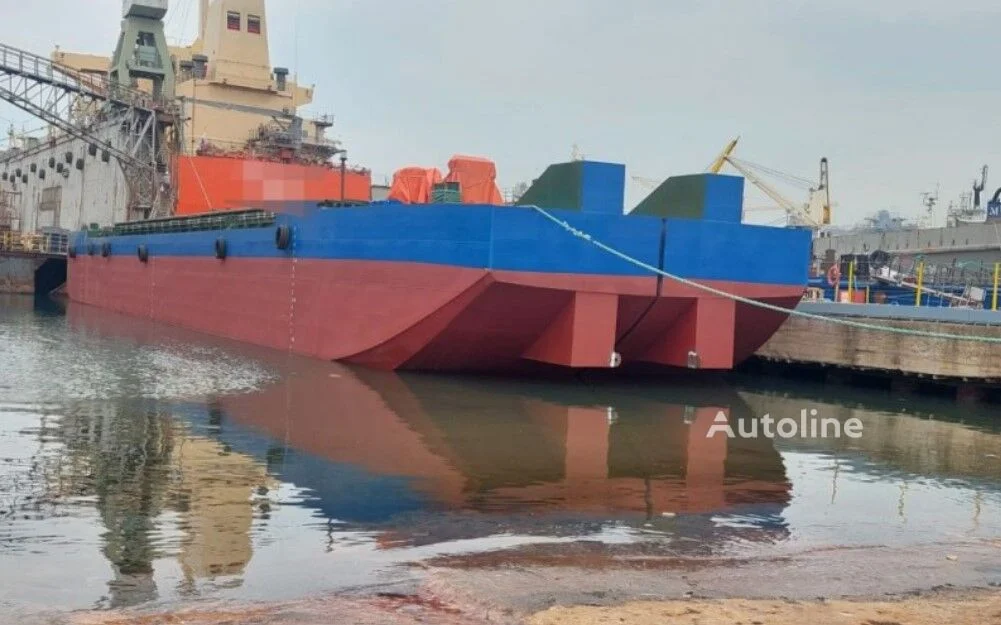
How does a split hopper barge work?
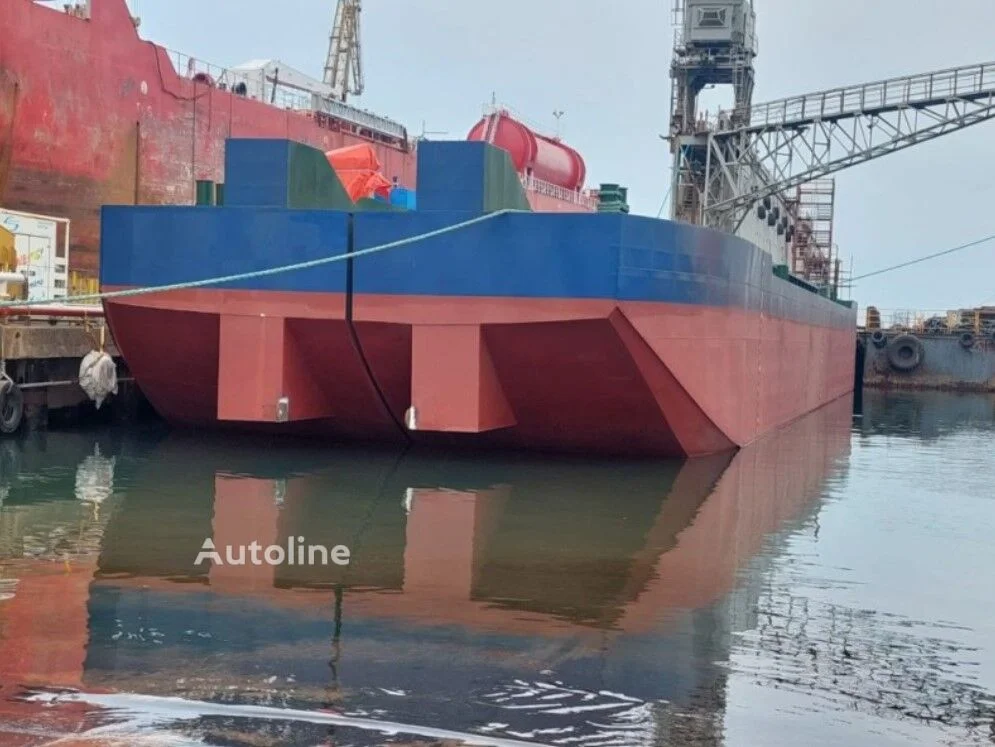
Shipbuilder GANZ Danubius describes the general principle as a vessel with two longitudinal hull halves connected by hinges and operated by hydraulic cylinders. Opening the hull allows the carried material to discharge; the halves then close for the next cycle.
That explains the equipment category, rather than certifying the mechanism, limits or approvals of this Transea offer. Request its hydraulic drawings, operating manual, control description and acceptance-test records.
For a contractor using a grab dredger or excavator, the practical question is how the receiving hopper, loading rate, transport route and discharge point work together. Ask for the details needed to develop that complete cycle.
Capacity: compare volume and material mass separately
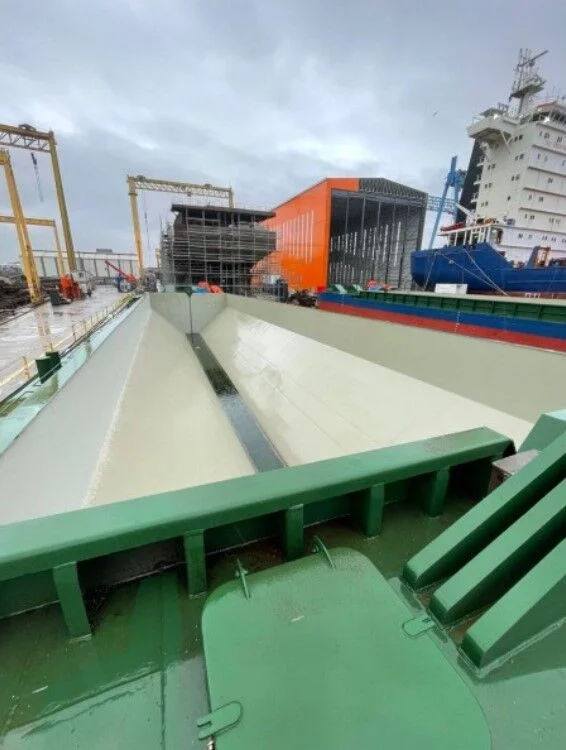
Hopper volume describes space. Cargo mass depends on what fills that space. Wet sand, silt and other dredged material can differ in density and behaviour, so volume alone does not establish an allowable load.
Provide the broker with your material description and representative density. Request the approved loading conditions, allowable cargo, draughts, freeboard and stability information for the exact vessel. Ask a competent marine specialist to assess them against the intended operation.
A useful planning brief also identifies the loading equipment, receiving height, hopper opening dimensions, water depth and transport distance. Include the conditions at the loading and discharge areas, rather than considering the vessel in isolation.
Hatz power pack: a defined component for your enquiry
The supplied sheet identifies a Hatz hydraulic diesel power pack. Ask for the installed engine plate, duty rating, hydraulic pump specification and service documentation. Hydraulic power-pack information should not be treated as a propulsion specification.
Hatz’s own H-Series page describes the 4H50TICD as a water-cooled, four-cylinder diesel engine with a 31.0–55.4 kW power range, diesel particulate filter, and EU Stage V and EPA Tier 4 final certification.
Those are engine-model reference details. Confirm the fitted engine, operating speed, rating and applicable emissions documents for this installation. The engine’s certification does not establish the barge’s class, flag acceptance or operating approval.
Remote control and hydraulic operation
The seller’s sheet describes remote control. Have the supplier explain where the operator controls the vessel systems, the required attendance and supervision, and the response to loss of communication or power.
Request documentation and demonstrations of the fitted emergency-stop arrangements, operating interlocks, hydraulic holding and closing functions, and any status indications. Confirm which are installed and how they are tested; the term “remote control” alone does not define the system.
For maintenance, obtain the applicable isolation and support procedures for the moving hull, hinges and hydraulics. A marine surveyor and competent personnel should assess access, condition and the handover requirements.
Watch a separate split-hopper working-principle reference
Watch Ken · New-Build Marine’s “How Split Hopper Barge Works”. This separate video provides general visual context. It is not a Transea vessel demonstration, condition verification or operating instruction. Request a current demonstration of the exact offered vessel and follow its applicable manuals.
Sale or charter: make the scope clear
The right commercial enquiry starts with the project duration and responsibilities. A purchase proposal should identify the vessel, documentation, survey access, handover scope and delivery arrangements. A charter proposal should define the charter form, dates, operating responsibilities and included services.
- Mobilisation: confirm present berth, delivery location, route, towing or pushing arrangements and who provides supporting vessels.
- Operation: define personnel, control arrangements, maintenance, fuel and inspection responsibilities.
- Commercial terms: request the price or hire rate, deposit/payment terms, insurance allocation and return or redelivery conditions.
- Project fit: agree the loading method, material, water depths, transit conditions and discharge arrangements.
Ask the broker to state whether the barge is propelled, towed or pushed, and provide the applicable supporting documentation. Include that answer in the mobilisation cost and schedule.
Read the supplied specification image
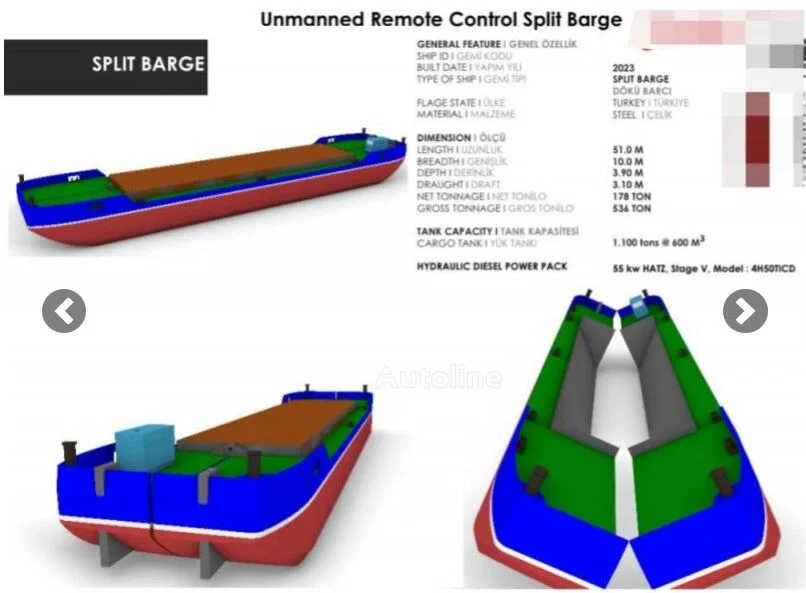
Request a readable original specification sheet, general arrangement and vessel identification records. For towing and mooring, obtain certified bollard ratings, structural details, equipment certificates and the approved arrangement. Use the signed documents for engineering decisions and calculations.
Plan environmental and operating permissions
Discharge planning belongs in the project brief. Confirm the material’s suitability, the permitted location and any monitoring or reporting requirements with the authorities responsible for the proposed work.
As a jurisdiction-specific example, the UK Marine Management Organisation’s sediment guidance explains how characterisation supports marine-licence applications for disposal at sea. Requirements depend on the project location; establish the applicable approvals with the relevant authority before mobilisation.
Buying and survey checks
- Identity and title: builder, hull identification, registration/flag records and ownership documents.
- Approved specification: general arrangement, capacity basis, loading/stability information, draught and freeboard limits.
- Condition: independent marine survey of hull, watertight spaces, hinges, hydraulics, machinery and fittings.
- Systems: fitted control and emergency arrangements, operating tests, engine records and applicable manuals.
- Mobilisation: tow/push requirements, certified mooring/towing equipment, route and weather limitations.
- Handover: survey access, acceptance scope, supporting documents, spares and complete sale/charter terms.
Our view
This offer brings together a defined split-barge format, exterior and hopper photographs, and a supplied specification image. It gives a marine contractor a useful starting point for discussing a complete material-handling cycle with the broker.
Connect the proposal to your loading method, material, route and authorised discharge plan. Confirm the approved vessel documentation and survey scope, then compare the complete purchase or charter package.
Frequently asked questions
Is a price published?
The reviewed offer is priced on request. Ask for purchase or charter terms matching your project and delivery location.
What documents should support the capacity?
Request approved loading conditions, stability information, allowable cargo and draught/freeboard limits for the identified vessel.
Does the power pack confirm propulsion?
No. Ask the broker to confirm the propulsion or towing/pushing arrangement separately.
Is the reference video the offered vessel?
No. It explains the equipment category; obtain a dated demonstration of the actual vessel from the broker.
Sources and editorial information
- Autoline seller offer — listing photographs, supplied specification and commercial description, reviewed 14 October 2026.
- Hatz H-Series engine information — component-model reference.
- GANZ Danubius split-barge principle — separate shipbuilder reference, not confirmation of the Transea builder or specification.
- MMO sediment-analysis guidance — jurisdiction-specific environmental planning context.
- Ken · New-Build Marine video — separate visual reference.
Confirm current availability, vessel documentation, condition and supplied terms directly with the broker.
Explore more equipment reviews
HSSE TIPS — Worksite Safety Hub
Every Task. Every Person. Home Safe.
Your experience matters
Share your thoughts on this page
Have a question, a useful experience or a suggestion? Add your input below.
Comments are public. Keep them respectful and relevant. Do not share contact details, confidential information or emergency reports.
Comments on this page
Loading comments…