HSSE TIPS · Product Reviews · Mining Safety / Emergency Response Vehicles
Toyota Mine Rescue Vehicle Review: Rescue Equipment, Specifications & Buying Guide
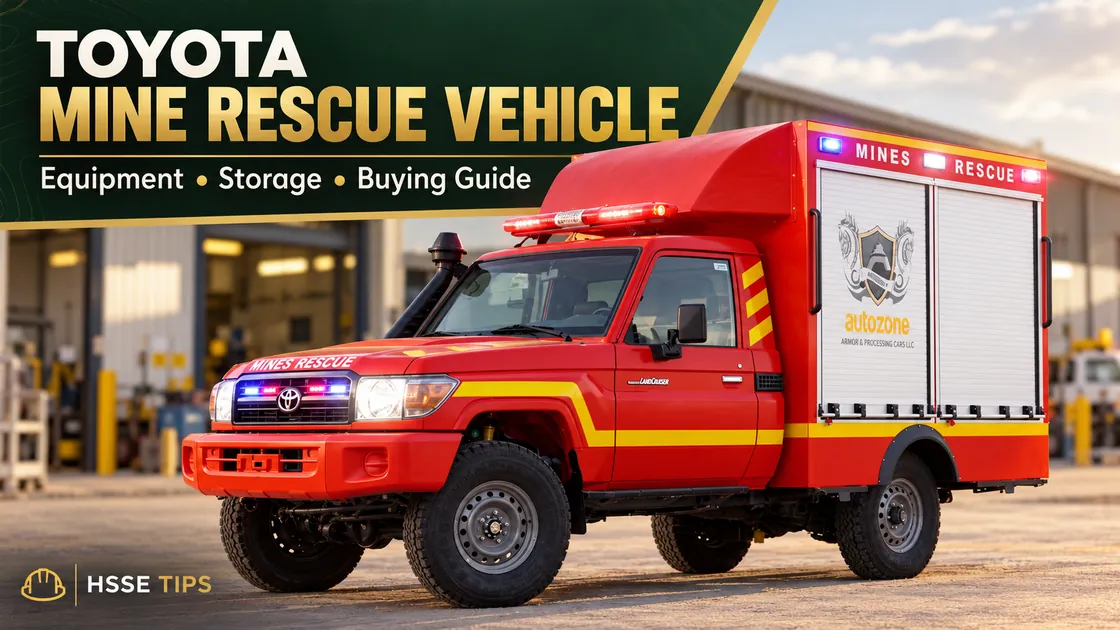
Introduction — Bringing Organized Rescue Support to the Mine Site
When a mine response team mobilizes, the vehicle carrying its equipment becomes part of a much larger system. Access to the site, organized storage, communications and compatibility with the team’s equipment all influence the purchasing specification.
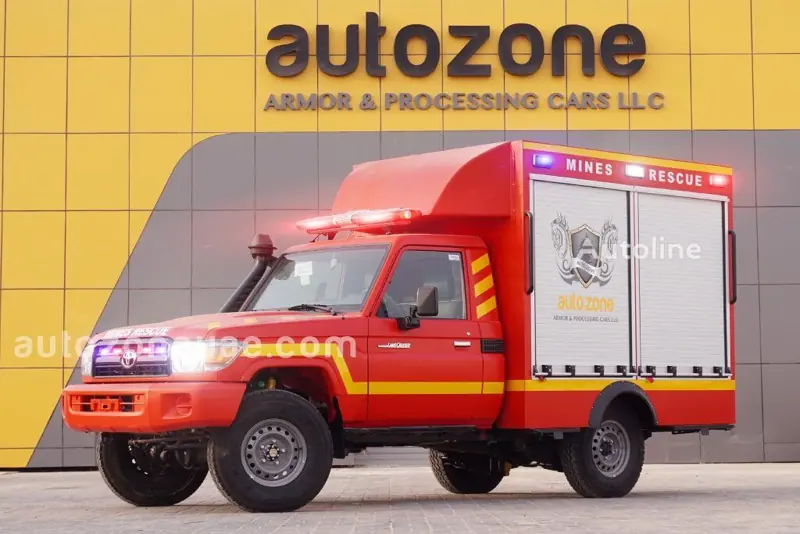
The Toyota Mine Rescue Vehicle is advertised as a Land Cruiser pickup-based conversion with a rear rescue body and equipment compartments. Its original gallery shows the red single-cab vehicle, rolling shutters, visibility markings and rear access arrangement. The published package also describes rescue and recovery accessories, with some items explicitly optional.
This review examines that proposal from a buyer’s perspective: what the sources describe, what the photographs show, and which documents are needed to establish the delivered configuration. It is procurement information for a planned response service, not instructions for conducting a mine rescue.
Affiliate Disclosure: Worksite Safety Hub may earn a commission if you make a qualifying purchase through links in this article. This does not change the price you pay.
EXPLORE THE TOYOTA MINE RESCUE VEHICLE
Toyota Mine Rescue Vehicle Overview
The supplied affiliate link resolves to Autoline GU41519. The corresponding Autozone UAE product page describes a Toyota-based mining rescue conversion. The emphasis is a rear body carrying tools and accessories, rather than a documented list of clinical systems.
Autoline categorizes the advertisement as an ambulance. That category does not independently establish an equipped patient compartment, approved stretcher transport or ambulance certification. Define whether the intended purchase is an equipment carrier, a casualty-handling support vehicle or another agreed configuration.
The sources were reviewed as published information, without a physical inspection, seller interview or equipment trial. Features described by the supplier remain distinct from contractual inclusions and independently established performance.
Toyota Platform and Chassis Identification
The converter summary identifies HZJ79, while the descriptive text refers to a Land Cruiser single-cab pickup. Before selecting technical figures, obtain the actual chassis number, model plate, production details and completed-vehicle records.
Toyota Gibraltar Stockholdings’ 70 Series brochure associates the HZJ79 family with a 1HZ 4.2-litre diesel. That supports a model-family reference; it does not identify the engine installed in the advertised rescue vehicle or resolve the conflicting seller text.
Ask the supplier to connect the quotation, chassis records, photographs and conversion drawing to one offered build. This allows the fleet team to obtain the correct service information and evaluate registration, parts support and operating requirements for the destination.
Engine, Transmission and Four-Wheel-Drive Configuration
The marketplace fields report a 4.2-litre diesel, and the converter summary also reports 4.2 litres. Detailed text in both sources includes a separate 4.5-litre V8 specification block. These descriptions should not be merged into a single confirmed specification.
Exact chassis and engine configuration require seller confirmation. Power and torque figures from the disputed block are therefore not adopted as established performance in this review. Request the engine identification and applicable Toyota documentation.
Manual transmission is advertised, with a five-speed description appearing in the detailed block. The converter summary lists four-wheel drive and left-hand drive. Reconcile these details with the actual vehicle; four-wheel drive is a configuration, not proof that every mine route or operating environment is suitable.
Rescue Body, Compartments and Equipment Access
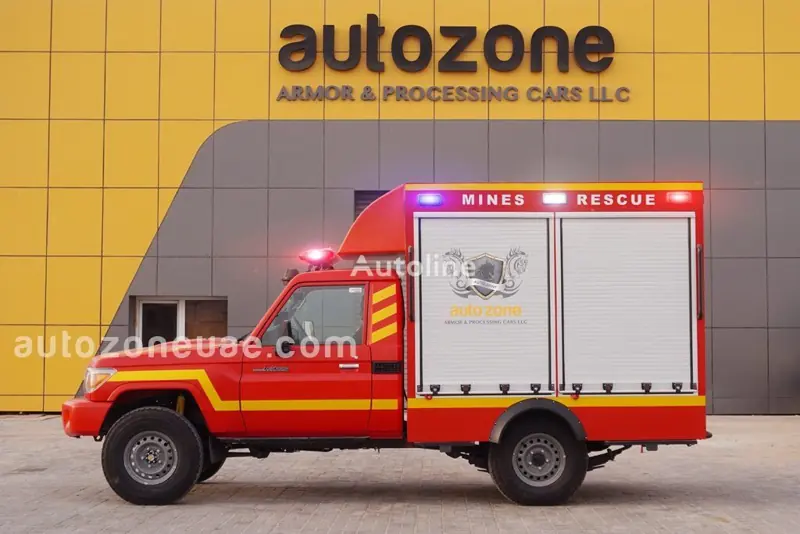
The gallery shows a tall rear body, side rolling shutters and rear access. The supplier describes aluminum construction and equipment brackets selected around the customer’s inventory. An agreed layout should show compartment sizes, working clearances and the position of each supplied item.
Consider how the team retrieves frequently used equipment, reaches heavier items and secures everything for travel. Ask for mounting specifications, shutter latches, service access and the completed weight distribution. Photographs of closed shutters cannot establish the internal inventory.
The source’s coating and insulation language does not establish a tested fire-resistant body, structural protection rating or environmental ingress rating. Where those characteristics are part of the specification, request documentation covering the proposed materials and installation.
Winch and Recovery Equipment
A winch and recovery kit appear in the advertised accessory list. Their exact models, ratings, attachments and contents need an itemized schedule. Do not assume that every recovery accessory is included under a broad kit description.
Review the winch installation, mounting evidence, electrical demand and compatibility of the supplied components. Define the intended recovery tasks with competent personnel and obtain the applicable manuals and inspection requirements.
Vehicle recovery and lifting people are different applications. The presence of a winch does not establish personnel-lifting capability. Keep procurement acceptance focused on documented intended use, suitable accessories, training and integration with the organization’s procedures.
Stretchers and Rescue Accessories
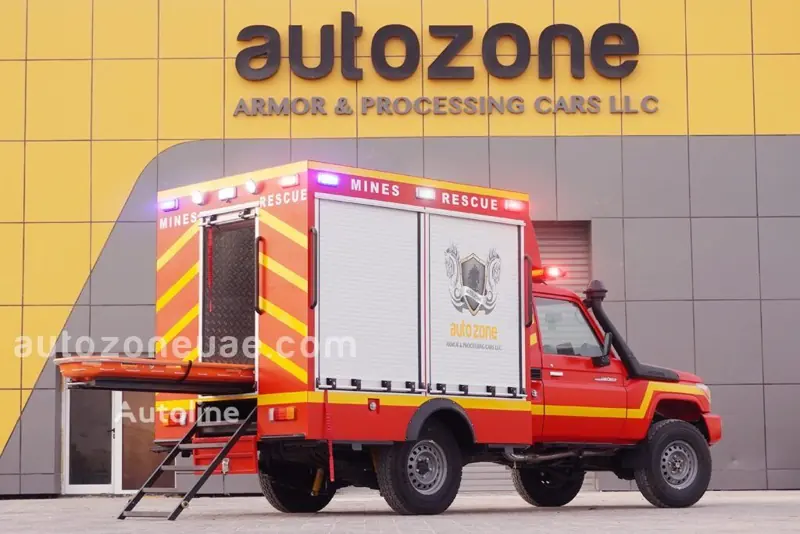
The published list includes a basket stretcher and other rescue accessories. A rear gallery view shows an orange basket-style carrier on an external support, together with a deployed step or ladder arrangement. Device identity and the supplied package still require documentation.
Confirm the stretcher’s manufacturer, model, accessories, intended use and accepted storage or restraint arrangement. A carried stretcher does not establish an approved patient position while the vehicle is moving, or the facilities of a clinical ambulance.
The rear ladder should also have a defined purpose, permitted loading, securing arrangement and inspection procedure. Its appearance does not demonstrate underground access capability. Match access and handling arrangements to the agreed work rather than interpreting promotional wording as a complete operating plan.
Breathing Apparatus, Gas Detection and Optional Equipment
The accessory list explicitly identifies breathing apparatus as optional and allows customer choice. Confirm whether it is included in the proposed quotation, together with quantities, storage, accessories, inspection status and service arrangements. Do not assume a particular apparatus type or operating duration.
The general description discusses gas monitors and radar, but does not establish an itemized supply of those devices. Ask for the actual equipment schedule, manufacturer documentation and compatibility with the response organization’s requirements.
Likewise, fire extinguishers and portable lighting require confirmed types, quantities, ratings and maintenance provisions. Water tanks, firefighting pumps, foam systems, hydraulic rescue tools, oxygen systems and other medical devices should only be treated as included when documented in the accepted offer.
DISCOVER THE RESCUE EQUIPMENT & STORAGE
Lighting, Communications and Auxiliary Power
The original photographs show exterior lights and high-visibility markings. The supplier also lists an auxiliary battery, light bar, public-address system and portable light. Their published names do not establish electrical output, operating endurance or communications compatibility.
Prepare an electrical load schedule for the accepted equipment. Confirm battery capacity, charging, isolation, protective devices and the approved connection arrangement. Include maintenance access and the effects of accessory loads in commissioning.
A PA system does not establish two-way radio coverage or compatibility with the mine’s network. Define the required communications separately, including the intended operating locations and verification process. Fitment of warning lights does not itself establish permission to use them on public roads.
Suspension, Braking and Vehicle Loading
The seller describes suspension and brake-related upgrades. Obtain the modification schedule, installation records and applicable ratings. An upgraded component should not be interpreted as an automatic increase in approved gross vehicle weight or payload.
Ask for the completed vehicle’s weight and axle loads, then account for equipment, batteries, accessories, fuel and people. Check the effect of the rescue body and stored equipment on the operating configuration and transport requirements.
The advertised two-seat field concerns seating; it is not a patient or rescue-team capacity figure. Confirm the actual approved positions and restraints. Do not infer that people may travel inside equipment compartments or on external platforms.
Technical Specifications and Equipment Tables
These tables separate published information from the documentation needed for purchasing. Unresolved variant-dependent figures remain unconfirmed rather than being presented as a single definitive specification.
Vehicle and Conversion Specifications
| Specification | Published Information | Buyer Confirmation Needed |
|---|---|---|
| Platform | Land Cruiser single-cab pickup described; HZJ79 in converter summary | VIN, model plate, year and completed-vehicle records |
| Engine | 4.2-litre diesel fields conflict with a 4.5-litre V8 text block | Actual engine identification; matching power and torque data |
| Transmission and drive | Manual advertised; converter lists 4WD and LHD | Gearbox and drivetrain applicable to the offered chassis |
| Dimensions | Detailed block gives 5,235 × 1,770 × 1,960 mm | Whether figures cover the base vehicle or completed rescue body |
| Vehicle fuel tank | 130 litres advertised | Actual tank configuration; not a rescue-equipment endurance figure |
| Crew seating | Two seats advertised | Approved seating and restraints; no patient capacity established |
| Body and storage | Rescue box and shutter compartments described and photographed | Drawings, materials, brackets, latches and load distribution |
| Weights and payload | Not specified in the information reviewed. | Completed weight, axle loads and remaining payload |
| Protection and approval | ROPS/FOPS discussed; installation evidence not established | Specific engineering, test and mine-acceptance records |
Rescue Equipment and Accessories
| Equipment | Evidence Status | Procurement Relevance |
|---|---|---|
| Winch and recovery kit | Advertiser-listed; detailed package not established | Confirm intended use, ratings, mounting and contents |
| Basket stretcher | Advertised; orange carrier visible in rear view | Confirm model, accessories, restraints and permitted transport arrangement |
| Breathing apparatus | Explicitly optional in the accessory list | Specify type, quantities, inspection and service support |
| Gas monitors and radar | Discussed generally; itemized inclusion not established | Obtain actual device identities and documentation |
| Work lights and reflective markings | Advertised; exterior features visible | Confirm installed layout, electrical demand and site requirements |
| Auxiliary battery and PA system | Advertiser-listed; ratings unspecified | Define power and communications integration |
| Fire extinguishers and portable light | Advertiser-listed without a complete schedule | Agree models, ratings, quantities and inspection requirements |
| Side bars and steps | Explicitly optional in the source list | Confirm which access accessories form part of the quotation |
VIEW CURRENT PRICE & AVAILABILITY
Mining and Industrial Response Applications
Potential applications include surface-mine response support, quarry fleets, industrial rescue-equipment transport and remote-site emergency logistics. Suitability depends on the accepted configuration, route assessment, trained personnel and the organization’s response arrangements.
Build the specification around the tasks assigned to the vehicle. An equipment carrier supporting a rescue team has different requirements from a vehicle authorized to transport a patient or operate in a particular underground environment.
Consider storage access, communications, crew deployment, maintenance coverage and connections with other response resources. The purchasing value is an agreed role within the mine’s system, rather than an assumption that one vehicle provides every rescue capability.
Mine-Site Acceptance and Safe Deployment
Obtain acceptance for the proposed vehicle and operating locations through the mine’s applicable process. Assess clearances, gradients, braking, ground conditions, traffic interfaces, visibility and safe parking. Treat surface and underground requirements separately.
Diesel power, four-wheel drive and mine-rescue branding do not establish hazardous-atmosphere suitability or underground entry approval. Where underground use is proposed, qualified personnel must assess ventilation, emissions, fire protection, atmospheric hazards, communications and applicable authorization.
The description mentions rollover and falling-object protection. Confirm whether protective structures are supplied and obtain evidence for the specific installation; general statements about their importance are not certification. Mine rescue wording also does not establish ballistic or landmine protection.
NSW Resources guidance provides a useful example of risk-based mobile-plant assessment, with separate guidance scopes for different mine environments. It is jurisdiction-specific context, not a universal approval checklist or evidence that this vehicle complies. This review does not provide entry procedures, rescue tactics or clinical instructions.
Maintenance, Training and Commissioning
Agree servicing responsibilities for both the Toyota chassis and the conversion. Request parts information, maintenance instructions and inspection schedules for shutters, mounts, electrical systems and supplied rescue accessories.
Commission the completed vehicle against a written inventory and acceptance plan. Demonstrate equipment access, securing, electrical functions and the approved handling arrangements with competent staff. Training should match the actual supplied equipment and the role assigned to the vehicle.
Confirm who supports the chassis, conversion and specialist devices at the destination. Record warranty coverage, spare-parts arrangements, technical assistance and the process for reporting defects. These details help the buyer plan readiness and ongoing support without assuming that every service is included in the purchase price.
Current Seller Offer — Verified 27 October 2026
Verification scope: Published information and the exact advertiser gallery were checked on this date. This does not establish inspected condition, ready stock, operational readiness, ambulance certification or mine-site approval.
Advertised product: Toyota Mine Rescue Vehicle (MRV), Autoline GU41519.
Converter: Autozone UAE.
Exact chassis and engine: Require confirmation because the published engine descriptions conflict.
Year and mileage: Not specified in the information reviewed.
Condition: Advertised as new.
Asking price: On request.
Product Location: Ajman, United Arab Emirates.
Offered equipment: Advertiser-described rescue conversion and accessories; itemized contractual package required. Breathing apparatus and certain access accessories are listed as optional.
Stock or production status and lead time: Not confirmed.
Warranty, commissioning, training and destination after-sales arrangements: Not specified for this vehicle in the information reviewed.
The converter makes a general worldwide-export statement. It does not establish vehicle-specific destinations, freight charges, collection arrangements, insurance, customs responsibilities or Incoterms for GU41519.
Delivery destinations, shipping arrangements, and applicable transport terms were not specified in the information reviewed. Prospective buyers should confirm these details directly with the seller.
CHECK SHIPPING & EXPORT OPTIONS
What Buyers Should Confirm Before Purchasing
Start with the vehicle’s intended role, operating locations and required equipment. Request a quotation tied to an identified chassis and conversion, supported by drawings, a signed inventory and clearly priced options.
Resolve the engine discrepancy before adopting performance figures or selecting service parts. Confirm completed dimensions, weights, load limits, approved seats and the evidence for any proposed protective structures. Review equipment ratings, access, restraints and utility demands together.
Agree inspection and commissioning criteria, training, destination documentation, registration and import responsibilities. Record freight terms, insurance, unloading, warranty and support arrangements. Comparing complete, documented packages helps buyers assess practical fit and prepare the mine’s acceptance process.
Frequently Asked Questions
What is the vehicle intended to support?
It is advertised as a Toyota-based mine rescue conversion carrying equipment and accessories. The accepted role depends on the final build and the mine’s response arrangements.
Which engine and chassis does it use?
The sources conflict between 4.2-litre/HZJ79 information and a 4.5-litre V8 text block. Obtain the actual chassis and engine identification before adopting specifications.
Is it a clinically equipped ambulance?
The marketplace category does not establish clinical equipment, an approved patient compartment or stretcher transport. Request the actual configuration and authorization records.
Is a winch included?
A winch is advertiser-listed. Confirm its model, rating, installation, accessories and contractual inclusion in the exact quoted build.
Does the basket stretcher establish patient capacity?
No approved patient-transport capacity was established. Confirm the stretcher, restraints, permitted use and any completed vehicle transport approval separately.
Is breathing apparatus standard?
It is listed as optional for client selection. Specify the equipment type, quantity, accessories, inspection and service requirements in the offer.
Are gas detectors and radios included?
General source wording does not establish an itemized gas-detection or radio package. Request exact devices, documentation and compatibility checks.
Are ROPS and FOPS certified?
The sources discuss these protections, but installation-specific engineering and test evidence were not established in this review. Obtain the relevant documents.
Can it operate underground?
No underground operating approval was established. Proposed use requires the mine’s assessment, applicable authorization and configuration-specific acceptance.
What power backup and training are supplied?
Auxiliary battery capacity, endurance and a defined training package were not established. Agree electrical loads, commissioning and support responsibilities.
What are its price, location and delivery arrangements?
At the published-information check, price was on request and the listed product location was Ajman, United Arab Emirates. Availability and vehicle-specific delivery terms require confirmation.
Final Verdict
The Toyota Mine Rescue Vehicle offers an advertiser-described approach to carrying rescue equipment on a single-cab Land Cruiser platform. Its exterior gallery gives buyers useful views of the shuttered body, access arrangement and visibility features.
The procurement decision should bring chassis identification, equipment supply, restraints, protective documentation and mine-site acceptance into one specification. Resolve the engine details, agree the optional equipment and confirm destination support. That creates a defined rescue-support package the buyer’s team can assess against its actual role.
Sources and Editorial Method
Sources checked on 27 October 2026 include Autoline GU41519, reached through the publisher’s affiliate link, and the Autozone UAE Mine Rescue Vehicle page. Original gallery photographs were inspected and reproduced under the publisher’s recorded permission, with watermarks retained. No product-specific advertiser video was identified in the reviewed sources. No physical inspection, seller contact, equipment trial or certification review was performed.
Model-family context: Toyota Gibraltar Stockholdings 70 Series brochure. Planning context: NSW Resources MDG15 mobile-plant guidance, excluding underground coal mines and NSW Resources mobile-plant fire guidance. These sources do not identify, approve or certify this offered build. The featured image is separately captioned generated editorial artwork.
Browse our Product Reviews for related equipment procurement guides and HSSE articles for work-planning topics. Specifications and equipment from other reviews should not be transferred to this vehicle.
Join the Conversation
Which requirement would your mine rescue team prioritize—equipment access, vehicle configuration, communications or recovery capability? Share your procurement priorities and professional experiences in the comments below. Please do not include identifiable casualty information or sensitive emergency-response plans.
Your experience matters
Share your thoughts on this page
Have a question, a useful experience or a suggestion? Add your input below.
Comments are public. Keep them respectful and relevant. Do not share contact details, confidential information or emergency reports.
Comments on this page
Loading comments…