Product Reviews · Safety footwear · 7 min read
SPIEZ Nimbus Geneva 390 Review: Oil-Resistant Slip-On Safety Shoe for Work?
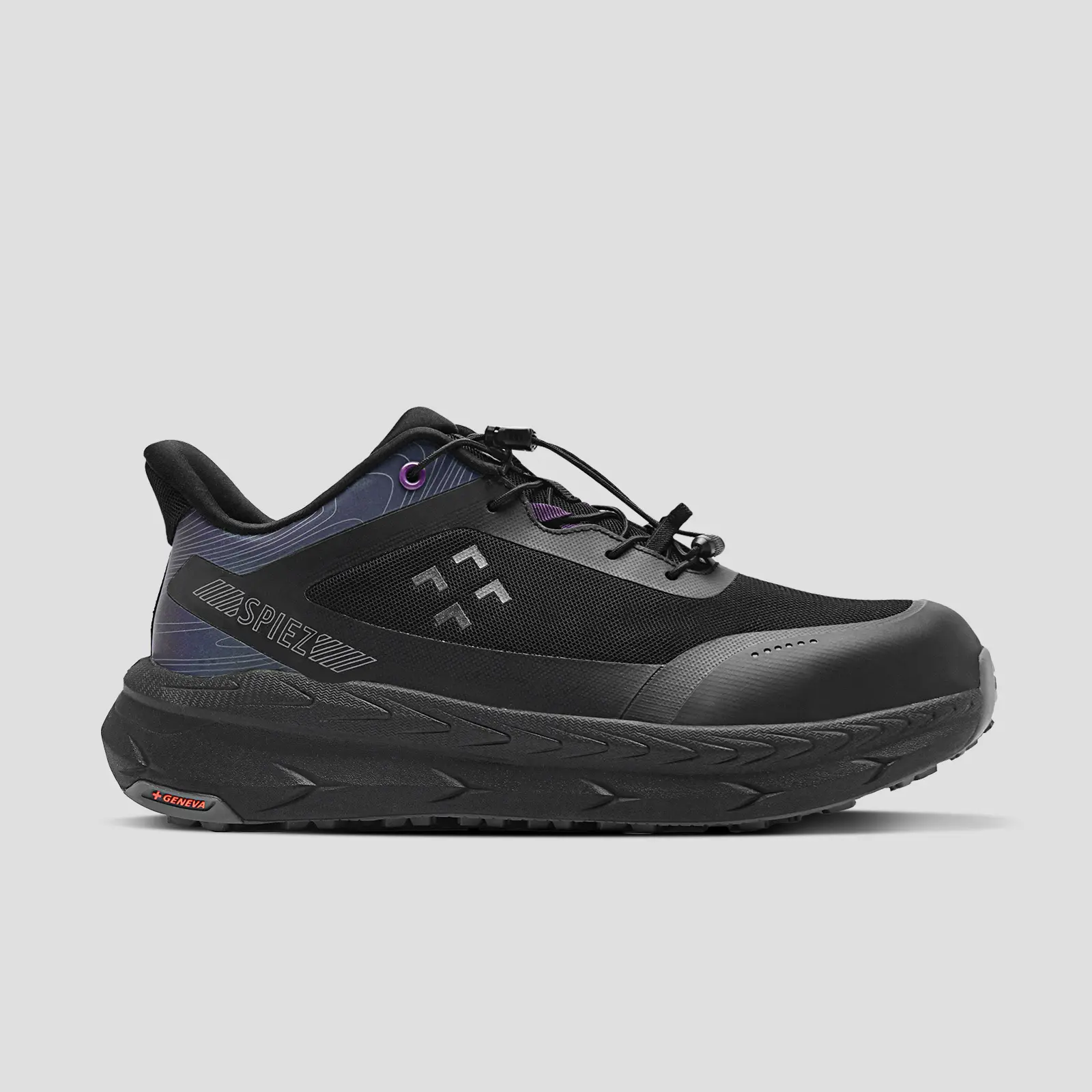
The all-black 390 pairs a reinforced mesh and TPU upper with a composite-toe claim, laceless entry and an oil-resistant outsole. That is an appealing specification for active work, provided its exact protection rating matches the job.
Quick verdict
The Nimbus Geneva 390 is a credible candidate for people seeking a low-cut, breathable safety shoe for dry indoor work and routine movement on floors where oil exposure is possible. The strengthened-looking upper and grippy sole set it apart from a plain casual trainer. Still, the manufacturer's product page does not identify the exact EN ISO 20345 or ASTM F2413 classification, slip-test result or puncture rating for the selected pair. Do not approve it as worksite PPE on appearance or marketing language alone. We have not worn or lab-tested this model.
The 390's design at a glance
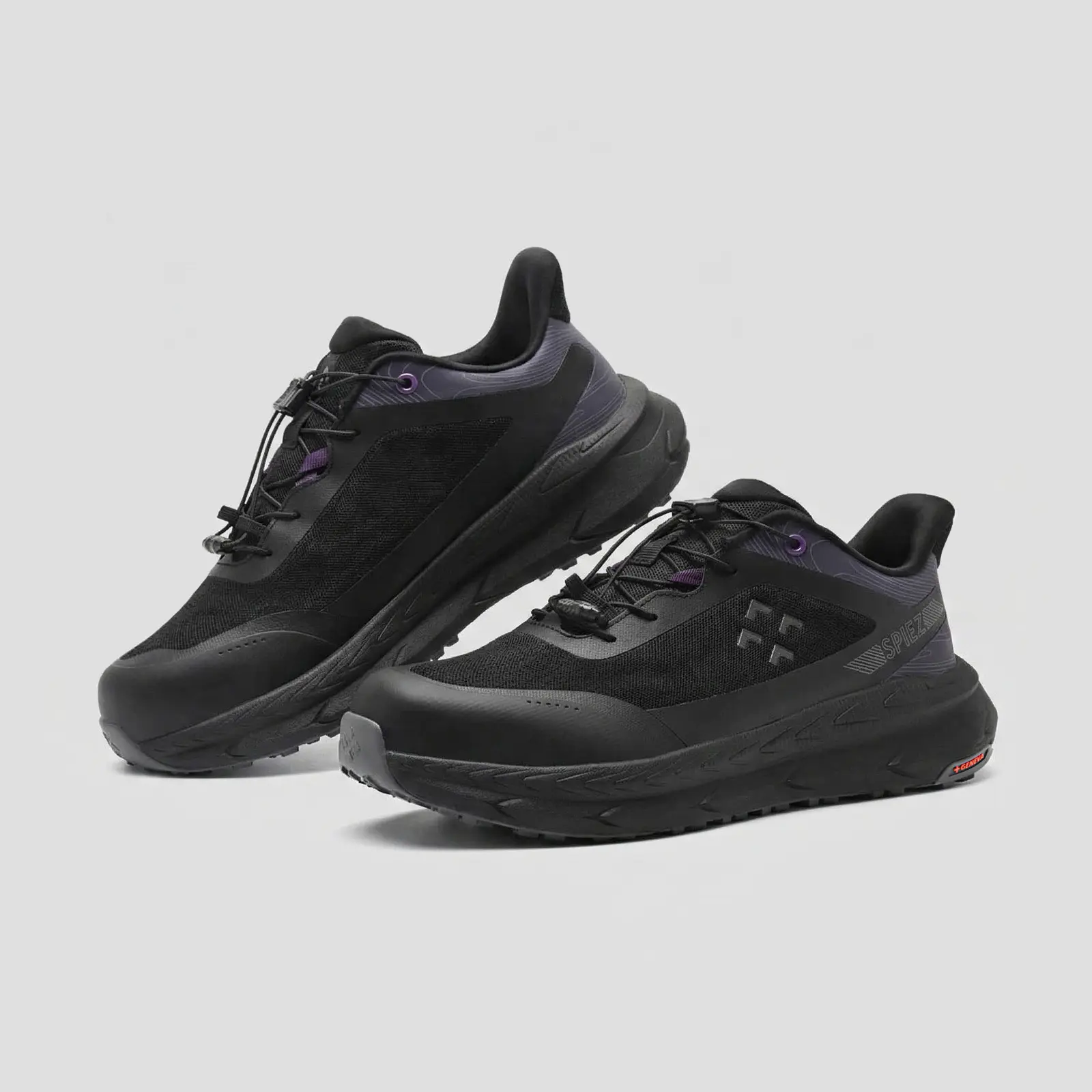
SPIEZ specifies a “Renton Shield PC” composite toe, abrasion-resistant mesh with reinforced TPU, an elastic slip-on collar and a cushioned MD sole. The listing shows a black men's model in several US sizes. Its promotional copy calls the outsole oil and slip resistant and says its ventilation reduces heat build-up compared with leather, but provides no test method or comparative data on the product page for that percentage claim.
What the upper and slip-on fit may offer
The mesh panels should allow more airflow than an impermeable leather upper, while TPU overlays appear positioned to support high-wear areas. This combination may suit workers who spend much of a shift walking or standing. Breathable mesh, however, is not a water barrier or chemical splash shield, and the low cut offers little coverage above the ankle.
A slip-on is only useful if the foot stays seated. Try the shoe with work socks: walk briskly, turn, crouch and climb a step. Check heel lift, toe-cap pressure, rubbing at the collar and whether the outsole remains stable on turns. A pair that slips at the heel should not be accepted merely because the length is correct.

Oil resistance is not a slip guarantee
SPIEZ says the outsole compound resists oil and improves grip on oily or slippery surfaces. Oil resistance generally describes how a sole material responds to oil; slip resistance is a separate measured performance question. The photographed tread looks substantial, but no tread image can tell us how the shoe performs on a particular contaminated floor.
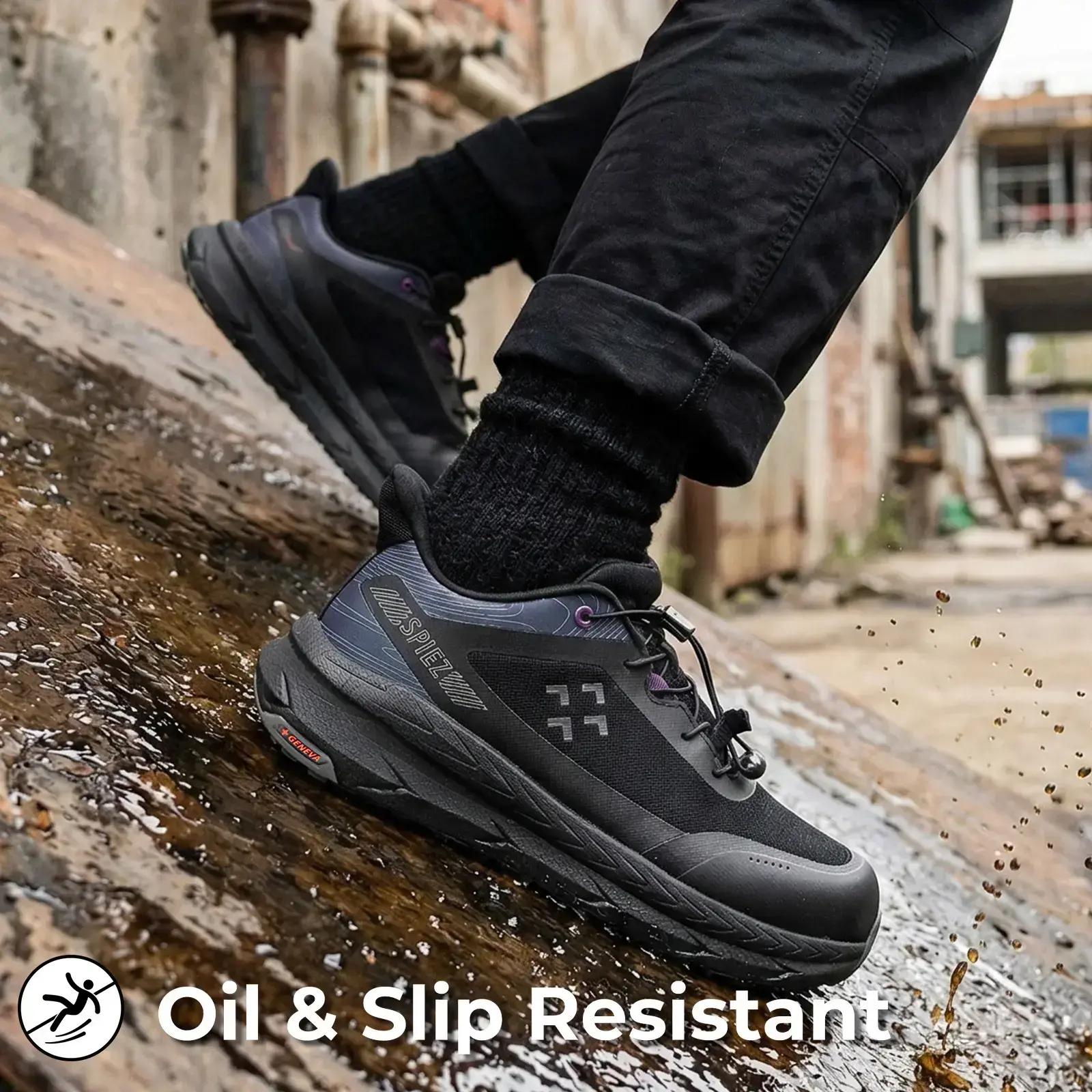
For a site with cutting fluids, grease or wet tiles, ask for a test report relevant to those conditions and compare it with the site footwear specification. Spill prevention, cleaning and floor design remain essential controls.
The protection details to verify
The composite-toe description is a feature claim. The product page reviewed does not state its exact impact/compression classification, puncture-resistant insert, electrical-hazard or antistatic rating, waterproof rating or heat-resistance marking. The site's category menus include these features for other shoes; they should not be read as specifications for the 390.
- Obtain the pair's label and model code, then match them to a declaration or test report for the required standard.
- Confirm underfoot puncture protection separately where nails, sharps or scrap are present.
- Check whether low-cut footwear is permitted; some sites require ankle-height boots and additional metatarsal coverage.
- Never assume a composite toe provides electrical protection. Use footwear specifically marked for the electrical task.
- Inspect upper abrasion, toe-cap position, tread wear and heel retention regularly. Retire damaged shoes under the workplace PPE procedure.
How it differs from the Nimbus Geneva 060C
We recently reviewed the Nimbus Geneva 060C. Both are marketed as low-cut composite-toe slip-ons, but the 390's page specifically describes reinforced TPU over mesh and an oil-resistant outsole. The 060C page emphasizes a lighter knit upper. That may steer a buyer toward the 390 where upper abrasion or oil exposure matters; neither model should be selected without its exact footwear rating and a fit check. The manufacturer does not give directly comparable independent performance data for the two.
Who should consider it?
Subject to documented certification and employer approval, the 390 could suit indoor logistics, light manufacturing or maintenance teams seeking a low-profile shoe with a reinforced upper. It is a less obvious choice for deep mud, persistent standing water, hot work, sharp underfoot debris or sites requiring ankle protection unless the relevant requirements are documented for this exact model.
Before purchasing, check the live size and delivery options, measure both feet, and confirm return terms if the fit is wrong. For a team order, request sample pairs and approval from the person responsible for PPE selection.
How we reviewed it
Assessment dated 25 September 2026. We examined SPIEZ's 390 product page and four manufacturer-supplied photographs. The affiliate short link resolved to that product during our check. We did not independently wear or test the shoe, and could not verify a video of this exact model for inclusion. Prices, availability and regional options may change.
Your experience matters
Share your thoughts on this page
Have a question, a useful experience or a suggestion? Add your input below.
Comments are public. Keep them respectful and relevant. Do not share contact details, confidential information or emergency reports.
Comments on this page
Loading comments…