Product Reviews · Men's safety footwear · 8 min read
SPIEZ Nimbus Geneva 324 Review: Steel-Toe Chelsea Safety Boots
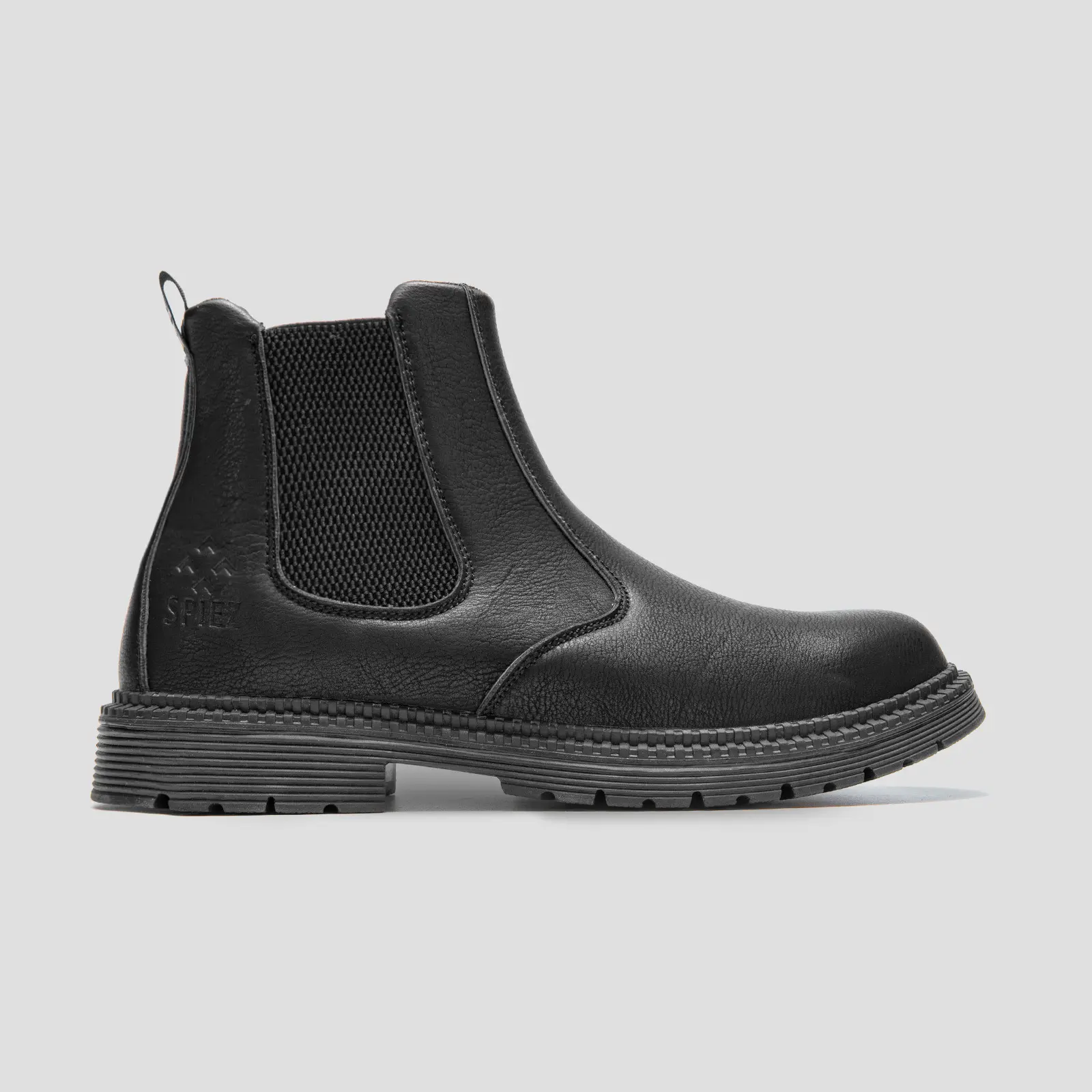
The Nimbus Geneva 324 combines a plain black Chelsea-boot profile with claims usually associated with more rugged safety footwear: a steel toe, protective midsole, slip-resistant sole and a water-repellent upper. Its appeal is clear for someone who wants quick, laceless entry. The question is whether its exact markings, fit and construction suit your work hazards.
Quick verdict
The 324 is worth a look where a men's slip-on safety boot is permitted and the delivered pair carries the protection class required by the workplace. The closed, wipeable upper and taller Chelsea collar offer a different balance from a low-cut mesh trainer. The manufacturer's descriptions are attractive, but neither the product photos nor our desk review verify toe, puncture, slip or water testing. Confirm the actual footwear label and current conformity documents before treating it as required PPE.
Design and stated features
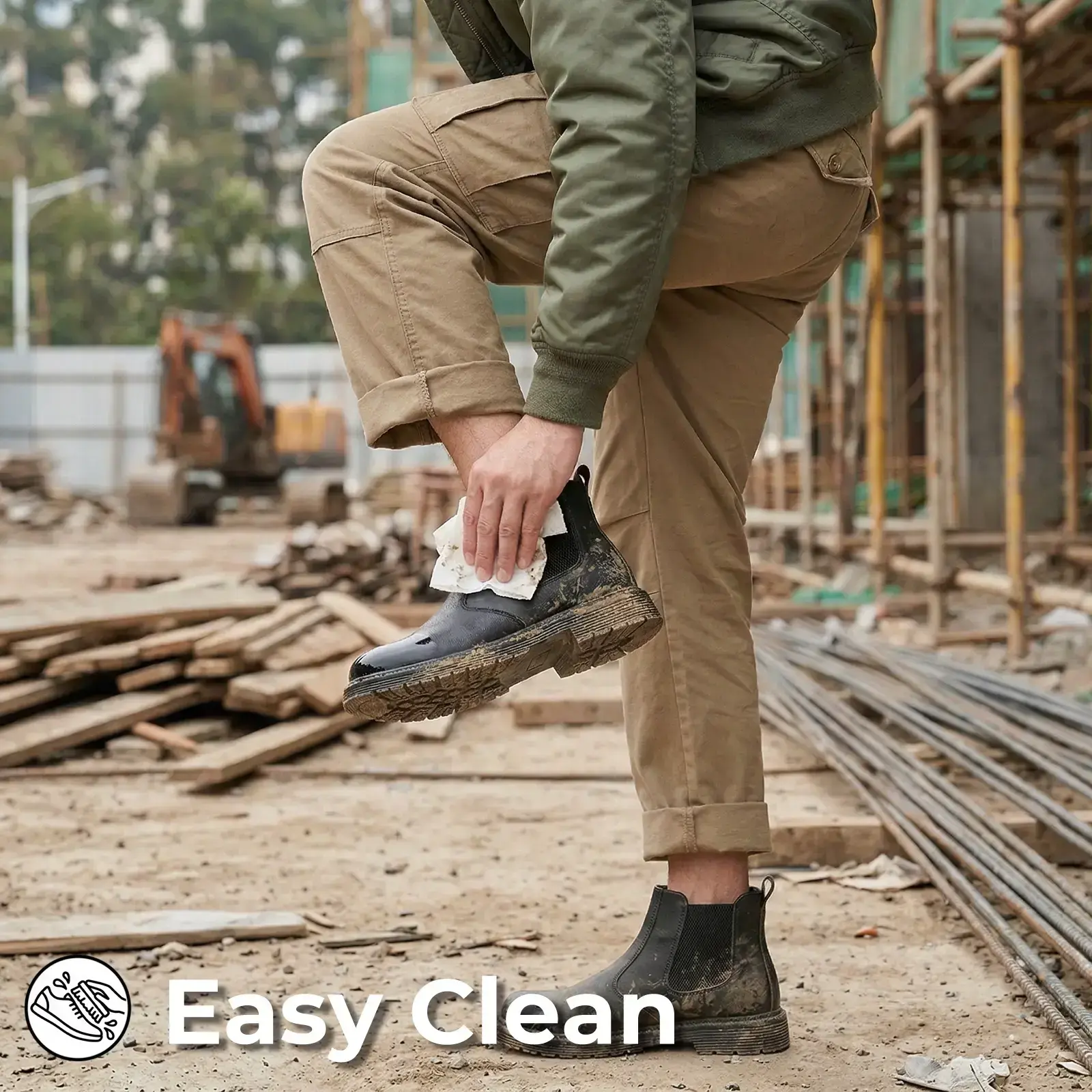
SPIEZ lists a steel toe cap; a leather, breathable mesh and microfiber upper; a puncture-resistant midsole; slip-resistant outsole; cushioning; and a laceless elastic collar. It markets the black 324 to men as a Chelsea-style work boot. The smooth upper should be easier to wipe clean than open knit, although cleaning ability is not proof of chemical resistance.
The ankle-height silhouette provides coverage around the lower leg, but a soft elastic collar should not be described as a certified ankle-protection feature. The higher profile also cannot substitute for a metatarsal guard or a shaft height specified in your PPE standard.
Toe, underfoot and slip claims
A steel cap is intended to address front-of-foot impact and compression hazards. A protective insert addresses objects penetrating from below; the two features are distinct. SPIEZ's broader listing text cites ASTM F2413-24 and EN ISO 20345 S1P/S3, but the visible product detail does not show a readable marking label or a model-specific certificate for a delivered pair. Ask for the applicable standard edition, exact 324 model code and complete marking, including any puncture classification. Verify that the documents and physical shoe match.
SPIEZ also uses slip-resistance language. Grip depends on the floor, contamination, footwear wear and the actual test classification. Do not assume immunity to slips on oil, soap, wet steel or uneven ground. Keep spill controls and tread inspection in place. The product page's broad job list is a marketing suggestion, not a site-specific PPE assessment.
Water resistance: define the exposure
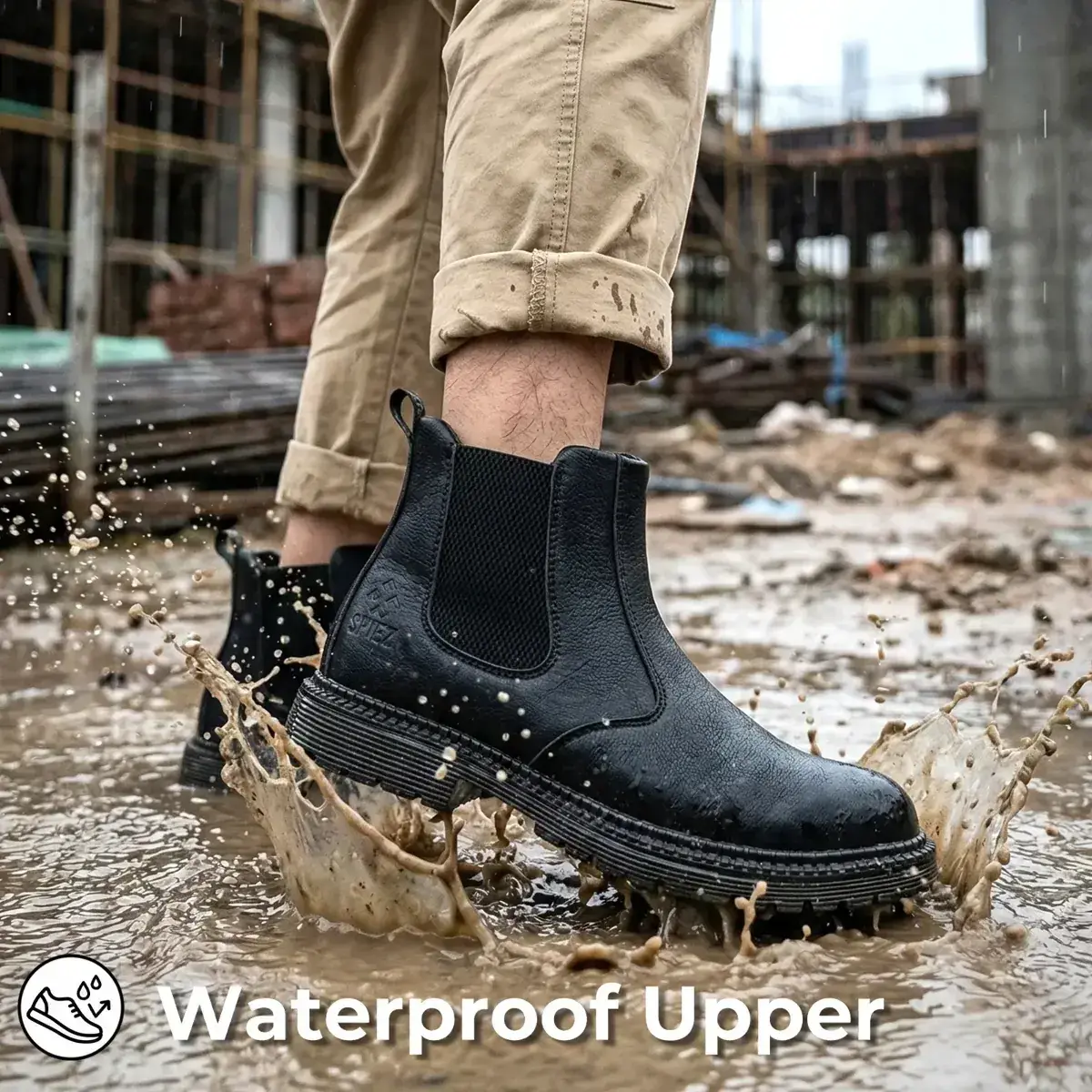
The listing headline says “waterproof,” while its detailed description calls the upper water-repellent and says it blocks splashes. Those words are not interchangeable. An upper that sheds a splash can still allow water through elastic side panels, seams or the opening during prolonged rain, pressure or standing water. We have not seen an independent whole-shoe waterproof test for the exact pair. If dry feet are essential to the task, ask for the relevant marking and test method and choose footwear rated for that exposure.
Fit and use on shift
Slip-on convenience works only when the heel stays seated. Walk briskly, turn, crouch and use stairs in a clean indoor try-on with your usual work socks. Check toe clearance within the cap and whether the elastic panels stretch enough for entry without letting the boot move excessively. A too-loose boot can undermine footing; a tight instep becomes distracting over a long shift.
The 324 may make sense for warehouse, maintenance or light construction settings after a hazard assessment confirms its exact rating. Work involving deep water, hot work, molten metal, aggressive chemicals or a specified high boot may need a different design. The upper and its cleaning claim could appeal to users moving between workshop and office, provided the workplace accepts the style.
Buying checklist
- Confirm the live offer is the Nimbus Geneva 324 in the correct size and black men's variant.
- Request the model-specific declaration, standard edition and legible label. Check the toe, puncture, slip and any water-resistance markings your job requires.
- Check the size chart, delivery terms, returns and any import charges for your location; price and stock can change.
- On arrival, inspect the toe fit, elastic panels, sole bond, tread and stitching before use.
How we reviewed it
Assessment dated 26 September 2026. We checked SPIEZ's current 324 listing, verified that the supplied affiliate link points to that model, and used manufacturer photographs. We did not wear or laboratory-test the boot or inspect a delivered pair's marking. We found no verified video demonstrating this exact 324 model suitable to embed.
Your experience matters
Share your thoughts on this page
Have a question, a useful experience or a suggestion? Add your input below.
Comments are public. Keep them respectful and relevant. Do not share contact details, confidential information or emergency reports.
Comments on this page
Loading comments…