Product Reviews · Concrete Equipment · 6 min read
NICOSAIL Self-Loading Concrete Mixer Review: Load, Mix and Move on Site
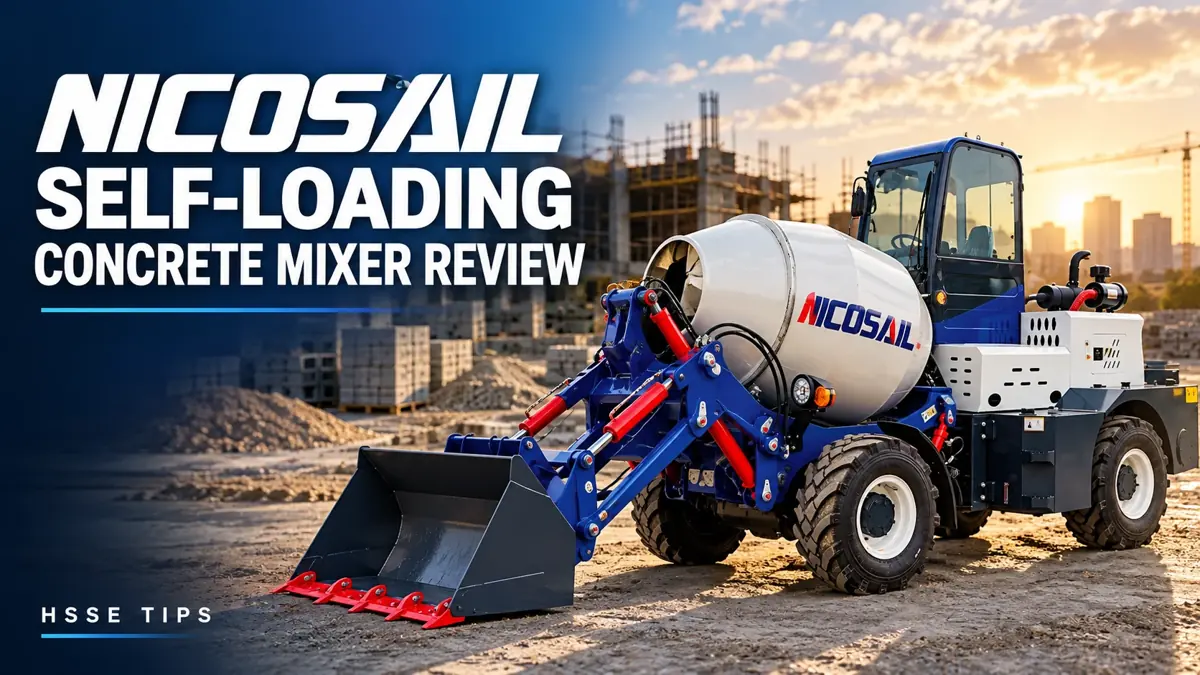
Load the materials. Mix the batch. Bring the concrete to the work. A self-loading mobile concrete mixer combines a loading arrangement, mixing drum and mobile chassis in one equipment format. For a contractor planning concrete work on site, the useful question is how that format fits the pour, the access route and the crew’s work sequence.
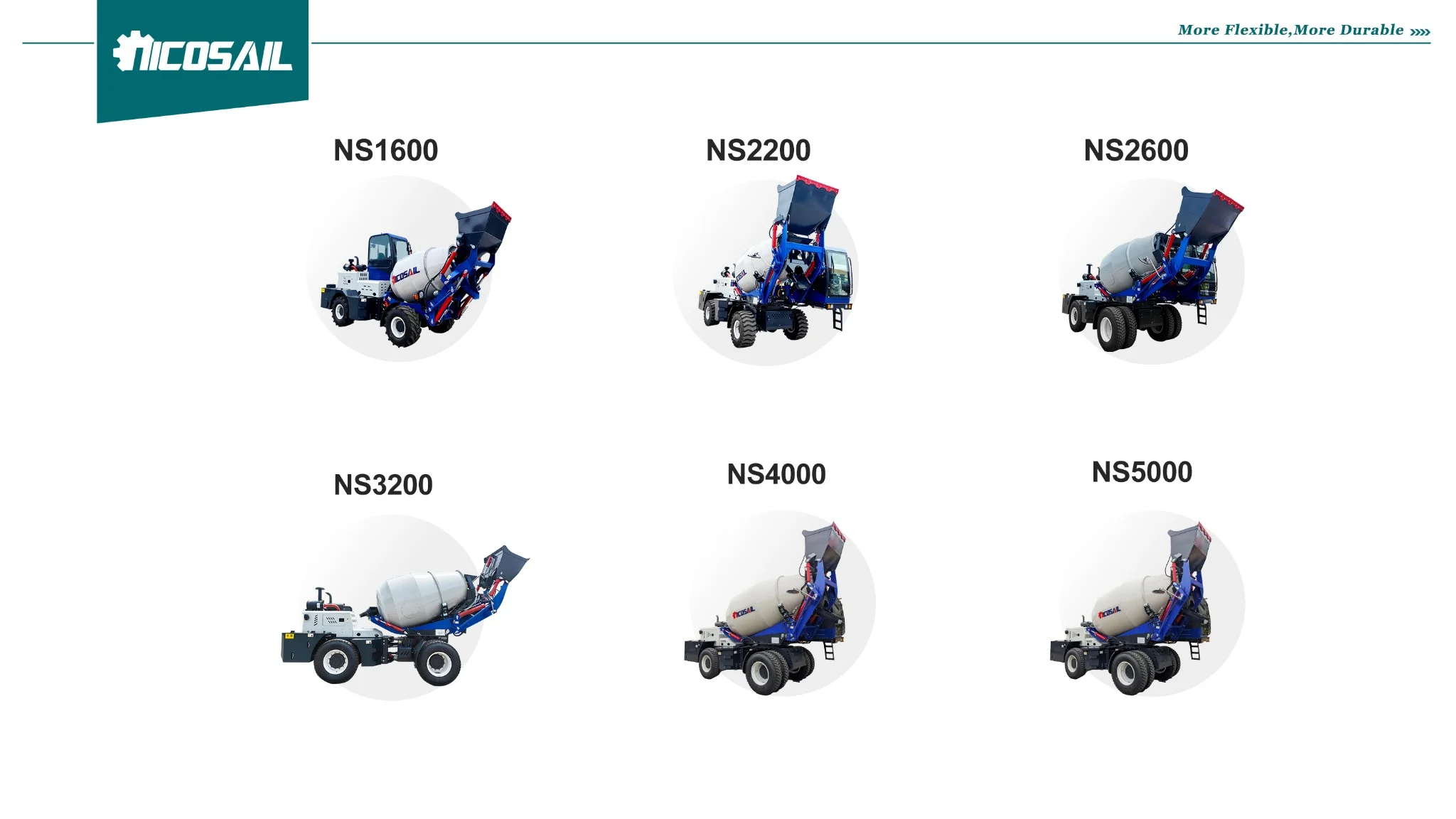
The supplied materials show NICOSAIL’s self-loading mixer range, with model references NS1600, NS2200, NS2600, NS3200, NS4000 and NS5000. The photographs depict blue-and-white machines with a loading bucket, glazed cab, mixing drum and wheeled chassis. A short supplied video adds a factory view of a similar mixer.
This is a desk-based review of supplied NICOSAIL range images, demonstration footage and manufacturer reference material, not a hands-on test. The provided affiliate URL redirects to AliExpress; its live item details could not be independently read. Confirm the exact model, included equipment and current offer with the seller.
What the supplied materials establish
| Brand shown | NICOSAIL |
|---|---|
| Product family | Self-loading mobile concrete mixer trucks |
| Models in supplied range panel | NS1600, NS2200, NS2600, NS3200, NS4000, NS5000 |
| Pictured equipment | Loading bucket, hydraulic arms, mixing drum, glazed cab and wheeled chassis |
| Supplied video | Approximately 15-second workshop demonstration |
| Purchase scope | Confirm model, configuration, usable batch output and delivery through the offer |
The model names identify products in a range. Ask for usable concrete output per batch and drum volume as separate figures for the selected model. The range graphic alone does not establish the capacity of the machine in the current offer.
One format for loading, mixing and site movement
The loading bucket and hydraulic arms are the distinctive visual feature in the supplied photographs. They sit alongside the mixing drum and operator cab on the mobile machine.
That arrangement gives a buyer a concrete discussion to have with the supplier: which materials the loading system handles, how ingredients are measured, what mixing process is supported and how concrete is discharged at the work location.
For a planned slab or footing, sketch the material-storage area, water supply, machine route and placement point. Then describe the pour requirement to the supplier. This makes the enquiry about a complete working arrangement, rather than a drum-size label.

Choose from the pour backwards
Begin with the concrete specification, total quantity and planned placement sequence. Agree who controls batching and quality checks. Then ask the supplier to match a model to that brief.
NICOSAIL’s sizing guide distinguishes usable batch output from nominal drum volume and considers the complete cycle: materials, mixing, travel, discharge, return and cleaning. Use supplier-supported figures for your selected configuration and check them against the site layout.
A helpful purchasing worksheet has four entries: concrete required, usable batch volume, completed cycles and available working time. Keep the assumptions visible, and include water replenishment and site coordination in your planning. The result is an estimate to discuss, not a promised production rate.
Confirm the water and material-measurement package
Ask how cement, aggregates, water and any admixtures are measured on the quoted machine. Identify the water tank, filling arrangement, metering equipment and any fitted weighing system in the written specification. Obtain the supported aggregate sizes and loading-bucket details.
Have the responsible concrete professional approve the mix and quality-control procedure for the project. Include any required sampling, consistency and acceptance checks in the work plan. The equipment quotation should support that procedure with clear information about its supplied systems.
Check access, placement and the machine’s working space
Measure the route before choosing a model: entrance width, overhead clearance, turning space, ground conditions and the area available for loading and discharge. Request both travel dimensions and the operating envelope of the selected machine.
Confirm how the discharge arrangement reaches the intended placement point and what repositioning is needed. Ask the supplier to demonstrate the controls, visibility aids, steering, braking and loading functions on a machine matching the quotation.
For transport to your site, request shipping dimensions and weight, loading arrangements and unloading requirements. Discuss any public-road use separately with the responsible local authority and supplier; the word “truck” does not establish road registration or approval.
Watch the supplied factory demonstration
Approximately 15 seconds of supplied footage showing a blue-and-white mixer inside a machinery workshop. This is a visual reference, not a batch-output test. Request a current demonstration identifying the exact model and showing the agreed loading, mixing, water and discharge functions.
Factory, documentation and delivery discussions
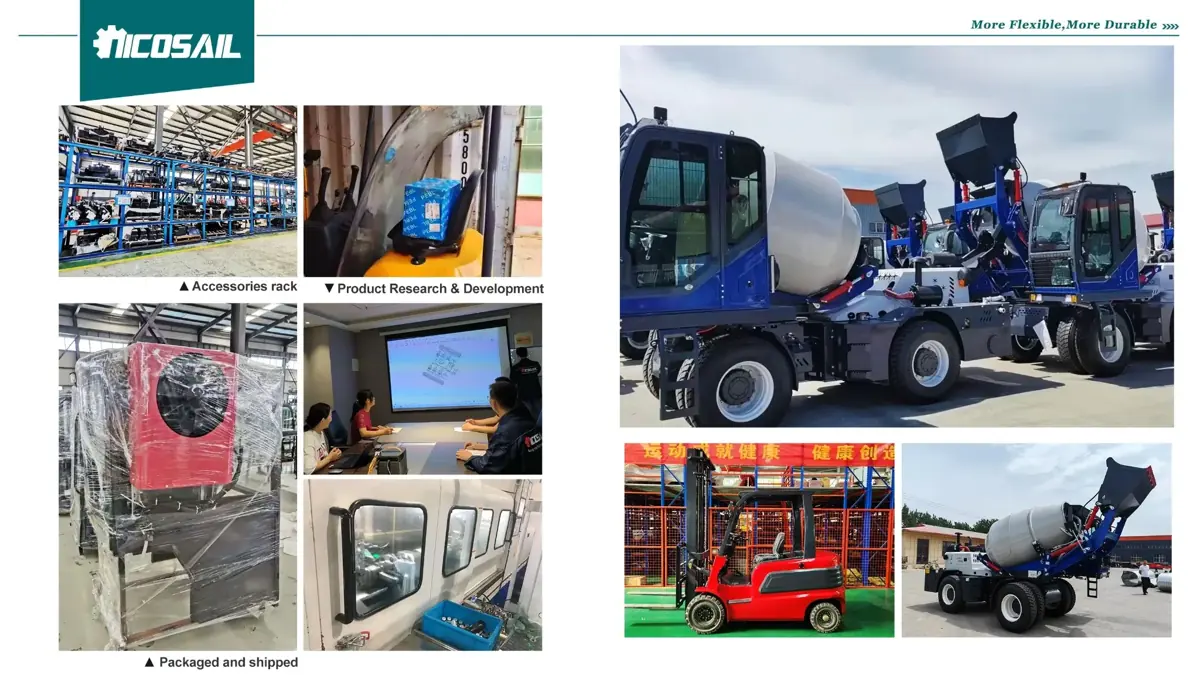
The supplied manufacturer panel includes workshop, component-storage, packing and machine-yard images. Use these as supplier context and ask for order-specific evidence: the machine’s identification plate, configuration checklist, function checks, included equipment and packing record.
Obtain the operating manual, maintenance schedule and wear-part references before shipment. Ask which service items should be stocked locally and how warranty enquiries and spare-parts orders are handled.
Make the commercial scope equally clear. Confirm what the displayed offer covers, the complete selected package, dispatch location, delivery destination, import arrangements and unloading responsibilities. Agree the final delivered price and terms in writing.
Prepare safe operation and cleaning
Arrange training and familiarisation for the exact mixer. Plan traffic routes and keep people clear of wheel movement, the loading bucket, drum and discharge area. Follow the manual’s ground, travel, loading and parking limits and complete the required inspections.
Concrete work also needs suitable dust controls and protection against contact with wet cement. OSHA’s concrete guidance addresses skin exposure, moving machinery and confined-space work. Use the controls appropriate to your materials, task and location.
Follow the manufacturer’s isolation procedure before cleaning or maintenance. Any proposed entry into a drum requires competent assessment, the applicable confined-space arrangements and verified isolation. Plan washout collection and disposal in accordance with local requirements.
A ready-to-use seller enquiry
Our view: bring the equipment plan close to the pour
The NICOSAIL materials present a self-loading mixer family that combines a loading bucket, drum and mobile chassis. For buyers exploring on-site concrete equipment, the range photographs and supplied clip provide a useful starting point for a focused enquiry.
The next step is a model-specific quotation connected to a defined pour plan. Confirm usable batch output, material measurement, access and discharge, then agree the complete equipment, documentation and delivery package.
Frequently asked questions
Which models appear in the supplied range graphic?
NS1600, NS2200, NS2600, NS3200, NS4000 and NS5000. Confirm which model the current offer and quotation supply.
What concrete capacity should I ask for?
Request usable concrete output per batch and drum volume separately, together with the supported materials and mixing procedure for the selected machine.
Is a weighing or water-metering system included?
Have the supplier identify the actual ingredient-measurement and water systems in the written equipment list.
What should the delivered quotation cover?
The exact machine, included equipment, documents, transport, import arrangements where applicable, unloading scope, warranty and parts-support terms.
Sources and editorial information
- User-supplied NICOSAIL range, product, factory and company panels, plus the short workshop video.
- NICOSAIL self-loading mixer catalogue — model-family reference.
- NICOSAIL mixer-sizing guide — selection context.
- OSHA concrete-work guidance — general safety reference.
Prepared 13 October 2026. Confirm the exact current offer and configuration with the supplier. Supplier photographs and promotional descriptions are not independent certification or test results.
Explore more equipment reviews · Plan your pre-work checks
HSSE TIPS — Worksite Safety Hub
Every Task. Every Person. Home Safe.
Your experience matters
Share your thoughts on this page
Have a question, a useful experience or a suggestion? Add your input below.
Comments are public. Keep them respectful and relevant. Do not share contact details, confidential information or emergency reports.
Comments on this page
Loading comments…