Product Reviews · Fire and Rescue Vehicles
Renault D16 Fire Truck: Bring the Crew, Water and Equipment Together
A fire truck is more than a vehicle. It is the place where your crew, equipment and response plan come together.
If your brigade is exploring a new rescue-and-firefighting vehicle, this Renault D16 offer gives you a practical starting point. This guide brings the advertised specification, seller photos and manufacturer information into one readable review, helping you move from browsing to a focused supplier conversation.
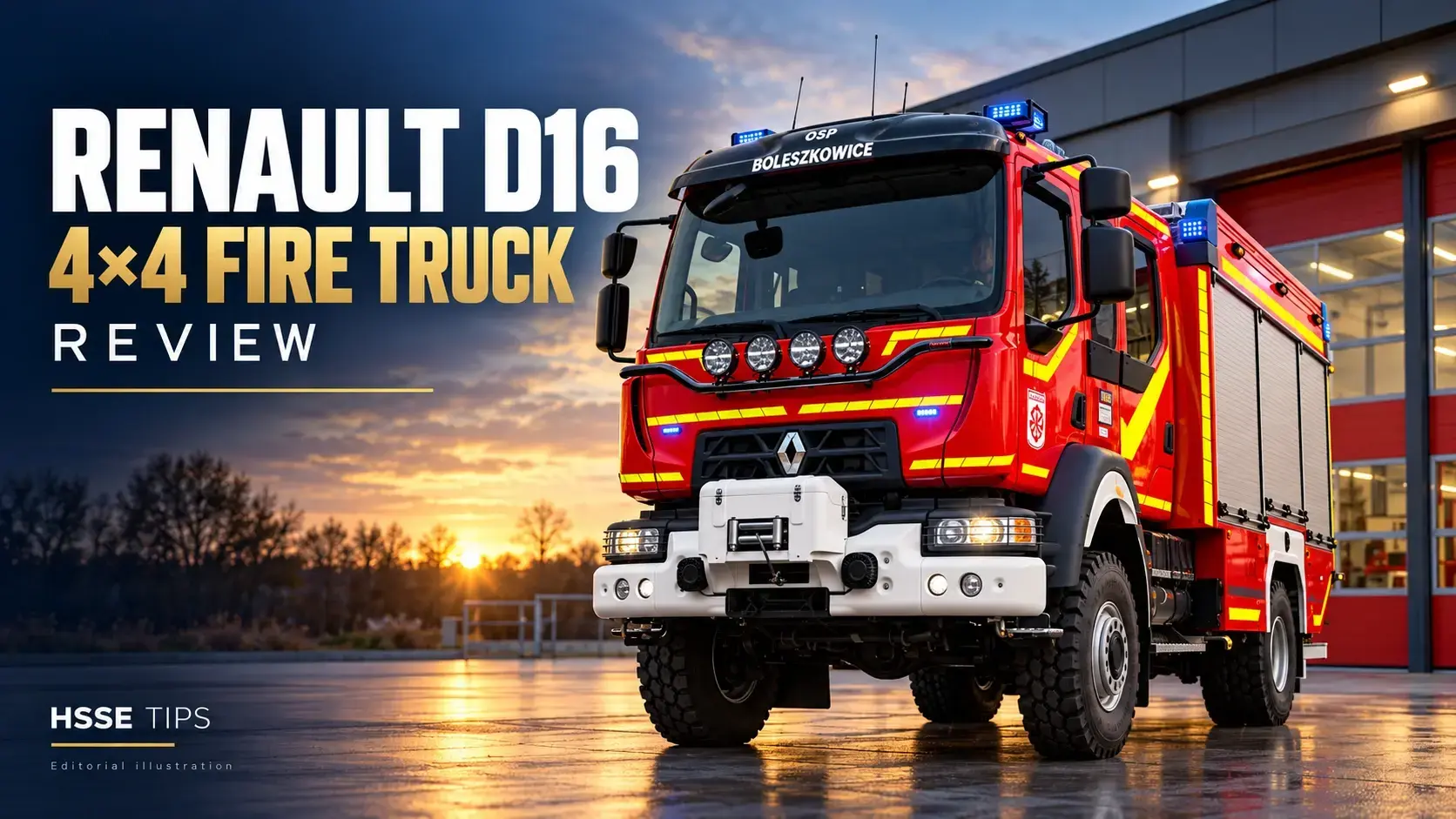
Renault D16 at a glance
These details come from the linked Autoline advertisement, checked on 7 October 2026.
| Listing detail | Advertised information |
|---|---|
| Vehicle | Renault D16 fire truck |
| Year / condition | 2025 / new |
| Crew | Double cab; 6 seats |
| Engine | Diesel; 280 HP (206 kW); Euro 6 |
| Gearbox | Manual |
| Drive / suspension | 4×4 / spring–spring |
| Axles | 2; twin rear wheels |
| Braking | ABS |
| Cab equipment | Air conditioning; Webasto heater; air seats; heated electric mirrors |
| Equipment | Water tank; winch; auxiliary and fog lamps |
| Water capacity | Approximately 4,000 litres (listed as 1,057 US gallons) |
| Gross vehicle weight | Approximately 16,000 kg (listed as 35,270 lb) |
| Price | On request |
| Location | Kamienica Polska, Poland |
| Seller / advertisement | BONEX / QF43857 |
Metric tank capacity and gross weight are rounded conversions of the listing’s US units. Agree the current completed-vehicle specification and included equipment in your written quotation.
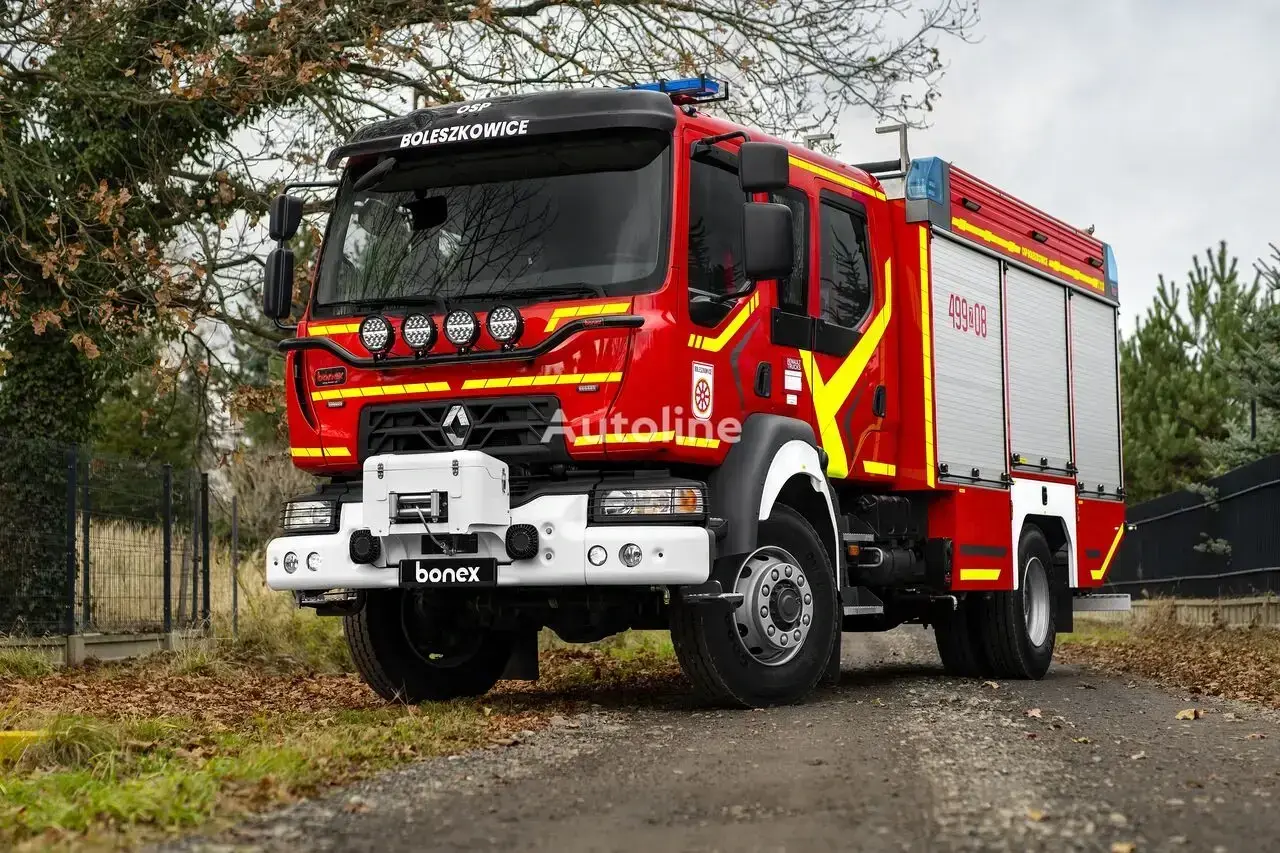
What makes this offer worth exploring?
Start with your brigade’s normal work. How many people travel together? What equipment needs to be accessible first? Where will the vehicle be positioned during training and deployment? Those questions give the supplier a useful brief.
A combined crew-and-equipment vehicle lets you discuss the cab layout, storage and firefighting package as one proposal. For procurement teams, that is a helpful way to organise a demonstration: follow the crew’s route from the cab to the equipment they will use, then review how everything is stowed for travel.
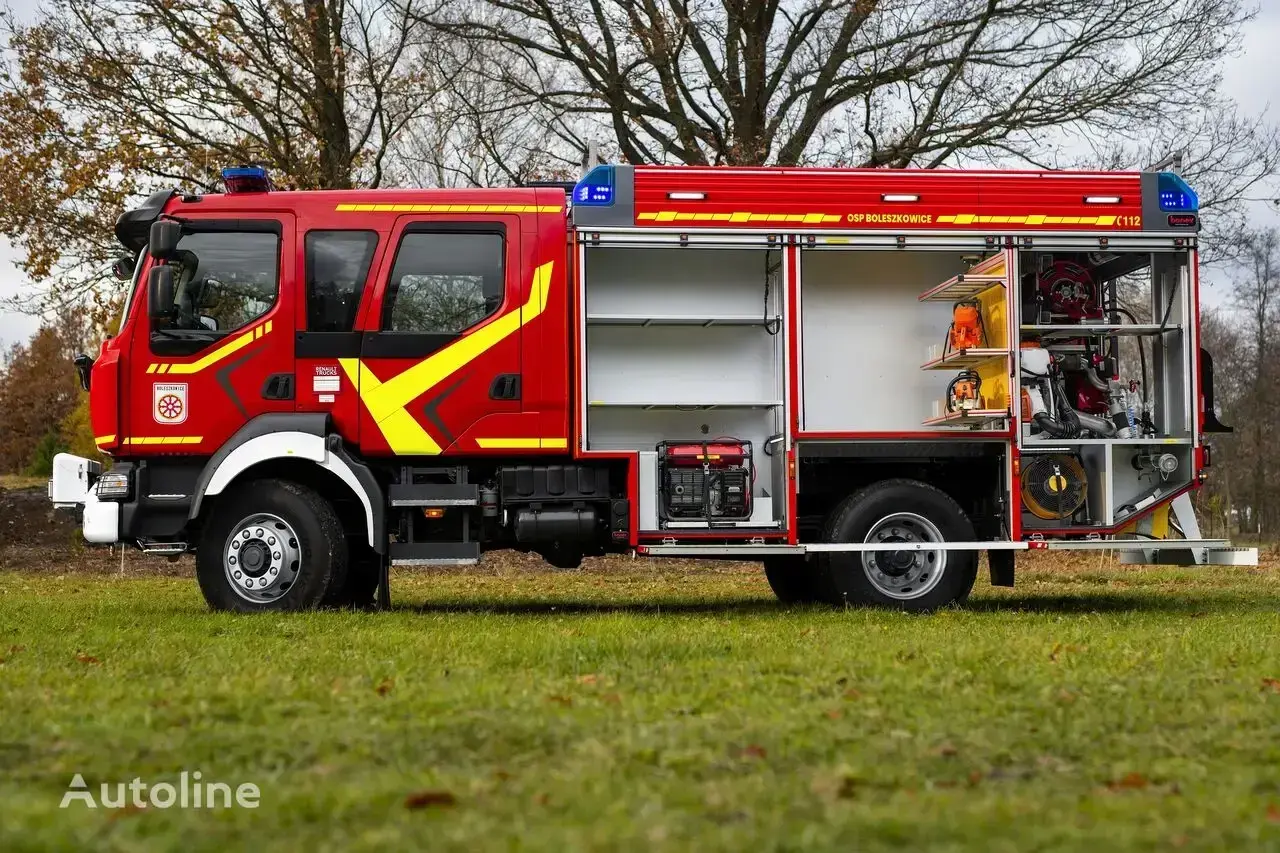
Make your equipment inventory part of the discussion. Ask BONEX to show the proposed mounting points, storage positions and access arrangements for the tools your service carries. This turns a general enquiry into a vehicle-specific plan.
The BONEX D16 rescue-and-firefighting package
BONEX’s D16 4×4 brochure describes a conversion family with 280 or 320 HP engines and manual or automatic gearboxes. The linked advertisement is the 280 HP manual offer. The brochure provides this equipment context:
- Stainless steel, composite and aluminium body construction; seven compartments arranged 3 + 3 + 1; aluminium shutters with BARLOCK closures.
- Internal and external LED lighting.
- A 4,000-litre composite water tank, 400-litre foam-agent tank and foam dosing system.
- An A 30/10-4/40 dual-range pump, 60-metre rapid-intervention hose and DWP 8/16/24 water-and-foam monitor.
- A remote-controlled LED lighting mast, reversing camera, electric winch described as 8 tonnes, AIRBOX charging and an onboard hygiene station.
Treat the brochure as manufacturer configuration information. Ask BONEX to mark which items form part of your quotation and provide the operating instructions for the completed vehicle.
Plan a demonstration around your crew’s intended use
For a fire service, the most useful demonstration follows the sequence of real work. Begin with vehicle positioning, then move through equipment access, water-system controls and stowage. Ask the supplier to demonstrate the controls on the vehicle included in the proposal.
Use a simple demonstration agenda:
- Crew movement: review seats, restraints, cab access and the team’s movement around the parked vehicle.
- Water-system operation: request a guided demonstration using the supplied operating instructions.
- Equipment organisation: walk through your inventory and agree storage and securing arrangements.
- Lighting and manoeuvring: explore the controls and viewpoints available to the crew.
- Return to readiness: ask how your team should inspect, stow and maintain the delivered equipment after use.
Agree permitted weights and axle limits for the completed operating configuration, including crew, water and equipment. Include the relevant documents and handover training in the supplier proposal.
Positive safety features from Renault Trucks
The advertisement identifies ABS. Its heated electric mirrors and auxiliary lighting are also useful items to review during the vehicle walkaround.
For broader chassis context, Renault Trucks’ official D-range page describes:
- Hill Start Aid: briefly holds brake pressure to assist with moving off on an incline.
- Automatic emergency braking: provides collision warnings and braking assistance.
- Lane departure warning: alerts the driver to an unintended deviation.
- Optional adaptive cruise control: adjusts acceleration and braking to manage following distance.
- Tyre-pressure monitoring: alerts the driver to pressure and temperature issues.
These are manufacturer model-range descriptions, not confirmation that every feature is fitted to this advertisement’s chassis. Request the vehicle’s equipment sheet and a demonstration of its installed systems. Use the vehicle handbook as the reference for their operating conditions.
Renault Trucks also explains its collaboration with bodybuilders for fire-and-rescue applications and the emphasis on crew access. That makes a chassis-and-body handover a valuable part of the buying process: review the driving controls and conversion controls together with the people who will operate them.
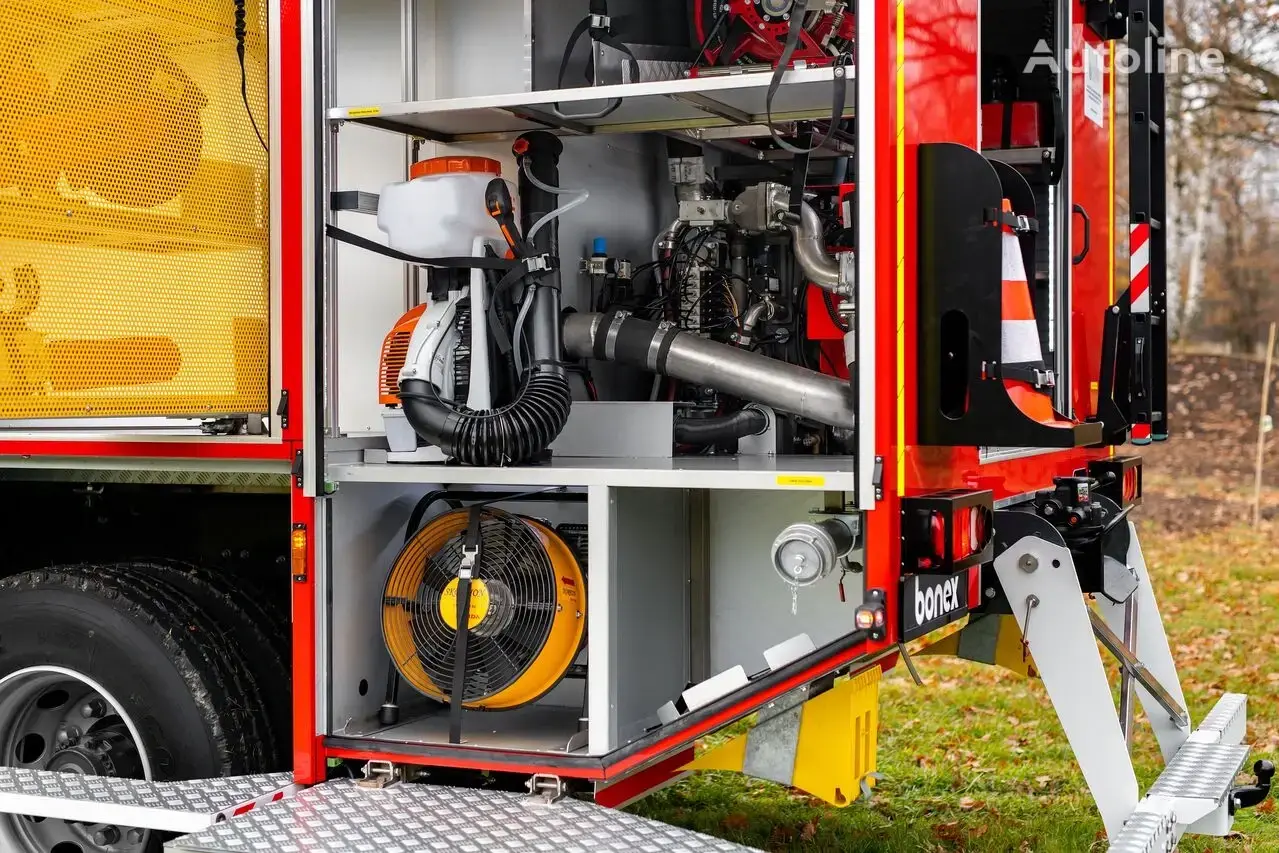
A clear specification supports a useful purchase
Ask for one written proposal identifying the chassis, body and equipment package. Include your registration destination and procurement requirements from the beginning, so the supplier can prepare the relevant documents.
BONEX’s brochure states CNBOP approval for the described vehicle. Request the applicable approval documents and their scope with the final specification. Agree the handover instructions, maintenance information, delivery arrangements and training in the quotation.
Seller photos and manufacturer brochure
The offer includes 34 seller photographs. Browse the full gallery through the listing button, and read BONEX’s D16 brochure below to prepare your enquiry. Ask the supplier for a current walkaround video or live equipment demonstration of the proposed vehicle.
READ THE BONEX RENAULT D16 4×4 BROCHURE →
Frequently asked questions
Which Renault D16 version does this review cover?
The linked BONEX advertisement is QF43857, a new 2025 D16 fire truck. The listing specification is summarised above; the manufacturer brochure is identified separately as configuration context.
How do I get the current price?
The seller invites a price enquiry. Open the offer and request a written quotation for your preferred equipment package and delivery destination.
How should a brigade prepare for a demonstration?
Bring the intended crew arrangement, equipment inventory and deployment procedures. Agree the systems you want demonstrated and the handover documents you need.
Sources and editorial method
Researched on 7 October 2026. Seller-listed specifications and photos come from the exact advertisement. BONEX provides attributed conversion-family information; Renault Trucks provides chassis model context. Procurement and demonstration suggestions are original editorial guidance. No independent inspection, operational rating or response-time result is claimed.
Autoline — Renault D16 QF43857 (affiliate source)
BONEX — official vehicle brochures
BONEX — Renault D16 4×4 2025 brochure (Polish)
Renault Trucks — D-range safety and equipment information (market-specific model context)
Your experience matters
Share your thoughts on this page
Have a question, a useful experience or a suggestion? Add your input below.
Comments are public. Keep them respectful and relevant. Do not share contact details, confidential information or emergency reports.
Comments on this page
Loading comments…