Product Reviews · Fire Protection Systems · 15 min read
NAFFCO NF-PHC300-8EDJ Fire Pump House Unit Review: 300 GPM at 8 Bar
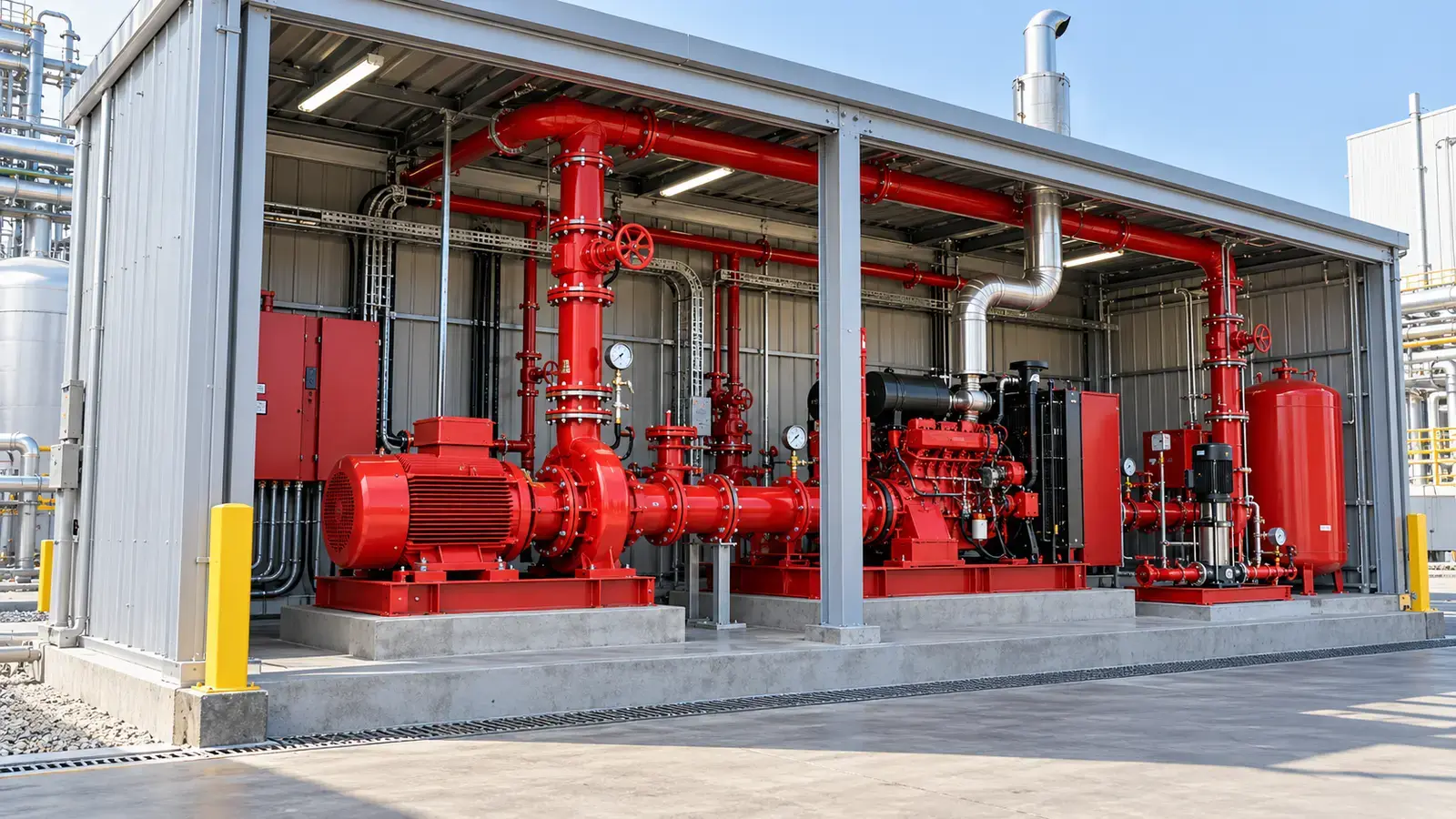
A packaged fire-pump house can bring pumps, controls, pipework and environmental protection together in one transportable system—but only verified performance and compatible design make it useful to a real project. This used 2021 NAFFCO NF-PHC300-8EDJ is advertised in Dubai with a pump duty of 300 US GPM at 8 bar.
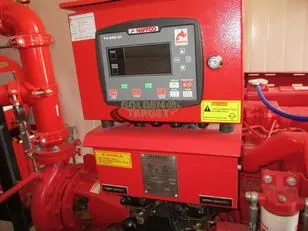
The listing contains 26 photographs of the enclosure, pipework, controllers and internal equipment. It does not publish a full component schedule, dimensions, operating hours, current test report or certifications for the exact package. Those documents are central to the buying decision, especially because a similarly named NAFFCO pump set must not be treated as the same model.
Review method: desk-based assessment of the active advertiser listing, seller description, 26 original photographs and supporting manufacturer-category information, verified 31 October 2026. Worksite Safety Hub has not physically inspected, commissioned, flow-tested or operated this fire-pump unit.
Quick verdict
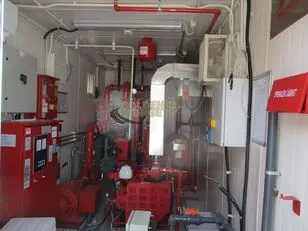
The NF-PHC300-8EDJ is an interesting option for a buyer seeking a self-contained used pump-house package with an advertised 300 GPM duty at 8 bar. The enclosure may simplify site work compared with building a new pump room, while the photographed internal equipment suggests a multi-pump arrangement with controls and associated pipework.
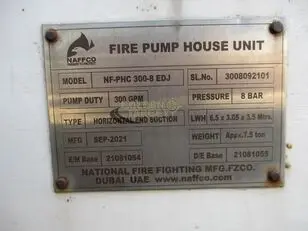
Its value cannot be established from appearance alone. The buyer needs the exact equipment schedule, nameplates, original curves, service records, operating hours, automatic-start tests and a recent performance test. Installation feasibility also depends on dimensions, weight, lifting points, electrical supply, water source, pipe connections, ventilation, exhaust and destination approval.
Verified specifications at a glance
| Manufacturer | NAFFCO |
|---|---|
| Model | NF-PHC300-8EDJ |
| Equipment type | Fire Pump House Unit |
| Listing category | Fire pump |
| Year | 2021 |
| Condition | Used |
| Advertised pump duty | 300 US GPM |
| Approximate converted flow | 1,136 L/min or 18.9 L/s |
| Advertised pressure | 8 bar |
| Approximate converted pressure | 116 psi |
| Engine | Four-cylinder reported by seller’s equipment page; verify exact data plate |
| Operating hours | Not specified |
| Product location | Dubai, United Arab Emirates |
| Seller stock ID | 00101 |
| Price | On request |
| Certification | Not specified for the exact complete unit |
| Delivery areas | Not specified |
| Shipping terms | Not specified |
| Listing status | Active when verified |
What is the NAFFCO NF-PHC300-8EDJ?
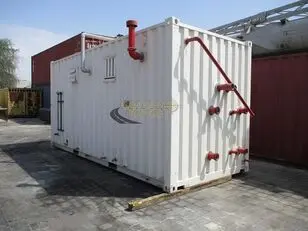
The listing identifies a purpose-built fire-pump house rather than a loose pump or mobile fire appliance. A packaged unit can integrate fire pumps, controllers, pipework, valves and supporting equipment inside a protected enclosure. That can reduce some building work at destination, although foundation, water, electrical, exhaust, drainage and fire-system connections are still required.
The seller’s model is NF-PHC300-8EDJ. Elsewhere, NAFFCO-related product information describes an NPS300/8-EDJ100-108 package, but that is not the advertised model. No specification from the NPS package should be copied into this review without the exact unit’s documentation.
Understanding the 300 GPM pump-duty rating
Three hundred US gallons per minute is approximately 1,136 litres per minute or 18.9 litres per second. That conversion helps international readers understand the scale; it does not add a new supplier claim. The relevant duty point is the flow delivered at the stated pressure, not flow in isolation.
A hydraulic calculation must establish the required demand for the most challenging design area, hydrant or combined system. Pipe friction, elevation, valves, backflow devices and available suction pressure all affect performance. The original pump curve and a current test report are therefore essential.
Understanding the 8-bar pressure rating
Eight bar is approximately 116 psi. Whether that is sufficient depends on the required residual pressure at the most hydraulically remote point after losses. A pump that produces the advertised pressure in one test arrangement may not satisfy a different project with longer pipework or greater elevation.
Ask whether 8 bar is the rated net pressure, a discharge-gauge observation or another published figure. Obtain shutoff or churn pressure, rated-flow pressure and any applicable higher-flow test result. Confirm the pressure rating of every connected component.
What EDJ may mean in a packaged fire-pump system
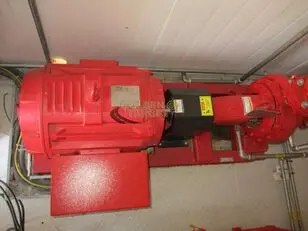
EDJ commonly describes an electric main pump, a diesel standby pump and a jockey or pressure-maintenance pump. The photographs show several pieces of pump and control equipment, but the seller description does not itemise the complete configuration. Treat EDJ as a useful question, not conclusive proof.
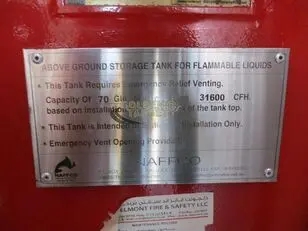
Request a tagged equipment list, general arrangement drawing, piping and instrumentation drawing, single-line electrical diagram and cause-and-effect schedule. Match every item to its nameplate and serial number before agreeing that the package is complete.
Electric main-pump considerations
An electric fire pump can provide dependable primary service where the power source is suitably designed. Confirm motor power, voltage, phase, frequency, insulation, enclosure, starting method and controller compatibility. Imported packages may have electrical ratings that differ from the destination facility.
Verify the independent fire-pump power arrangement, cable route, protection philosophy, earthing and generator interaction under the applicable project rules. A qualified electrical engineer should review the controller, motor and power supply before energisation.
Diesel standby-pump considerations
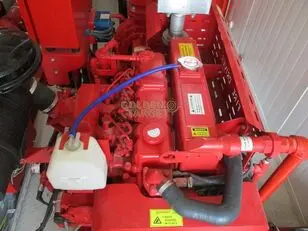
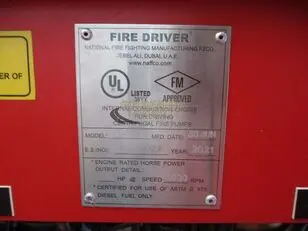
A diesel-driven pump can maintain pumping capability if electrical power is unavailable. The seller’s own equipment page reports a four-cylinder engine, but the exact manufacturer, model, output and running hours should be read from the unit’s data plate.
Inspect the fuel tank, lines, filters, cooling system, radiator or heat exchanger, batteries, chargers, starter motors, exhaust, ventilation and shutdown controls. Request cold-start and repeated-start demonstrations. Establish fuel ageing, maintenance history and the replacement availability of engine parts.
Jockey pump and pressure maintenance
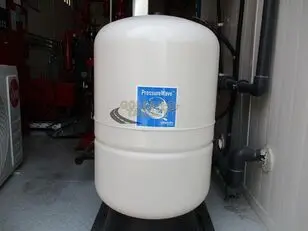
A jockey pump maintains pressure during small leakage or temperature-related fluctuations so the main pumps do not start unnecessarily. Confirm whether one is included, its duty, cut-in and cut-out settings, controller and pressure-vessel relationship. Settings must coordinate with the main-pump start pressures.
Ask for a witnessed pressure-maintenance test and verify that automatic control responds consistently. Frequent jockey-pump cycling can indicate leakage or an unsuitable setting and should be investigated during commissioning.
Pump-house enclosure and packaged-system advantages
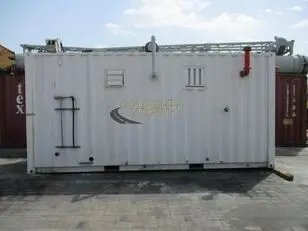
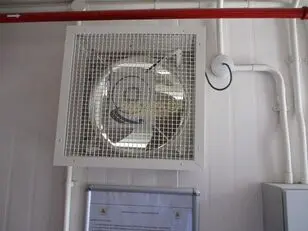
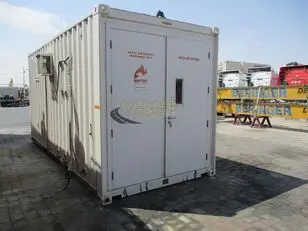
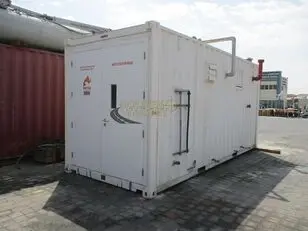
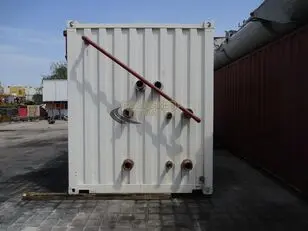
The enclosure may protect equipment from sun, wind, dust and unauthorised access while consolidating installation work. The photos show a steel structure with access doors and internal systems. Buyers should confirm weather rating, corrosion protection, insulation, ventilation, lighting, drainage, fire detection and lifting design.
Measure the package and route from seller yard to final foundation. Door openings, crane reach, site access and centre of gravity can control the transport plan. Confirm whether the unit is designed to lift as one package or must be dismantled.
Potential commercial and industrial applications
A correctly selected 300 GPM package may form part of fire protection for warehouses, manufacturing plants, residential developments, hotels, campuses, hospitals, data centres, utilities or industrial sites. The named application does not establish suitability; the project design and authority requirements do.
The water source must sustain the required duration and the pump must meet the calculated demand. Hazard classification, sprinkler density, hose allowance, hydrants, elevation and redundancy determine the final solution. Use a competent fire-protection engineer.
Inspection of a used fire-pump package
- Record pump, motor, engine, controller and vessel nameplates.
- Confirm serial numbers and year against documents.
- Inspect pumps, seals, bearings, couplings and guards.
- Check shaft alignment and base-frame condition.
- Look for reported or visible leakage, corrosion or previous repairs.
- Operate valves and examine gauges and sensing lines.
- Inspect pipe supports, flexible connections and penetrations.
- Check diesel fuel, cooling, battery, charger and exhaust systems.
- Inspect electrical wiring, terminals, earthing and controller history.
- Review enclosure doors, ventilation, lighting and drainage.
- Verify manuals, curves, test reports and service records.
Performance testing and documentation
Request the original manufacturer’s curve and a recent flow test showing suction pressure, discharge pressure, engine or motor speed and flow. A test should identify the instrumentation and calibration status. Churn, rated duty and any required higher-flow point help compare the pump with its curve.
Witness automatic starts from pressure reduction, diesel cranking cycles, electric-controller operation, jockey settings, alarms and fault signals. A visually clean enclosure does not demonstrate hydraulic performance. If possible, appoint an independent fire-pump specialist before purchase.
Installation and site integration
Obtain dimensions, total mass, lifting points and foundation loads. Confirm suction and discharge sizes, connection elevations, required positive suction conditions, relief or circulation arrangements, test provisions and pipe-support limits. Transport can disturb alignment, so recheck it before commissioning.
The site design must cover diesel exhaust, ventilation, cooling, fuel safety, drainage, electrical power, earthing, lighting and alarm integration. Confirm water quality, available suction pressure and fire-water capacity. Commission the complete installed system under destination requirements.
Controls, electrical supply and automatic operation
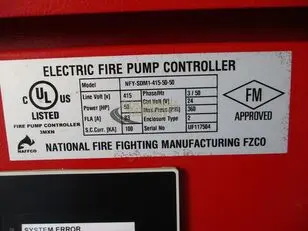
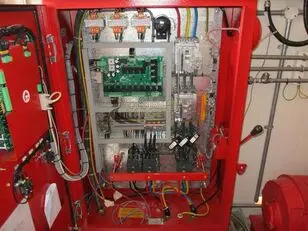
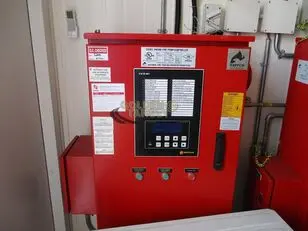
Photographs may show controllers, but model identity and logic should come from labels and drawings. Confirm voltage, phase and frequency, automatic and manual modes, remote signals, alarm contacts, event history and software or settings access.
Never energise imported equipment until insulation, earthing, wiring and supply compatibility have been inspected. Confirm whether replacement controller parts and technical support are available locally.
Suction, discharge and fire-water supply checks
A pump cannot deliver dependable performance without a suitable water source. Confirm whether the project uses a dedicated tank, reservoir or another approved supply. Suction pipe size, length, fittings, elevation and air entry can materially affect pump performance.
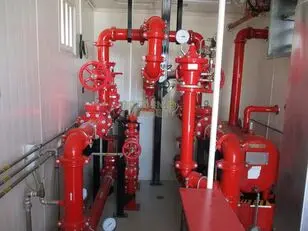
Check flange standards, pressure ratings and connection sizes. Plan a test header, calibrated flow meter or another approved test method. Confirm valve supervision and sensing-line arrangements.
Maintenance, parts and after-sales support
Ask for spare seals, bearings, filters, belts, hoses, batteries, controller parts and recommended commissioning spares. Identify local service support for the pump, motor, engine and controllers. Confirm maintenance intervals and long-term parts availability.
Clarify whether the seller offers dismantling, recommissioning or warranty. Used-equipment warranties may differ by component, so obtain commitments in writing.
Product location, shipping and export considerations
Listed product location: Dubai, United Arab Emirates.
The reviewed listing does not specify delivery territories, freight charges or export arrangements. Buyers should confirm dismantling, loading, lifting, packaging, inland transport, port handling, marine insurance, export documents, customs responsibilities and destination delivery directly with the seller.
Ask whether the package ships as one unit or on a flat rack, and obtain lifting drawings and centre-of-gravity information. Drain or secure fluids as required, isolate batteries and fuel according to carrier rules, protect openings and electronics from humidity, and document every disconnected pipe and cable. Reassembly must include alignment and performance testing.
Current seller offer — verified 31 October 2026
Commercial information may change. The technical buyer’s guide remains useful if this unit is sold, withdrawn or replaced. Confirm that any quotation refers to this exact stock unit and includes every component shown or described.
Buyer inspection and procurement checklist
- Match model and serial numbers to the quotation.
- Obtain the exact equipment schedule and drawings.
- Record pump, motor, engine, controller and vessel nameplates.
- Verify operating hours and service history.
- Review original curves and current performance tests.
- Witness electric, diesel and jockey automatic starts.
- Test batteries, chargers, fuel, cooling and exhaust systems.
- Inspect pumps, seals, bearings, couplings and alignment.
- Check valves, gauges, sensing lines and pressure vessel.
- Inspect pipework, supports, wiring, earthing and controllers.
- Review enclosure, ventilation, access, lighting and drainage.
- Verify certifications for the exact components and project.
- Confirm dimensions, weight, lifting points and transport method.
- Calculate freight, duties, installation and commissioning cost.
Questions to ask before contacting the seller
- Is this exact stock unit still available?
- Is NF-PHC300-8EDJ the complete package model?
- Does the sale include the enclosure and every photographed component?
- Which electric, diesel and jockey pumps are included?
- What are their manufacturers, models, serial numbers and duties?
- What are the motor and diesel-engine ratings?
- Is the reported engine four-cylinder, and what are its operating hours?
- What is the jockey-pump duty and pressure-setting schedule?
- What are suction and discharge sizes and flange standards?
- Are the original pump curves available?
- Can you supply a recent 300 GPM at 8-bar flow test?
- What churn and higher-flow results were recorded?
- Can the exact package be demonstrated on video?
- Do controllers start pumps automatically and record events?
- Which batteries, chargers and fuel tank are included?
- Which exact UL, FM or other documents apply?
- Are maintenance and repair records available?
- Are there known leaks, faults, corrosion or missing parts?
- What are enclosure dimensions, mass and lifting points?
- Can an independent inspection and witnessed test be arranged?
- Does the seller provide dismantling, loading and export packing?
- Which destinations can be served?
- Who handles freight, insurance, customs and destination unloading?
- What is the total delivered cost?
- Are commissioning, spares or after-sales support available?
Original advertiser gallery
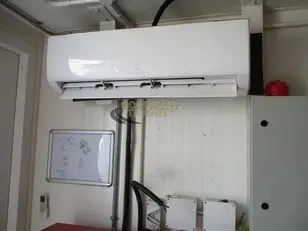
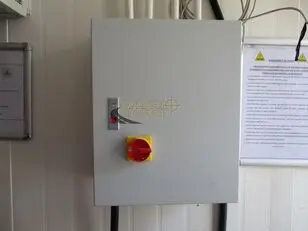
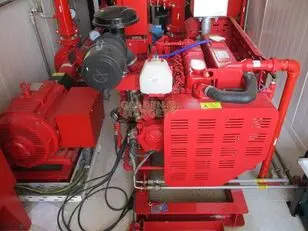
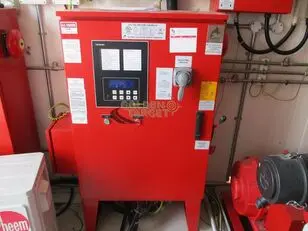
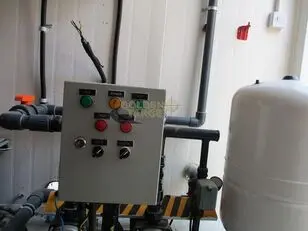
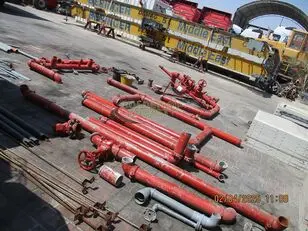
The complete 26-image gallery below documents the unit from multiple angles. Use it to prepare questions, then verify every component through nameplates, drawings and functional testing.
Who may find this system useful?
This package may interest contractors, developers, industrial operators or equipment dealers seeking a used, enclosed 300 GPM fire-pump solution. It may be especially relevant where a packaged enclosure can reduce pump-room construction time, subject to design compatibility and local approval.
The strongest buyer will already know the required duty, electrical standard, water supply, installation location and acceptance criteria. Projects without that definition should complete engineering before buying equipment.
Final assessment
The used 2021 NAFFCO NF-PHC300-8EDJ combines a recognisable manufacturer, packaged enclosure and clearly advertised 300 GPM at 8-bar duty. Its Dubai location may also be practical for regional or export buyers.
The decisive information remains documentary: exact components, hours, curves, tests, certifications, mass, dimensions and shipping scope. A disciplined inspection and witnessed performance test can show whether the unit is a credible fit for the intended fire-water design.
Frequently asked questions
What is the NAFFCO NF-PHC300-8EDJ?
It is an advertised packaged fire-pump house unit. The reviewed used unit was manufactured in 2021 and listed with a pump duty of 300 US GPM at 8 bar.
What does 300 GPM at 8 bar mean?
It describes an advertised duty point of about 1,136 litres per minute or 18.9 litres per second at approximately 116 psi. Suitability still depends on the project hydraulic calculation and verified pump curve.
What may EDJ mean in a fire-pump package?
EDJ commonly describes an electric main pump, diesel standby pump and jockey or pressure-maintenance pump. The exact components in this unit must be confirmed from its documentation and nameplates.
Does this unit include electric, diesel and jockey pumps?
The gallery shows multiple pump and control components, but the seller description does not itemise every component. Request the exact equipment schedule and drawings.
Is this fire-pump unit new or used?
The listing identifies it as used.
What year was it manufactured?
The listing states 2021.
Where is the unit located?
Dubai, United Arab Emirates.
Is the price published?
No. The current listing states price on request.
Does the seller provide a recent flow test?
A current flow-test report is not mentioned in the listing. Request a witnessed performance test and the original pump curve.
Is the system UL listed or FM approved?
The reviewed listing does not state certification for the exact complete unit. Verify each pump, controller and package document rather than relying on similar NAFFCO models.
Can the pump house be shipped internationally?
The listing does not specify delivery destinations or export terms. Confirm dismantling, loading, freight, insurance and destination delivery directly with the seller.
What should a buyer inspect before purchase?
Verify nameplates, pumps, engine, controllers, automatic starts, batteries, fuel, pipework, valves, enclosure, service records, pump curves and current performance-test results.
Join the discussion
Would your project consider a used packaged fire-pump house, or would current performance testing and certification determine the decision? Share your experience or questions in the comment section below.
Sources and editorial information
- Autoline listing PB47953 — product identity, year, condition, duty, pressure, Dubai location, stock ID, offer status and 26 advertiser photographs, verified 31 October 2026.
- Golden Target equipment listing — reported four-cylinder engine and duplicate commercial details, reviewed 31 October 2026.
- NAFFCO-related pump-package information — used only to explain general EDJ concepts and model-differentiation requirements.
HSSE TIPS — Worksite Safety Hub
Every Task. Every Person. Home Safe.
Your experience matters
Share your thoughts on this page
Have a question, a useful experience or a suggestion? Add your input below.
Comments are public. Keep them respectful and relevant. Do not share contact details, confidential information or emergency reports.
Comments on this page
Loading comments…