HSSE TIPS · Product Reviews · Police Vehicles / Public-Service Fleet Infrastructure
Mitsubishi Police Vehicle Review: Patrol Equipment, Specifications & Buying Guide
Introduction — Matching the Patrol Vehicle to the Mission
A patrol vehicle is a fleet decision before it becomes a purchase. The operating area, driver requirements, carried equipment and maintenance support all shape the specification. Warning lights and distinctive markings are visible parts of the conversion, but the installation behind them matters just as much.
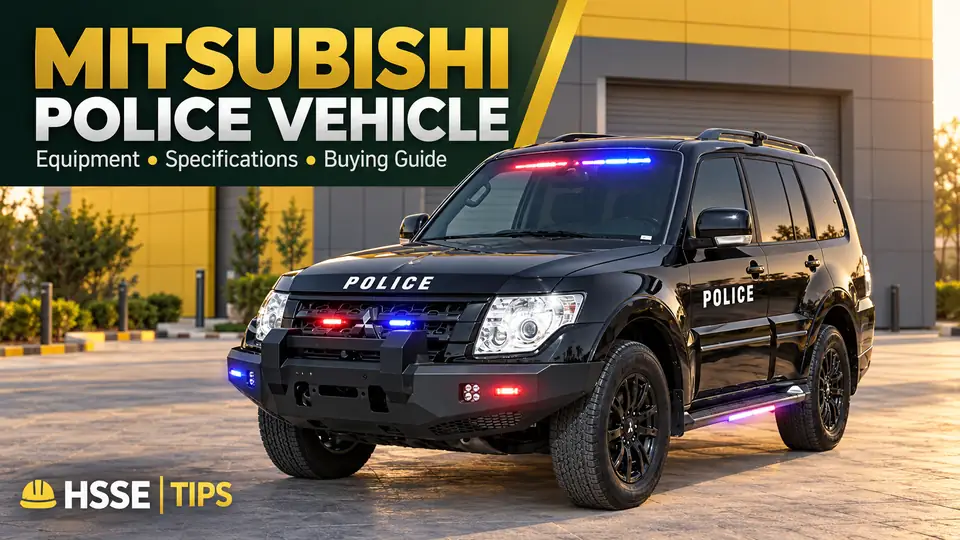
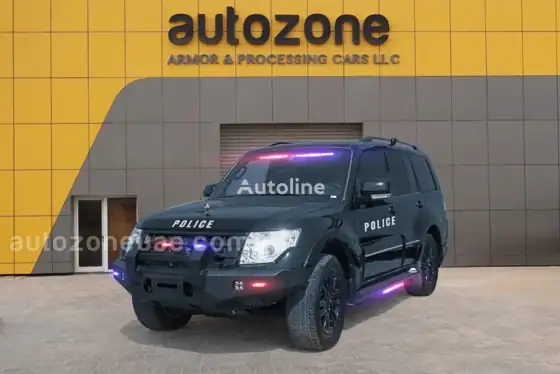
The Mitsubishi Police Vehicle is advertised as a Pajero-based conversion with warning equipment, a camera display and rear-compartment modifications. Its original gallery shows a black five-door SUV, front bumper, grilles and storage. For procurement teams, those photographs provide a starting point for a precise vehicle and equipment brief.
This review examines published information and the exact gallery, then develops practical purchasing checks. It is a document-based assessment, with no physical inspection, road test or equipment trial. Conflicting year and engine information is identified openly so buyers know which records to request.
Affiliate Disclosure: Worksite Safety Hub may earn a commission if you make a qualifying purchase through links in this article. This does not change the price you pay.
EXPLORE THE MITSUBISHI POLICE VEHICLE
Mitsubishi Police Vehicle Overview
The converter identifies a Mitsubishi Pajero, while the marketplace uses the broader name “police vehicles.” Treat that description as a conversion concept rather than a complete fleet specification. The final offer should identify the exact chassis, installed equipment and intended use.
Separate three questions: what the base vehicle is, what the conversion supplies and what the destination authority permits. A camera, partition or warning light does not by itself establish the vehicle’s approved role. Ask the supplier to connect the quotation, equipment schedule and installation documents to the actual vehicle.
This article covers Autoline KQ43674. It does not transfer specifications or equipment from Pajero Sport, Outlander or previously reviewed police, rescue and workshop vehicles. Similar markings or equipment names do not establish an identical platform or conversion.
Understanding the Pajero Platform and Vehicle Identity
The marketplace lists a 2025 manufacture year, while the converter’s model field displays 2020. Request the VIN, identification plate and supporting records to distinguish manufacture date, model year, first registration and conversion completion. Advertised “new” condition is a separate claim requiring confirmation.
Mitsubishi’s official history states that global production of the earlier Pajero concluded in 2021. That is relevant context for clarifying the later advertised year, not proof of this vehicle’s manufacture date or condition. Do not infer that it is used or assign it a different year from photographs alone.
Ask for the exact generation, chassis code, market variant, mileage and service or storage history. Match those records to the photographs and proposed delivery vehicle. This establishes which Mitsubishi manuals, replacement parts and maintenance requirements apply to the fleet.
Engine, Transmission and Four-Wheel Drive
The converter combines a 3.8-litre, six-cylinder specification with a diesel field. Mitsubishi’s historical material identifies the 3.8-litre 6G75 within its gasoline V6 family. The offered vehicle’s engine and fuel therefore require confirmation; this review does not adopt “3.8-litre V6 diesel” as an established specification.
Obtain the engine code and applicable market documentation before relying on published output or torque. An automatic transmission and four-wheel drive are described, but the marketplace’s “5+1” notation should not be interpreted as six forward gears. Confirm the actual gearbox and available drive modes.
Four-wheel drive is a vehicle configuration, not proof of unrestricted route access or pursuit suitability. Select routes and operating conditions around the actual vehicle, load, tyres, driver training and applicable instructions. No fuel-economy, range or performance guarantee is established here.
Police Conversion and Exterior Equipment
The published equipment list includes a front bumper, warning lights and other conversion accessories. The gallery shows a black bumper, Police markings and illuminated equipment. Ask which items are included, how they are attached and what installation documentation accompanies them.
A heavy-duty description does not establish a crash rating, ballistic protection or an approved impact function. Grilles and window protection likewise do not demonstrate armour. Request documentation for any protection characteristic that forms part of the purchasing specification.
Agree the final livery and exterior configuration with the authorized operator. The advertised appearance is not evidence that the same markings, light colours or accessories are permitted everywhere. Confirm destination-specific requirements before the conversion is finalized.
Warning Lights, Siren and Public-Address System
A red-and-blue light bar, siren, speakers and public-address system are advertised, along with grille, side and rear lighting. Obtain manufacturers, models, quantities, controls and applicable approvals. A broad list should become an itemized schedule tied to the quoted vehicle.
Review control placement, electrical demand, mounting and access for servicing. Ask how functions are identified and demonstrated during handover. Warning-system installation and permission to use it are separate matters; neither special road privileges nor emergency-driving authorization follows from the equipment’s presence.
Include equipment familiarization and agency-specific authorization in the fleet plan. This is procurement guidance, not instruction in emergency driving or enforcement. The article makes no claim that the conversion delivers faster response or a particular operational outcome.
Camera System, Display and Driver Visibility
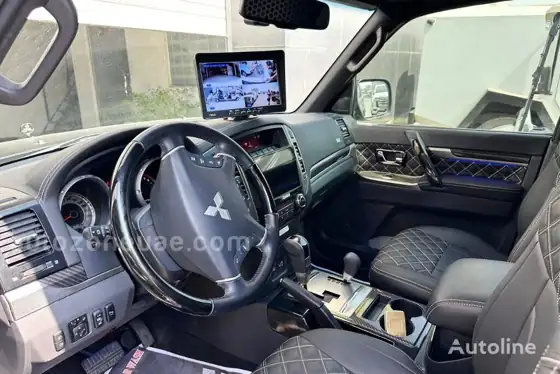
The converter describes a 360-degree camera with an LCD, and a dashboard display showing several views is visible in the gallery. Those observations support discussion of a viewing system, but do not establish recording, analytics, recognition or a particular coverage standard.
Request camera and display models, supported functions, operating conditions and the installation drawing. Check the proposed display position from the driver’s seat, alongside normal mirrors and vehicle controls. A camera view should not be described as eliminating blind spots or replacing direct observation.
If recording is supplied, agree storage, access permissions, retention and applicable privacy arrangements with the operating organization. Do not assume cloud connectivity, remote monitoring, evidential recording or a continuous operating duration unless the supplied system and documentation establish them.
Cabin, Partition and Occupant Arrangements
Cabin and rear photographs show seating and grille or partition arrangements. The equipment text contains ambiguous partition wording, so request a clear layout drawing and description of its purpose. Confirm attachment, access, ventilation and any effect on approved occupant positions.
Cargo separation, occupant accommodation and detained-person transport are different specifications. A partition or rear-window grille does not establish prisoner-transport approval. Do not infer an approved restraint system, specialized transport role or safe occupant capacity from appearance.
Review seat belts, airbags and equipment positions with the converter. Ask how aftermarket components avoid obstructing controls, sight lines and required access. No claim is made that every installation preserves original crash or airbag performance without applicable evidence.
Rear Storage and Equipment Security
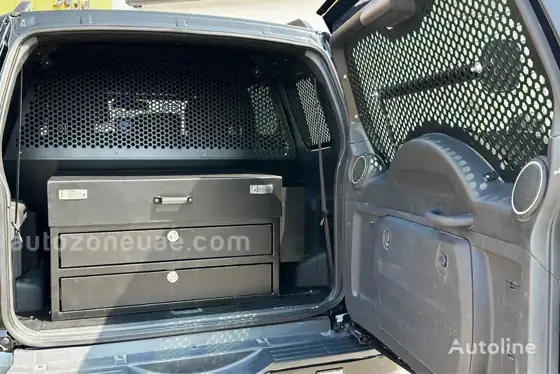
The rear gallery shows a box behind the seating area, with grilles and interior fittings nearby. Ask for dimensions, usable capacity, mounting, locks and permitted loading. The term “back side box” is not an inventory of what is supplied inside it.
Define the equipment the fleet intends to carry, then allocate secure positions and appropriate separation from occupants. Confirm access for inspection, cleaning and maintenance. A storage box does not establish K9 accommodation, medical equipment, communications equipment or any other specialist package.
Include the weight of the conversion and carried equipment in the loading assessment. Request completed axle weights and remaining capacity. A published gross vehicle weight is a rating field, not the amount of cargo that can be added after conversion.
Electrical Integration and Equipment Controls
Lighting, displays and other accessories need a documented electrical installation. Request a load schedule, wiring diagram, fusing, cable protection, isolation and service information. Identify how equipment is powered when parked and how the installation protects vehicle starting capability.
Auxiliary batteries, low-voltage protection, inverter capacity and electrical redundancy are not established by a generic accessory list. Confirm them individually if required. No battery runtime or continuous operating capability is inferred from the dashboard display or warning lights.
Arrange access to controls and protective devices so technicians can inspect and maintain the installation. Agree equipment identification, operating instructions and handover demonstrations. A tidy visible cabin does not substitute for the wiring and installation records behind it.
DISCOVER THE PATROL EQUIPMENT & CONVERSION
Technical Specifications and Conversion Equipment Tables
| Specification | Published Information | Buyer Confirmation Needed |
|---|---|---|
| Identity | Mitsubishi police vehicles; converter identifies Pajero | VIN, generation, chassis code and market variant |
| Year | Marketplace 2025; converter model field 2020 | Manufacture, model year, registration and conversion dates |
| Engine / fuel | 3.8-litre and six-cylinder details combined with diesel wording | Actual engine code and fuel; unresolved combination not adopted |
| Power / torque | 250 HP and 330 Nm in published material | Applicable engine and market documentation |
| Transmission | Automatic; marketplace notation “5+1” | Forward gears and actual gearbox |
| Drivetrain / steering | 4WD and LHD described | System, drive modes and vehicle records |
| Gross vehicle weight | 3,030 kg in listing material | Actual rating, axle limits, completed weight and remaining payload |
| Dimensions | Published dimensional formatting requires clarification | Measured units, completed dimensions and wheelbase |
| Fuel capacity | 88-litre figure in converter material | Applicability to exact chassis |
| Seating / mileage / history | Not established for the actual offered build | Approved occupants, restraints, mileage and service/storage records |
| Equipment | Evidence Status | Procurement Relevance |
|---|---|---|
| Warning light bar / additional lights | Advertised; illuminated equipment visible | Models, controls, installation and destination permission |
| Siren / speakers / PA | Advertised; complete system not tested | Final inclusion, electrical demand and approvals |
| Front bumper | Advertised and visible | Mounting and intended use; no protection rating inferred |
| Camera / LCD | Advertised; multi-view display visible | Coverage, functions and recording status |
| Partition / grilles | Advertised with unclear wording; grilles visible | Purpose, attachment, access and approved occupant arrangements |
| Rear storage box | Advertised and visible | Dimensions, locks, loading and restraints |
| Electrical installation | Accessory equipment visible; full specification unavailable | Load schedule, wiring, protection, batteries and service access |
| Specialist transport / armour | Not established in reviewed information | Only specify a capability with build-specific documentation |
VIEW CURRENT PRICE & AVAILABILITY
Patrol and Public-Service Fleet Applications
Procurement teams can assess the described package for routine patrol support, community-service fleets and public-service inspections. Authorized security organizations may define a suitable specification for their permitted activities, while event-support teams can evaluate visibility, storage and service arrangements against their own brief.
For rural or dispersed service areas, consider route conditions, communications arrangements, driver competence and maintenance access. Do not assume radios, data terminals or specialist recovery equipment are supplied. Applications depend on the accepted equipment, staffing, permissions and operating environment.
Fleet standardization should consider manuals, replacement parts, installation consistency and technician support alongside appearance. Use the organization’s own duty profile and quotations to assess lifecycle requirements. The advertisement does not establish operating savings, response performance or universal suitability.
Driver Safety, Authorization and Fleet Management
Plan familiarization for the actual vehicle and installed controls. Maintain clear driver visibility, secure carried equipment and assess fatigue, distraction and route conditions. HSE’s driving-for-work guidance provides a useful general framework covering the journey, driver and vehicle; it is not certification of this conversion.
Confirm local registration, insurance, import and authorized-use requirements with the relevant parties. Warning-system permission and vehicle installation approval need their own evidence. A converter’s management-system certificate does not establish vehicle-specific policing approval, armour or occupant-transport capability.
Keep pre-use checks, maintenance reporting and defect management within the fleet system. This review does not provide pursuit techniques, enforcement procedures or high-speed driving guidance. Any specialist operation requires the organization’s applicable authorization and training.
Maintenance, Commissioning and Support
Agree acceptance criteria before delivery. Request the chassis records, equipment schedule and installation documents, then define demonstrations of the warning equipment, camera functions, controls and storage. Include loading, restraint and access checks appropriate to the actual configuration.
Confirm service responsibilities for Mitsubishi components, conversion work and third-party devices. Obtain manuals, parts references, warranty terms and support arrangements in the destination country. Different components may have different coverage and service routes.
Record who will provide commissioning and familiarization, what evidence will be handed over and how changes are documented. These are proposed procurement checks; this review did not perform those demonstrations or assess certification.
Current Seller Offer — Verified 27 October 2026
“Verified” means checking published listing and converter information on this date. It does not establish inspected condition, ready stock, operational readiness or tested equipment performance.
Advertised product: Mitsubishi police vehicles, Autoline KQ43674.
Advertiser/converter: Autozone UAE.
Product location: Ajman, United Arab Emirates.
Condition: Advertised as new.
Asking price: On request.
Vehicle year: Marketplace 2025 and converter model field 2020 require documentary reconciliation.
Mileage and service history: Not specified in the information reviewed.
The converter describes a Pajero police conversion with warning equipment, camera/display, front bumper, partition or grilles and rear storage. Confirm exact vehicle identity, engine/fuel and the final equipment schedule. Stock or production status, lead time, commissioning, training, warranty and after-sales terms were not specified in the information reviewed.
Delivery destinations, shipping arrangements, and applicable transport terms were not specified in the information reviewed. Prospective buyers should confirm these details directly with the seller.
Request a destination-specific quotation covering collection, freight charges, insurance, export documents, applicable Incoterms and registration responsibilities. General international supply claims do not establish delivery terms for this offered vehicle.
What Buyers Should Confirm Before Purchasing
Start with a fleet brief: operating areas, approved roles, staffing, carried equipment and service support. Ask for a quotation distinguishing base vehicle, included conversion, selected options and exclusions. Identify any destination-specific changes to markings and warning equipment before finalizing supply.
Obtain the VIN, engine code and dated records to resolve year and fuel information. Request completed weights, approved seating, installation drawings and an itemized equipment schedule. Confirm camera functions, electrical demand, partition purpose and storage limits.
Agree acceptance evidence, commissioning, training and payment milestones in writing. Establish who supports each part of the vehicle after delivery and what happens if the final specification changes. Keep procurement records specific to the actual build rather than a representative gallery example.
Frequently Asked Questions
What vehicle is this conversion based on?
The converter identifies Mitsubishi Pajero, while the marketplace uses “Mitsubishi police vehicles.” Confirm the VIN, generation, chassis and market variant; do not substitute Pajero Sport or Outlander specifications.
Why do the sources show different years?
The marketplace lists 2025 and the converter model field shows 2020. Ask for manufacture, model-year, registration and conversion records. The discrepancy does not establish condition or justify assigning a replacement year.
Is it a 3.8-litre diesel?
That combination is not established. The published fuel and engine wording needs reconciliation with the actual engine code and applicable Mitsubishi documents.
What transmission and four-wheel-drive system are supplied?
Automatic transmission and 4WD are advertised. Confirm the gearbox, forward gear count and operating modes; “5+1” should not be read as six forward gears without evidence.
Which warning and public-address equipment is included?
A light bar, additional lights, siren, speakers and PA are advertised. Obtain an itemized schedule and confirm installation approvals and permitted use in the destination jurisdiction.
Does the camera system record?
A 360-camera/LCD system is described and a multi-view display is pictured. Recording, storage, connectivity and analytics are not established by those observations.
Is the vehicle armoured?
No ballistic protection is established by the reviewed material. A bumper, grilles and police markings do not demonstrate an armour rating.
Is the rear compartment approved for detained-person transport?
That capability is not established. Request the partition purpose, approved occupant positions, restraints, access and applicable build-specific documentation.
What should electrical and maintenance handover include?
Request wiring and load information, protective-device details, manuals, demonstrations, warranty terms, parts references and defined support responsibilities.
What are the price, location and availability?
The dated published offer identifies Ajman, United Arab Emirates and price on request. Ready stock, inspected condition and delivery readiness were not confirmed.
Can it be delivered internationally?
Product-specific destinations, charges, export terms and lead time were not specified in the information reviewed. Request a written destination-specific proposal, including local registration responsibilities.
Final Verdict
The Mitsubishi Police Vehicle offers a tangible conversion concept for fleet buyers: a Pajero-based SUV with advertised warning equipment, a camera display and rear-compartment adaptations. The original photographs make those features easier to discuss with the supplier and turn into an itemized procurement brief.
The purchase decision should rest on confirmed vehicle identity, documented equipment integration and an authorized operating role. Resolve the year and engine details, agree the actual supply package and define acceptance and support. That approach keeps the review useful after the current seller offer changes.
Sources and Editorial Method
Research checked 27 October 2026: Autoline KQ43674, reached through the exact publisher affiliate link, its seven-image gallery, and the corresponding Autozone Pajero police-conversion page. Specifications remain advertiser-reported unless identified as photographic observations or manufacturer context. No physical inspection, seller contact, road test, equipment trial or certification assessment was performed.
Manufacturer context: Mitsubishi Pajero history and Mitsubishi engine-family history. These sources inform the year and engine questions; they do not identify the offered vehicle. Fleet-planning context: HSE driving-for-work guidance. Apply requirements appropriate to the destination and operator.
Original photographs and generated editorial artwork are captioned separately. No product-specific advertiser video was identified in the reviewed material. Browse related Product Reviews and the Articles archive; specifications from other vehicles do not establish this conversion’s capabilities.
Join the Conversation
When specifying a police fleet vehicle, which would your team prioritize—vehicle configuration, equipment integration, driver visibility or maintenance support? Share your procurement priorities and professional experiences in the comments below. Please do not include confidential operational details or identifiable incident information.
Your experience matters
Share your thoughts on this page
Have a question, a useful experience or a suggestion? Add your input below.
Comments are public. Keep them respectful and relevant. Do not share contact details, confidential information or emergency reports.
Comments on this page
Loading comments…