Grain combines · Crop setup · Header matching · 18 October 2026
John Deere X9 1000 Review: Build Your Harvest Around the Complete Package
A short harvest window needs more than a powerful combine. It needs the right header, a crop-ready threshing setup and a grain-handling plan that keeps the work moving. The John Deere X9 1000 brings dual-rotor harvesting into that conversation—and the strongest buying enquiry starts with your crops and fields.
Affiliate disclosure: Worksite Safety Hub may earn a commission if you purchase through the affiliate links in this review. This does not change the price you pay.
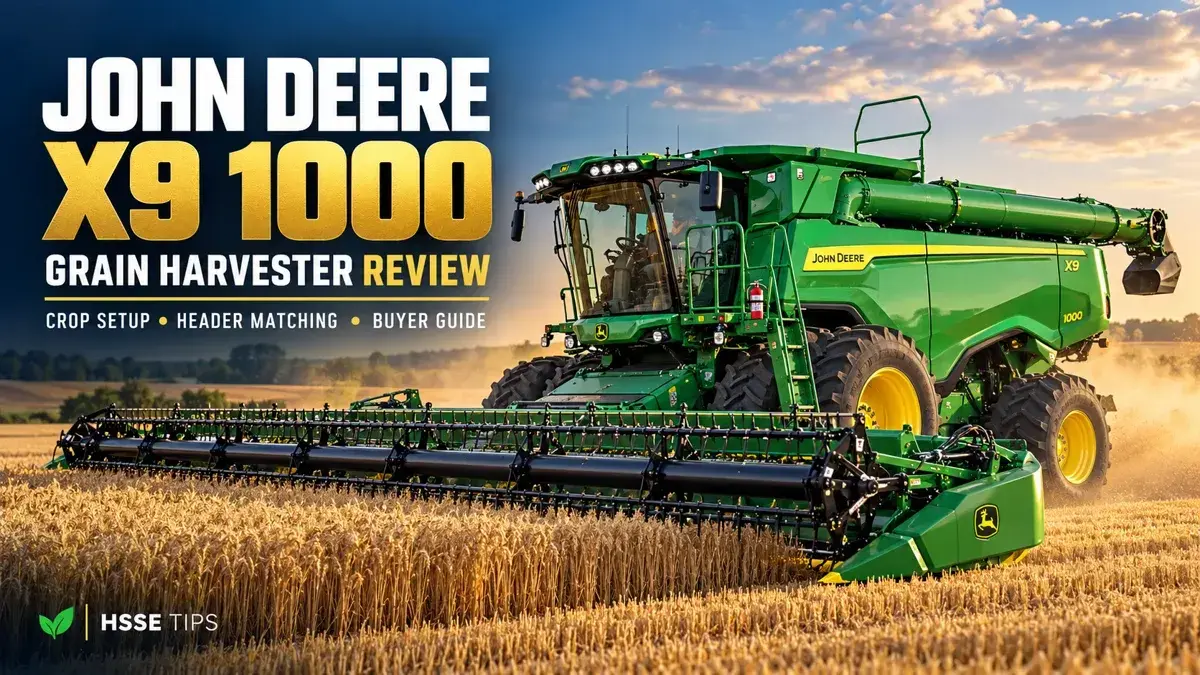
This research-based guide covers X9 1000 applications, header compatibility and practical buying questions. The dated seller section records a used 2022 machine in Nebraska, USA. We have not operated or inspected that individual combine.
What Makes the X9 1000 Worth Assessing?
John Deere’s model-year 2022 documentation describes the X9 1000 with the X Series Dual Separator, a 13.6-litre engine and a 420-bushel grain tank. These are useful model reference points for a buyer planning a harvesting system; establish the actual build and equipment of the offered machine from its serial number.
| MY2022 manufacturer reference | X9 1000 |
|---|---|
| Threshing and separating | X Series Dual Separator (XDS). |
| Engine | 13.6-litre, six-cylinder PWS. |
| Published horsepower | 550 hp rated; 630 hp maximum. Different rating conditions apply. |
| Grain tank | 420 bushels / approximately 14,800 litres. |
For a farm or harvesting business, the practical opportunity is to match that platform to a complete workflow: feed the crop evenly, thresh and separate it with the appropriate components, manage the residue and transfer grain to the next stage. Your field conditions and quality targets belong at the centre of the decision.
Start with Your Crop Mix and Harvest Window
Give the supplier a clear picture of the work before discussing a header width or daily acreage. Include crop types, expected yields, typical moisture, field sizes, terrain and the number of workable harvest days you are planning around.
| Your harvesting requirement | What to establish with the supplier |
|---|---|
| Wheat and other small grains | Suitable header, concaves, cleaning components and straw-handling setup. |
| Corn | Row spacing, corn-head configuration, drive requirements and crop-processing package. |
| Soybeans or other low-cut crops | Cutterbar and ground-following requirements, header controls and crop-specific setup. |
| Several crops in one season | Changeover parts, available tooling, setup support and time between crops. |
| Grain quality or straw requirements | Required sample quality, loss checks and whether straw will be chopped or retained. |
These are enquiry prompts, not confirmation that the advertised machine includes every configuration. Ask for a written recommendation tied to the combine’s build and your intended work.
Header Compatibility: Confirm the Whole Connection
John Deere’s X Series brochure lists corn heads, drapers and belt pickups as front-end equipment options. The individual match depends on the header model, model year, feederhouse and drive configuration—not simply its width.
Send the seller or a John Deere dealer the serial numbers of the combine and any header you already own. Ask them to verify the mounting and latching arrangement, drive connection, electrical and hydraulic interfaces, control compatibility, lift requirements and any required kits.
For an existing fleet, this is especially useful: compare the cost of matching your current header with the cost of buying a complete harvesting package. Include header transport, crop-specific attachments and commissioning in both quotations.
For this offer: request a written list identifying any included header, its model and serial number, crop attachments and trailer. The checked listing does not establish a complete header package, and nearby equipment in seller photographs should not be treated as part of the sale.
Match the Crop-Processing Components
Ask for the fitted concave, separator, chaffer and sieve specifications, together with details of any crop-conversion parts supplied. Have the supplier assess them against your crop mix and grain-quality requirements.
For a demonstration or inspection, agree how the team will review the feederhouse, threshing components, grain handling and residue system. Ask for available harvest records or a current working video, and identify which manuals and setup guidance apply to the serial number.
Build your seasonal plan around the whole operation. Evenly feeding the machine, moving grain away and having storage or drying capacity available all deserve a place in the enquiry. A model’s advertised maximum performance is not a forecast for a particular field.
Grain Cart, Auger and Road Moves
Confirm the unloading-auger length and configuration fitted to the offered combine. Compare its reach and clearance with the intended header and your grain cart, then discuss the working arrangement with the supplier.
Header towing needs its own check. John Deere’s MY2022 ordering guide places restrictions on draper towing with the 31 ft auger option. Have a dealer verify the actual auger, hitch and trailer combination before planning to tow a header behind the combine.
For harvest logistics, a simple planning calculation can help: area × expected yield = estimated crop quantity. Compare that quantity with available harvest days, cart capacity, haulage cycles and receiving capacity. Use consistent units and allow for field moves and other non-harvesting time. This frames the equipment discussion without turning a brochure claim into a daily-output promise.
Cab, Guidance and Harvest Data
Request a cab and technology inventory: seat and suspension package, displays, receiver, cameras, guidance functions, yield and moisture equipment, and any associated activations or subscriptions. Ask for a demonstration and confirmation of what remains with the machine at sale.
For a used 2022 combine, the current brochure’s G5 displays, newer receiver options and later automation packages should not be assumed to be installed. Have the dealer check the actual hardware, software and account-transfer requirements. Include setup and familiarisation in the handover plan.
The same principle applies to tyres or tracks, drive configuration and residue equipment. Establish the supplied build, then assess it against field access, soil conditions, transport and the next operation after harvest.
Seller Offer Snapshot — Checked 18 October 2026
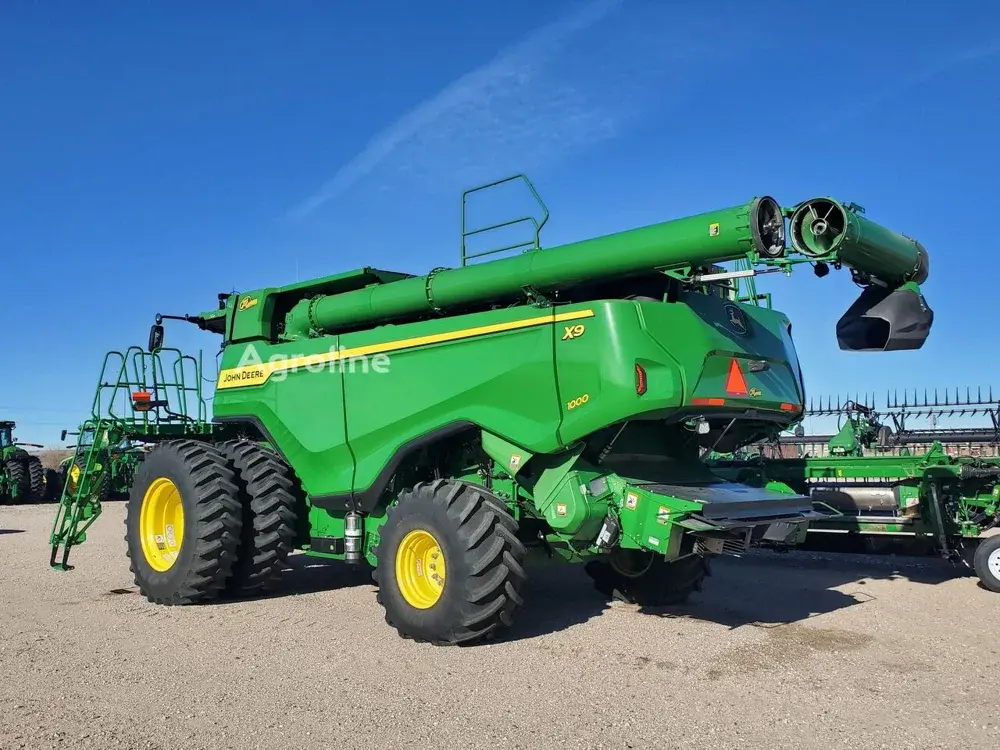
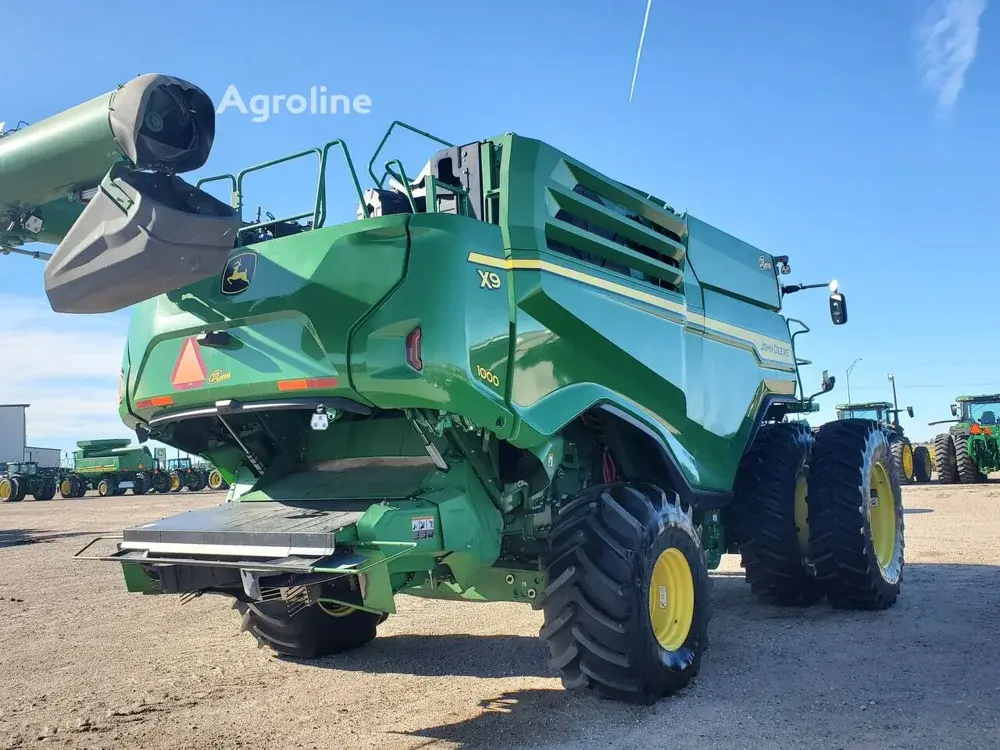
This section records the individual Agroline offer reached through the supplied affiliate URL. Reconfirm current availability, hours, equipment inclusions and the final price before arranging a viewing.
| Advertised machine | Used John Deere X9 1000 grain harvester. |
|---|---|
| Product location | Nebraska, USA, as stated in the product listing. Request the physical inspection and collection site. |
| Year of manufacture | 2022, according to the seller’s listing. |
| Advertised hours | 1,290 running hours and 1,030 rotor running hours. Confirm both current readings and maintenance history. |
| Advertised price | US$355,000 net; US$426,000 gross. Ask the supplier to explain the applicable tax basis and provide a destination-specific quotation. |
| Supplier and reference | Exim Capital LLC; Agroline XN51622. |
| Package to confirm | Header and trailer inclusions; feederhouse, crop components, unloading auger, cab equipment and technology inventory. |
Where Does the Supplier Advertise Delivery?
Exim Capital’s Countries Served page advertises worldwide shipping and publishes the following regional examples and indicative transit ranges.
| Region | Examples named by supplier | Published transit range |
|---|---|---|
| Africa | Nigeria, Ghana, Kenya, South Africa | 25–35 days |
| Europe | Poland, Romania, Germany, Ukraine | 18–25 days |
| Middle East | UAE, Saudi Arabia, Iraq, Oman | 22–30 days |
| Asia | India, Pakistan, Bangladesh, Kazakhstan | 28–40 days |
| South America | Brazil, Colombia, Peru, Argentina | 20–28 days |
| Central America & Caribbean | Guatemala, Dominican Republic, Jamaica, Costa Rica | 10–18 days |
| Australia & Oceania | Australia, New Zealand, Papua New Guinea, Fiji | 35–45 days |
These are general supplier estimates, not a delivery commitment for this combine. Confirm the route, sailing, start point for the timing estimate and any inland stages. For US collection, Canada or another destination, request a specific quotation rather than inferring coverage from the regional examples.
Port Delivery, Documentation and Shipping Costs
The supplier’s Export Process page describes inspection reporting, purchase documentation, inland transport, port handling, ocean freight and cargo insurance. Its final delivery step specifies the destination port.
Ask for an itemised quote covering the combine, any header and trailer, loading, necessary dismantling, freight, insurance and unloading. Establish who handles customs clearance, local charges and onward transport from the destination port. Confirm the named Incoterm and the exact delivery point in the contract.
The checked offer does not publish machine-specific freight charges, payment milestones, warranty terms or a fixed delivery date. Request those terms in writing, together with the inspection report and conditions for any deposit.
Inspection and Handover Questions
Agree an inspection scope with a qualified person. Include machine identity, engine and rotor hours, service records, tyres, feederhouse, crop-processing components, grain-handling system, unloading auger and the fitted electronics.
Request the actual transport dimensions and weight for the agreed configuration, including tyre arrangements and any removed equipment. Have the carrier establish the loading and transport plan. For handover, obtain the correct manuals, supplied-parts inventory and the agreed demonstration or familiarisation arrangements.
See an X9 Dealer Walkaround
Watch Heritage Tractor’s John Deere X9 walkaround. The dealer video discusses the X Series and model-year 2023 differences between the X9 1000 and X9 1100. It is not a demonstration of XN51622, and the shown equipment is not an inventory for the 2022 offer.
Questions Buyers Commonly Ask
Is a header included?
Obtain written confirmation of the included header, serial number, crop attachments and transport equipment. The checked advertisement does not establish a complete header package.
Can I use my current header?
Provide both serial numbers to a John Deere dealer for a compatibility assessment. Confirm the feederhouse, drives, controls, required kits and lift configuration.
Why are two hour readings listed?
The offer lists running hours and rotor running hours separately. Request current photographs of both readings and ask the supplier to explain their recorded basis and supporting history.
What should my first enquiry say?
Try: “I am interested in X9 1000 XN51622 for [crops, acreage and expected conditions]. Please confirm the serial number, both hour readings, header inclusions, crop setup and fitted technology. I would also like inspection arrangements and a complete quotation to [destination], showing the delivery point and onward costs.”
Choose the Combine as Part of Your Harvest System
The X9 1000 is best assessed alongside the header, crop-processing setup, grain cart and receiving operation. Define that package before comparing offers. The dated Nebraska listing gives you a specific machine to discuss while this model guide remains useful beyond the individual sale.
Sources and Review Method
- John Deere MY2022 combine ordering guide, X9 1000 section — model references, configuration options and header-towing considerations.
- John Deere X Series brochure — model-family equipment and later technology, distinguished from the individual offer.
- Agroline XN51622 (affiliate link) — seller details and original photography, checked 18 October 2026.
- Exim Capital Countries Served and Export Process — supplier delivery coverage and general process, checked on the same date.
This is a document-based buying guide, not a hands-on test or condition certification. The dated offer can be refreshed or marked sold while the model guide remains available. Explore more equipment reviews.
Join the Discussion
Which part of an X9 1000 package matters most to your harvest: header matching, crop setup or grain-cart logistics? Share your crops, preferred setup or a question in the comment section below.
Your experience matters
Share your thoughts on this page
Have a question, a useful experience or a suggestion? Add your input below.
Comments are public. Keep them respectful and relevant. Do not share contact details, confidential information or emergency reports.
Comments on this page
Loading comments…