GRAIN HARVESTERS • CROP SETUP • HEADER MATCHING
John Deere S670 Review: Build Your Harvest Around the Complete Package
A combine is only one part of a successful harvest. The header must suit the crop, the threshing setup must suit the material, and the grain-handling plan must keep the work moving. That is the right starting point for a John Deere S670.
This guide focuses on the S670 model and the decisions that matter on the farm. A separate, dated section covers the linked 2012 machine in Nebraska, so the review can remain useful when that individual offer changes.
Affiliate disclosure: HSSETIPS may earn a commission if you purchase through the affiliate links in this article, at no additional cost to you. This is a document-based buying guide, not a hands-on test or an independent inspection of the advertised combine.
VIEW THE S670 OFFER & CONTACT THE SELLER →
What Work Should You Plan Around an S670?
The S670 is a self-propelled combine that brings crop feeding, threshing, separation, cleaning and grain collection into one machine. Assess it as a harvesting package for your crop mix, field conditions and available labour, rather than choosing on engine power alone.
John Deere's model-year 2012 ordering documentation distinguishes corn, small-grain and rice configurations. That is a useful reminder that “S670” identifies the model, while the installed harvesting equipment determines the starting point for your crops.
Before comparing offers, write down the crops and acreage, expected yield and moisture range, straw-management needs and target harvesting window. Add the distance between fields and the grain-cart, truck and receiving capacity available. These details give the seller and inspecting dealer a practical brief.
2012 Model Reference: Useful Specifications in Context
Deere's 2012 S670 documentation provides the following reference figures. They describe published model equipment, not a verified build sheet for the advertised Nebraska combine.
| Manufacturer reference | Published 2012 S670 detail |
|---|---|
| Engine | John Deere six-cylinder 9.0 L diesel |
| Rated engine power | 278 kW / 373 hp at 2,200 rpm, ECE R120 |
| Grain tank | 300 bushels / 10,600 L |
| Average unloading rate | 3.3 bushels per second / 120 L per second |
| Reference unloading auger | 22.5 ft / 6.9 m |
Different equipment and later modifications can change the practical package. Confirm the tank extensions, auger, drivetrain and crop-processing components on the actual machine. Published unloading capacity also needs to be considered alongside the grain cart, operator coordination and field conditions.
Start With Header Compatibility
The right header decision involves more than cutting width. Confirm the crop, header model and serial number, weight, required feederhouse drive, hydraulic connections, electrical interface and height-control functions. Establish the combine's lift equipment and approved configuration with a Deere dealer.
For corn, discuss row count and spacing, the header drive requirements and the expected material load. For small grains or soybeans, discuss platform or draper suitability, ground following, reel control and how the header fits the field terrain.
Deere's later header ordering literature identifies specific single-point latching requirements for model-year 2012–2013 S670 machines when pairing certain headers. Treat that as a reason to obtain a serial-number-based compatibility assessment, rather than assuming that a similar-looking connector establishes a complete match.
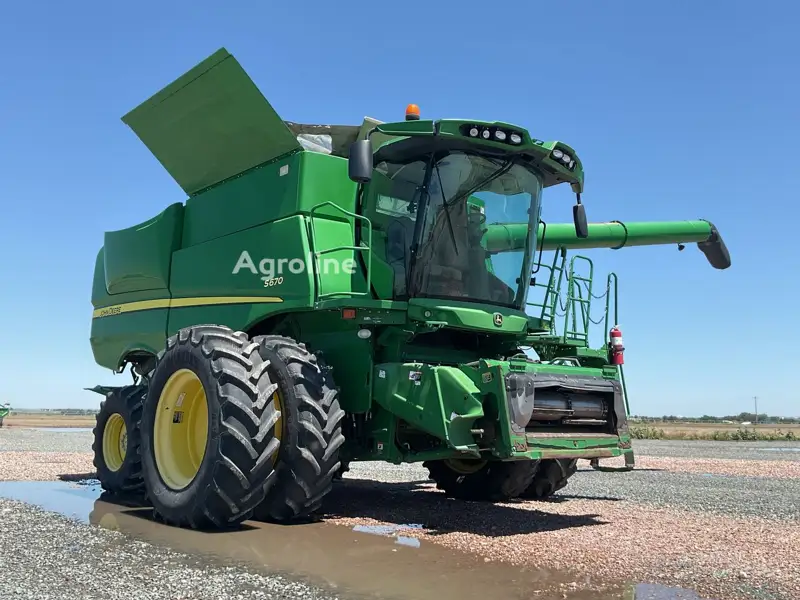
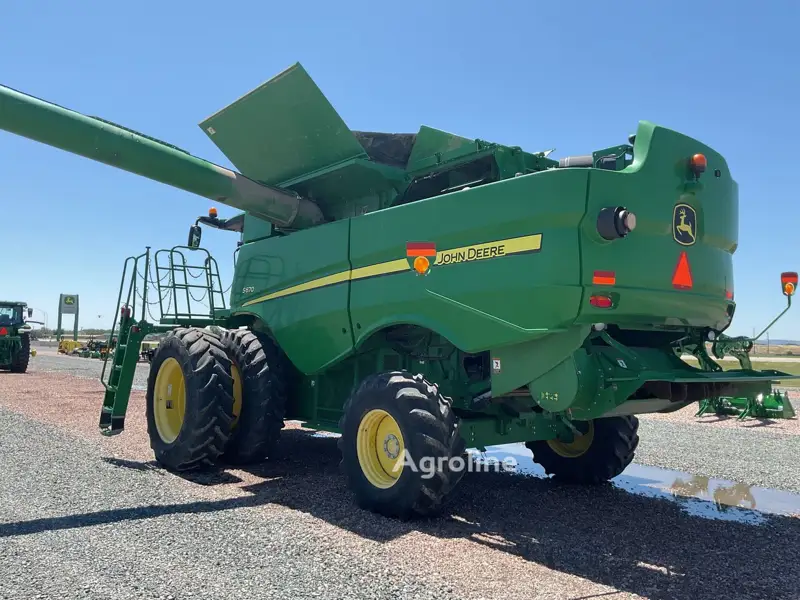
Ask for the proposed header to be named explicitly in the quotation. If it is purchased separately, request a separate price, transport plan and list of any required installation work. The advertised combine photographs show an exposed feederhouse; this review does not assume a header is included.
Match the Crop-Processing Setup to the Crop
In the 2012 reference, Deere specifies TriStream rotor equipment for corn and small grains, with different concave selections for those applications. Rice equipment has a separate configuration. Ask which rotor, concaves, grates, chaffer and sieve are fitted to the machine you are considering.
For a farm changing between crops, request a written list of conversion components and adjustment guidance. Establish what is included with the sale, what needs to be sourced and who will prepare the machine. A documented crop setup is more useful than an unqualified promise that a combine will harvest everything.
During a suitable demonstration, assess feeding, the grain sample and losses using the operator manual and a qualified harvest specialist. Crop condition, moisture, settings and forward speed all belong in that discussion; this guide does not promise a fixed output per hour.
Keep Grain Handling and Residue in the Plan
Compare the fitted auger's reach and discharge position with your grain carts or trailers. Ask for the actual tank-extension arrangement and unloading controls to be demonstrated. Confirm access, transport height and the route between fields with the machine in its agreed transport configuration.
Residue handling also needs a clear plan. Will you retain straw for baling, chop it, or spread it for the following operation? Request details of the installed chopper and spreading equipment and discuss how it will be configured for your crop and header width.
Think of the combine, header, grain cart and receiving point as one workflow. A suitable unloading plan helps you make practical use of the combine's capacity within the harvest window you have.
Cab Controls, Guidance and Harvest Records
The 2012 model documentation includes CommandCenter information and TouchSet adjustment functions. It also describes AutoTrac-ready equipment separately from a GreenStar display. Verify what is installed and included on the individual machine.
Ask for display and receiver identification photographs, current operating screens and the list of guidance activations. Establish how yield and moisture information will be calibrated and recorded, and whether the included equipment works with your existing farm-data arrangements.
Use the machine's serial number when discussing any upgrade. Current S7 or X9 technology should not be assumed to be part of an earlier S670 package.
Seller Offer Snapshot — Checked 18 October 2026
The linked advertisement is offered by Exim Capital LLC on Agroline, listing RJ51622. These are seller-stated offer details, subject to current confirmation.
| Advertised item | Offer detail |
|---|---|
| Model / condition | John Deere S670 / used |
| Year | 2012 |
| Running hours | 3,400 hours |
| Rotor running hours | 2,400 hours |
| Product location | Nebraska, USA |
| Advertised net price | US$75,000 |
| Advertised gross price | US$90,000 |
| Engine / fuel | John Deere / diesel |
Request confirmation of the serial number, both hour readings, service history and current equipment list. The advertisement does not establish a named included header or a complete precision-farming package. Ask the seller to identify all accessories and crop-conversion parts in the sale agreement.
Ask the supplier to explain the tax basis of the net and gross figures for your transaction. Obtain an itemised quotation for equipment, inspection, preparation, freight and destination charges. The displayed prices should not be treated as a complete delivered cost.
This dated offer section can be updated or marked sold while the model and compatibility guide remains available.
CHECK PRICE, HEADER INCLUSIONS & AVAILABILITY →
Supplier Delivery Areas and General Transit Estimates
Exim Capital's Countries Served page identifies the following regions and example destinations. These are supplier-wide routes and general transit estimates, not a confirmed delivery commitment for this S670.
| Region | Examples listed by the supplier | General transit estimate |
|---|---|---|
| Africa | Nigeria, Kenya, Ghana, Tanzania, South Africa | 25–35 days |
| Europe | Poland, Germany, Romania, Turkey, Ukraine | 18–25 days |
| Middle East | UAE, Saudi Arabia, Iraq, Jordan, Oman | 22–30 days |
| Asia | India, Pakistan, Bangladesh, Kazakhstan, Uzbekistan | 28–40 days |
| South America | Brazil, Colombia, Peru, Chile, Argentina | 20–28 days |
| Central America and Caribbean | Guatemala, Honduras, Dominican Republic, Haiti, Jamaica | 10–18 days |
| Australia and Oceania | Australia, New Zealand, Papua New Guinea, Fiji | 35–45 days |
Ask for confirmation of your country and destination port. The supplier's page invites enquiries about other destinations; the estimates above should not be read as an order-to-delivery guarantee.
Shipping Terms to Confirm for This Machine
Exim Capital's general export process describes inspection reports, purchase and title documentation, inland transport, port handling, ocean freight and cargo insurance. It describes delivery to the destination port, so establish onward transport and unloading separately if required.
Request the proposed shipping method, measured transport dimensions, preparation or disassembly needs, loading responsibilities and insurance terms. Confirm the Incoterm, payment schedule, applicable duties and taxes, and which services are included in the quote. No fixed freight price, transaction-specific Incoterm or payment schedule was confirmed in the advertisement.
Ask for the inspection report applicable to this combine and agree any independent inspection access before purchase.
Watch John Deere S670 Combines in the Field
S670 model footage by bigtractorpower, published July 2014. These are separate machines and harvesting packages, not footage or an inspection of the advertised Nebraska combine.
Questions to Send Before Contacting the Seller
- Can you confirm the serial number and both hour readings? Request current photographs and the available service records.
- Which crop-processing components are fitted? Name your crops and ask for the rotor, concaves, grates, chaffer, sieve and conversion equipment.
- Is a header included? If so, request its model, serial number, working width and a documented compatibility assessment.
- What grain-handling and residue equipment is fitted? Confirm tank extensions, auger specification, chopper and spreading arrangement.
- Which displays and guidance items stay with the combine? Obtain the receiver, activation and software details and request a demonstration.
- Can I arrange an independent inspection? Agree the scope of checks and any operational demonstration under the appropriate procedures.
- What is the total cost to my destination? Request an itemised quotation and clarify tax, shipping, preparation and onward delivery.
Make the S670 Part of a Complete Harvest Plan
The S670 is best evaluated alongside the crop setup, header, grain cart and receiving operation you intend to use. Start with those requirements, then confirm the individual machine's configuration, condition and complete purchase cost.
The Nebraska offer gives you a specific starting point for that conversation. Bring your crop list and proposed header to the seller and inspecting dealer, and ask them to document the package before you commit.
EXPLORE THE S670 & REQUEST YOUR HARVEST PACKAGE QUOTE →
Sources and Review Method
- John Deere model-year 2012 ordering documentation, hosted by Ohio — S670 Corn Combine section, dated 1 November 2011; model references and crop configurations.
- John Deere header ordering guide — model-year and serial-number-specific latching requirements; not a build sheet for the advertised combine.
- Exim Capital / Agroline RJ51622 — dated offer details and seller photographs, checked 18 October 2026.
- Exim Capital Countries Served and Export Process — supplier-wide routes, transit estimates and process, checked on the same date.
- MachineFinder S-Series walkaround gallery — further model-family walkarounds. See also bigtractorpower S670 field footage.
This review uses manufacturer documentation and supplier information. It does not certify machine condition or promise a harvesting rate. Explore more equipment reviews.
Join the Discussion
Which part of an S670 harvest package matters most to you: header matching, crop setup or grain-cart logistics? Share your crops, preferred setup or question in the comment section below.
Your experience matters
Share your thoughts on this page
Have a question, a useful experience or a suggestion? Add your input below.
Comments are public. Keep them respectful and relevant. Do not share contact details, confidential information or emergency reports.
Comments on this page
Loading comments…