SELF-PROPELLED SPRAYERS • CROP CARE • BUYING GUIDE
John Deere R4030 Review: Build Your Spraying Day Around the Right Setup
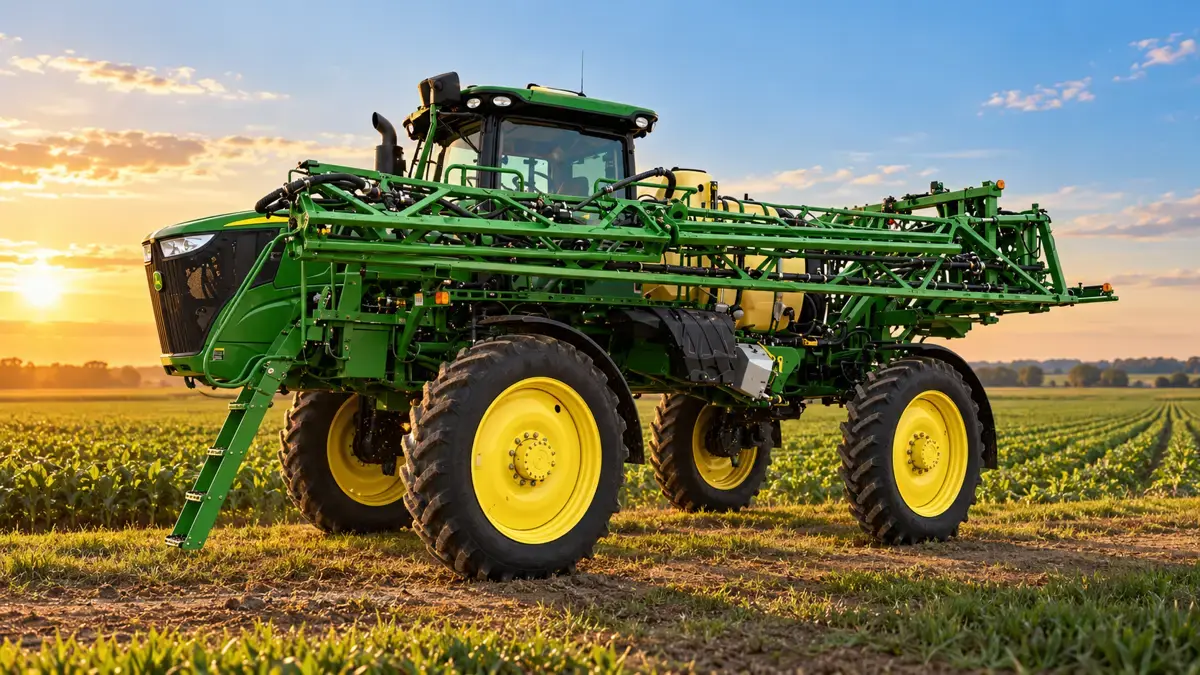
A productive spraying day starts before the first pass: the right tank size, a boom that suits your fields, and controls that match the application. The John Deere R4030 brings those decisions together in a dedicated, high-clearance self-propelled sprayer.
If you are planning crop-care work for your own farm or an application business, this guide explains what to evaluate. The individual Ohio offer appears in a clearly dated section, so the model guide remains useful after that machine sells.
Affiliate disclosure: HSSETIPS may earn a commission if you purchase through the affiliate links in this article, at no additional cost to you. This is a researched buying guide, not a hands-on test or an independent condition report.
VIEW THE R4030 OFFER & CONTACT THE SELLER →
What the R4030 Is Designed to Do
The R4030 is a self-propelled agricultural sprayer: the vehicle, solution tank, application system and boom work as one machine. It is a model to assess for crop-protection passes and compatible liquid applications, using the correct product, nozzles and operating setup.
Its place in your operation depends on field size, crop rows, seasonal workload and refill logistics. A wide boom can cover more ground per pass, while a dedicated chassis gives you an alternative to allocating a tractor to a mounted or trailed sprayer. The practical match comes from your fields and application programme.
For contractors, also consider movement between customers, access through field entrances and the time needed to prepare for a different product. For owner-operators, compare the spraying workload with the rest of the farm's seasonal operations.
Model References: Tank, Drive and Crop Clearance
John Deere's published R4030 specifications describe a nominal 800-US-gallon solution tank—about 3,028 litres—alongside hydrostatic drive, full-time four-wheel drive and independent wheel air suspension. Deere's regional model page gives 280 hp (209 kW) and approximately 1.52 m under-frame crop clearance with standard tyres.
These are manufacturer model references, not a certification of the advertised unit. Model year, market, tyres, boom and installed options matter. The 2018 Deere ordering guide also lists different boom and solution-system choices; later equipment should be checked against the serial number before being attributed to a 2014 machine.
The useful benefit of those references is a starting point for comparing your workload. Confirm the actual tank, wheel arrangement and application hardware on any individual R4030 before agreeing a purchase.
Plan the Refill Cycle, Not Just the Tank Size
A tank specification becomes more useful when you translate it into work between fills. As a simple planning example, 3,000 litres divided by an illustrative total spray volume of 100 L/ha equals 30 hectares. At an illustrative 150 L/ha, it equals 20 hectares.
Those figures are arithmetic examples, not application-rate recommendations or a promise of usable coverage. Actual working volume, residual liquid, product instructions and field conditions determine the result. Use the authorised product label and an agronomist's application plan to establish the correct rate.
Then add the time required to travel to water, fill, mix, return to the field and clean the system. Ask about the fill connection, induction equipment, agitation and rinse arrangements. A suitable water supply and tender plan can be just as important to the day's work as the size of the machine.
Match the Boom to Your Fields
Choose a boom around tramlines, crop rows, field shape and access. Confirm the actual working width, number of sections, nozzle spacing and folded transport dimensions. These details affect how the sprayer fits existing field practices.
During an inspection, ask for the boom to be unfolded, raised, levelled and folded in a suitable clear area by an authorised operator. Request close-ups of joints, breakaways, plumbing and nozzle bodies. Establish which boom-height controls or sensors are installed and demonstrate their operation.
A section layout also matters at headlands and irregular boundaries. Ask whether section control is manual or automatic, what hardware and software are required, and which functions will be included and active at handover. A model's available options do not establish the equipment on a particular used machine.
Nozzles and Calibration Turn Capacity Into Application
John Deere's sprayer-parts guidance emphasises nozzle selection across pressure ranges, flow rates and spray patterns. For a buyer, the key is to identify the nozzle bodies and tips already fitted, then assess them against the intended product and application.
Request a clean-water demonstration and an appropriate calibration check. Confirm the rate controller, flowmeter, pressure indication, section shut-off and nozzle output with a qualified sprayer technician. This provides a practical basis for preparing the machine for your work.
Follow the product label, operator manual and applicable local requirements for nozzle choice, pressure, boom height, weather conditions, protective equipment and drift control. The EPA explains that pesticide labels can include drift-reduction instructions; the requirements for your actual product and destination govern its use.
Cab, Guidance and Digital Compatibility
Look at the operator's workflow: visibility of the field and boom, access to rate settings, section controls and the information needed during a pass. Request clear photographs of the display identification and operating screens rather than relying on a description alone.
For automatic steering, documentation or mapping, confirm the installed display, receiver, steering components, software activations and correction service. Ask which items stay with the sprayer and which subscriptions or account arrangements need attention. Have a Deere dealer assess compatibility with your existing precision-farming system.
Assess upgrades separately against the machine's serial number and market. This review does not assume that later ExactApply, See & Spray or current-generation connected features are included in an older R4030.
Seller Offer Snapshot — Checked 18 October 2026
The linked offer is advertised by JumboBee on Agroline, listing VR52183. The details below are seller-stated and should be reconfirmed before purchase.
| Advertised item | Offer detail |
|---|---|
| Model / condition | John Deere R4030 / used |
| Year / hours | 2014 / 6,182 hours |
| Product location | Ohio, USA |
| Asking price | US$69,500 |
| Solution / rinse capacity | 3,000 L / 454 L |
| Boom information | 27 m length option and nine sections listed; confirm fitted width |
| Drive / suspension | Hydrostatic / dual-strut independent wheel air ride |
| Solution pump | Hydraulically driven centrifugal pump |
| Display description | 4600 Gen 4 CommandCenter listed; confirm actual installation |
Request the serial number and engine identification to confirm the power rating; the manufacturer model reference above provides a comparison basis. Also confirm the fitted boom, display and application-control equipment against current photographs and an operational demonstration.
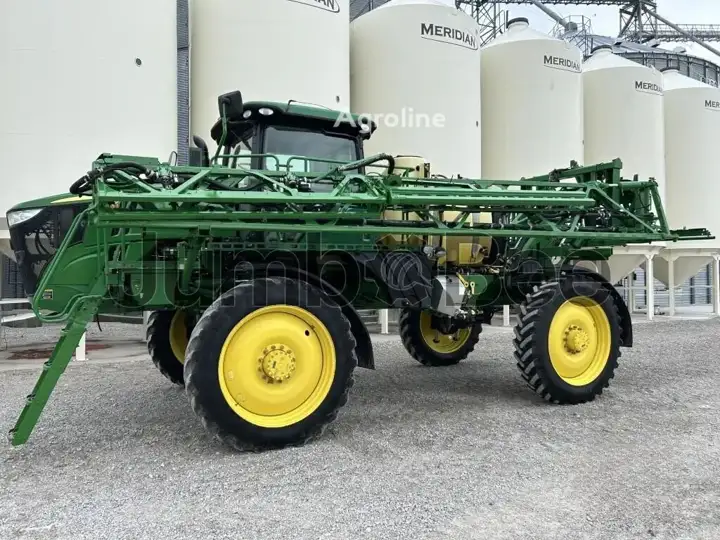
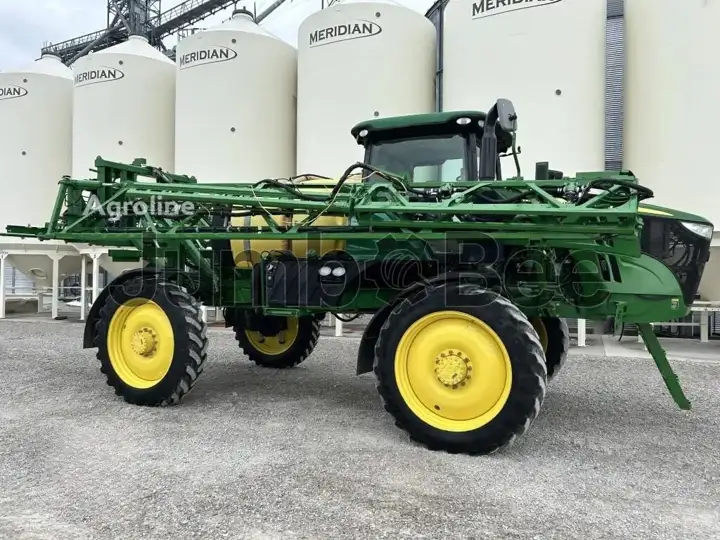
The asking price is not presented here as a delivered total. Request a written quotation covering applicable taxes, inspection, preparation, freight and destination costs. Availability, hours and price can change. This dated section can be refreshed or marked sold while the model guide remains available.
CHECK CURRENT PRICE, EQUIPMENT & AVAILABILITY →
Delivery Areas and Shipping Conditions
JumboBee advertises domestic and international shipping, with personalised quotations and logistics powered by Atlantic Project Cargo. Its service page lists disassembly, packing, loading, customs assistance and pre-shipment inspection options. It does not provide a country-by-country delivery list for this R4030.
The supplier states that domestic shipments are fully insured, while international insurance options carry an additional charge. Confirm insured value, coverage and exclusions in your own quotation.
For this Ohio machine, request destination confirmation, transport configuration, measured shipping dimensions, collection and unloading responsibilities, preparation requirements, freight charges and the estimated schedule. Ask how the tank and application system will be cleaned and prepared for transport. No fixed transit time or Incoterm was confirmed in the linked advertisement; agree payment and delivery conditions in writing.
Watch a 2014 R4030 Walkaround
Dealer footage by AGROPARK – Euro Noliker Kft., published April 2016. This is a different 2014 sprayer, not the advertised Ohio unit. The video's boom and technology package should not be assumed to match this offer.
Questions Buyers Should Ask Before an Inspection
- Can you provide the serial number and service records? Request current hour-meter photographs and identify whether any separate spraying-hour records are available.
- What is the actual boom configuration? Confirm width, sections, nozzle spacing, plumbing and installed height-control equipment.
- Which display and guidance items are included? Ask for identification photographs, receiver details, activations and a demonstration of the included functions.
- Can the solution system be demonstrated with clean water? Discuss pump operation, agitation, rate control, section shut-off and calibration evidence with the inspector.
- What tyres and track-width settings are fitted? Compare them with your rows, entrances, ground conditions and transport plan.
- What preparation and cleaning history is available? Establish appropriate cleaning and inspection arrangements for your planned products and transport destination.
- What is the complete delivered price? Request the agreed equipment inclusions, inspection access, freight and payment terms in writing.
Build the Purchase Around Your Spraying Programme
The R4030 is worth investigating when your priority is a dedicated sprayer that can be matched to your crop-care workload. Start with tank coverage between fills, then work through boom width, nozzle selection, controls and field access.
The Ohio offer gives you a specific machine to discuss. A documented equipment list, suitable inspection and complete delivery quotation will help you decide how it fits your farm or application business.
EXPLORE THE R4030 & REQUEST A COMPLETE QUOTE →
Sources and Review Method
- John Deere regional R4030 model specifications — engine rating, chassis and application-system references; market configuration varies.
- John Deere 2018 sprayer ordering guide, R4030 section — tank specification and configuration choices; not a build sheet for this 2014 unit.
- John Deere Sprayer Parts Guide — nozzle-selection considerations.
- JumboBee / Agroline advertisement VR52183 — individual offer and seller photographs, checked 18 October 2026.
- JumboBee shipping services — supplier delivery and preparation statements.
- US EPA: improving labels to reduce pesticide drift — label-based drift-reduction context.
This guide combines manufacturer references, supplier information and practical buying questions. It does not certify machine condition or guarantee application performance. Explore more equipment reviews.
Join the Discussion
What matters most in your next sprayer: tank capacity, boom width, refill time or application controls? Share your crop, field setup or buying question in the comment section below.
Your experience matters
Share your thoughts on this page
Have a question, a useful experience or a suggestion? Add your input below.
Comments are public. Keep them respectful and relevant. Do not share contact details, confidential information or emergency reports.
Comments on this page
Loading comments…