Product Reviews · Construction Site Equipment · 6 min read
JCB 6 FT 3S5 Mini Dumper Review: Material Movement for Busy Sites
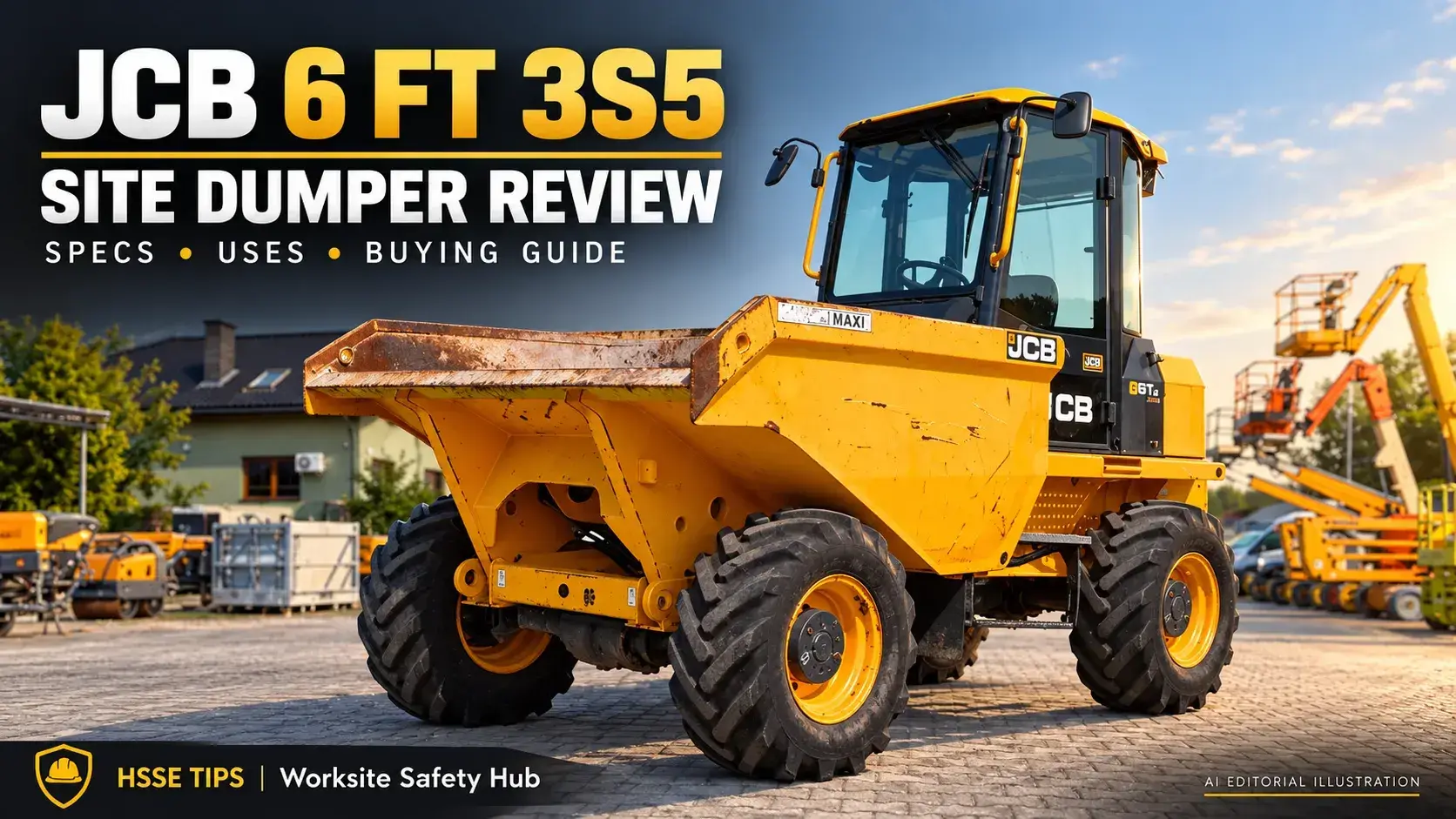
The work does not stop at digging. The material still needs to move. For a construction team, matching a dumper to the excavator, route and discharge point can make the equipment enquiry far more useful. This cabbed JCB offer provides a specific machine to assess against that plan.
DAKOM advertises the used dumper with a 6,000 kg payload. The table below brings together the listing’s key details; confirm the actual configuration and current condition before agreeing a purchase.
Review method: a desk-based assessment of the seller’s offer, photographs and listing video, alongside JCB manufacturer reference information. We have not operated or independently inspected the machine. Manufacturer reference features are not treated as proof of this used unit’s equipment or condition.
JCB 6 FT 3S5 offer at a glance
| Advertised model / condition | JCB 6 FT 3S5 / used |
|---|---|
| Seller-listed year | 2022 |
| Net asking price | PLN 99,000; request a current quotation and applicable taxes |
| Hours | 1,122 in the listing fields / 1,119 in the description; request a current meter photo |
| Seller-listed payload / net mass | 6,000 kg / 5,180 kg |
| Seller-listed engine power | 74 HP (listing displays 54.39 kW); diesel |
| Drive / gearbox | 4×4 / four gears |
| Cab / tyres | Enclosed, heated cab / 405/70-20 tyres — seller description |
| Seller / location | DAKOM / Paniówki, Poland |
| Offer reference | Machineryline UR48460 |
Use the PLN asking price as your starting point. Request a written quote showing taxes, preparation, collection and delivery costs. A current meter photograph will establish the reading for your enquiry.
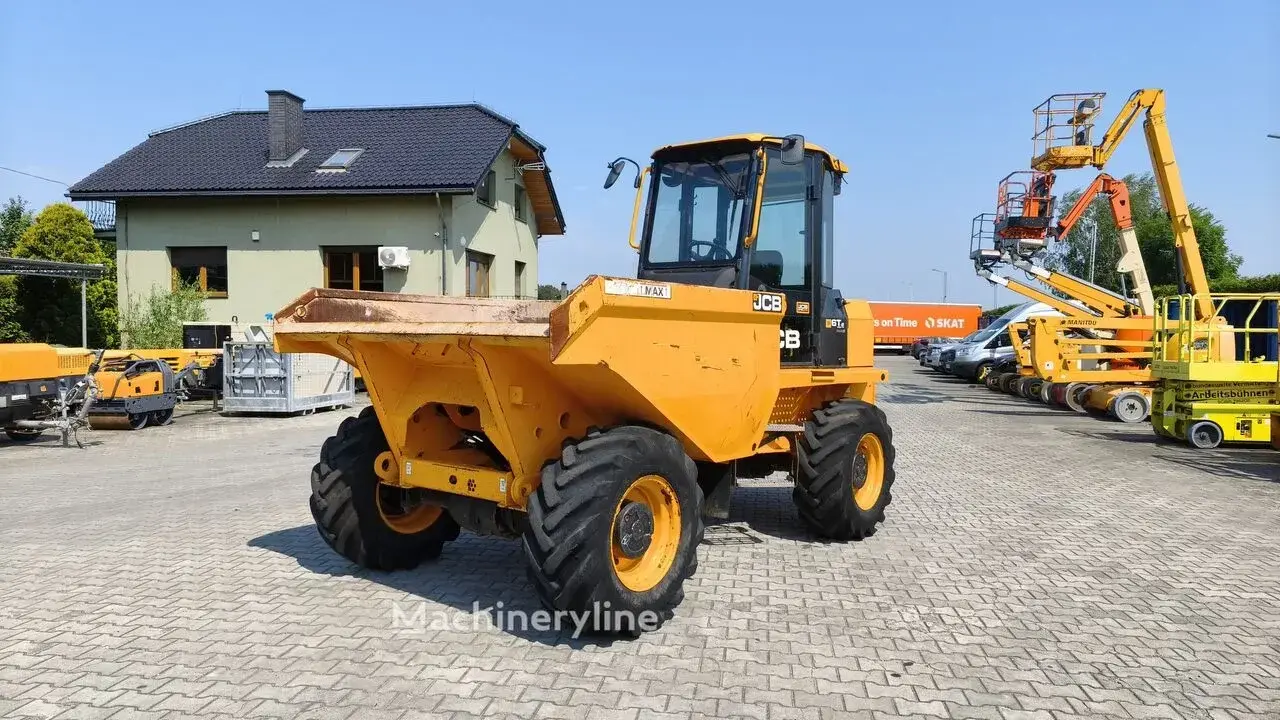
What stands out in the photographs?
A front-tip layout for a defined discharge area
The gallery shows a skip in front of the operator’s cab. Think about the whole cycle: where the excavator loads, how the dumper travels and where it tips. For example, a contractor moving excavated soil to a prepared stockpile can send the seller a route sketch and loading-machine details.
That brief gives the supplier practical questions to answer: receiving height, skip volume, discharge reach, clearance and turning space. Match those confirmed details to the material and site arrangement.
An enclosed operator environment
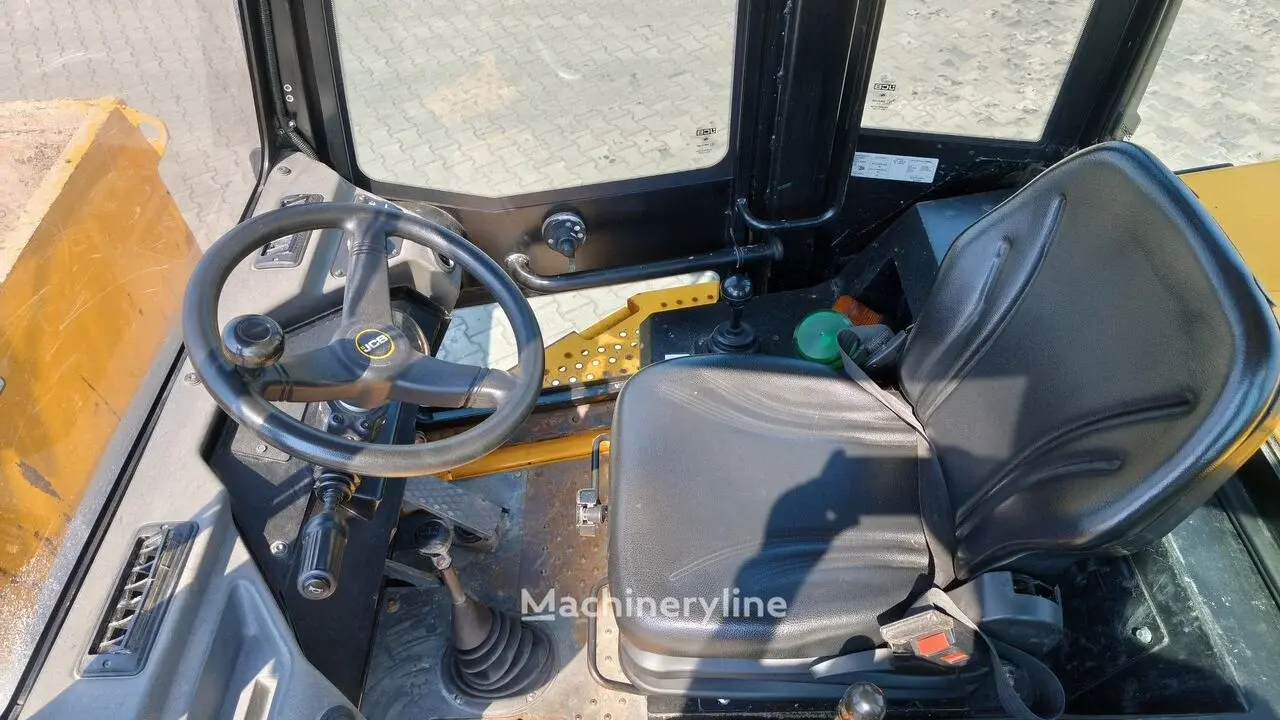
The photographs show a fully glazed cab, steps and handholds. During inspection, assess access, doors, glass, mirrors, wipers, restraint and the view from the driving position. Ask for a demonstration of the climate controls and any fitted camera or alarm systems.
A cab photograph helps show the layout. Its protective rating and fitted safety systems should be confirmed from the machine’s documentation and inspection, with operator familiarisation included in the handover.
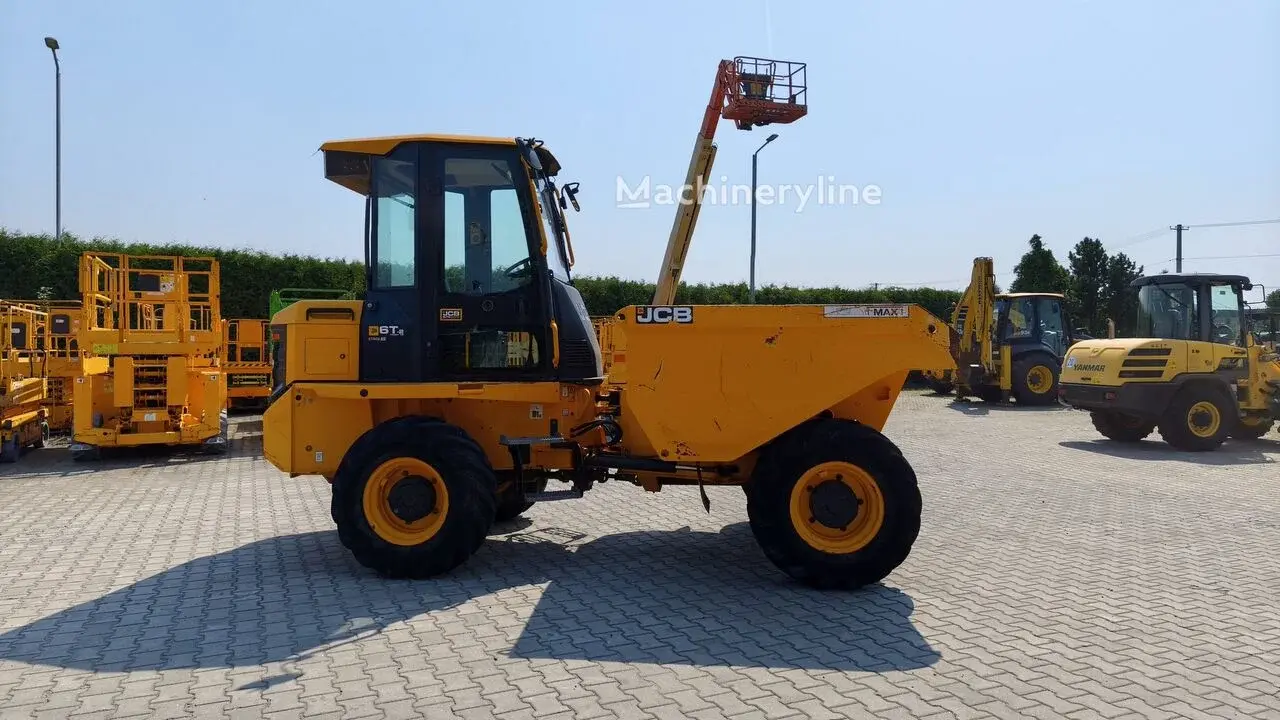
Articulated steering in a four-wheel format
The side view shows the centre joint between the cab section and front skip section. Include that joint, steering cylinders, hoses, pins and bushes in the inspection brief. Request the applicable turning dimensions and clearances for the paths you intend to use.
Surface conditions, route width and the loading/tipping layout all matter when assessing site fit. Give the supplier the actual job requirements rather than relying on a model name alone.
Confirm the model and supplied specification
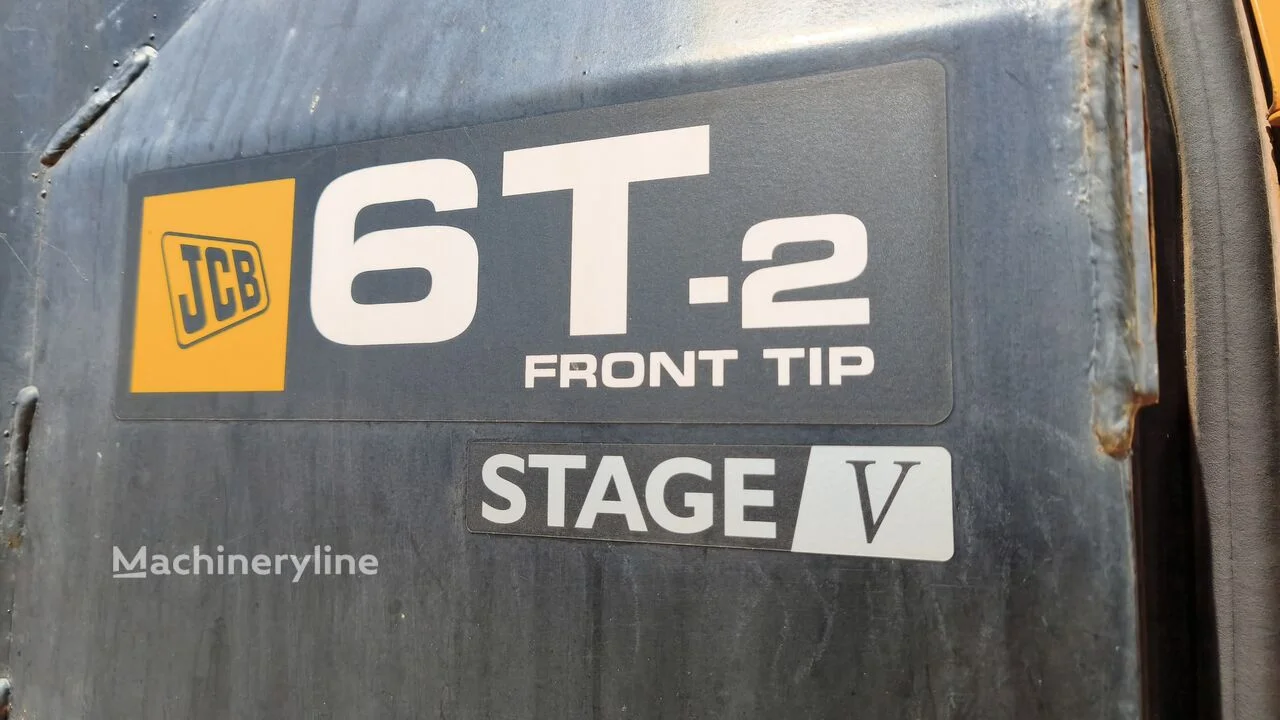
A close-up gallery photograph carries a “6T-2 Front Tip” marking and a “Stage V” decal. Keep the advertised name on the enquiry and ask the seller to identify the full model and engine from the machine and engine plates. A decal alone does not replace the applicable emissions and configuration documents.
JCB manufacturer reference: useful features to discuss
JCB’s 6T-2 Front Tip Cab store page lists a 6,000 kg payload, 5,180 kg operating weight, 55 kW engine power, Powershuttle transmission and a 3,191-litre heaped skip. Its build description includes a SiTESAFE cab with heater and front camera.
Those are reference specifications for the manufacturer’s stated configuration. Request the serial-specific specification for the offered machine, including skip type and volume, engine identification, transport dimensions and fitted equipment.
JCB’s separate 6T-1 product page describes a front camera, initial-movement alarm and protective-structure arrangements, with an optional SiTESAFE cab and other optional visibility aids. Model generation, market and options matter: use those features as inspection questions, rather than assigning them to this offer.
Have competent personnel verify the actual protective-structure documentation, restraint and relevant fitted systems. Include function demonstrations and operating instructions in your handover requirements.
Watch DAKOM’s listing-linked video
Watch DAKOM PL’s JCB 6 FT cabbed-dumper video. This is the video linked in the offer’s gallery. Confirm its date and correspondence to the quoted machine with the seller, and request a current demonstration. Use the applicable machine manual for operating instruction.
Plan material movement before buying
Start with the material, not just the machine. What does it weigh, how far must it travel and how often will it move? A simple work brief can identify whether the proposed configuration fits the intended cycle.
- Loading: provide the excavator or loader model, bucket size, material density and receiving-height requirements.
- Travel: describe distance, gradients, route widths, surface conditions and pedestrian interfaces.
- Discharge: identify the prepared tipping area, clearances and edge arrangements.
- Support: plan operator familiarisation, servicing, inspections and parts supply.
For a landscaping or construction project, that brief might describe soil movement between an excavation and a prepared discharge area. Ask the supplier to return the dimensions, skip specification and applicable limits needed to assess that exact job.
Prepare the site and handover
HSE’s dumper guidance calls for trained, competent operators, separation of pedestrians and vehicles, suitable routes, roll-over protection and seat-belt use. It also addresses gradient limits, even loading, unobstructed vision and wheel stops set safely back from excavation edges.
Use the machine manual and site assessment to plan loading and tipping, including operator positioning during loading. Establish daily checks, scheduled inspections and maintenance. Confirm fitted protective equipment and safe-use procedures before putting the dumper into service.
Buying checks for a complete quotation
- Identity and records: machine/engine plates, ownership documents, current hours and service history.
- Working configuration: applicable payload, skip type/volume, dimensions, transport mass and fitted equipment.
- Condition: competent inspection of the engine, cooling, gearbox, brakes, steering, articulation joint, hydraulics, tyres and skip.
- Handover: manuals, protective-structure documentation, restraint and fitted-system demonstrations.
- Commercial scope: current net price, taxes, inspection access, preparation, support terms and transport responsibilities.
Our view
This offer gives buyers actual exterior and cab photographs, a seller-linked video and enough information to begin a focused supplier enquiry. The next step is to match the confirmed configuration to a real loading, travel and discharge plan.
Request the identification records, current condition evidence and complete delivered-cost quotation. Together, these support an informed decision and a planned handover.
Frequently asked questions
How should I compare the asking price?
Use the listed net price, then obtain taxes, freight, preparation and unloading costs in the same written quotation.
What should I confirm about the model?
Match the advertised name and visible decal to the machine and engine plates, applicable specification and manuals.
Are manufacturer safety features verified on this unit?
They are reference information. Ask for a fitted-equipment list, supporting documents and competent inspection of the actual machine.
Sources and editorial information
- Seller offer and media — reviewed 14 October 2026.
- JCB 6T-2 Front Tip Cab — manufacturer reference configuration.
- JCB 6T-1 product information — separate manufacturer feature reference.
- HSE construction dumper guidance.
- DAKOM PL listing-linked video — seller media.
Confirm current availability, condition, supplied specifications and terms directly with the seller.
Explore more equipment reviews
HSSE TIPS — Worksite Safety Hub
Every Task. Every Person. Home Safe.
Your experience matters
Share your thoughts on this page
Have a question, a useful experience or a suggestion? Add your input below.
Comments are public. Keep them respectful and relevant. Do not share contact details, confidential information or emergency reports.
Comments on this page
Loading comments…