Product Reviews · Earthmoving Equipment · 6 min read
NICOSAIL 4CX Backhoe Loader Review: Load, Dig and Plan the Work
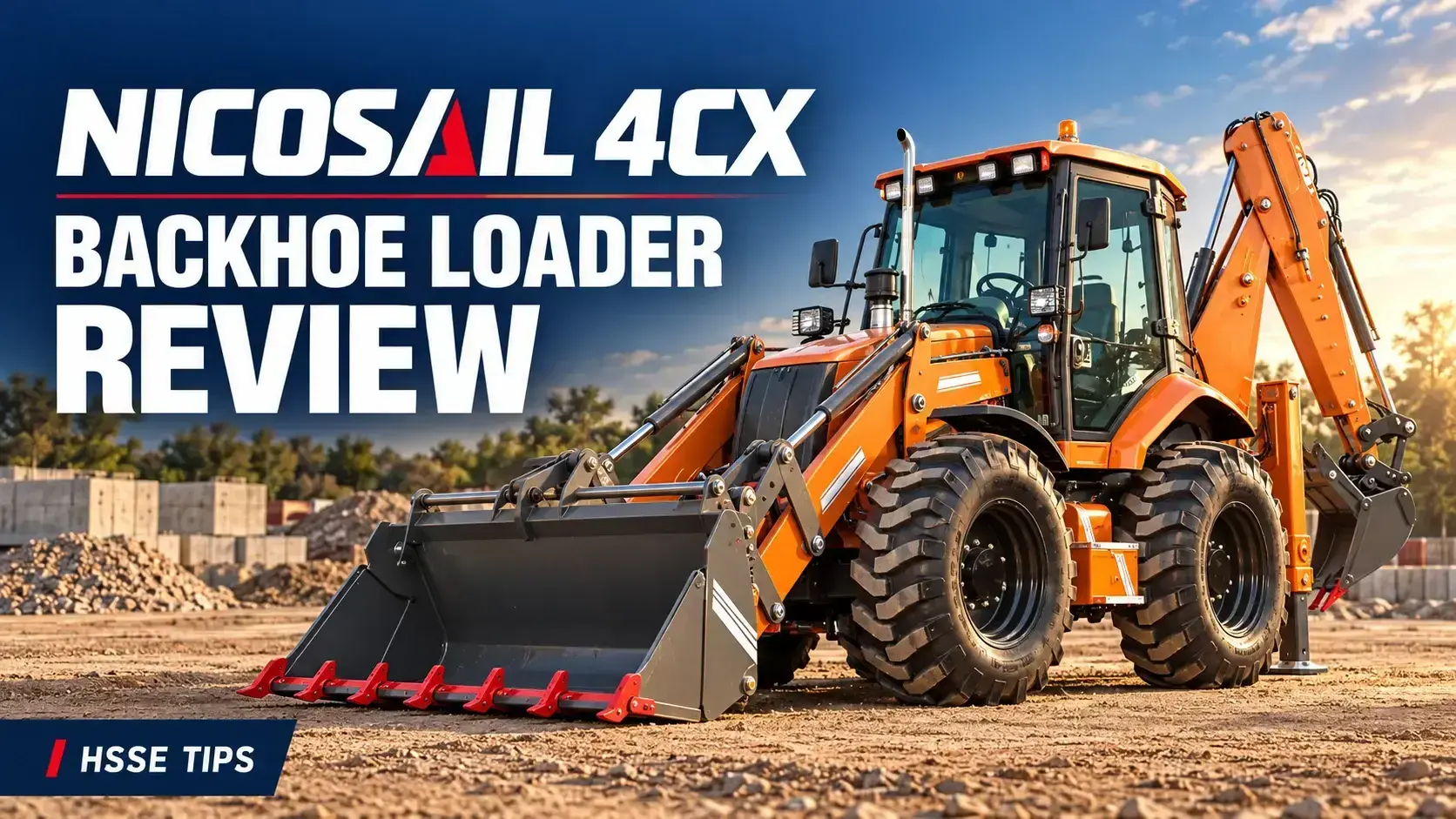
Load at the front. Dig at the rear. Bring both tasks into one equipment plan. When a job moves between excavation, loading and backfilling, a backhoe loader gives buyers a combined machine format to consider. The NICOSAIL 4CX shown in the supplied materials pairs a front loader bucket with a rear digging assembly, an enclosed cab and a wheeled chassis.
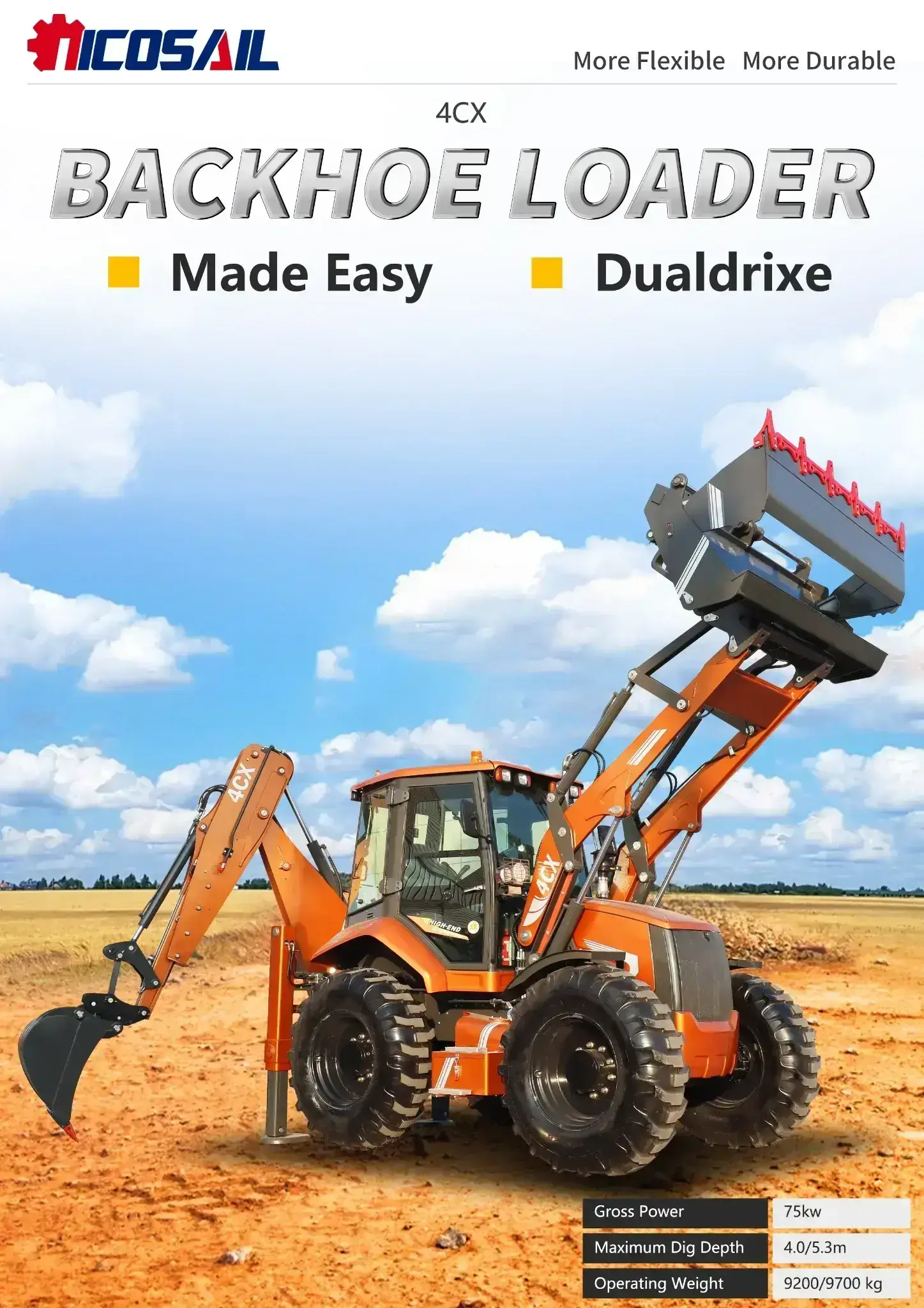
The supplied 4CX graphic lists 75 kW power, 4.0/5.3 m maximum digging depth and 9,200/9,700 kg operating weight. NICOSAIL’s current catalogue also lists a 1.2 m³ loader bucket. These are published configuration figures to discuss with the supplier, not measurements from our own testing.
This is a desk-based review of user-supplied NICOSAIL promotional materials and the manufacturer’s 4CX catalogue. Your affiliate link redirects to AliExpress; the live item page could not be independently read during preparation. Confirm that the current offer supplies the model and configuration described here.
NICOSAIL 4CX specifications at a glance
| Brand / model in supplied materials | NICOSAIL / 4CX |
|---|---|
| Machine format | Front loader and rear backhoe on a wheeled chassis |
| Published power | 75 kW; verify engine and rating basis |
| Published operating weight | 9,200 / 9,700 kg, configuration dependent |
| Published maximum digging depth | 4.0 / 5.3 m, configuration dependent |
| Published loader bucket volume | 1.2 m³; confirm payload separately |
| Supplier options panel | Deluxe and Standard versions |
| Pictured steering modes | All-wheel, front-wheel and crab steering; confirm fitted modes |
The paired weight and digging-depth figures indicate configuration choices. Ask the supplier which values apply to the exact machine quoted, and request the corresponding digging-range diagram and operating manual.
Two working ends for a varied workday
The front bucket provides a loader arrangement for handling suitable loose materials. The rear boom, dipper and digging bucket provide an excavation arrangement. For a contractor whose work alternates between these tasks, the format is worth comparing with the day’s actual work sequence.
Picture a planned drainage project: excavation creates the trench, the loader handles suitable backfill material, and the crew changes between tasks as the work progresses. Before choosing the machine, compare the required trench dimensions, material quantities, access and ground conditions with the documented capabilities of the selected 4CX.
The 1.2 m³ bucket figure describes volume. Ask separately for permissible payload, approved materials and loading limits for the bucket and machine. This connects the quoted attachment to the material you intend to move.
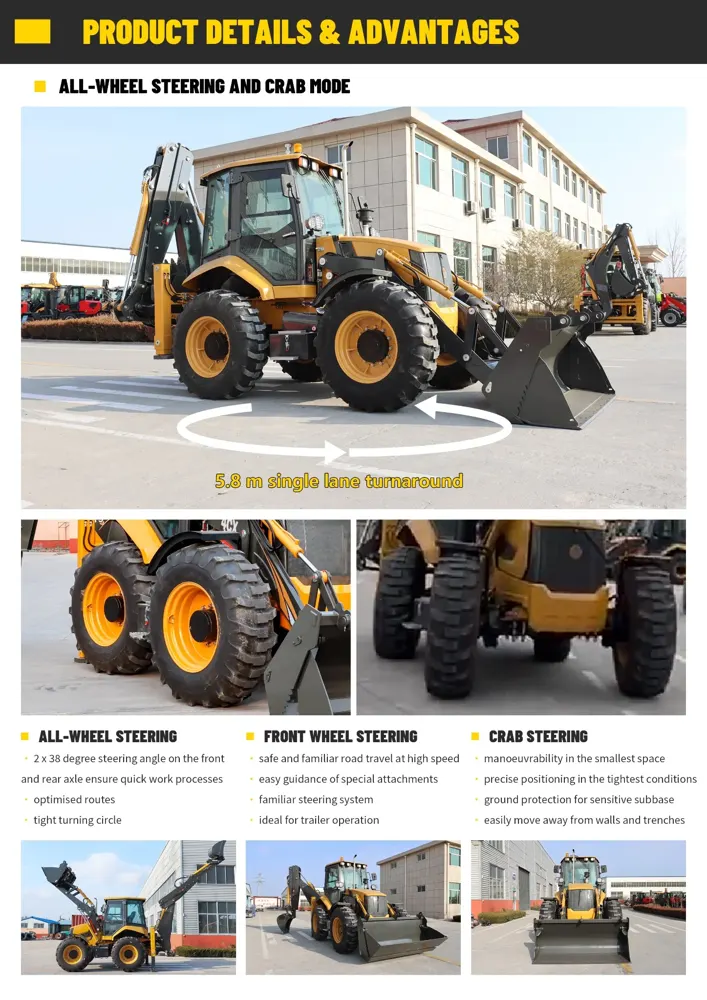
Steering options shown in the supplier materials
The steering panel illustrates all-wheel steering, front-wheel steering and crab steering. It also advertises a 5.8 m single-lane turnaround and describes steering angles. Treat those as supplier-stated details: request the turning measurements, conditions and fitted steering modes for your selected version.
Steering information is most useful when paired with a site sketch. Mark gates, working lanes, storage areas and the space available around the machine. Then ask the seller to explain how each fitted steering mode is selected and used under the operating manual.
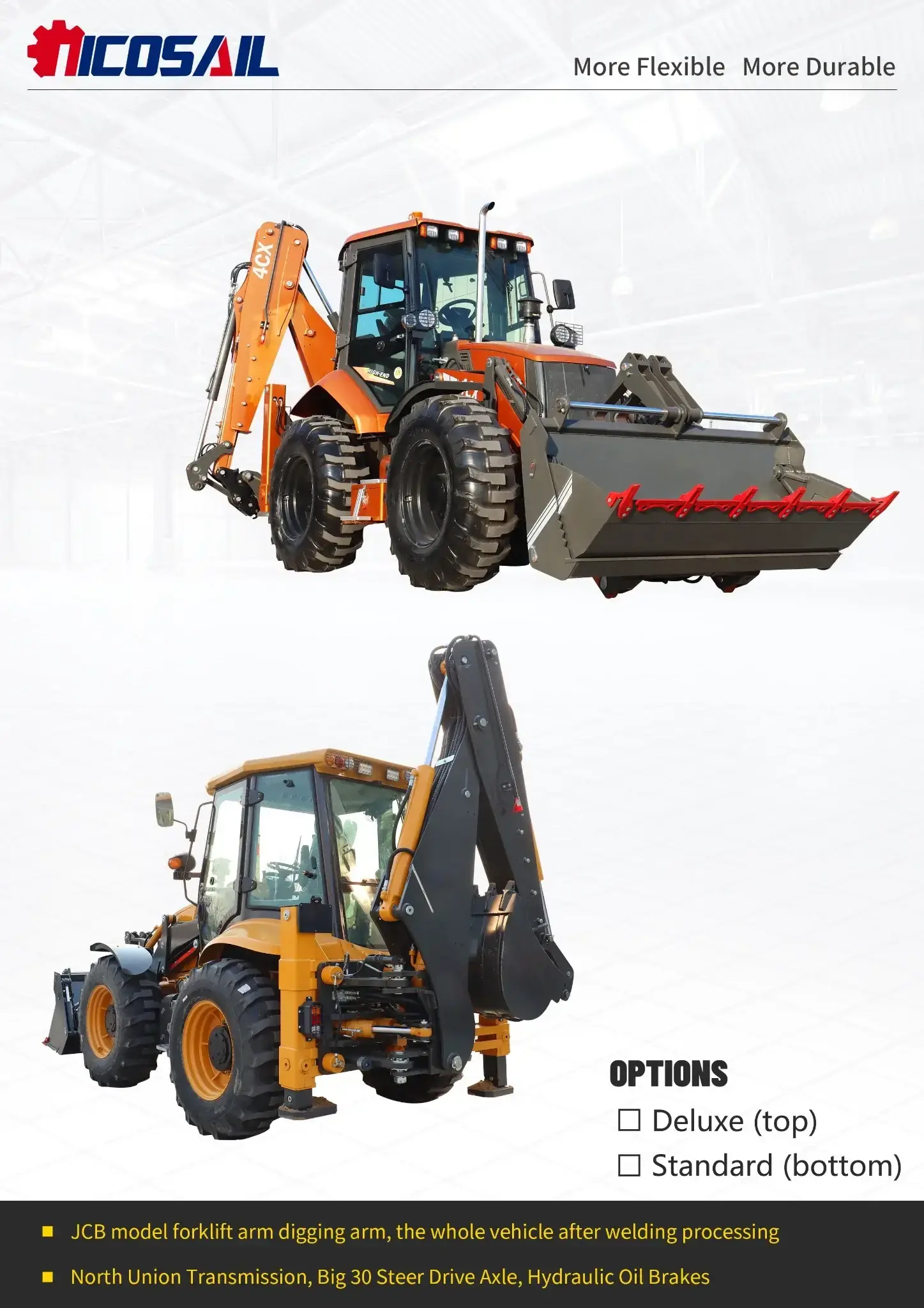
Compare the pictured Deluxe and Standard versions
The options panel labels an orange machine as Deluxe and a yellow machine as Standard. Both are shown with a loader at the front and a backhoe assembly at the rear.
Ask for a written comparison of the packages rather than relying on colour or the promotional photographs. Have the supplier identify the engine, transmission, axles, tyres, cab equipment, controls, buckets and digging assembly included with each quoted version.
The same panel mentions transmission and hydraulic braking details. Request their technical specifications and maintenance information for the selected machine. A clearly itemised configuration makes the quotation easier to assess and later service.
Bucket, digging assembly and visibility questions
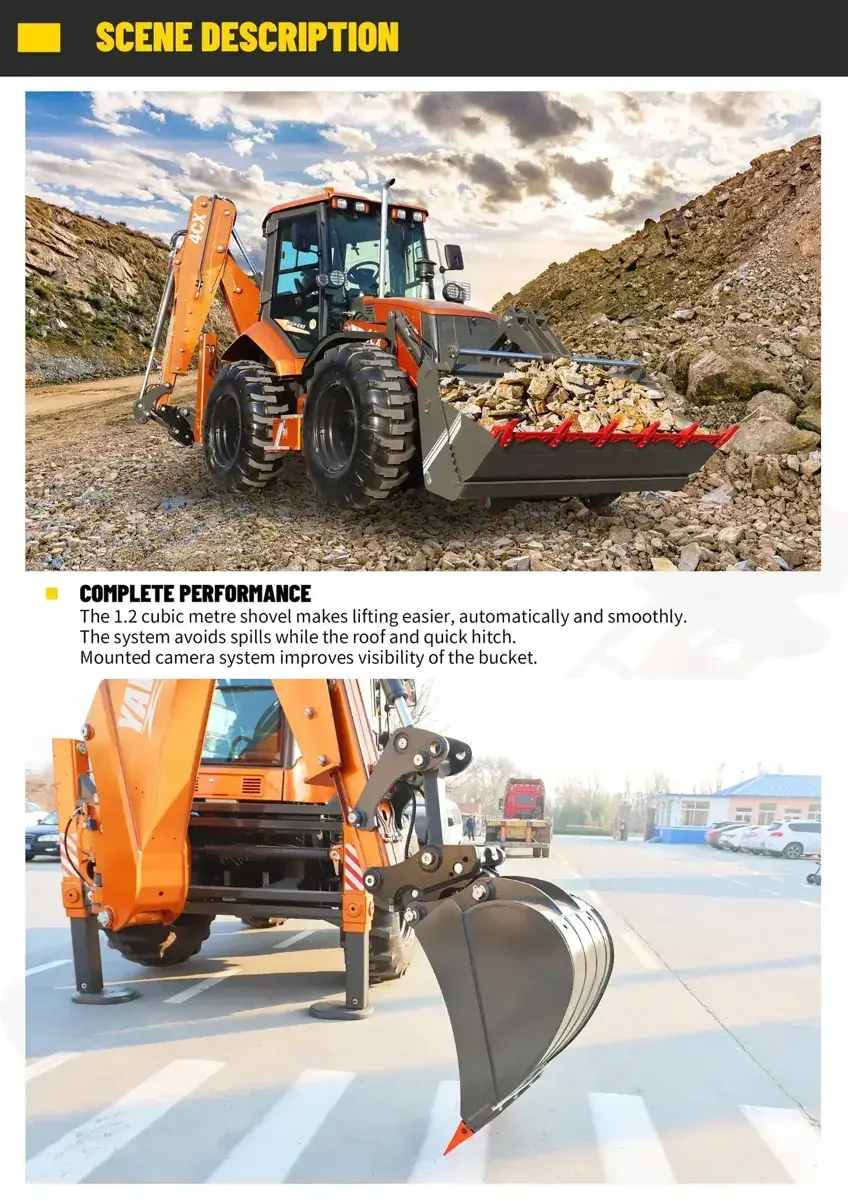
The application panel shows the front bucket handling rock-like material and a close-up of the rear bucket, linkage and stabiliser legs. Its text also describes a mounted camera system for bucket visibility.
Use these details to prepare a demonstration request. Ask which camera and visibility aids are supplied, what views they provide, and how the front and rear controls work. Request the stabiliser setup requirements, approved attachment combinations and any fitted quick-hitch instructions.
For maintenance planning, ask for the bucket, pin, bush and hydraulic-component references relevant to the package. A parts list and service schedule help turn the purchase enquiry into a practical ownership plan.
Where could a 4CX backhoe loader fit?
- Construction support: planned excavation, loading, backfilling and site preparation within the confirmed machine limits.
- Utility and municipal work: access and digging tasks planned around identified services and approved excavation methods.
- Farm and property maintenance: material handling and earthwork where machine size and ground conditions suit the task.
- Contractor equipment planning: work cycles that call for both a loader and a rear digging assembly.
Start with the tasks you perform most often. Write down trench depth, bucket requirements, material type, travel route and available operating space. Compare those needs with the selected configuration before discussing accessories or delivery.
Watch the supplied backhoe-loader demonstration
Supplied demonstration, approximately 2 minutes 9 seconds, showing a yellow backhoe loader travelling in a machinery yard and operating its front bucket. The clip provides visual context for the machine format; confirm the model and configuration against the exact unit in your quotation. Demonstration footage is not operating instruction or proof of rated capacity.
For further product context, explore NICOSAIL’s official machinery video channel, and request a current demonstration matching your selected 4CX configuration.
A useful demonstration should identify the machine and show the agreed front-loader functions, rear digging functions, steering modes, controls and included attachments. Confirm that the configuration shown is the one you would receive.
Plan the job as well as the purchase
Provide operator training and familiarisation for the actual machine. Follow its manual for stabiliser use, ground conditions, operating limits and daily inspections. Organise suitable operating space and keep pedestrians clear of travel routes and the loader and backhoe working areas.
HSE’s excavator guidance supports competent operators, managed visibility, secure bucket attachment and inspection arrangements. For excavation near buried services, its HSG47 guidance centres on planning, identifying services and safe excavation. Apply the requirements relevant to your location and work.
Ask for documentation covering the cab protection, restraints, braking, attachment locking and any other fitted safety equipment on the actual unit. Review the supplied documents with the responsible person before putting the machine into service.
A ready-to-use seller enquiry
Ask what the delivered quotation includes: machine, attachments, spare parts, transport, unloading arrangements and applicable import costs. Agree the dispatch location and inspection arrangements before shipment. Check current pricing and purchase terms through the supplied offer.
Our view: combine the functions, define the configuration
The supplied NICOSAIL 4CX materials present a substantial wheeled backhoe-loader format with a front bucket, rear digging assembly and pictured steering options. The published power, bucket volume, weight and digging-depth figures give buyers concrete points to discuss.
For work that alternates between loading and excavation, the next step is a configuration-specific quotation. Match the machine to your tasks, confirm the included equipment and documentation, and plan delivery and operation around your site.
Frequently asked questions
What power is listed for the NICOSAIL 4CX?
The supplied graphic states 75 kW gross power, and NICOSAIL’s catalogue lists 75 kW rated power. Ask for the engine model and its applicable power rating for your selected configuration.
What digging depth is published?
The materials list 4.0/5.3 m. Confirm which figure applies to the quoted digging assembly and request its working-range diagram.
What is the loader-bucket capacity?
NICOSAIL publishes 1.2 m³ bucket volume. Obtain permissible loading limits separately for the material, bucket and machine configuration.
Are all steering modes included?
The supplier panel illustrates all-wheel, front-wheel and crab steering. Ask the seller to confirm the modes fitted to the exact version in your order.
Sources and editorial information
- User-supplied NICOSAIL 4CX overview, options, application and steering panels, plus a supplier contact card and supplied backhoe-loader yard-demonstration video.
- NICOSAIL 4CX catalogue — manufacturer-published model information, reviewed 13 October 2026.
- HSE excavator guidance — general work-planning reference.
- HSE HSG47: avoiding danger from underground services — excavation-planning reference.
Specifications remain subject to the selected configuration and written quotation. This review does not assign another manufacturer’s specifications, approvals or warranty terms to the offered machine.
Explore more equipment reviews · Plan your pre-work checks
HSSE TIPS — Worksite Safety Hub
Every Task. Every Person. Home Safe.
Your experience matters
Share your thoughts on this page
Have a question, a useful experience or a suggestion? Add your input below.
Comments are public. Keep them respectful and relevant. Do not share contact details, confidential information or emergency reports.
Comments on this page
Loading comments…