Electric vehicle review · Enclosed five-seat transport
Family Four-Wheel Electric Sightseeing Car Review & Buyer’s Guide
This compact, enclosed electric vehicle is presented as a five-door, five-seat option for sightseeing, resort mobility and short-distance passenger transport. This review focuses on what the supplier media actually shows, the applications it may suit, and the questions a buyer should settle before requesting a quotation or arranging delivery.
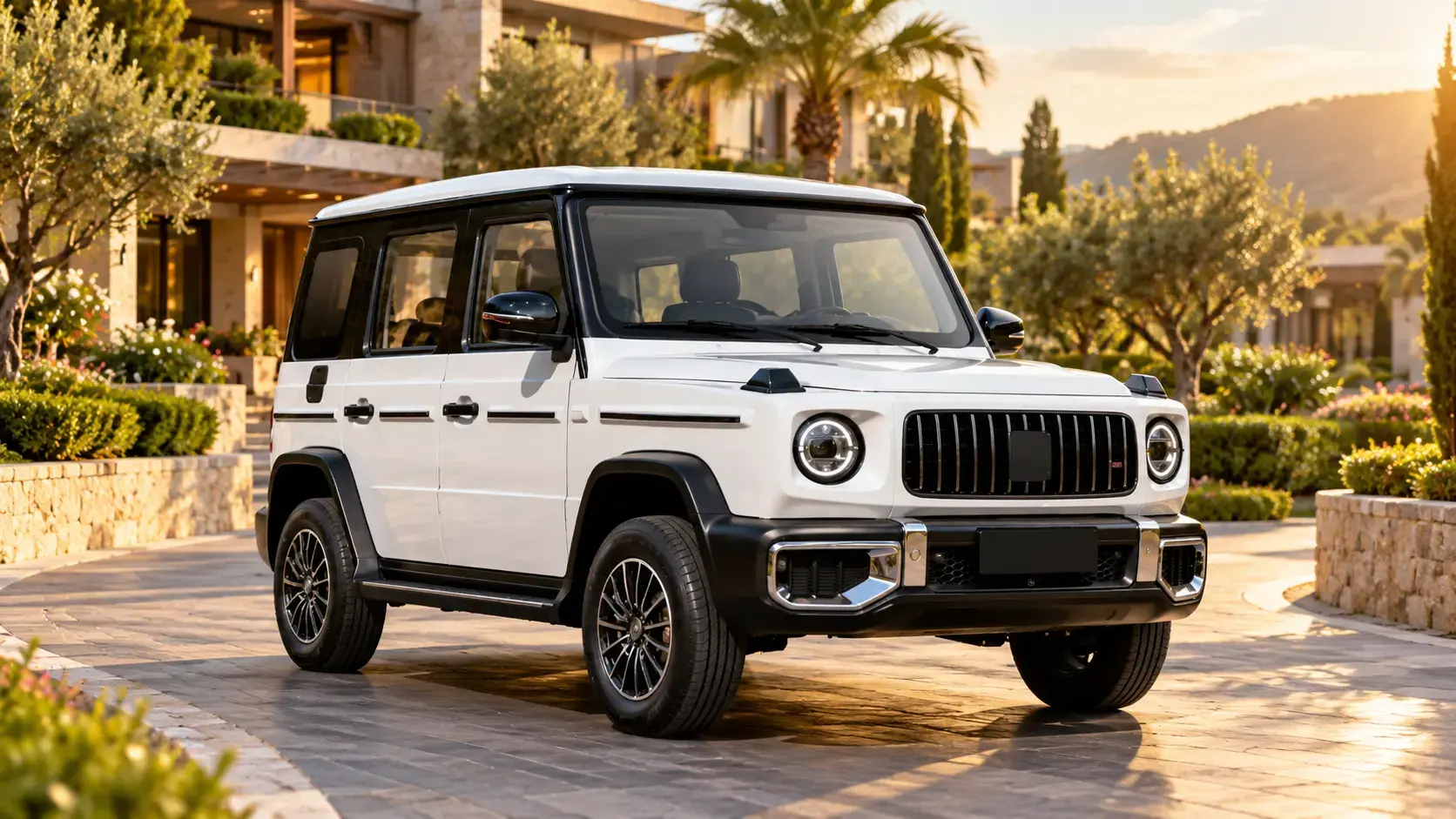
The supplier media presents a practical enclosed five-seat electric vehicle with a familiar SUV-style body, multimedia display, reversing camera, rear parking assistance and foldable rear seating. It may be worth considering for controlled campuses, resorts, parks and visitor operations, provided the buyer confirms the exact model, battery, range, speed, homologation, warranty and destination-specific shipping terms in writing.
Supplier-shown features at a glance
| Vehicle format | Enclosed, four-wheel, five-door body |
|---|---|
| Seating | Supplier graphic states five seats |
| Motor | Supplier configuration graphic states 3,500 W; confirm the installed motor |
| Braking | Supplier graphic states four-wheel disc brakes and brake assist |
| Tyres | 195/70R14 shown in the supplier graphic |
| Cabin equipment shown | LCD instrument panel, central display, multifunction steering wheel and push-button start |
| Parking aids shown | Reversing camera and rear parking radar |
| Exterior colors shown | White and black |
| Exact model/brand | Not reliably stated in the supplied material |
| Product location | Not stated in the supplied media; confirm the inspection and dispatch location |
| Delivery areas and shipping terms | Not stated; request a destination-specific written quotation |

What is this electric sightseeing car designed to do?
The vehicle is best understood as a compact low-speed passenger carrier, not as a substitute for a certified passenger car unless the exact configuration has the approvals required in the buyer’s jurisdiction. Its enclosed cabin can make it more comfortable than an open golf-cart-style shuttle for visitor tours, guest transfers and day-to-day mobility in controlled environments.
Potential applications include resorts, holiday parks, large private estates, campuses, exhibition grounds, scenic attractions, retirement communities, industrial compounds and other managed sites. The five-seat layout can support a driver plus passengers, while the supplier’s foldable rear-seat arrangement may provide additional space for light luggage or supplies when fewer passengers are carried.
Exterior and passenger layout
The squared body, upright seating position and five-door arrangement should make passenger entry and exit straightforward. Four side doors can reduce the need for rear occupants to climb past front seats, which is helpful for repeated short journeys. The enclosed roof and doors may also give occupants better weather protection than an open sightseeing cart.
Buyers should request actual door-opening dimensions, step-in height, seat dimensions, headroom and maximum passenger/load capacity. If the vehicle will carry older visitors or passengers with limited mobility, arrange a physical accessibility assessment rather than relying on exterior photographs.
Flexible rear seating and cargo use
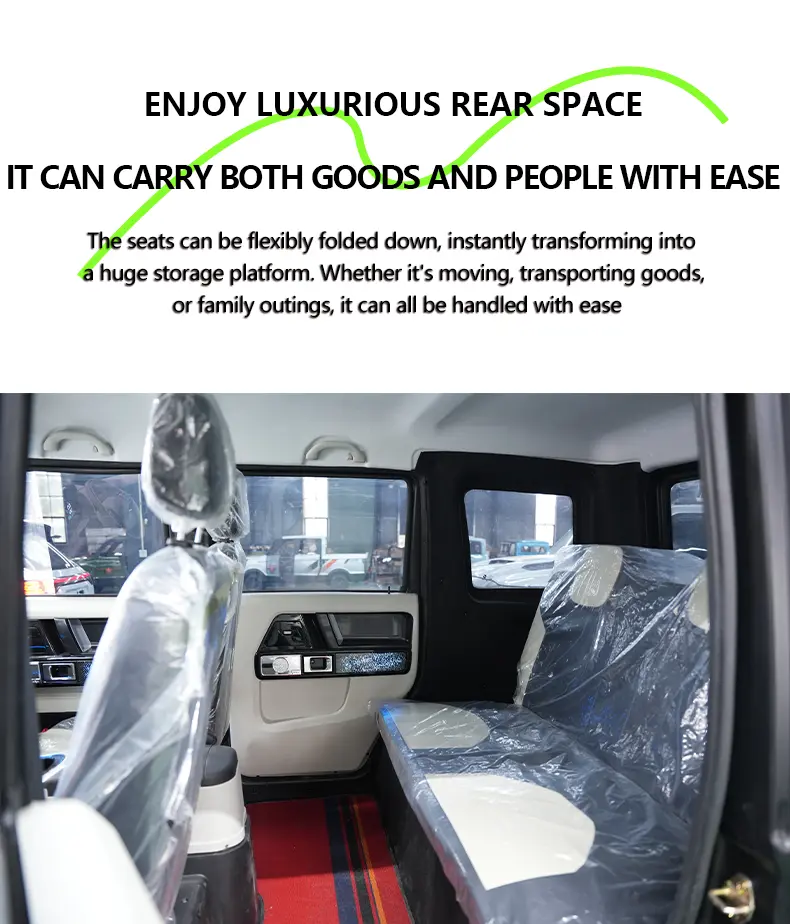
The supplied rear-cabin image shows a bench seat and a relatively upright passenger area. The advertiser says the seat can fold down to create a larger storage platform. That flexibility could help operators alternate between passenger trips and light-duty supply runs.
Confirm the folding mechanism, usable cargo dimensions, load rating, restraint points and whether cargo can be separated from occupants. Items should be secured so they cannot move into the passenger or driver space during braking or turning. Ask whether seat belts are fitted to every seating position and whether their type and anchorages meet the rules applicable to the intended operation.
Dashboard, controls and parking assistance
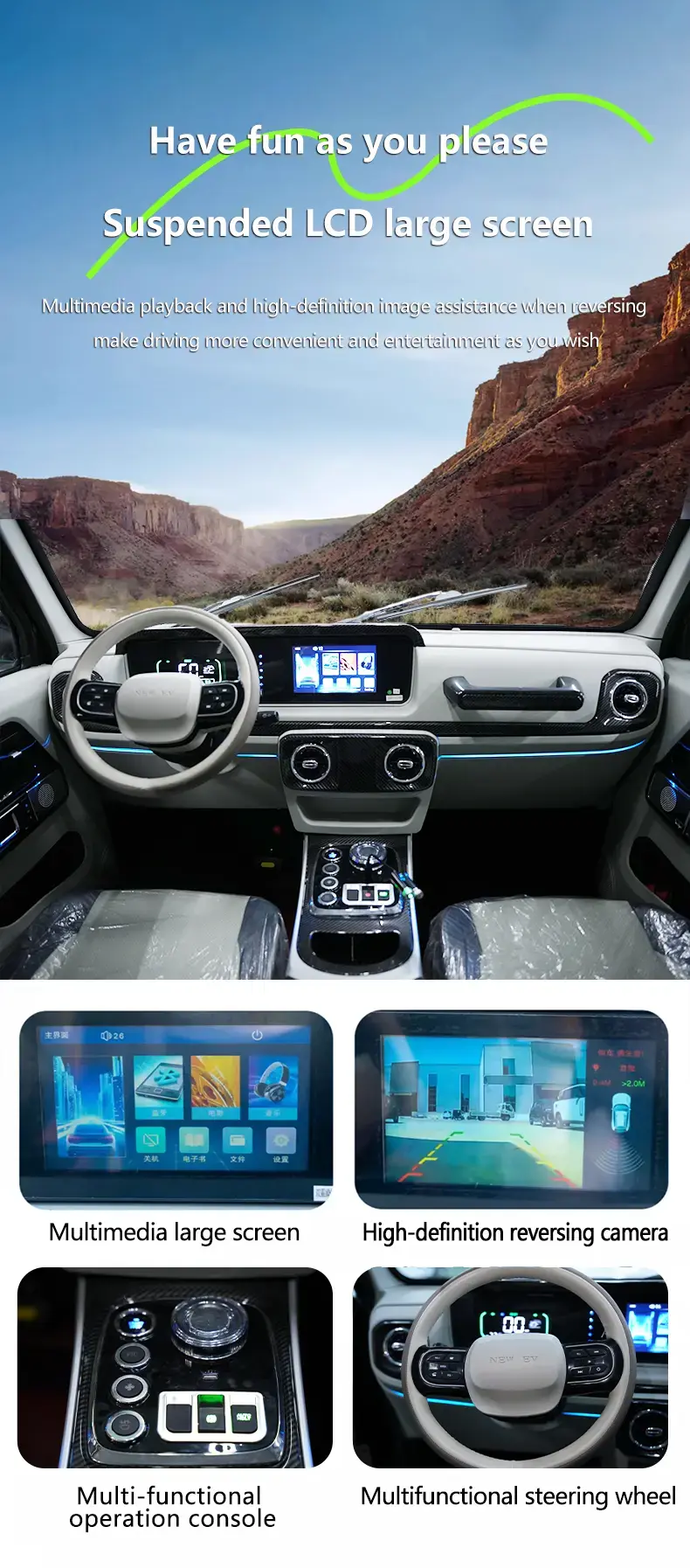
The media shows a digital instrument display, central multimedia screen, multifunction steering wheel and a center control console. A reversing-camera view and parking-guidance graphics are also pictured. These can be useful in busy visitor areas, but cameras and sensors remain aids: drivers still need clear procedures, direct observation and controlled pedestrian separation.
Ask the supplier to demonstrate every display and switch in a live video call. Confirm the interface language, speed and battery readouts, camera field of view, audible warnings, lighting controls, emergency isolation and availability of user manuals. Where vehicles will be shared by several drivers, simple controls and consistent induction are especially valuable.
Motor, battery, range and charging: confirm before ordering
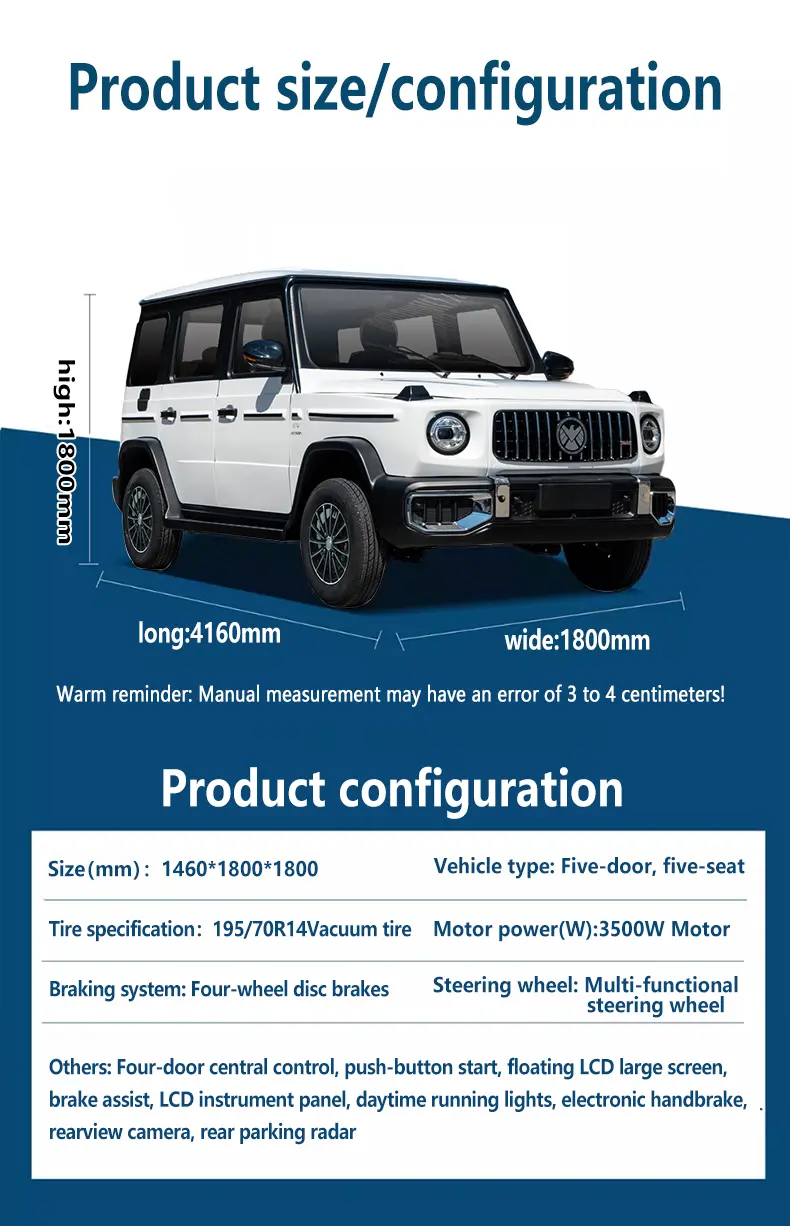
The supplier configuration panel states a 3,500 W motor. The exact battery chemistry, nominal voltage, usable capacity, charger rating, maximum speed, test-cycle range and charging time are not confirmed by the supplied images. These details are fundamental to route planning and should appear in the pro-forma invoice or signed specification sheet.
Request range figures for the real operating conditions: passenger load, gradients, ambient temperature, stop-start frequency, heating or air-conditioning use, tyre pressure and expected battery age. Ask whether the quoted range is a laboratory figure or an actual duty-cycle result. A useful fleet calculation should also include charging windows, spare vehicles, charger availability and battery degradation.
Confirm the charging connector, input voltage and frequency, plug type, cable length, required circuit protection and whether the charger is onboard or separate. Installation should follow the manufacturer’s instructions and local electrical requirements. For lithium batteries, request battery-management-system details, safety certifications, transport documentation, storage guidance and emergency information.
Braking, steering and operating controls
The supplier graphic lists four-wheel disc brakes, brake assist and an electronic handbrake. It also shows 195/70R14 tyres. Buyers should verify these features on the exact vehicle and request component brands, service intervals and parts availability.
A pre-delivery inspection should test normal and emergency braking, steering free play, parking brake holding, lights, indicators, horn, wipers, mirrors, doors, seat belts, tyres and warning systems. For private-site operations, set an appropriate speed limit, define pedestrian-priority areas and create rules for reversing, parking, charging and key control.
Dimensions: resolve the supplier graphic discrepancy
The dimension illustration labels the vehicle as approximately 4,160 mm long, 1,800 mm wide and 1,800 mm high. However, a table in the same graphic lists “1460×1800×1800,” which appears inconsistent with the visual length callout. Do not plan shipping, storage, turning areas or access gates until the supplier provides a signed dimension drawing for the exact ordered version.
Supplier demonstration video
Road legality and site suitability
Do not assume that the SUV-like appearance makes this vehicle road legal. Registration, licensing, insurance, lighting, glazing, occupant protection and low-speed-vehicle rules differ by country and region. Ask for the vehicle identification method, conformity documents and certifications, then check them with the relevant authority or a qualified local importer before purchase.
On private sites, operators still need a risk assessment. Consider route width, gradients, surface condition, blind corners, mixed traffic, pedestrian density, weather, charging locations, fire precautions, driver authorization and incident response. The supplier should confirm maximum gradeability, turning radius, ground clearance, rated payload and environmental operating limits.
Product location, delivery areas and shipping terms
Product location: the supplied media does not state a verified physical product location. Ask where the exact vehicle can be inspected and from which city, port or warehouse it will be dispatched. A supplier office address is not necessarily the product’s collection point.
Delivery coverage: no confirmed delivery countries or regions were identified in the supplied materials. Request a written destination-specific quotation covering vehicle price, export packing, inland transport, port handling, sea or road freight, cargo insurance, customs documentation, duties, taxes, destination handling and final delivery.
Also ask which Incoterm applies and who bears risk at each stage. Confirm whether the traction battery can travel installed, which dangerous-goods documents are provided, how the vehicle will be secured, and who handles damage claims. Do not send funds based only on chat messages; verify the contracting entity, bank details and payment protections.
Current seller offer — checked 31 October 2026
Availability and commercial terms can change. Use the affiliate link to view the current offer and obtain a written quotation tied to the exact configuration. This dated section can be updated if the seller changes the listing or the offer ends, while the application and buyer guidance remain useful.
Questions to ask before contacting the seller
- What is the exact manufacturer, model, model year and vehicle identification method?
- Where is the vehicle physically located and available for inspection?
- Is the quoted unit identical to the vehicle in the photos and video?
- What motor type, continuous rating and peak rating are installed?
- What are the battery chemistry, voltage, usable capacity and warranty?
- What are the tested range, top speed and maximum gradeability?
- What load and passenger capacities apply?
- Which charger, connector, plug and electrical supply are required?
- How long does a normal full charge take?
- Are seat belts installed at all five positions?
- What are the confirmed overall dimensions and turning radius?
- Which braking, lighting, camera and parking-aid features are standard?
- What conformity, electrical and battery certifications are supplied?
- Can the vehicle be registered or operated for the intended use in my location?
- Which colors and optional equipment are available?
- What is included in the warranty and who performs local repairs?
- How quickly can common parts and diagnostic support be supplied?
- What is the production lead time and minimum order quantity?
- Which countries or areas can the supplier deliver to?
- What Incoterm, export packing and freight insurance apply?
- What is the complete delivered cost to my named destination?
Pre-purchase checklist
- Obtain a signed specification sheet and pro-forma invoice.
- Resolve the conflicting length values in the supplier graphic.
- Verify battery, motor, charger, speed, range and load ratings.
- Confirm product location and inspect the exact configuration where practical.
- Check conformity documents with the relevant local authority or importer.
- Request a live cold-start, driving, braking, charging and controls demonstration.
- Confirm seat belts, doors, lighting, mirrors, wipers, camera and warning systems.
- Document warranty terms, exclusions, parts supply and technical support.
- Obtain an itemized delivered quotation and Incoterm.
- Use appropriate payment protection and verify the contracting entity.
Who is this vehicle likely to suit?
It may suit operators who need an enclosed, compact people carrier for controlled low-speed routes and value a familiar cabin, separate passenger doors, weather protection and flexible rear space. Resorts, managed attractions, private estates and campuses are the most natural applications, subject to route assessment and local rules.
It is less useful to make assumptions from appearance alone. Buyers who need public-road use, long daily range, high-speed travel or formal accessibility provisions should make those requirements explicit and obtain documentary confirmation before committing.
Final assessment
The strongest points visible in the supplier material are the enclosed five-seat layout, accessible five-door body, digital cabin, reversing aids and foldable rear seating. Together, they create a versatile concept for passenger movement and light carrying duties on managed sites.
The buying decision should turn on verified specifications and support: exact battery and motor, realistic duty-cycle range, braking and occupant protection, local approval, spares, warranty, product location and delivered cost. If the supplier can document those items and the vehicle matches the intended route, the offer deserves a closer commercial and technical review.
Frequently asked questions
How many people can the vehicle carry?
The supplier graphic describes a five-seat layout. Confirm the approved occupant and load capacity for the exact version.
What motor does it use?
A supplier graphic states 3,500 W. Ask whether that is the continuous or peak rating and verify the installed motor in the quotation.
What is its battery capacity and driving range?
The supplied media does not reliably confirm battery chemistry, usable capacity or test-cycle range. Request these details in writing for the ordered configuration.
Is it road legal?
That cannot be established from the images. Eligibility depends on the vehicle’s certification and the laws where it will operate.
What are the vehicle dimensions?
The illustration shows about 4,160 × 1,800 × 1,800 mm, but the same supplier graphic contains a conflicting 1,460 mm length entry. Obtain a signed drawing before planning transport or access.
Does it have a reversing camera?
Yes, a reversing-camera display and rear parking assistance are shown in the supplier media. Confirm that both are standard on the quoted vehicle.
Where is the product located?
A verified physical location is not stated in the supplied material. Ask for the inspection and dispatch location.
Where can the supplier deliver?
Delivery areas and terms were not confirmed. Request an itemized written quotation for your named destination.
Is a supplier video available?
Yes. The advertiser supplied a short product demonstration, embedded above. Verify that the video depicts the same configuration offered to you.
Join the discussion
Where would this enclosed electric sightseeing car be most useful in your operation—guest transfers, campus mobility or visitor tours? Share your intended use and your most important buyer question in the comment section below.
HSSE TIPS — Worksite Safety Hub
Every Task. Every Person. Home Safe.
Your experience matters
Share your thoughts on this page
Have a question, a useful experience or a suggestion? Add your input below.
Comments are public. Keep them respectful and relevant. Do not share contact details, confidential information or emergency reports.
Comments on this page
Loading comments…