Product Reviews · Concrete & Masonry Tools · 6 min read
Electric Concrete Wall Cutter Review: Match the Cutting System to Your Next Job
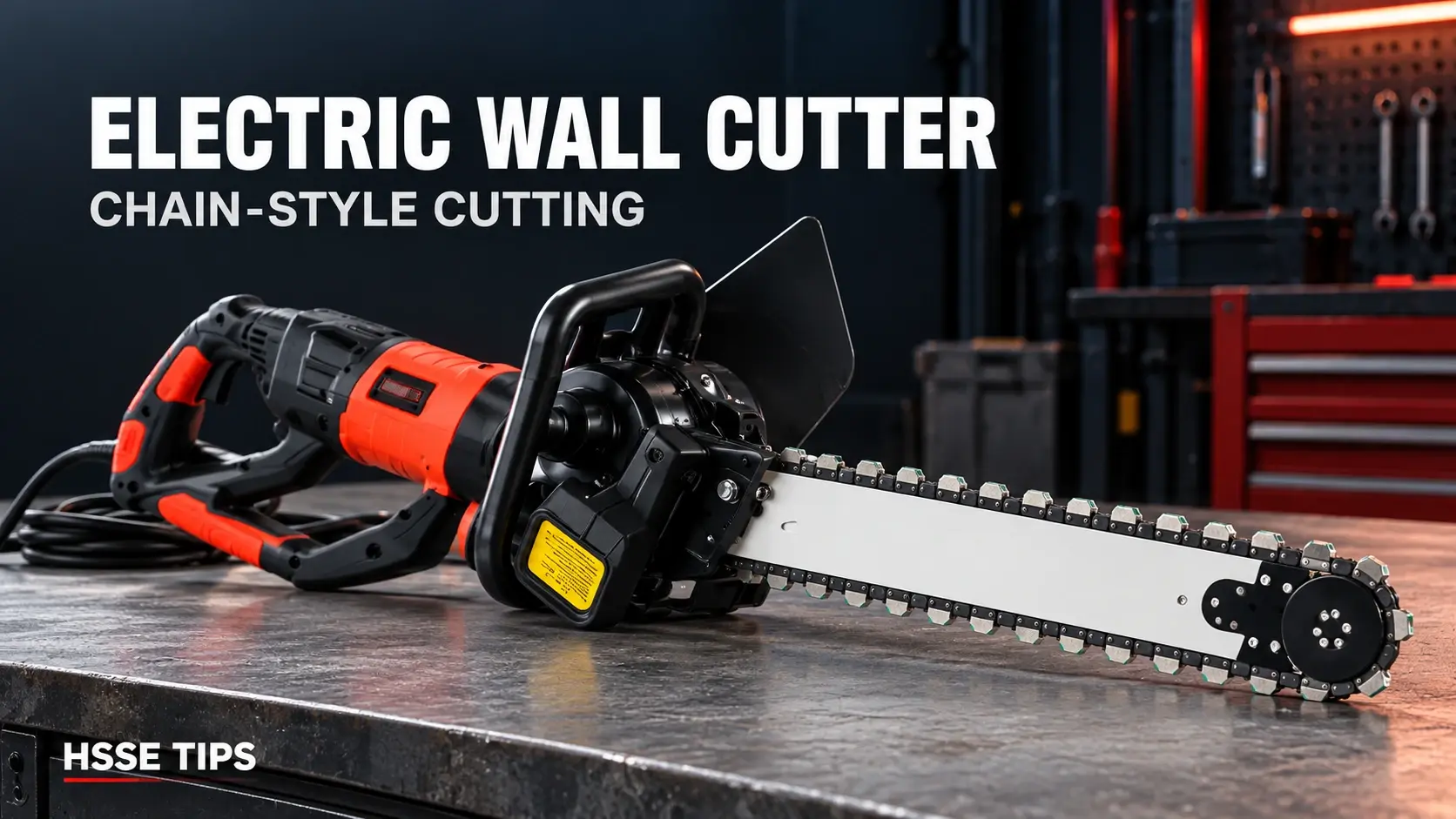
The right cutting system starts with a clear job brief. This electric wall-cutter offer presents a handheld, chain-style tool with front and rear handles, a long guide bar and controls identified in the supplied graphics. For contractors planning masonry work, it provides a specific product to discuss with the supplier: the material, cut dimensions, power supply and equipment package.
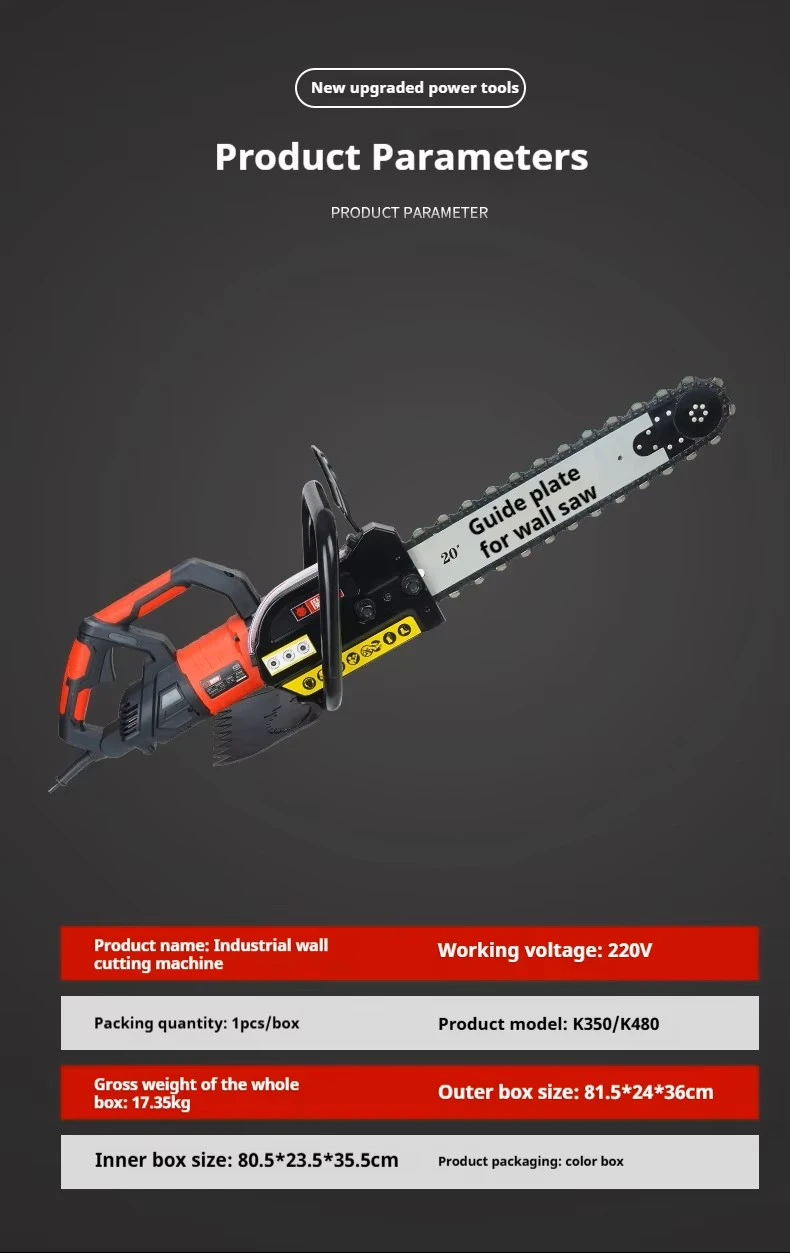
The seller’s parameter sheet names K350/K480 models and 220V working voltage. The supplied short video also shows a similar tool cutting masonry blocks. Here is what the materials establish and how to turn those details into a useful purchasing enquiry.
This is a desk-based review of supplied seller images and video, not a hands-on test. The provided short link redirects to AliExpress; its live item details could not be independently read during preparation. Confirm the current model and offer through the supplied link.
K350/K480 seller-listed details at a glance
| Seller product description | Industrial wall cutting machine |
|---|---|
| Models on parameter sheet | K350 / K480; confirm the selected option |
| Working voltage | 220V, seller-listed; confirm frequency, plug and supply requirements |
| Packing quantity | 1 piece per box |
| Gross weight of whole box | 17.35 kg — packaged gross weight |
| Outer box size | 81.5 × 24 × 36 cm |
| Inner box size | 80.5 × 23.5 × 35.5 cm |
| Packaging | Colour box |
The guide bar in the supplied images carries a 20-inch marking. Ask for the fitted bar length and the permitted cutting depth for the selected model, chain and material. Request the tool’s operating weight separately from the packaged gross weight.
A chain-style format for a specific cutting task
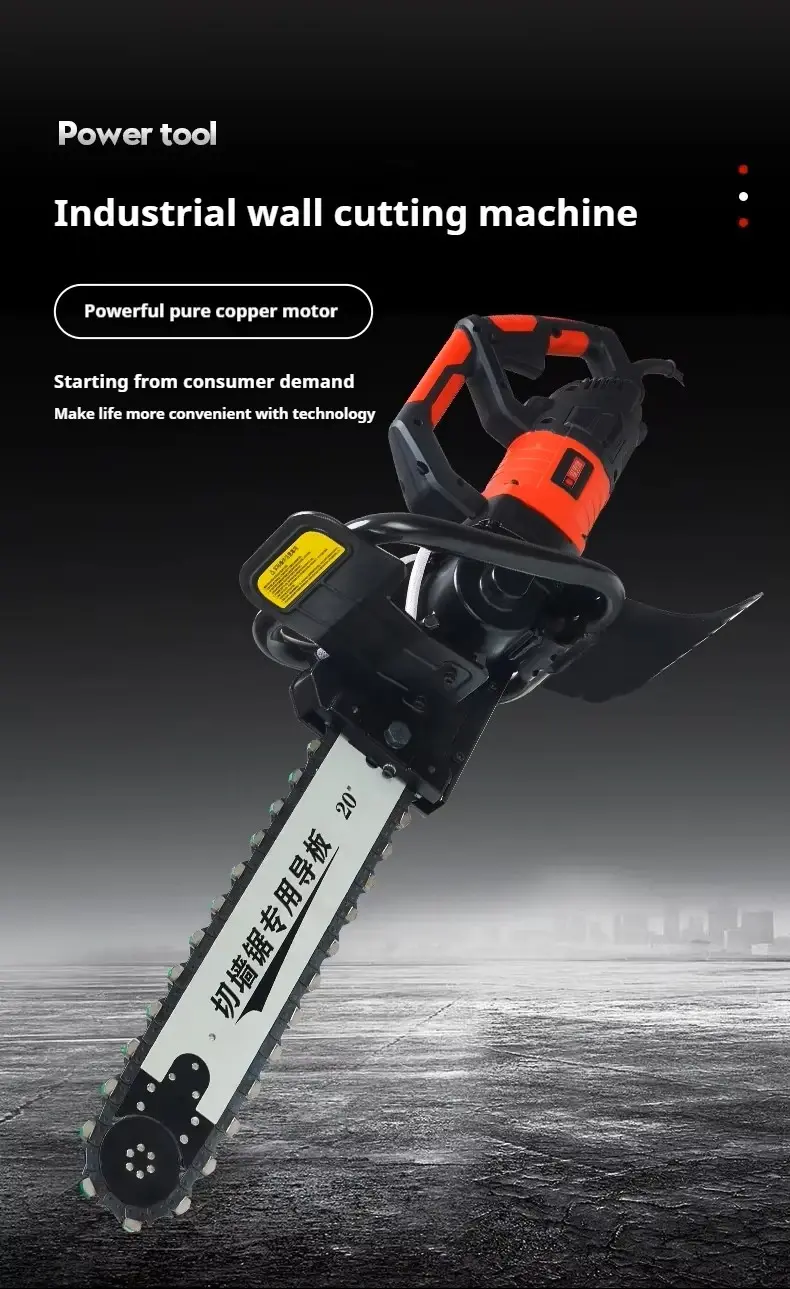
The pictured tool uses a guide bar and segmented chain arrangement. Its front wraparound handle and rear grip make the handheld layout easy to recognise, while the seller describes it as an industrial wall-cutting machine.
For a buyer evaluating concrete or masonry cutting, material approval is the key starting point. Describe the wall or block material, thickness, cut length and any reinforcement to the supplier. Request written confirmation of the suitable chain, guide bar and approved cutting method for that job.
Specialist manufacturer ICS documents diamond-chain cutting systems for concrete, stone and masonry. That is useful category context; ICS specifications and approvals are not assigned to this seller’s tool.
Look closely at the cutting system
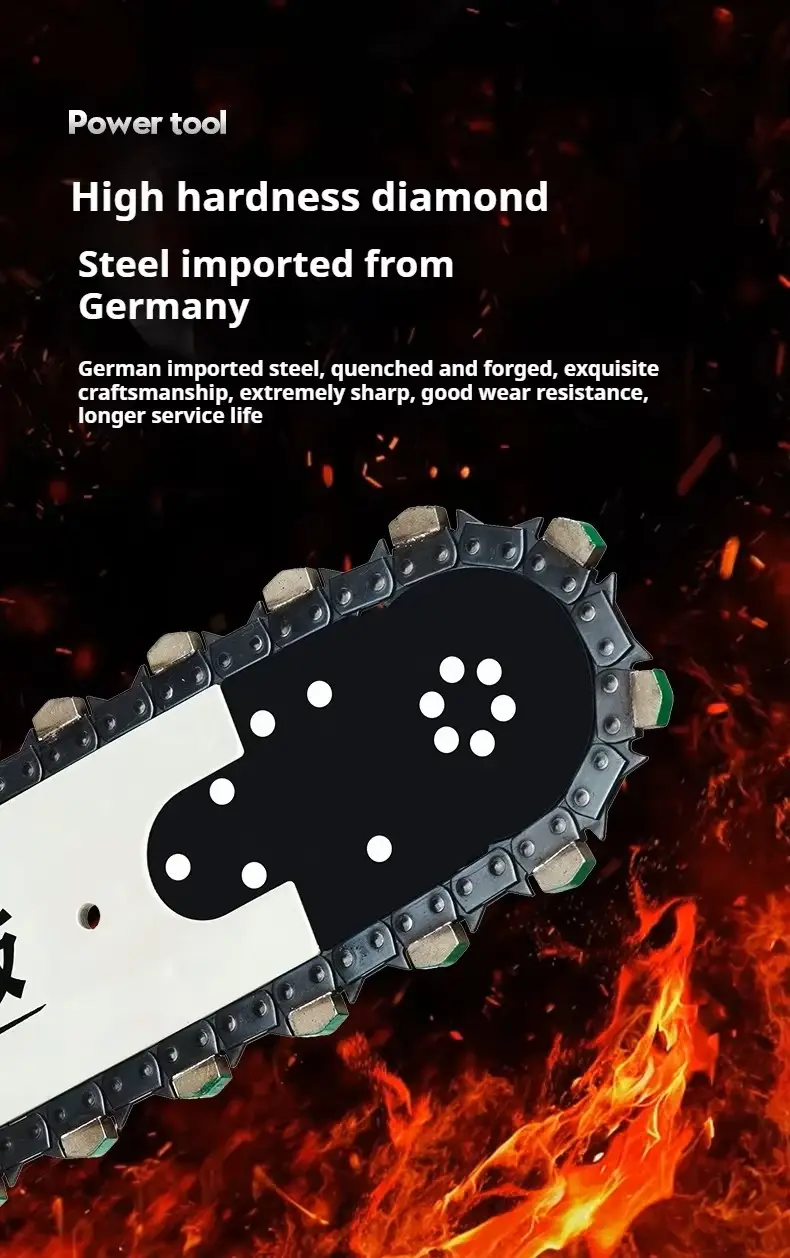
The close-up graphic describes the chain in diamond-cutting terms and shows segmented cutting elements around the bar. Before ordering, ask the seller to identify the exact chain and bar supplied, their approved materials and replacement-part references.
This makes future maintenance easier to plan. Request the manufacturer’s inspection, adjustment, lubrication or cooling requirements as applicable to the selected system, along with the replacement-chain price and availability.
Handles, controls and pictured guarding
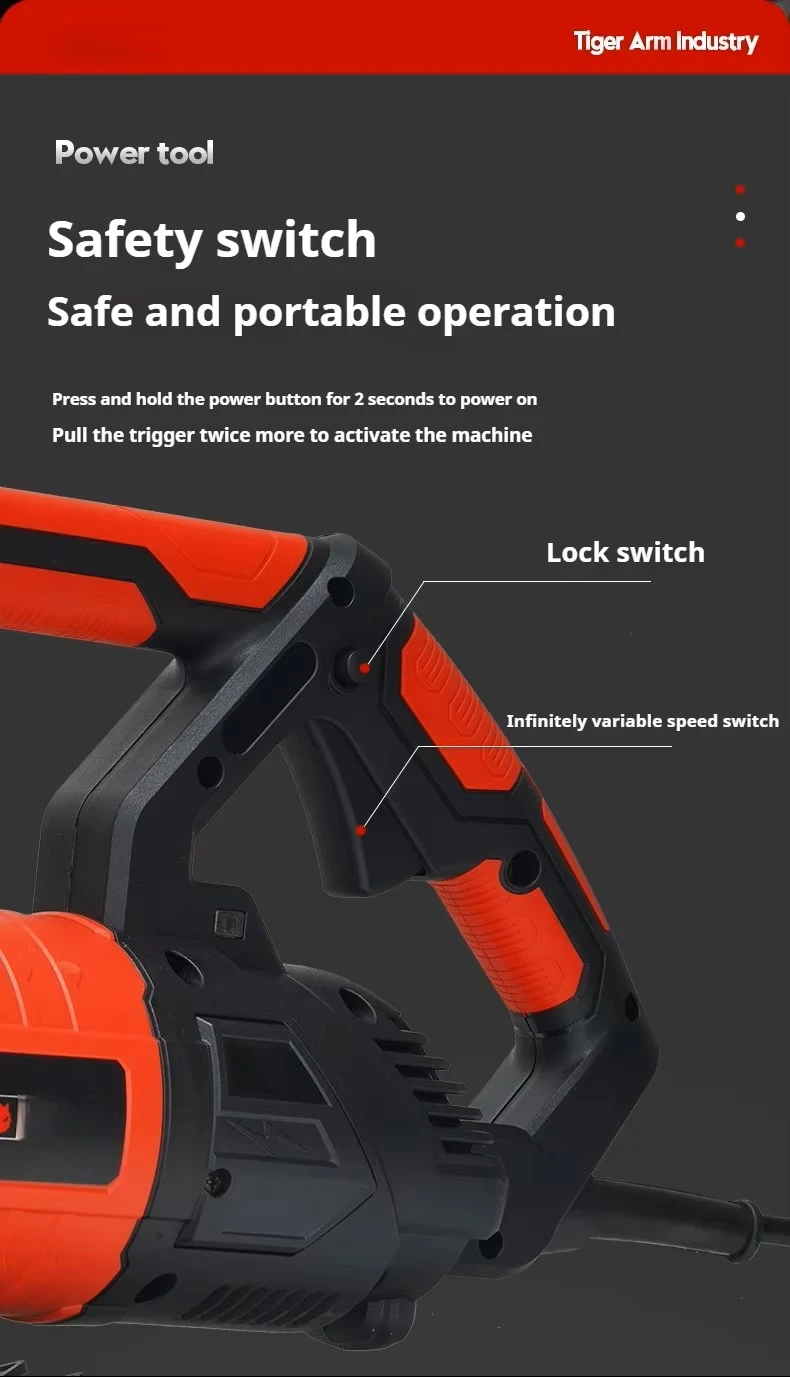
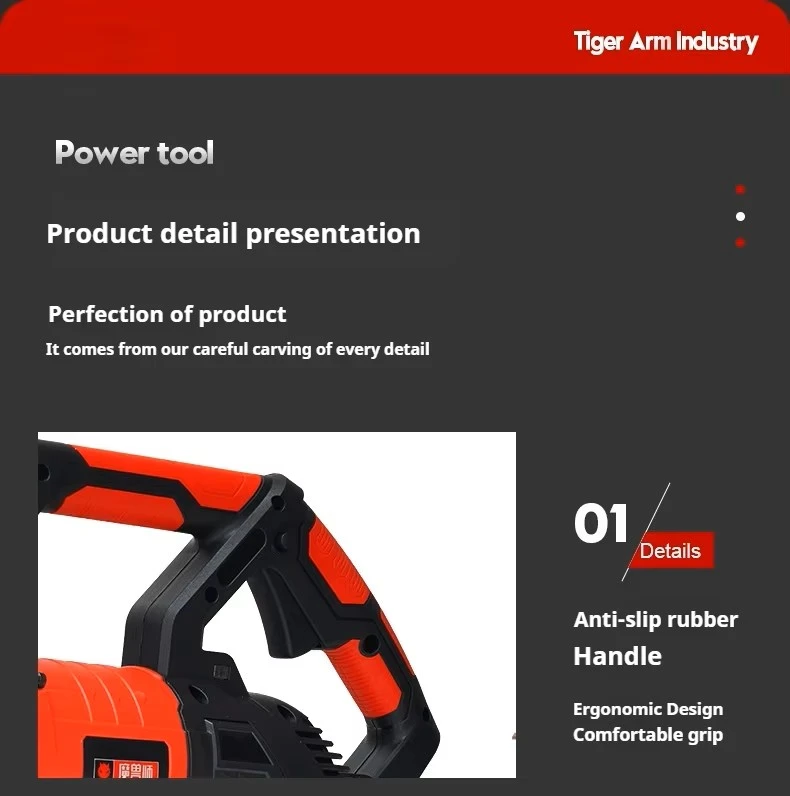
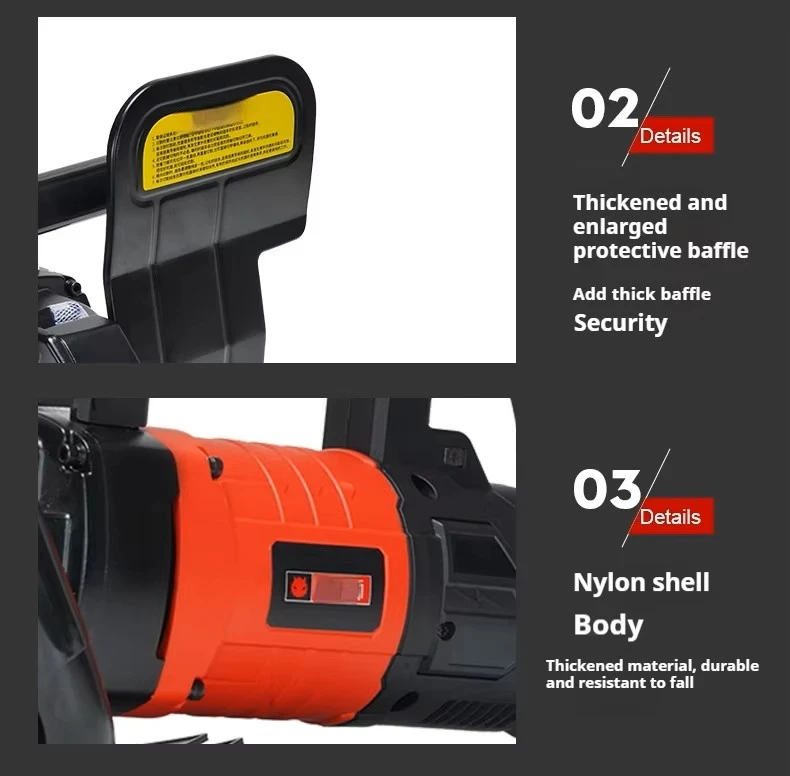
The control graphic labels a lock switch and a variable-speed trigger. A separate detail image describes the rear handle as rubberised, and the guard graphic identifies an enlarged protective baffle and nylon housing.
These pictured features give you useful questions for a product demonstration. Ask the supplier to explain the actual start, stop and speed-control arrangements, the required grip positions and the guarding fitted to the quoted model. Follow the supplied operating manual for the precise control sequence.
Watch the supplied masonry-cutting clip
The approximately 11-second clip shows a similar cutting tool working on masonry blocks and carries the name Henan Lingye Industrial Co., Ltd. The product graphics carry Tiger Arm Industry branding. Confirm which manufacturer, model and cutting system the offer supplies. The clip illustrates an application; use the manual and site controls for operating practice.
Prepare a cutting brief the seller can answer
A good equipment enquiry connects the tool to a defined task. Include the material and wall thickness, the opening or cut dimensions, access around the work, available electrical supply and expected frequency of use.
For an opening or alteration, have the responsible person assess the structure, locate services and plan support for sections being removed. Then ask the supplier to confirm the tool’s approved role in the agreed cutting plan.
Plan dust control and electrical protection
Concrete and masonry cutting can generate respirable silica dust. Agree the appropriate dust-control method before work and use only systems approved for the selected tool and cutting assembly.
OSHA’s handheld-saw guidance describes continuous water delivery for compatible wet-cutting saws and electrical protection when water is used, including GFCIs and watertight connectors. It also addresses ventilation and respiratory protection. Apply the requirements relevant to your location and task; have a competent person establish the control plan. Do not add water to electrical equipment unless its manufacturer approves that use.
Read OSHA’s handheld power-saw silica fact sheet — general U.S. guidance, not a product approval.
Arrange training for the actual machine. Inspect the chain, bar, guards, cable and controls as specified in the manual, keep others clear of the work area, use the required protective equipment and isolate the power before adjustment, cleaning or maintenance.
Compare the complete purchase package
Obtain a written list of what the price includes: powerhead, guide bar, chain, fittings, tools and manuals. Confirm the plug, electrical requirements and any approved cooling or dust-control accessories needed for the task.
Ask for dispatch and delivery scope, import arrangements where applicable, warranty terms and service-part support. The listed box dimensions and 17.35 kg gross package weight provide a starting point for logistics discussions; confirm the actual shipment details.
Our view: make the specification work for the job
This offer presents a corded, chain-style wall cutter with a seller-listed 220V specification, K350/K480 model references and clearly pictured handles and controls. The supplied parameter sheet, close-ups and application clip help a buyer prepare a targeted enquiry.
For contractors exploring concrete or masonry cutting equipment, the practical next step is to match the selected powerhead, chain and bar to the approved material and cut dimensions. Confirm the manual, work controls and complete package, then compare the offer against your project requirements.
Frequently asked questions
What voltage does the seller list?
The supplied parameter graphic lists 220V. Confirm the selected model’s frequency, plug, rated power and electrical supply requirements.
What does the 17.35 kg figure describe?
The sheet identifies it as the gross weight of the whole box. Request operating weight separately.
How should I confirm cutting depth?
Ask for the maximum permitted depth for the exact model, bar, chain and material. The visible 20-inch bar marking is an appearance reference, not a complete cutting-depth specification.
Is it approved for reinforced concrete?
Have the supplier confirm the material and reinforcement compatibility of the exact cutting assembly in writing before planning that application.
Sources and editorial information
- User-supplied product, parameter, chain, control, handle, housing and motor-promotional images, plus the masonry-cutting video.
- ICS industrial cutting-system catalogue — category context only.
- OSHA handheld power-saw silica guidance — general work-planning reference.
Prepared on 13 October 2026. Specifications are attributed to the supplied seller sheet. Confirm current availability, the exact configuration, approved materials and complete delivered terms with the seller.
Explore more equipment reviews · Plan your pre-work checks
HSSE TIPS — Worksite Safety Hub
Every Task. Every Person. Home Safe.
Your experience matters
Share your thoughts on this page
Have a question, a useful experience or a suggestion? Add your input below.
Comments are public. Keep them respectful and relevant. Do not share contact details, confidential information or emergency reports.
Comments on this page
Loading comments…