Product Reviews · Livestock · 18 min read
Dairy Cows for Sale in Latvia: Herd Review and Buyer’s Guide
A dairy herd is never just a headcount. The real value sits in the individual animals—their identity, health, lactation stage, fertility, milk records and ability to fit the buyer’s farm. Rikava Agro SIA is advertising a Holstein Friesian herd in Lielie Dreizi, Latvia, with the price on request. The seller says every animal is officially registered with Latvia’s LAD and PVD, but the public listing does not state how many animals are included or publish production, pregnancy or health-test results. Those records should shape the conversation before price does.
Quick verdict
This offer may be worth investigating for a dairy operator seeking Holstein Friesian cattle in Latvia or within a legally workable European movement route. The listing gives a confirmed farm location, seller identity and a useful statement about official registration. Still, it is an invitation to begin due diligence—not enough information to value the herd. Ask first for a dated ear-tag inventory, individual production and reproductive records, veterinary status and a written destination-specific transport plan.
Check availability, herd composition, price basis and access to the underlying records.
Listing details at a glance
| Advertised offer | Herd of dairy cows for sale in Latvia |
|---|---|
| Species | Cattle / cows |
| Breed | Holstein Friesian, seller-listed |
| Herd size | Not stated |
| Animal categories | Not broken down in the public listing |
| Age and lactation profile | Not stated |
| Pregnancy status | Not stated |
| Milk-production records | Not published |
| Health-test results | Not published |
| Registration | Seller states all animals are officially registered with LAD and PVD |
| Seller | Rikava Agro SIA |
| Agroline ID | KG53190 |
| Location | Lielie Dreizi, Latvia |
| Displayed address | Akmentiņi 1, LV-4641, Lielie Dreizi, Latvia |
| Price | On request; basis and VAT treatment not stated |
| Delivery area | Not stated |
| Availability | Advertised as available when checked |
What exactly is included?
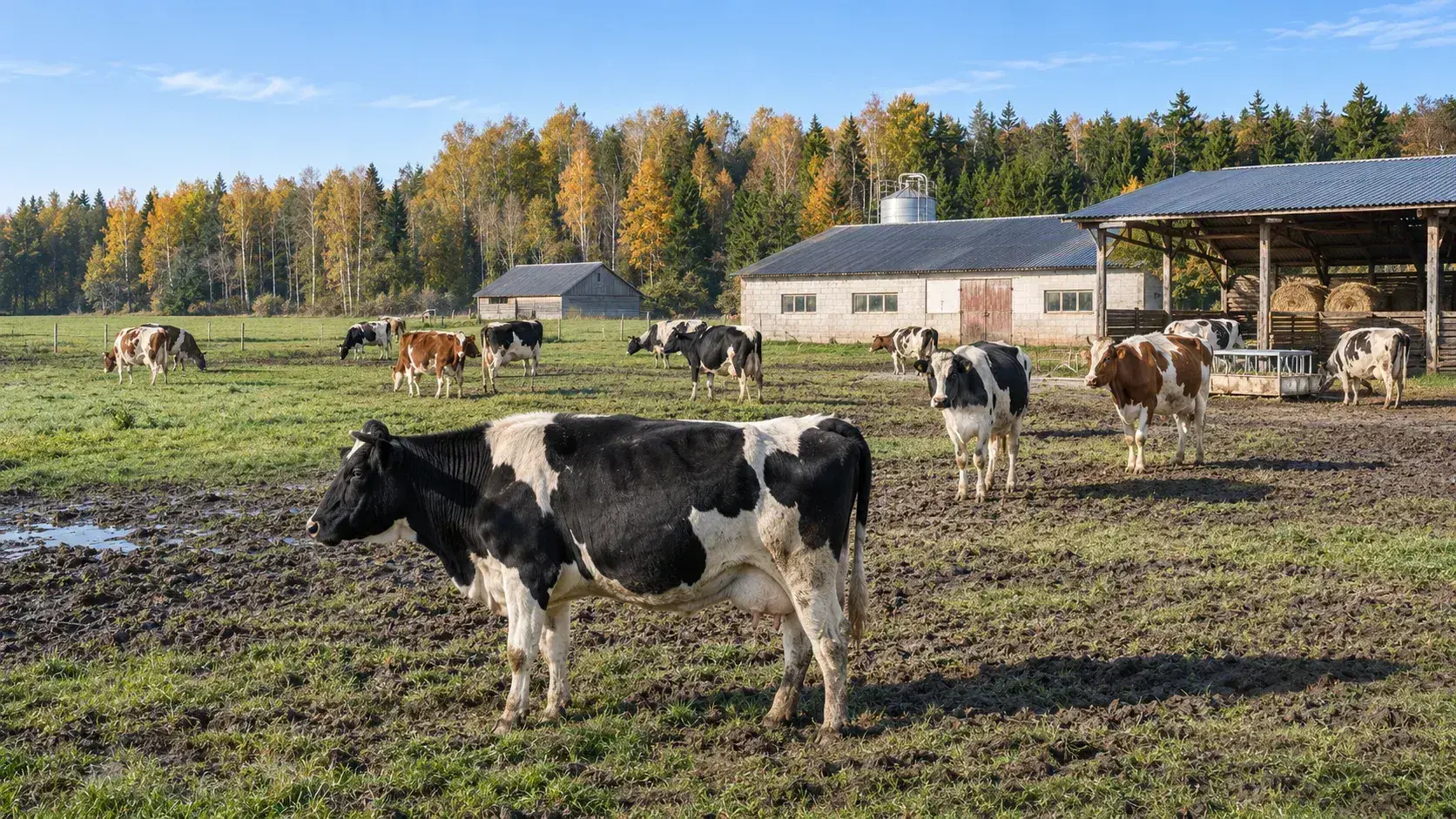
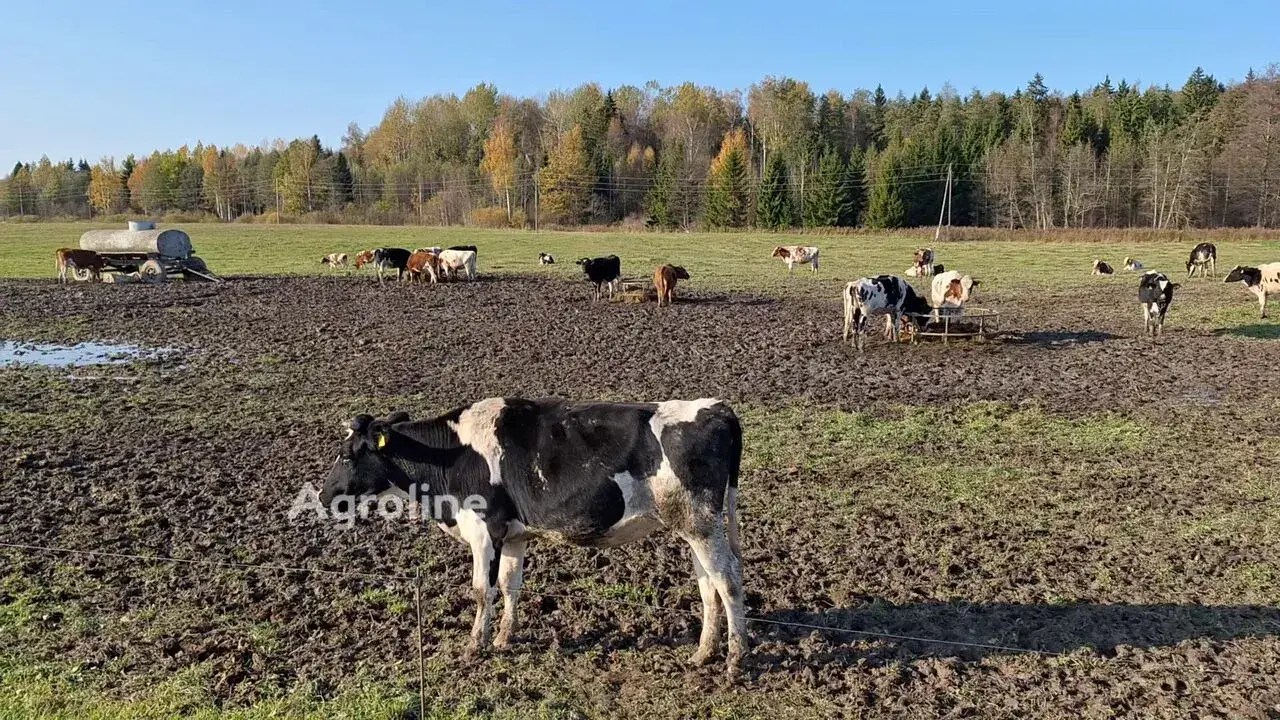
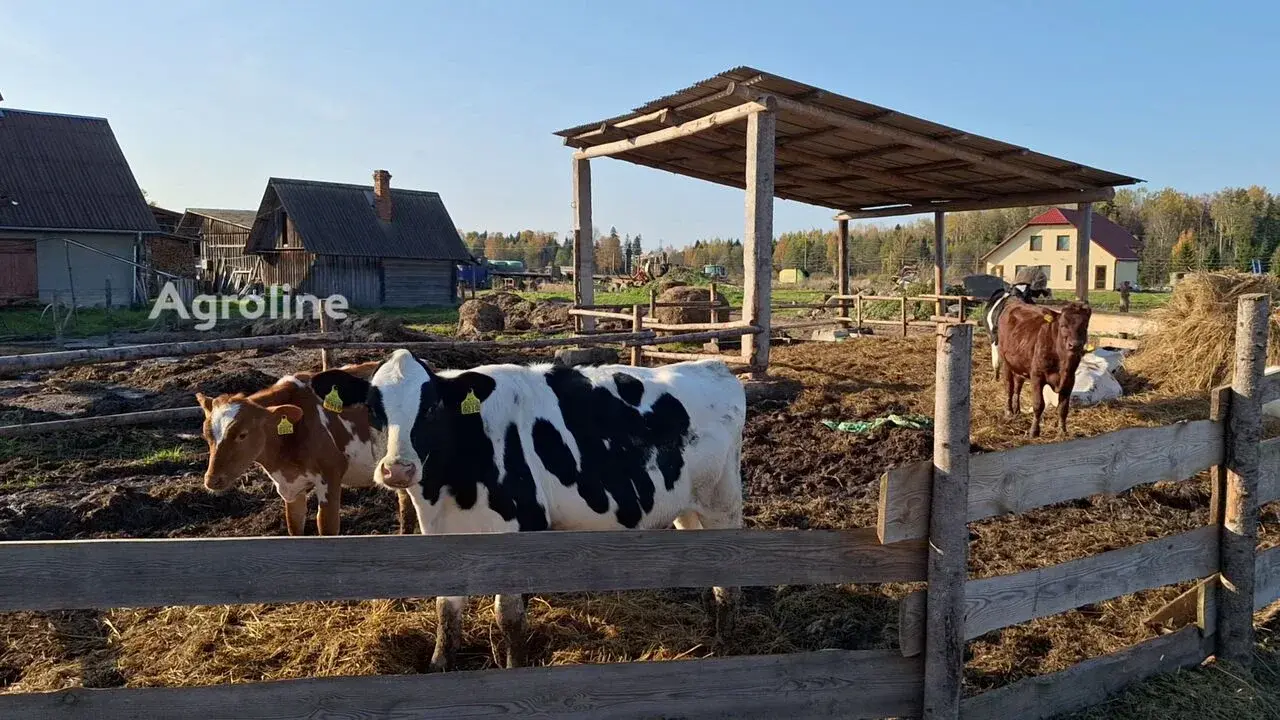
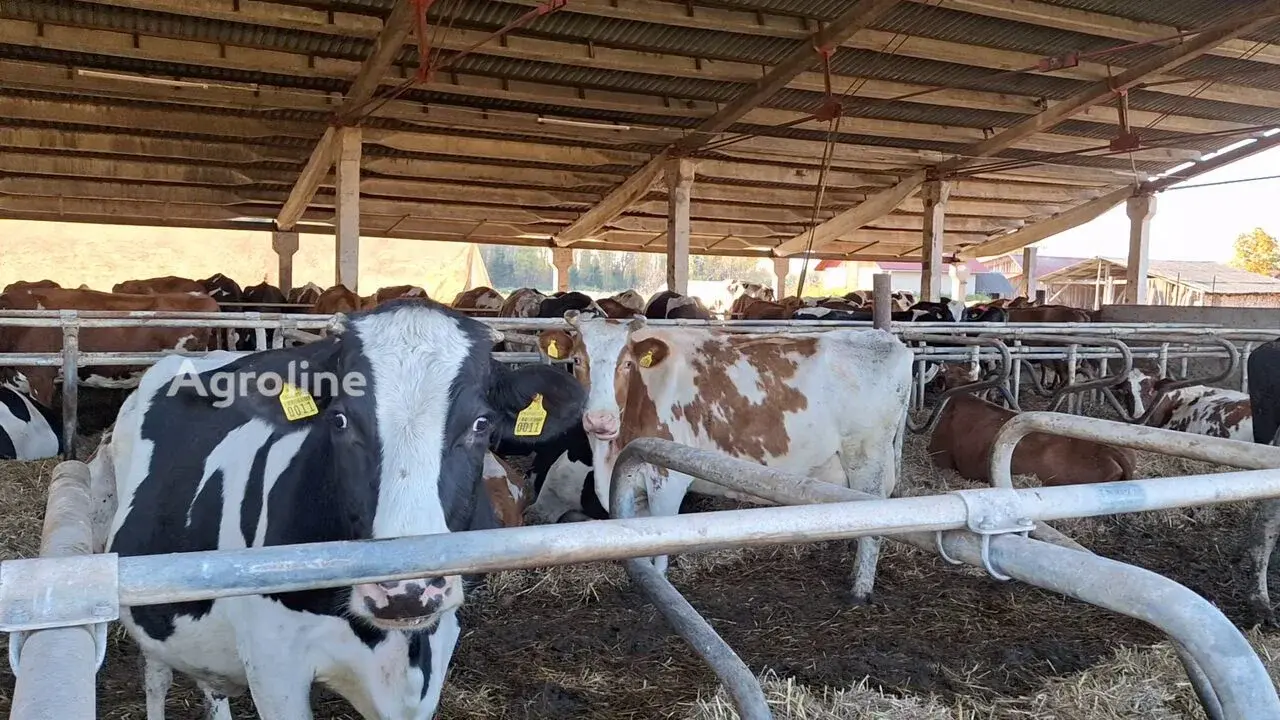
The listing uses the broad phrase “herd of dairy cows,” but it does not publish a count or divide the animals into lactating cows, dry cows, pregnant cows, heifers, calves or bulls. The photographs show multiple black-and-white and brown-and-white cattle on pasture and in open farm housing; photographs alone cannot establish the legal inventory or each animal’s production status.
Ask the seller for one spreadsheet or official report that pairs every ear-tag number with date of birth, breed percentage, parity, calving date, days in milk, current reproductive status and recent health or treatment information. That turns a general herd advertisement into something a buyer, veterinarian and lender can assess properly.
Holstein Friesian herd profile
Holstein Friesians are widely used in commercial dairy systems, but breed name alone does not predict the performance of this particular herd. Age, parity, stage of lactation, udder health, fertility, feeding, housing and previous management all matter. Even cows standing side by side may have very different production histories and future requirements.
If the buyer wants registered genetics, obtain the herd-book status and pedigree for each relevant animal rather than assuming that the marketplace breed field confirms purebred status. Genetic tests, breeding values, insemination records and sire information should be linked to individual identification.
Request the complete ear-tag inventory, herd-book status and animal-by-animal records.
Milk-production information buyers need
No daily yield, 305-day lactation figure, milk-fat percentage, protein percentage, somatic-cell count or bacterial result is published. That does not mean the records do not exist; the seller says detailed information is available. Ask whether the figures come from official milk recording, farm software, milk-tank summaries or estimates.
Useful records identify the cow, calving date, measurement date, milking frequency, yield and milk components. ICAR guidance explains that credible milk recording begins with animal identification, calving information, measured milk and the timing of milking, with laboratory analysis used when milk constituents are reported. Compare recent tests with whole-lactation trends rather than selecting animals on a single high day.
Health, fertility and veterinary documentation
The seller’s registration statement is useful for traceability, but registration is not the same as a current veterinary certificate or a guarantee of health, fertility or production. Before agreeing a price, appoint an independent veterinarian who is familiar with both Latvian requirements and the destination herd.
- Match both ear tags and identification documents to the seller’s inventory.
- Review official movement history, holding records and ownership authority.
- Confirm the health status and tests required for the intended destination.
- Review mastitis treatment, somatic-cell history and udder condition.
- Examine feet, hooves, locomotion, body condition, eyes, respiration and general condition.
- Verify pregnancy by a competent professional and record service and expected calving dates.
- Review vaccination, medicine, withdrawal-period, mortality and culling records.
- Agree in writing what happens if an animal fails the veterinary or transport-fitness examination.
Where this herd may fit
Subject to records and inspection, a group like this could support expansion of an established dairy herd, replacement of culled cows, a planned increase in milk output or the introduction of selected animals with verified genetics. The right fit depends on more than breed: the animals must suit the buyer’s housing, milking system, feed resources, climate, labor, veterinary support and calving plan.
For a new dairy unit, buying animals before the facilities, feed stocks, staff, quarantine area and veterinary arrangements are ready creates avoidable pressure. Build the receiving plan first, then select animals that fit it.
Animal welfare, HSSE and biosecurity
- Use calm, low-stress handling and trained people who understand cattle behavior.
- Provide secure races, gates, crush facilities and clear handler escape routes.
- Control kick, crush, slip and manual-handling hazards during inspection and loading.
- Separate new arrivals according to a veterinarian-approved isolation and testing plan.
- Clean and disinfect vehicles and shared equipment between consignments.
- Plan stocking density, ventilation, water, feed, rest and temperature control for the journey.
- Do not load an animal that is not fit for transport.
- Confirm unloading facilities before the vehicle departs, including non-slip footing and secure pens.
- Brief all personnel on communication, emergency contacts and actions for injury, escape, delay or vehicle failure.
Independent inspection checklist
- Verify the seller’s identity and legal authority to sell every animal.
- Reconcile the physical herd with a dated, ear-tagged inventory.
- Inspect passports, herd-register entries and official movement information.
- Review breed, pedigree and genetic records where represented.
- Check individual milk recording, parity, calving date and days in milk.
- Review fat, protein, somatic-cell and bacteriological results.
- Confirm service, pregnancy and expected calving records.
- Review veterinary, vaccination, treatment and medicine-withdrawal records.
- Assess udders, teats, hooves, locomotion, body condition, teeth and general health.
- Observe the herd in its normal environment and, where possible, during milking.
- Ask about the current ration, housing, milking equipment and reason for sale.
- Confirm temperament and handling needs without relying on a brief photograph.
- Have an independent veterinarian examine the selected animals before payment.
- Confirm fitness to travel and destination-specific movement eligibility.
- Use a written contract that defines the exact animals, price, taxes, test conditions, risk transfer and remedies.
Product Location: Lielie Dreizi, Latvia
The listing displays the seller address as Akmentiņi 1, LV-4641, Lielie Dreizi, Latvia. Before travelling, confirm that the herd remains at this holding, agree visitor biosecurity rules, book the veterinarian and verify that an approved livestock vehicle can safely reach the loading area.
Transport, export and delivery
The advertiser does not publish delivery destinations, a freight price or responsibility for arranging transport. Do not assume the seller can deliver to your farm or country. Ask for written confirmation based on the destination, number of animals and planned movement date.
Latvia’s Food and Veterinary Service states that commercial animal transport requires the applicable carrier authorization and accompanying documents. It distinguishes shorter journeys of up to eight hours from long journeys above eight hours, with additional planning requirements for long transport. For movement between EU Member States, the European Commission explains that cattle must originate from an eligible registered or approved establishment, meet animal-health conditions, carry identification and animal-health documentation, and use TRACES NT certification.
Request a quotation separating animal price, VAT, veterinary examination, laboratory testing, certificates, loading, approved transport, insurance, border or control charges, rest arrangements, destination handling and any quarantine. The contract should define when ownership, cost and risk transfer.
Confirm the legal route, approved carrier, veterinary documents and destination charges.
Current Seller Offer — Verified 7 November 2026
Rikava Agro SIA was advertising a Holstein Friesian dairy herd at Lielie Dreizi, Latvia, under Agroline ID KG53190. The displayed price was “on request.” The seller states that all animals are officially registered with LAD and PVD and that detailed information is available. The listing did not publish herd size, animal-category breakdown, production results, pregnancy details, veterinary test results, price basis, VAT treatment, delivery area or freight terms. Availability and animal status can change, so request a current signed inventory and quotation.
Ask for identification, production, fertility, health and veterinary documentation.
Video: what is available?
No advertiser video of this exact herd was verified. A generic Holstein promotional video would not help a buyer assess these animals, so none has been embedded. Ask the seller for one current, continuous recording that shows the herd, ear-tag sampling, animals walking on a firm surface, the milking routine, housing, feed and water areas, and the loading facilities. Treat that footage as preparation for inspection—not a substitute for it.
Questions worth asking the seller
- Is the complete herd still available?
- How many animals are included today?
- How many are lactating cows, dry cows, pregnant cows, heifers, calves or other stock?
- Is the price per animal, per selected group or for the complete herd?
- Does the quotation include VAT?
- Why is the herd being sold?
- Can you provide the complete ear-tag inventory and animal passports?
- What does the LAD and PVD registration statement cover for each animal?
- Are the animals herd-book registered, and what breed percentages are recorded?
- What are the dates of birth and parity of the cows?
- What are the current calving dates and days in milk?
- What official milk-recording reports are available?
- What are the recent milk-fat, protein, somatic-cell and bacterial results?
- Which animals are pregnant, and when was pregnancy confirmed?
- What are the service and expected calving dates?
- Which health tests have been completed, on what dates and by which laboratory?
- Are veterinary, vaccination and treatment records available?
- Is there a history of mastitis, lameness, reproductive difficulty or metabolic disease?
- May an independent veterinarian inspect and test the animals?
- May the buyer observe the herd walking and being milked?
- Can selected animals or groups be purchased, or is the herd sold only as one lot?
- What ration, housing and milking system are currently used?
- Which animals are considered fit for the planned journey?
- Which destinations can legally receive the cattle?
- Who arranges the approved transporter and TRACES or export documentation?
- Can you provide a destination-specific delivered quotation?
- What deposit, cancellation and payment-protection terms apply?
- When do ownership and transport risk transfer?
- What happens if an animal fails the agreed veterinary examination?
Frequently asked questions
Where is the herd located?
Lielie Dreizi, Latvia. The displayed seller address is Akmentiņi 1, LV-4641.
Which breed is advertised?
The listing identifies Holstein Friesian cattle.
How many cows are included?
The public listing does not state a number. Request a dated, ear-tagged inventory.
Are all the animals lactating?
The listing does not publish an animal-category or lactation breakdown.
Is the price per cow or for the herd?
The price is on request, and the basis is not stated. Confirm this in the written quotation.
Are milk-production records available?
The seller says detailed information is available, but no production results are published. Request official individual and herd reports.
Are pregnancy records available?
No reproductive details are public. Ask for veterinary-confirmed status and dates for each relevant animal.
Can a veterinarian inspect the cattle?
The listing does not state the inspection terms. Make independent veterinary examination a condition of purchase.
Can the cattle be exported from Latvia?
Potentially, subject to origin and destination requirements, identification, health certification, transport authorization and the legally required movement process.
Does the seller arrange delivery?
No delivery regions or freight terms are published. Ask the seller directly.
What documents should a buyer request?
Request the ear-tag inventory, identification documents, herd register, ownership evidence, milk and reproductive records, veterinary results, movement documentation and the sale contract.
How should the cattle join an existing herd?
Use a veterinarian-approved arrival, isolation, testing, feeding and gradual-integration plan.
Final assessment
The verified offer is straightforward: a Holstein Friesian dairy herd in Lielie Dreizi, Latvia, advertised by Rikava Agro SIA at a price available on request. The seller’s statement that the animals are officially registered provides a useful traceability starting point, and the selected photographs show the farm context.
The buying decision must come from the missing detail. Confirm the exact animals, production and fertility records, veterinary status, welfare and handling condition, movement eligibility, transport arrangements and total delivered cost. If those records support the seller’s offer and the animals fit the receiving farm, the herd may merit a structured veterinary and commercial evaluation.
Confirm the animals, inspection access, sale terms and legally workable transport plan.
Join the discussion
Would this Latvian dairy herd fit your farm’s expansion plans or production system? Share your intended application or the questions you would ask the seller in the comment section below.
Sources and verification
- Current affiliate seller offer — checked 7 November 2026.
- Agroline listing KG53190.
- Latvia Food and Veterinary Service — animal registration and identification.
- Latvia Food and Veterinary Service — animal transport.
- European Commission — movement of bovine animals.
- ICAR Guidelines — overview of dairy-cattle milk recording.
Explore more product reviews · Browse the HSSE article library · Read practical safety guidance
HSSE TIPS — Worksite Safety Hub
Every Task. Every Person. Home Safe.
Your experience matters
Share your thoughts on this page
Have a question, a useful experience or a suggestion? Add your input below.
Comments are public. Keep them respectful and relevant. Do not share contact details, confidential information or emergency reports.
Comments on this page
Loading comments…