Product Reviews · Construction Equipment
Caterpillar 306E2 Tracked Excavator Review: Engineering, Attachments and Buying Checks
Affiliate Disclosure: Worksite Safety Hub may earn a commission if you make a qualifying purchase through links in this article. This does not change the price you pay.
A trench, a drainage run and a landscaping job can ask very different things of the same excavator. Reach matters, but so do bucket choice, control, space for the counterweight and the practical work of moving the machine between sites.
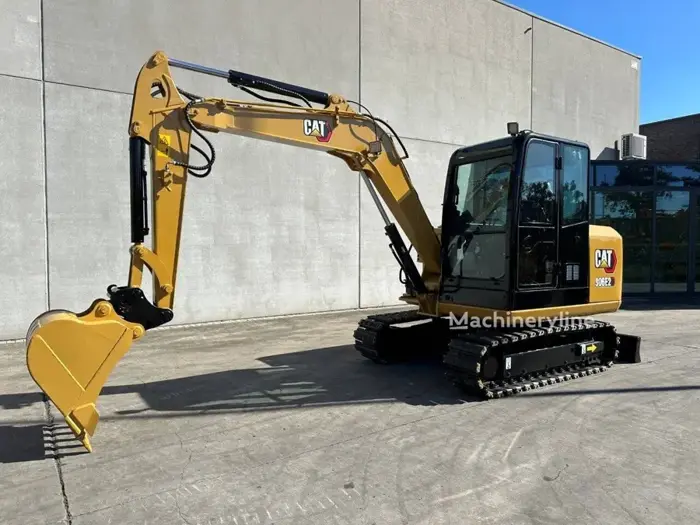
The Caterpillar 306E2 tracked excavator brings those decisions into the six-ton size class. Caterpillar describes it as a Mini Hydraulic Excavator with conventional tail swing. The machine reviewed here is advertised as a 2016 example with an enclosed cab, mechanical quick coupler, toothed bucket, auxiliary hammer pipes and tracks fitted with rubber pads.
This review combines Caterpillar model documentation with photographs and information for the exact auction machine. Model specifications are identified separately from its verified installed equipment. We have not operated, inspected or tested the excavator.
EXPLORE THE CATERPILLAR 306E2 EXCAVATOR
Caterpillar 306E2 Tracked Excavator: Overview
The 306E2 is a compact tracked hydraulic excavator intended for excavation and related earthmoving tasks. Its conventional counterweight extends behind the undercarriage during rotation. That arrangement belongs in the site-access plan alongside the boom, bucket and working area.
The advertised package includes a front blade and a quick-change bucket arrangement. For a contractor comparing machines, that combination makes the review about more than maximum depth: it raises useful questions about trench dimensions, surface protection, attachment changes and the operator’s view of the work.
Understanding the Caterpillar 306E2 Model
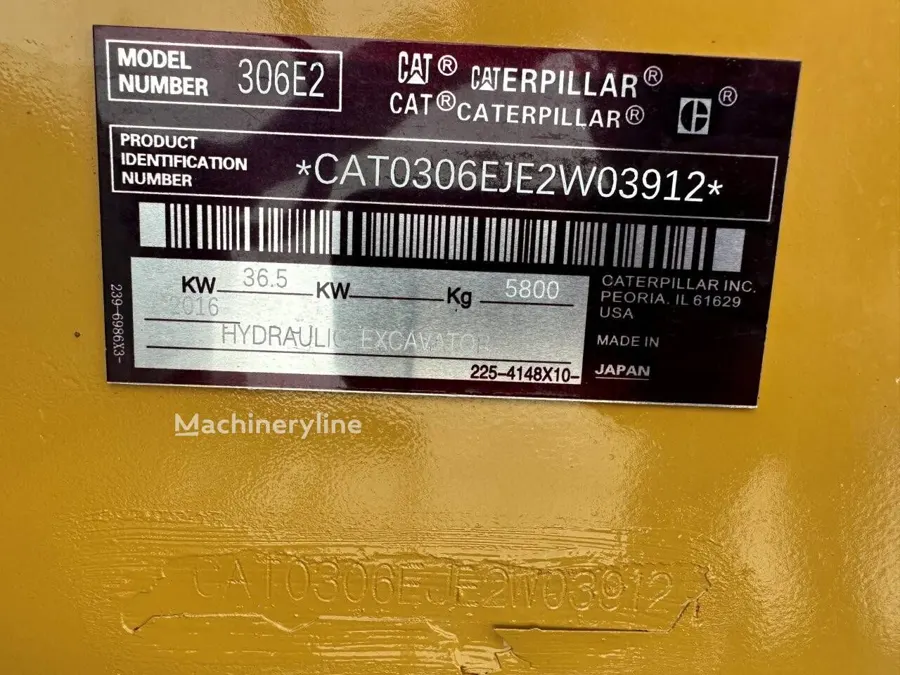
The photographed identification plate explicitly reads 306E2, carries PIN CAT0306EJE2W03912, and shows 2016, 36.5 kW and 5,800 kg. No CR suffix is shown. This machine should therefore be researched as a 306E2 rather than by borrowing data from the 306 CR, 306E or another six-ton Cat excavator.
Caterpillar’s archived product literature places the 306E2 among mini excavators and describes its standard tail-swing design. “Mini” is the manufacturer’s category; it does not remove the need for a suitable transport vehicle, ground assessment or a clear swing zone.
Engine and Powertrain
Caterpillar’s AEHQ7367-02 brochure specifies a Cat C2.4 direct-injection turbo diesel, 2.4-litre displacement, 36.5 kW gross at 2,200 rpm and 34.7 kW net. Gross and net are different rating bases, so the two values should not be treated as competing measurements.
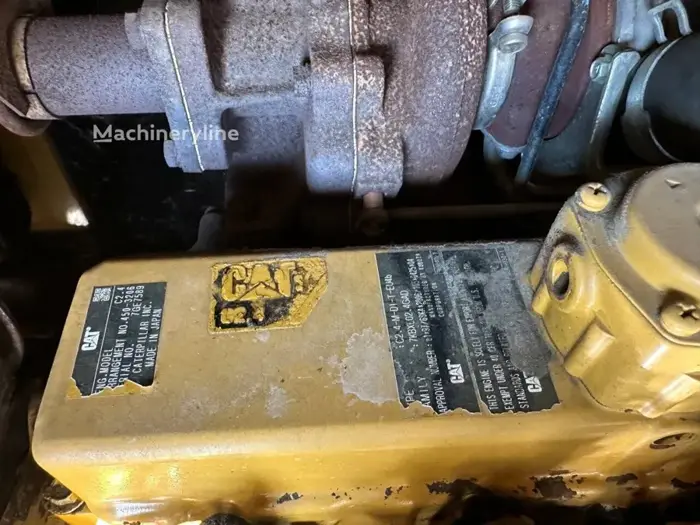
The advertised machine’s plate states 36.5 kW, and an engine-compartment photograph shows a Cat C2.4 identification label. The seller’s description calls it “Kubota C2.4,” while Machineryline’s summary converts 49 hp to 36.02 kW. For this review, the plate and Caterpillar’s terminology take precedence; confirm the engine’s complete identity and parts requirements from its serial record.
The brochure lists a 78-litre fuel tank. That is a model reference, not a verified measurement of this unit’s tank. No machine-specific fuel-consumption result is provided, and no hourly operating-cost or runtime figure is claimed. The applicable emissions documentation should also be checked for the intended destination.
Hydraulic System and Operating Performance
The model uses hydraulics to translate engine power into boom, stick, bucket, swing and travel movement. Caterpillar describes pilot controls and load-sensing operation; the later AEHQ8034-00 model sheet identifies a variable-displacement piston pump. These descriptions explain the engineering approach, rather than proving the current performance of a used machine.
Published model figures include 140 L/min maximum main-system flow and 25,000 kPa maximum implement pressure. Pump flow is not the same as flow available continuously at an attachment connection. Attachment selection needs the actual auxiliary flow, pressure, return arrangement and control settings.
The seller lists hammer pipes, and lines are visible along the working equipment. Their presence supports an enquiry about hydraulic tools, but does not establish compatibility with a particular breaker or auger. Ask for circuit details and an operational demonstration before choosing an attachment.
Digging Depth, Reach and Bucket Performance
Caterpillar’s AEHQ7367-02 working-range diagram gives 3,870 mm maximum digging depth, 6,090 mm maximum reach and 5,970 mm reach at ground level for its standard-stick configuration. Maximum cutting height is 5,530 mm and maximum dump height is 3,900 mm in that same diagram.
These figures belong together. They are not independently confirmed measurements of the auction machine’s installed front equipment. The seller does not supply its boom and stick lengths, so a buyer should verify the configuration before planning a specific trench or loading operation.
The model brochure quotes 39 kN bucket digging force and 28 kN standard-stick force. It uses a 0.25 m³ standard bucket as a reference. The auction bucket is described as 650 mm wide; its volume is not stated. Width alone cannot establish capacity, loading behaviour or suitability for a particular material.
Boom, Stick and Attachment Configuration
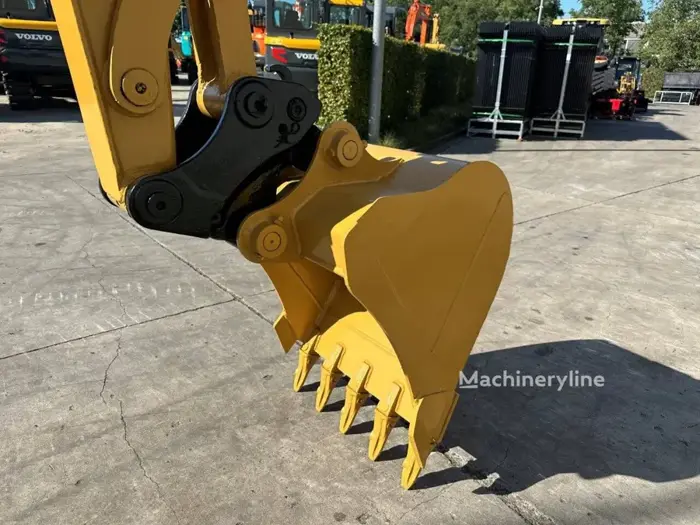
The current gallery shows a conventional boom-and-stick assembly, black mechanical quick coupler and yellow toothed digging bucket. The seller also lists the blade and hammer pipes. No supplied hydraulic breaker, auger or grading bucket has been verified.
For purchasing purposes, identify the coupler make, locking method, compatible pin dimensions and included attachments. A mechanical coupler changes how attachment checks are performed; follow its own engagement and verification instructions. A photograph of a fitted bucket does not establish the locking condition or rated lifting arrangement.
CHECK EXCAVATOR SPECIFICATIONS
Tracked Undercarriage and Mobility
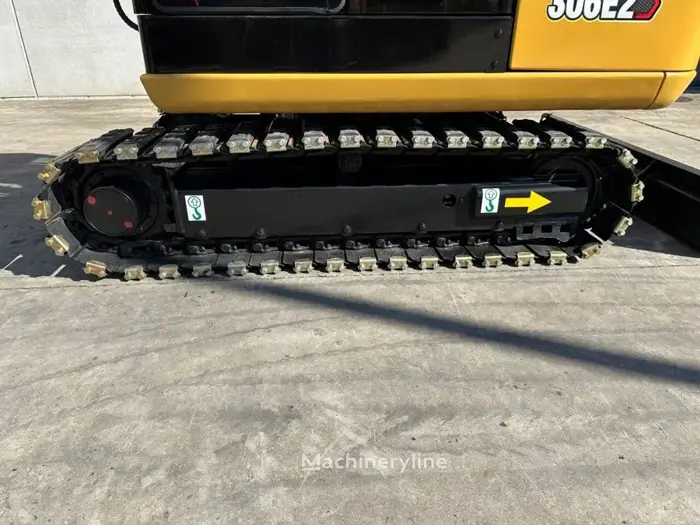
The machine is advertised with 400 mm tracks and rubber pads. Photographs show steel track assemblies with pads, rather than a continuous all-rubber belt. Include the pad condition and the surface to be crossed in any access assessment.
Caterpillar’s model data lists two travel speeds, 2.8 and 4.3 km/h, and a 10.5 rpm swing speed. These are catalogue figures, not results from our testing. The blade is useful to consider for backfilling and surface work, but neither tracks nor a blade establish suitability for every slope or ground condition.
Inspect the undercarriage as a system: pads, shoes, chains, rollers, idlers and sprockets work together. Ask for the appropriate track-tension procedure and assess turning space, surface loading and the route to the work area.
Operator Cabin and Controls
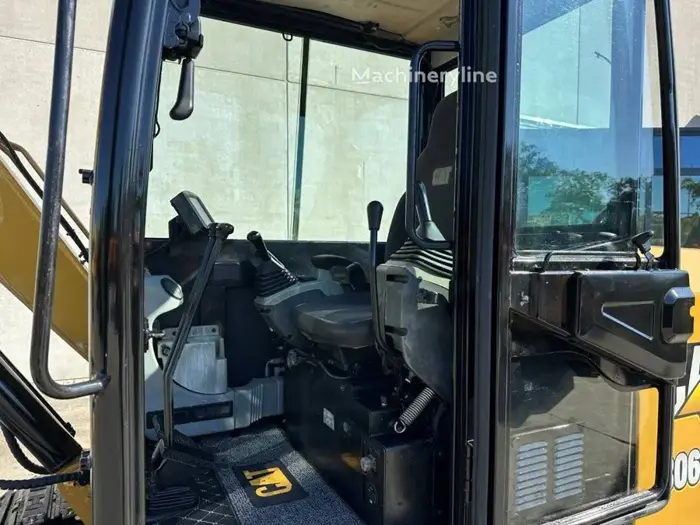
The advertiser photographs confirm an enclosed glazed cab, operator seat, armrests, joystick controls, travel controls and an instrument display. These are useful views for discussing entry, visibility and the control layout with an operator.
Caterpillar’s model literature describes pilot levers, an opening front window, adjustable seating, heating and air conditioning. Those are catalogue descriptions; this lot’s climate-control operation and individual conveniences need demonstration. We do not claim that every brochure item remains installed or functional.
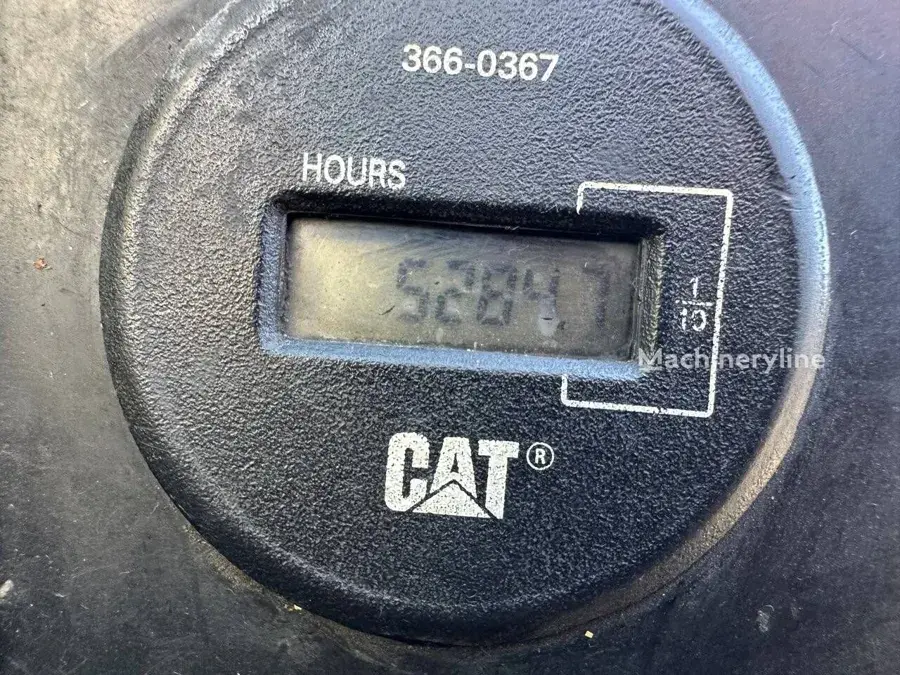
One photograph deserves specific attention: the listing reports 4,284 hours, while the photographed hour meter appears to display approximately 5,284.7 hours. Both observations are reported without drawing conclusions about the cause. Request a current meter photograph and supporting history before recording an accepted reading.
Dimensions, Operating Weight and Transport
The seller gives transport dimensions of 5,800 × 2,000 × 2,550 mm and a machine weight of 5,800 kg. The identification plate also shows 5,800 kg. Confirm the actual loaded transport weight, including the supplied bucket, coupler, fluids and any separately carried equipment.
For context, Caterpillar’s brochure uses a 5,800 kg operating-weight configuration including counterweight, steel tracks, standard bucket and operator. Operating weight is not automatically the legal payload figure for a particular transport combination.
Give the haulier the actual folded dimensions, loading instructions and attachment list. Agree ramp suitability, securing points and collection equipment before dispatch. Manufacturer-approved lifting and tie-down procedures should determine the handling method.
Construction and Earthmoving Applications
The verified digging bucket and compact tracked layout make general excavation, drainage work, site preparation and landscaping sensible applications to assess. Utility trenching requires matching bucket width and working range to the trench design, alongside locating buried services and planning ground support.
Agricultural infrastructure and property-development work may also be relevant where access, ground conditions and the task suit the machine. The blade can be considered for backfilling and site clean-up. Attachment-led work requires a separate compatibility check; hammer pipes alone do not turn the package into a supplied breaker system.
Productivity depends on the job sequence as much as the specification sheet. Consider where spoil will go, how often the machine must reposition, truck access and whether the operator can work within a clear, controlled area. These are planning considerations, not promised cycle-time or profitability results.
Maintenance and Operational Considerations
Use the serial-specific operation and maintenance manual to plan engine servicing, filters, cooling-system checks, hydraulic inspections, lubrication and track adjustment. Caterpillar’s general maintenance guidance highlights fluid levels, filters, cooling and attachment inspection, but it is not a substitute for this machine’s service schedule.
Before work, check the coupler connection, attachment pins, hoses, access steps, seat belt and controls under the applicable inspection procedure. Establish communication with ground workers, preserve the swing exclusion zone and identify underground services. Our related article, The Spoil Pile Is Part of the Excavation Hazard, adds practical excavation-planning context.
Any lifting operation needs the correct configuration-specific load chart, approved lifting point and required equipment. Maximum digging reach is not a lifting-capacity chart. Operator training and the manufacturer’s limits remain central to selecting and using a used excavator.
Caterpillar 306E2 Technical Specifications
Advertised Machine and Photographed Identification
| Item | Verified information |
|---|---|
| Manufacturer / model | Caterpillar / 306E2, photographed plate |
| Year / condition | 2016, plate and seller / used, seller |
| PIN | CAT0306EJE2W03912, plate and seller |
| Hours | Seller: 4,284 h; meter photograph appears approximately 5,284.7 h. Confirm. |
| Power / weight on plate | 36.5 kW / 5,800 kg |
| Engine label photographed | Cat C2.4; seller’s “Kubota C2.4” wording requires clarification |
| Cab / undercarriage | Enclosed cab / steel tracks with rubber pads |
| Track / bucket width | 400 mm / 650 mm, seller |
| Listed equipment | Mechanical quick coupler, toothed bucket, hammer pipes, blade |
| Transport dimensions, L × W × H | 5,800 × 2,000 × 2,550 mm, seller |
Caterpillar Model Reference: Standard Configuration
The following values come from AEHQ7367-02, not from a test of the advertised machine. Installed geometry, equipment and current condition require confirmation.
| Model specification | Manufacturer reference |
|---|---|
| Engine / displacement | Cat C2.4 DI Turbo / 2.4 L |
| Gross / net power | 36.5 kW at 2,200 rpm / 34.7 kW net |
| Main hydraulic flow / implement pressure | 140 L/min maximum / 25,000 kPa maximum |
| Maximum depth / reach | 3,870 mm / 6,090 mm, standard-stick working range |
| Maximum cutting / dump height | 5,530 mm / 3,900 mm, same configuration |
| Bucket / standard-stick digging force | 39 kN / 28 kN |
| Reference bucket capacity | 0.25 m³; auction bucket volume not specified |
| Travel / swing speed | 2.8–4.3 km/h / 10.5 rpm |
| Fuel tank | 78 L, model reference |
Current Auction Offer — Verified 24 October 2026
Product Location: 8020 Oostkamp, Belgium. This comes from the matching operator auction’s goods-location field. Machineryline says Antwerp; confirm the precise viewing and collection point with AuctionPort. The seller’s office address is not used as the machine location.
| Auction detail | Information reviewed |
|---|---|
| Operator / lot | AuctionPort; platform lot 274503, lot 2, auction 1506 |
| Marketplace reference | Machineryline XD52958 / seller stock 358683426 |
| Status | Matching lot data marked open; no bids in retrieved snapshot. Live status can change. |
| Scheduled opening / closing dates | 23 October / 4 November 2026 |
| Starting bid | €7,000 net; not a final selling price |
| Auction charge / lot VAT field | 16% / 21%; confirm transaction-specific VAT treatment |
| Bidding step | €250 in retrieved lot data |
| Viewing / collection dates | 3 November / 18 November 2026; appointment and exact times require confirmation |
| Documentation | Seller states “No documents.” Confirm what can be obtained before purchase and operation. |
The operator’s embedded record gives closing as 4 November 2026 at 19:00 +01:00. Its rendered page shows 18:00, while Machineryline shows 20:00. Confirm the authoritative live deadline and time zone. Generic static status messages also conflict; the open status above is attributed to the retrieved lot record.
The seller states that the machine starts, drives and performs all functions. That is a seller description, not an independent inspection result. A current bid, reserve price, buy-now option and final hammer price were not disclosed in the reviewed snapshot.
AuctionPort’s public FAQ describes standard and proxy bids, states that bids cannot be cancelled and requests payment of the winning pro forma invoice within 24 hours by bank transfer. Include the auction charge, applicable taxes, transport and commissioning in the purchase budget.
Delivery and collection: the operator’s general FAQ offers paid delivery within the EU by quotation after purchase and payment. A transport booking, price, loading assistance, export paperwork and destinations outside the EU were not confirmed for this lot. Obtain a quote and handling arrangements for this 5,800 kg machine.
The FAQ permits collection by appointment within ten days after the scheduled collection day without storage charges, then states €10 per day per lot from day eleven. Confirm the applicable booking, payment and collection terms before bidding.
Questions Buyers Should Ask Before Bidding
Begin with the PIN, production record, engine identity and current hour reading. Ask for maintenance history, available manuals, proof of ownership and any documentation needed for import, registration or use at the destination. Clarify the seller’s statement that no documents are supplied.
Request an inspection covering engine operation, hydraulics, travel, swing, undercarriage and attachment engagement. Confirm boom and stick dimensions, bucket volume, coupler details and auxiliary-circuit specifications. Ask what attachments are included and whether any warranty applies.
Finally, obtain the full cost calculation, bidding conditions, viewing appointment, collection point and transport quote. Review loading arrangements and parts support before committing. These are normal steps in matching a used machine to a defined project.
Buyer-Focused FAQs
Is this a 306E2 or a 306 CR?
The photographed plate identifies 306E2, without a CR suffix. Caterpillar describes this model as a conventional-tail-swing Mini Hydraulic Excavator.
What engine does it have?
Caterpillar documents the Cat C2.4, and a Cat C2.4 label is visible in the engine gallery. Clarify the seller’s “Kubota C2.4” description using the engine serial record.
How deep can the 306E2 dig?
AEHQ7367-02 gives 3,870 mm for its standard-stick configuration. Verify the auction machine’s installed geometry before applying that figure.
How many hours are recorded?
The seller reports 4,284 hours; the photographed display appears approximately 5,284.7. Request a current reading and history.
Which attachments are supplied?
The seller lists a mechanical quick coupler, toothed bucket, hammer pipes and blade. A supplied breaker, auger or grading bucket was not verified.
Where is the excavator located?
The matching operator auction identifies Oostkamp, Belgium. Confirm the precise location because the marketplace instead says Antwerp.
Is €7,000 the purchase price?
No. It is the net starting bid. Auction charges, applicable tax and other costs require separate confirmation.
Can the operator arrange delivery?
Its general FAQ offers paid EU delivery by quote. Confirm this lot’s loading, transport price and destination terms through the listing.
Final Verdict
The Caterpillar 306E2 offers a clearly documented compact-excavator platform, with conventional tail swing, hydraulic controls and a useful manufacturer working-range reference. This particular auction package adds a photographed enclosed cab, mechanical coupler, toothed bucket, blade and padded steel tracks.
For a contractor or equipment buyer, the next step is a focused inspection and document enquiry: reconcile the hours, confirm the installed configuration and agree the total cost and collection terms. Use the verified model information as a planning tool, then assess the actual machine against the work it must perform.
Sources, Photographs and Editorial Method
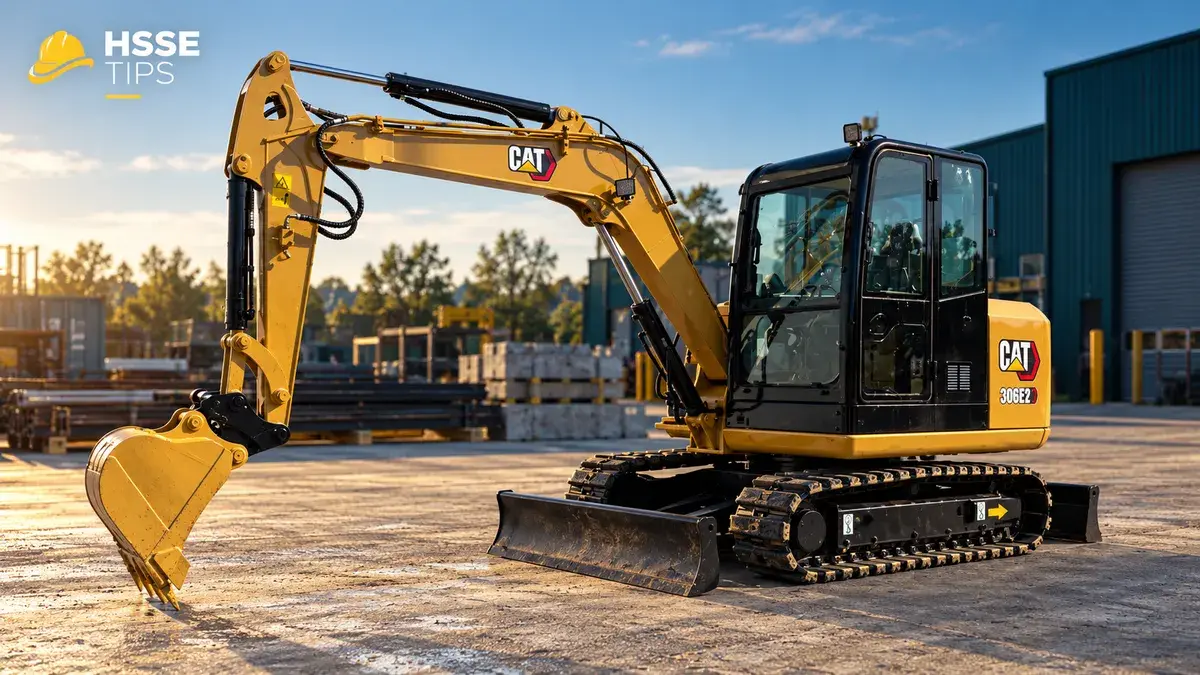
Reviewed on 24 October 2026 using Machineryline XD52958, AuctionPort lot 274503 and its public FAQ. All original equipment photographs here come from that exact Machineryline gallery under the publisher’s confirmed reuse permission, with watermarks retained. The featured artwork is separately identified as promotional illustration.
Model references: Caterpillar 306E2 brochure AEHQ7367-02, model sheet AEHQ8034-00 and the archived Caterpillar model page. These publications differ in some regional and revision details; this review does not combine incompatible working-range configurations.
General inspection guidance draws on Caterpillar’s maintenance checklist and NIOSH quick-coupler guidance. No advertiser video was identified in the exact listing; no unverified different-machine video is embedded.
Join the Conversation
What matters most when choosing a compact excavator—working range, attachment setup, service history or transport practicality? Share your thoughts in the comments below.
Your experience matters
Share your thoughts on this page
Have a question, a useful experience or a suggestion? Add your input below.
Comments are public. Keep them respectful and relevant. Do not share contact details, confidential information or emergency reports.
Comments on this page
Loading comments…