Heavy equipment review · Rotary piling rig
Casagrande B300 XP-2 Review: 2022 Rotary Piling Rig Buyer’s Guide
A 300 kNm-class foundation rig is not simply a machine purchase. It is a production system, transport project and safety-critical investment. This review examines the advertised 2022 Casagrande B300 XP-2, what its configuration is intended to do, and the evidence a serious buyer should request before committing.
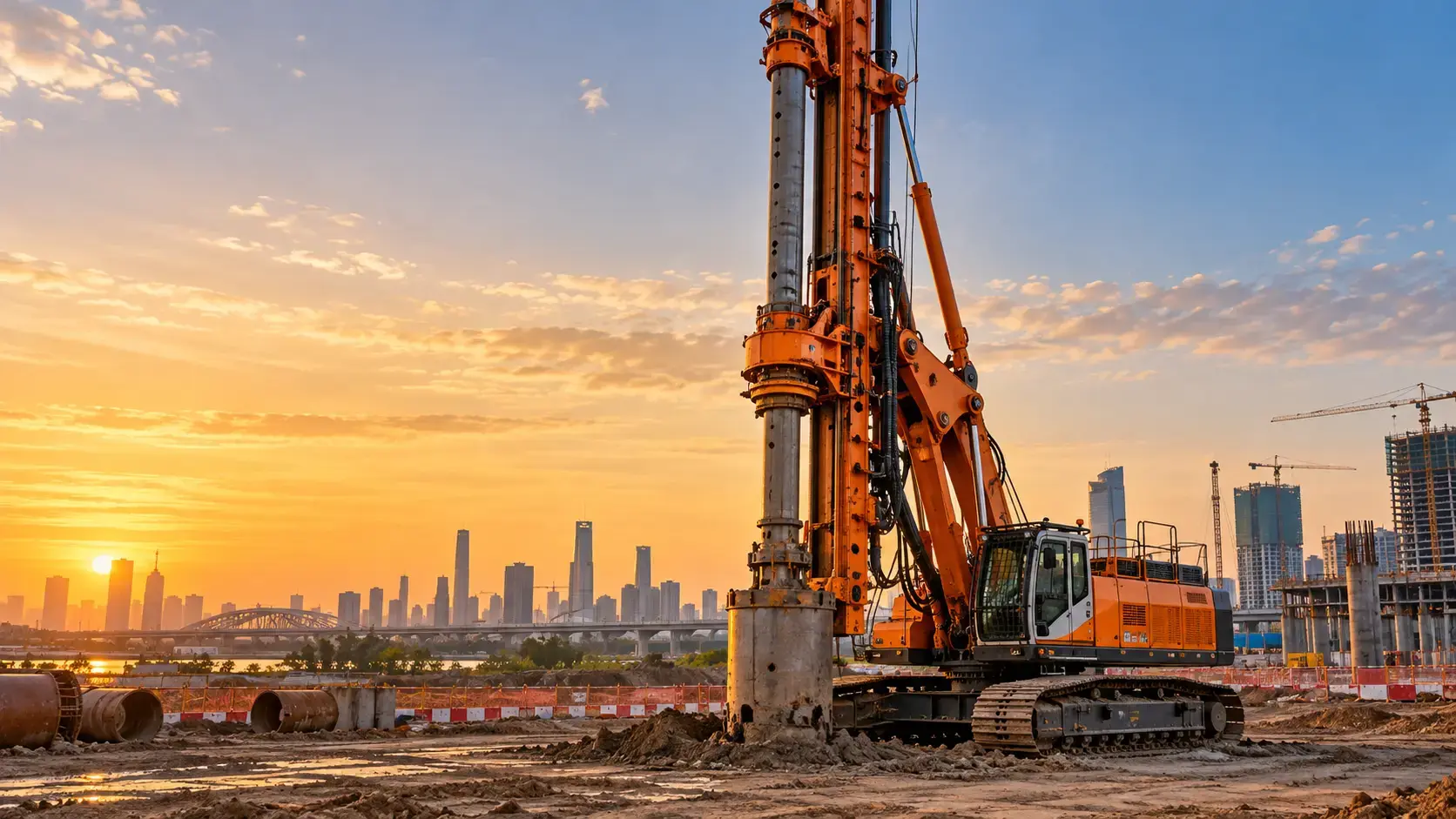
The listing presents a relatively recent, used Casagrande B300 XP-2 with 2,379 operating hours, a Tier 4 engine, H30 rotary head and 9.5 m Kelly bar. The seller also states that it is set up for Kelly drilling, CFA and FDP work. That combination makes the offer relevant to specialist foundation contractors seeking a versatile large piling platform—provided inspection confirms the exact attachments, service condition, transport configuration and documented performance.
Advertised machine at a glance
| Brand and model | Casagrande B300 XP-2 |
|---|---|
| Machine type | Used hydraulic rotary piling/drilling rig |
| First registration | 2022 |
| Operating hours | 2,379 m/h |
| Advertised engine | Tier 4 |
| Rotary head | H30 |
| Kelly bar | 9.5 m, as stated in the listing |
| Advertised setup | Kelly, CFA and FDP |
| Colour | Orange |
| Seller stock ID | US2810 |
| Displayed price | US$1,000,000 |
| Displayed location | Miami, Florida, USA |
| Listing media | Seven photographs; no exact product video identified |

What the Casagrande B300 XP-2 is built to do
Casagrande positions the B300 XP-2 as a multifunctional hydraulic piling rig for demanding foundation and geotechnical work. Depending on installed equipment, the platform supports large-diameter bored piles, continuous flight auger piling, displacement piles and soil-mixing applications. The reviewed seller specifically identifies Kelly, CFA and FDP setups, which are commercially useful because one carrier may support several foundation methods across different contracts.
Kelly-bar rotary drilling is commonly used for bored piles where the tooling repeatedly excavates and removes soil from the bore. CFA uses a continuous flight auger and typically places concrete as the auger is withdrawn. FDP, or full-displacement piling, displaces soil laterally rather than lifting all spoil to the surface. Each technique has different requirements for tooling, monitoring, concrete supply, ground response and site management. The seller’s short description should therefore be treated as a starting point—not proof that every attachment, software package and working configuration is included.
Model-level performance context
The current manufacturer page describes the B300 XP-2 model family with maximum rotary torque of 300 kNm, working-condition weight around 100 tonnes and maximum drilling depth up to 89.5 m. It lists an H30 rotary speed up to 29 rpm, a 335 kN main-winch line pull and 150 kN auxiliary-winch line pull. These figures show the scale of the platform, but maximum capacities depend on mast, Kelly bar, crowd system, tooling and approved load charts.
Manufacturer material also describes model configurations for bored piles, CFA, cased CFA, displacement piles and soil mixing. Published maximum diameters and depths vary by method and configuration. Buyers should never transfer a brochure maximum directly into a project plan. Ask the seller for the serial-number-specific build sheet, installed configuration and applicable capacity tables, then have the proposed foundation method checked by competent engineering and operations teams.

Why the H30 rotary head matters
The H30 is the working heart of the advertised rotary setup. Casagrande’s model information associates it with torque up to 300 kNm and speed up to 29 rpm. In practical terms, torque supports cutting and casing work while controlled speed helps match tooling and ground conditions. Productivity still depends on geology, tool selection, crowd force, winch performance, operator technique and spoil handling.
During inspection, check the rotary head structure, guides, bearings, seals, hoses, gearbox and locking interfaces. Ask for oil-analysis records, service invoices and operating data. Listen for abnormal noise, inspect for leaks and confirm that torque and speed indications respond correctly. If casing work is intended, verify the exact casing-driver or oscillator interface rather than assuming compatibility from the model name.
Kelly bar, CFA and FDP applications
Kelly drilling
The listing states a 9.5 m Kelly bar. That description is unusually brief for a large rig, so the buyer should clarify whether 9.5 m refers to a section, working length or another dimension. Request the bar manufacturer, type, number of elements, overall length, locking arrangement, weight, maximum torque rating and documented drilling depth. Inspect keys, rails, welds, pins and wear surfaces and confirm compatibility with the rotary head and intended bucket, auger or core-barrel tooling.
Continuous flight auger piling
CFA capability can support fast pile construction with reduced open-bore exposure, but the rig must have the correct mast, auger string, lower guide, cleaner, crowd arrangement, concrete swivel and instrumentation. Ask whether the quoted machine includes the full CFA kit and data-recording system. Concrete pressure, volume, extraction rate, depth and auger rotation may all be critical quality records.
Full-displacement piling
FDP can reduce spoil generation, subject to ground conditions and project design. It requires purpose-designed displacement tooling and adequate torque, crowd and extraction capacity. Confirm that the seller’s “FDP” statement means a complete, functional arrangement and obtain the precise tooling schedule. Ground heave, vibration, nearby structures and underground services still require project-specific assessment.

Controls, monitoring and operator environment
Casagrande’s current model information lists Smart Power Management, a 12-inch touch display, drilling-depth measurement, automatic mast-verticality control and operating-parameter visualisation as standard model features. Other data-recording, fleet monitoring and camera functions may be standard, optional or configuration-dependent. Confirm what remains installed, licensed and operational on this exact 2022 unit.
A pre-purchase functional test should include display start-up, fault history, sensors, verticality readings, depth measurement, cameras, limit devices, emergency stops, travel controls and remote-control functions if fitted. Ask how data can be exported and whether passwords, software licences, telematics ownership and subscriptions transfer to the buyer.
Inspect the cab structure, FOPS identification, glazing, doors, seat, restraint, climate control, wipers, lighting, alarms and visibility aids. Ergonomics matter on repetitive drilling cycles, but they must be assessed alongside site exclusion zones, a trained banksman where required and reliable communication.
Engine, hydraulics and emissions
The listing confirms a Tier 4 engine but does not publish manufacturer, exact rating or emissions sub-stage. Casagrande’s current pages contain different engine-power figures in different model summaries, which reinforces the need to read the installed engine plate rather than infer the answer. Request engine make, model, serial number, rated power, emissions certificate and after-treatment specification.
At 2,379 advertised hours, condition depends more on duty cycle and maintenance than the number alone. Review electronic engine hours against the display, service history and telematics. Inspect cold starting, exhaust, blow-by, coolant, oil condition, filters, cooling packs, fuel system and after-treatment warnings. Sample hydraulic oil if practical, inspect pumps and valve blocks, and cycle functions until the system reaches normal operating temperature.

Undercarriage, mast and structural inspection
A large piling rig repeatedly transfers torque, crowd and winch loads through the mast and carrier. Inspect mast chords, welds, joints, pins, bushings, cylinders, sheaves, ropes, guides and the rotary-head carriage. Look for repairs, distortion, cracking, oil leakage and uneven wear. Any structural repair should be supported by an approved method and inspection record.
Measure track-chain, roller, idler, sprocket and shoe wear rather than relying on photographs. Test track extension and retraction if fitted. Confirm crawler width for both work and transport, and compare the actual shoe width with ground-bearing calculations. Ground conditions must be engineered for the rig’s working mass and dynamic loads.
Winch ropes deserve particular attention. Obtain installation dates, specifications, discard criteria and inspection records. Check drums, spooling, end terminations and safety devices. A competent specialist should assess ropes when records are incomplete.
Safe deployment and site readiness
Around 100 tonnes in working configuration means mobilisation begins with a lift and transport plan. The contractor should know component weights, lifting points, assembly sequence, required cranes, ground-bearing pressures and exclusion zones. Rigging and derigging should follow the manufacturer’s procedure with competent supervision.
Before drilling, verify platform certification, underground and overhead services, edge distances, adjacent structures, spoil routes, concrete access, illumination and emergency arrangements. Maintain clear exclusion zones around rotating tools, suspended loads, winches and the rear counterweight. Inspect guarding, access stairs, platforms and handrails in the exact configuration that will be used.
Local law, permits and operator-certification requirements always take precedence. A machine’s capability does not establish the suitability of a pile design or work method.

Transport and mobilisation questions
Confirm the transport envelope for the exact machine and whether the mast, counterweights, Kelly bar, rotary head or tracks must be removed. Request transport drawings for every configuration, component weights, centres of gravity and lifting instructions. Route surveys may need to address bridge limits, axle loads, height, width and escort requirements.
Ask whether the seller will dismantle and load the rig, which lifting equipment is available, and where responsibility transfers. Photograph and label disconnected hoses, cables, pins and shims. Protect machined surfaces and open hydraulic connections. If shipped internationally, plan cleaning, dangerous-goods declarations, marine securing, insurance, customs classification and destination reassembly.
Product location, delivery and shipping
Displayed product location: Miami, Florida, USA.
The seller’s description also contains “Country: CA” and “Canadian Province: Quebec.” Because that conflicts with the marketplace’s displayed Miami location, buyers should ask where the machine is physically stored and available for inspection before arranging travel or freight. This review does not substitute the seller’s office address for product location.
The listing displays a vehicle-delivery-service option but does not specify delivery territories, included freight, export packing, Incoterms, customs responsibilities, insurance or final-mile unloading. Obtain a written logistics quotation covering the exact physical collection point and destination.
Current seller offer — verified 31 October 2026
Price, availability, hours and location can change. The applications and inspection guidance in this article remain useful after the offer is sold, while this dated section can be updated without weakening the long-term model review.
Pre-purchase inspection checklist
- Match rig, engine, rotary-head and Kelly-bar serial numbers to the quotation.
- Obtain the factory build sheet and current attachment schedule.
- Reconcile display, ECU and service-record operating hours.
- Run the machine from cold to full operating temperature.
- Check engine, emissions system, cooling and fuel functions.
- Sample engine and hydraulic oils where practical.
- Test rotary head, crowd, winches, mast, travel and track-width functions.
- Inspect mast, welds, pins, bushings, cylinders, hoses, sheaves and ropes.
- Measure undercarriage wear and document remaining service life.
- Verify safety devices, emergency stops, cameras, alarms and interlocks.
- Confirm depth, verticality and production-data recording.
- Inspect all Kelly, CFA and FDP tooling included in the offer.
- Review service, repair, inspection and software records.
- Obtain work and transport dimensions, masses and lifting drawings.
- Arrange an independent specialist inspection and witnessed demonstration.

Questions buyers should ask before contacting the seller
- Is stock US2810 still available, and are the price and 2,379 hours current?
- Where is the rig physically stored and available for inspection?
- Why does the description mention Canada/Quebec while the listing displays Miami?
- What is the full serial-number-specific factory configuration?
- Which engine is installed, and what is its exact rated power and emissions certification?
- What does “9.5 m Kelly bar” refer to, and what drilling depth does the included bar provide?
- Are the Kelly bar and all pictured tools included?
- Which CFA mast, augers, cleaner, swivel and concrete equipment are included?
- Which FDP tool and monitoring equipment are included?
- Are load charts and operating manuals supplied for each setup?
- What repairs or component replacements have been completed?
- Can the seller provide service history, oil reports and fault logs?
- What is the measured undercarriage wear?
- When were winch ropes installed and inspected?
- Do depth, verticality and production-data systems work and transfer to the buyer?
- Can the rig be demonstrated through a complete operating cycle?
- May an independent Casagrande-qualified inspector attend?
- What are the working and transport dimensions and component weights?
- Who dismantles, loads, secures and reassembles the rig?
- Which destinations can the seller or delivery provider serve?
- What export documents, cleaning and insurance are included?
- What is the total delivered cost and expected transit time?
- What warranty, spares and technical support are available?
Original advertiser gallery
The seven-image gallery below is supplied through the advertiser’s live listing and is reproduced for product-review context with permission. Preserve it as evidence of the advertised machine; do not treat photographs alone as proof of mechanical condition.

Who is this machine likely to suit?
The B300 XP-2 is most relevant to established piling and deep-foundation contractors with the engineering, transport, maintenance and operating capability to use a roughly 100-tonne multifunction platform. It may suit firms pursuing bored-pile, CFA or displacement-pile projects where a large common carrier can support several methods.
It is not a plug-and-play purchase. The strongest case exists when the buyer has suitable project demand, compatible tooling, trained crews, local technical support and a clear logistics plan. The advertised machine’s comparatively recent year and moderate stated hours are attractive facts, but the inspection outcome and included configuration determine practical value.
Final assessment
The advertised 2022 Casagrande B300 XP-2 combines a serious 300 kNm-class model platform with useful seller-stated Kelly, CFA and FDP capability. Its H30 rotary head, Tier 4 engine and 2,379 advertised hours make it a notable option for contractors seeking a large foundation rig without buying new.
The next step is disciplined verification: identify the exact physical location, establish what “9.5 m Kelly bar” means, confirm every included attachment, inspect the structure and undercarriage, test controls and working functions, and price the full transport and recommissioning scope. If that evidence aligns with the intended project, the listing merits a detailed technical conversation.
Frequently asked questions
What is the Casagrande B300 XP-2?
It is a large multifunction hydraulic piling rig designed for deep-foundation methods including rotary bored piles and, with suitable equipment, CFA, displacement piles and soil mixing.
How much torque does the B300 XP-2 provide?
Casagrande’s current model information lists maximum rotary torque of 300 kNm. Verify the exact H30 condition and configuration on the used machine.
How deep can it drill?
The model family is published with maximum depth up to 89.5 m in a suitable configuration. The included 9.5 m Kelly-bar description does not establish that capacity; ask for the exact bar specification and setup.
What piling methods are advertised for this machine?
The seller states Kelly, CFA and FDP. Confirm that the complete attachment kits, controls and tooling for each method are included.
How many hours has it worked?
The active listing displayed 2,379 operating hours when verified on 31 October 2026.
Where is the rig located?
The marketplace displays Miami, Florida, USA. The description also references Canada and Quebec, so the precise inspection and collection yard must be confirmed.
Is shipping included?
No included freight or delivery territory is stated. The listing shows a delivery-service option, but buyers need a written quotation for dismantling, loading, export and destination delivery.
Is there a video of the exact machine?
No exact advertiser product video was identified in the reviewed listing. Ask for a dated walk-around and operating demonstration or arrange an independent inspection.
What should be inspected first?
Start with identity and build records, engine and hydraulic health, mast and structural condition, rotary head, winches and ropes, undercarriage wear, controls, safety devices and the completeness of all working equipment.
Join the discussion
For your projects, would the B300 XP-2’s multi-method flexibility matter more than a single-purpose rig’s simpler setup? Share your experience with Kelly, CFA or displacement piling in the comment section below.
HSSE TIPS — Worksite Safety Hub
Every Task. Every Person. Home Safe.
Your experience matters
Share your thoughts on this page
Have a question, a useful experience or a suggestion? Add your input below.
Comments are public. Keep them respectful and relevant. Do not share contact details, confidential information or emergency reports.
Comments on this page
Loading comments…