Product Reviews · Welding PPE · 9 min read
ARCCAPTAIN Sensecore X200 Review: A Smarter Helmet for the Welder Who Switches Processes?
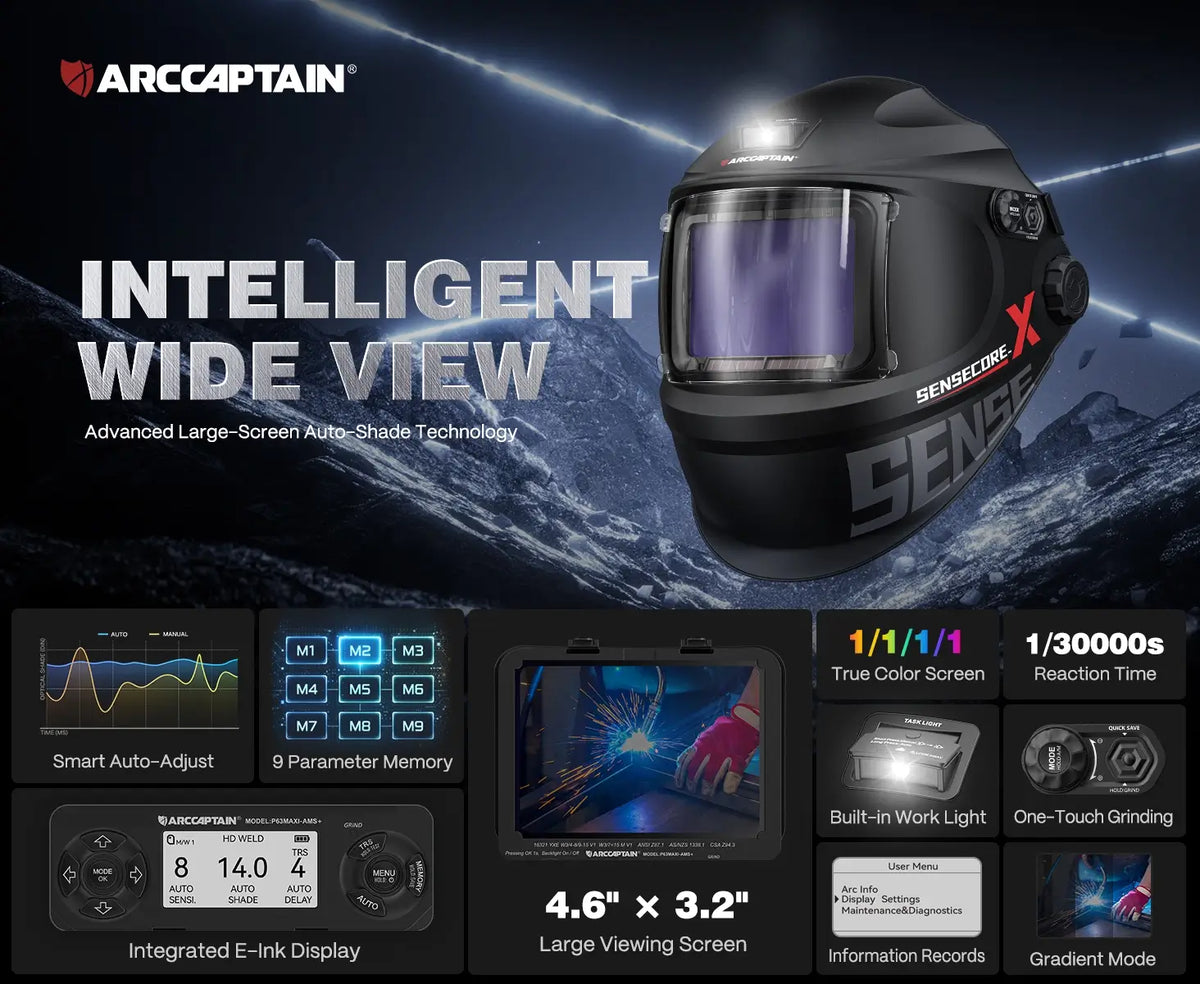
One hour you are making low-current TIG welds; the next you are laying MIG beads or preparing a plasma cut. Reaching into a helmet to rebuild your settings every time can interrupt the rhythm. The ARCCAPTAIN Sensecore X200 aims to solve that with automatic and manual shade control, nine stored setups and a backlit display. The real question is whether those controls improve your work without compromising the basics: correct shade, reliable fit and verified eye protection.
See the current helmet, included items, live price and delivery options on ARCCAPTAIN’s product listing.
View the Sensecore X200 listing ↗Quick verdict
The Sensecore X200 looks most compelling for a welder who changes process or current often and wants to save repeatable lens settings. Its published DIN 4–15 shade range, nine memory channels, four arc sensors, work light and adjustable transition controls make a strong feature set. Before treating it as a workplace PPE choice, confirm the exact helmet's markings, standards documentation, fit and shade suitability for each operation.
What makes this helmet different?
This is an auto-darkening welding helmet with more than a simple shade dial. ARCCAPTAIN lists an EPD backlit control display, automatic shade and sensitivity options, manual fine-tuning, nine stored parameter sets and TRS fade-to-clear mode. The manufacturer also lists a 116 × 81 mm viewing area, four arc sensors, a built-in work light and a published switching time of 0.04 ms at +55°C. These are seller specifications, not measurements we independently verified.
| Feature | Why it matters on the job | Buying check |
|---|---|---|
| Shade 4–15 and auto/manual control | Lets an operator adjust for different welding and cutting tasks. | Choose the required filter shade for the actual process and current; do not rely on auto selection alone. |
| Nine memory channels | Recalls preferred shade, sensitivity and delay combinations. | Confirm the saved setup before striking the arc. |
| Four arc sensors | Provides several detection points around the viewing lens. | Check for blocked sensors, damage and correct response with the TEST function. |
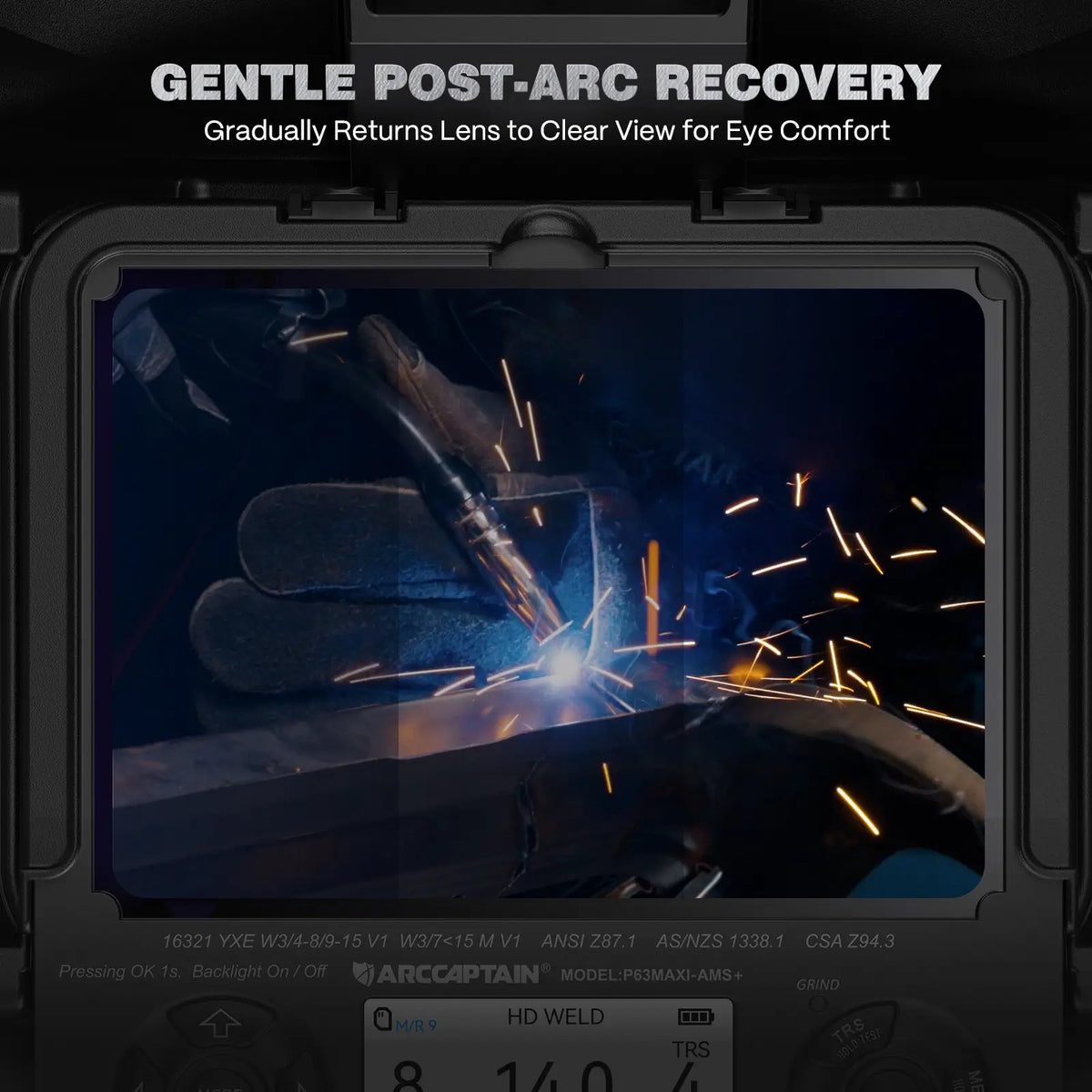
| TRS gradual clear transition | Softens the shift back to the light state after an arc. | Set delay for the work, especially when hot metal remains bright. |
| Built-in work light | Can improve visibility when positioning work before an arc. | Charge the light system and understand its operating mode. |
Nine presets: useful if your jobs really vary
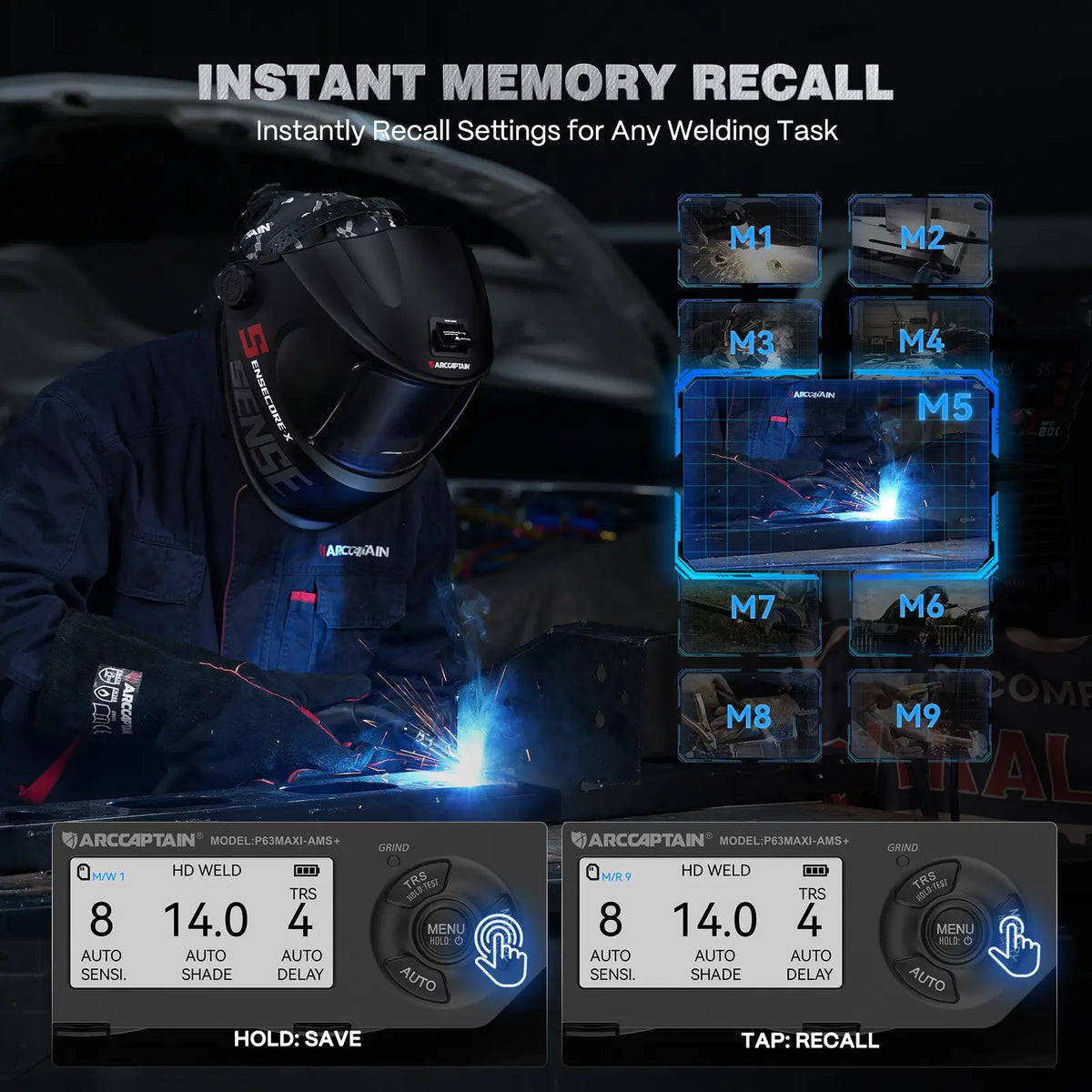
A welder alternating between TIG, MIG, stick and cutting can store preferred setups instead of rebuilding settings from memory. This is a convenience, especially when a shift has recurring jobs. But the preset is only a starting point. Confirm the process, amperage, selected shade and surrounding lighting for the current task, then use a test function and inspect the lens before exposure.
The mode control includes weld, cut, grind and a locked black-glass state, according to the seller. The grind mode must not be used for arc welding. Treat each mode switch as a deliberate pre-use check, rather than assuming the helmet will compensate for a wrong setting.
Lens clarity, comfort and power
ARCCAPTAIN describes the lens as V1 (1/1/1/1) optical class with a 116 × 81 mm window. A large viewing area can help with positioning and situational awareness, but fit, headgear stability and balance still determine whether a helmet remains comfortable through a shift. Try it with your safety glasses and any respirator or other PPE you use; check that the shell protects the face and that the headgear stays secure when the visor is raised or lowered.
The listing specifies a built-in 3.7V 1500mAh rechargeable battery, an estimated two-hour full charge and more than four hours' runtime at the stated 100-lumen light setting, plus two CR2450 backup batteries. Verify actual battery status before work and keep the optical sensors and protective cover lenses clean. The package list includes outer and inner cover lenses, backup batteries, a carrying bag and a manual; check the live carton contents when ordering.
Review the current specification sheet, supplied lenses, battery arrangement, warranty and shipping policy before checkout.
Check the helmet and current price ↗Protection is a specification, not a slogan
Shade numbers should be selected for the process, current and applicable workplace rules. OSHA’s eye and face protection guidance ↗ requires an appropriate filter shade for injurious light radiation, and its welding shade tables ↗ give process-specific starting points. Ask the seller for documentation and markings for the precise helmet offered in your market. The product page's optical-class language should not be treated as independent proof of every occupational safety certification.
Wear suitable safety spectacles under the welding helmet for impact hazards. Keep others behind screens or suitable protection, and use ventilation and respiratory protection as indicated by the job assessment. This helmet is not a respirator. Replace cracked lenses, damaged cover plates or faulty electronics, and never continue welding if the darkening function fails its pre-use check.
Delivery and warranty: the seller's current page states a 180-day standard welding-helmet warranty and says it does not ship internationally. Buyers outside the seller's supported regions, including Nigeria, should confirm a legitimate local seller, exact model, documentation, spare cover lenses and after-sales support before purchasing.
Who should consider it?
Good fit: an experienced welder moving among several processes who will use saved settings, adjustable sensitivity and the work light, and who can verify the helmet's safety documents for the workplace.
Consider a simpler helmet: if most work is one process at a steady current and you value direct controls over menus and memory. The seller positions its Velocity X200 as a simpler entry option. If your employer specifies an exact standard or shade range, verify compliance before choosing either model.
Our assessment: the Sensecore X200 offers a thoughtful set of controls for a busy multi-process workshop. Its most useful feature is the ability to return quickly to known settings—provided the operator still checks shade, sensor response, fit and the hazards of each new job.
Compare today's listing, delivery area, warranty and accessories directly with the seller.
Open the live product listing ↗Review basis
Reviewed 27 September 2026 using ARCCAPTAIN's Sensecore X200 product page ↗ and OSHA eye-protection guidance. Images are manufacturer product materials. We could not verify a model-specific product video suitable for embedding. We have not used or independently tested this helmet. Product specifications, availability and policies may change.
Your experience matters
Share your thoughts on this page
Have a question, a useful experience or a suggestion? Add your input below.
Comments are public. Keep them respectful and relevant. Do not share contact details, confidential information or emergency reports.
Comments on this page
Loading comments…