Product Reviews · Agricultural Machinery · 14 min read
25HP 4WD Diesel Agricultural Dumper Review: A Compact Farm Transport Vehicle
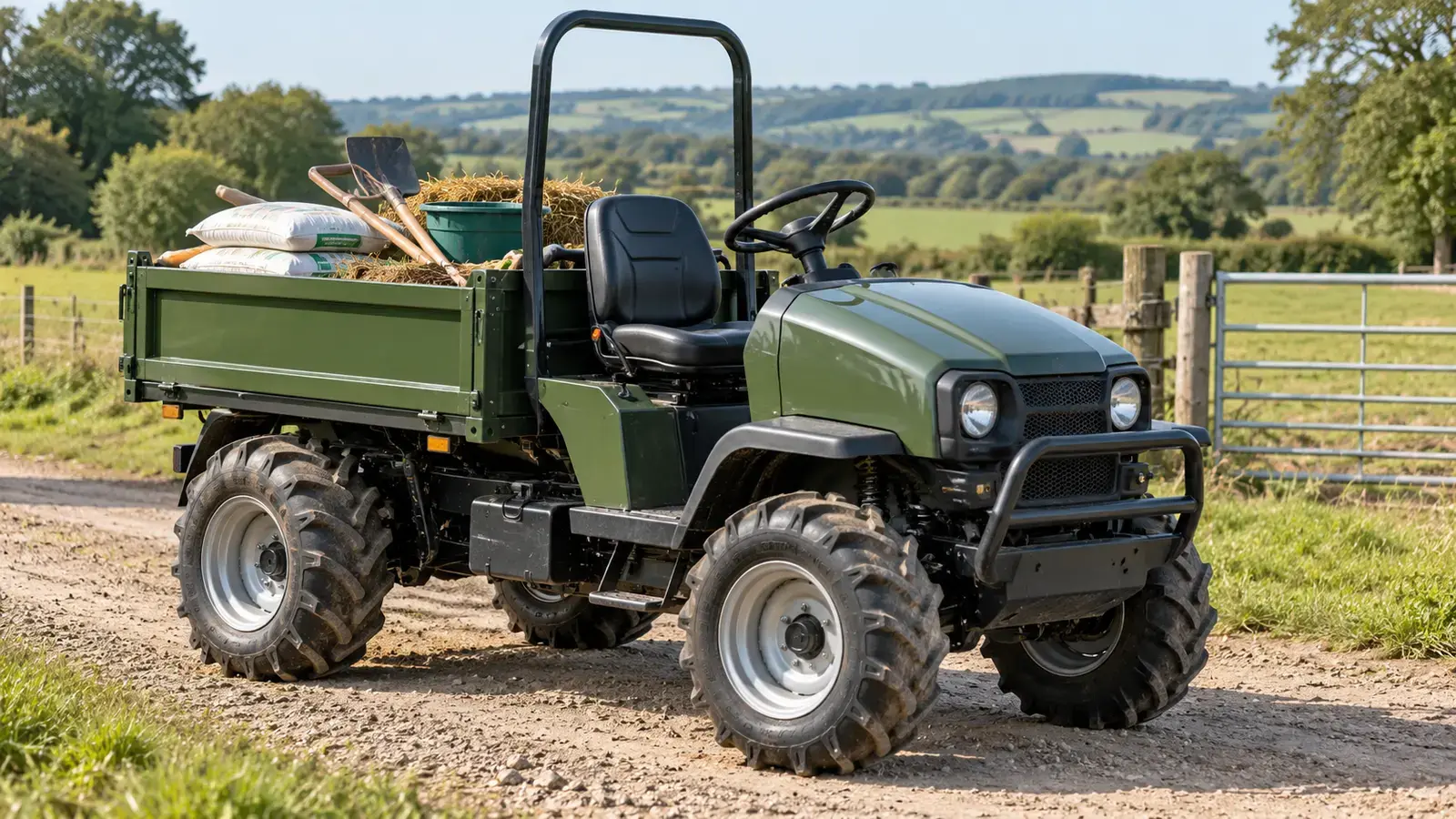
Moving feed, crops, fertiliser, fencing materials and tools across a farm often calls for something smaller than a road truck but more capable than a wheelbarrow. This compact agricultural utility vehicle is advertised as a 25HP diesel machine with four-wheel drive and a hydraulically tipping cargo body.
The open operator layout, rugged tyres and practical rear bed make it an interesting concept for livestock farms, orchards, plantations and rural properties. The main buying task is to establish exactly which configuration the current offer represents. The supplied media does not provide a dependable manufacturer, model number, payload, dimensions or road-approval status, so this review separates the visible and advertised features from the details that still require written confirmation.
Review method: desk-based assessment of the affiliate destination, advertiser-supplied title, four unique photographs and complete 12.26-second product video, verified 31 October 2026. Worksite Safety Hub has not physically inspected, driven, loaded or tested this vehicle.
Quick verdict
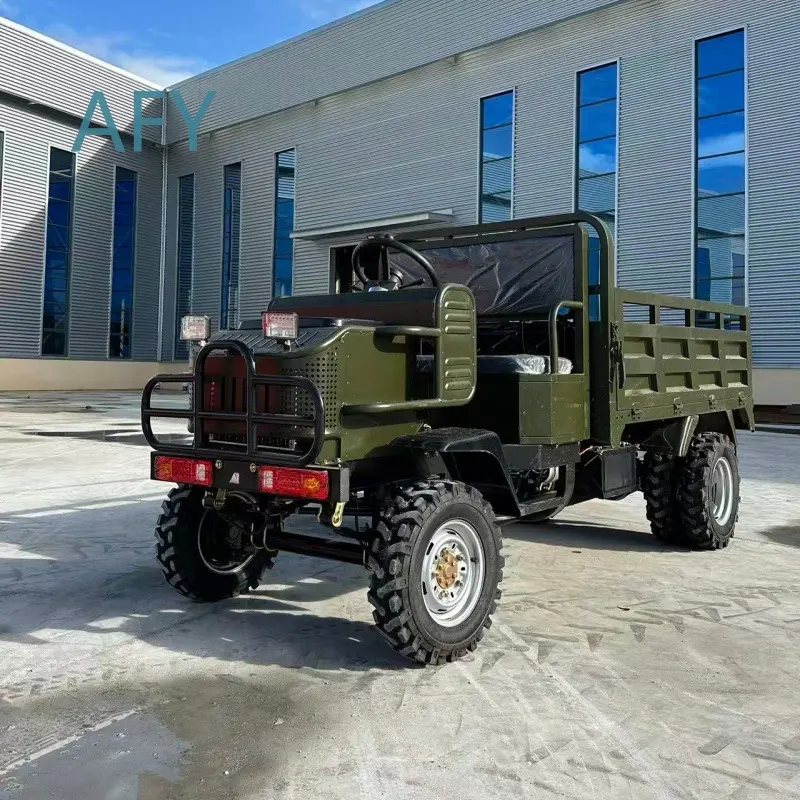
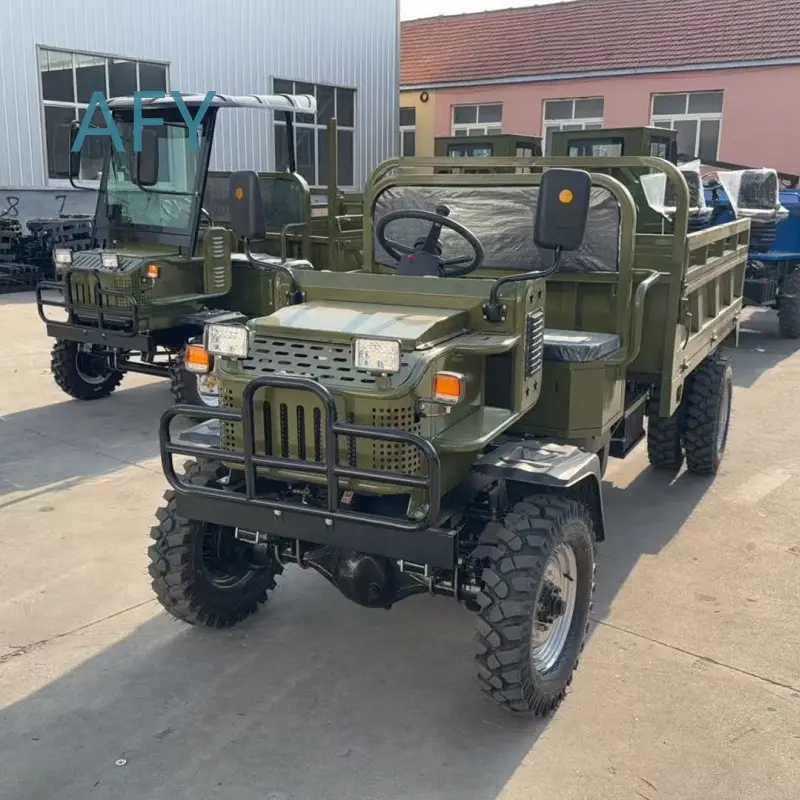
The 25HP 4WD Diesel Agricultural Dumper combines three features that can be valuable on a working farm: compact size, driven wheels at both axles and hydraulic unloading. The photographs show an olive-green open vehicle with a rear cargo body, agricultural-pattern tyres, front protective structure and simple operator area.
Its potential value depends on variant-specific facts that are not visible in the media. Rated payload, cargo dimensions, transmission, brakes, steering, hydraulic capacity, dimensions and documentation should all be identified before ordering. Buyers should treat the product as a configurable agricultural machine rather than assume that every visually similar unit shares the same specification.
Verified specifications at a glance
| Descriptive product name | 25HP 4WD Diesel Agricultural Dumper |
|---|---|
| Manufacturer | Not specified in the reviewed material |
| Model | Not specified in the reviewed material |
| Product type | Compact agricultural utility vehicle with rear cargo body |
| Advertised engine output | 25 horsepower; request the engine data plate |
| Advertised fuel | Diesel |
| Drive description | Four-wheel drive; operating type not specified |
| Unloading system | Hydraulic dumping; ram details not specified |
| Transmission | Not specified |
| Braking system | Not specified |
| Rated payload | Not specified |
| Cargo-bed dimensions | Not specified |
| Overall dimensions | Not specified |
| Operator enclosure | Open configuration shown; confirm exact order |
| Condition | Confirm on current offer |
| Product location | Not confirmed in supplied material |
| Minimum order | Confirm on current offer |
| Warranty | Not confirmed |
| Shipping destinations | Not specified |
| Delivery terms | Not specified |
What is this agricultural utility vehicle?
This vehicle sits between a small tractor-and-trailer combination and a conventional road-going tipper. Its purpose is straightforward: carry useful loads around agricultural property and unload them with less manual handling. Because the cargo body and driving platform form one compact machine, the operator does not need to manoeuvre a separate trailer.
The advertiser describes it for pastoral farmers, but the category can extend to crop farms, orchards, plantations, landscaping, rural estates and light site-support work. That does not make it suitable for every load or route. Intended use must be checked against the rated payload, bed size, centre of gravity, braking system, ground conditions and manufacturer’s operating limits.
25HP diesel-engine configuration
The supplied title states 25 horsepower and diesel power. This is a useful descriptive starting point, not a complete engine specification. Ask who manufactures the engine, whether 25HP is the rated continuous output, its cylinder arrangement, displacement, governed speed, cooling system and emissions information.
Also confirm electric or manual starting, battery capacity, alternator output, fuel-tank volume, filtration, service intervals and cold-start procedure. Buyers in hot, dusty or remote environments should ask about radiator or air-cooling arrangements, pre-cleaners, replacement filters and the availability of engine spares. The operating manual should identify the required oils, coolant and fuel quality.
Four-wheel drive and farm-track applications
Four-wheel drive can improve tractive effort when a vehicle must cross loose soil, grass, gravel or uneven farm tracks. The media shows four rugged tyres and driven-axle hardware, while the title describes four-wheel drive. Buyers should still confirm whether drive is permanent or selectable, how it is engaged, whether high and low ranges are available and whether differential locks are fitted.
Traction is not a guarantee against becoming stuck or losing stability. Wet clay, deep mud, cross-slopes, hidden ruts and soft shoulders can challenge any compact vehicle. Tyre type, pressure, tread condition, load and driving technique matter. Plan recovery points and suitable recovery equipment, and never exceed the manufacturer’s gradient or side-slope limits.
Hydraulic tipping cargo body
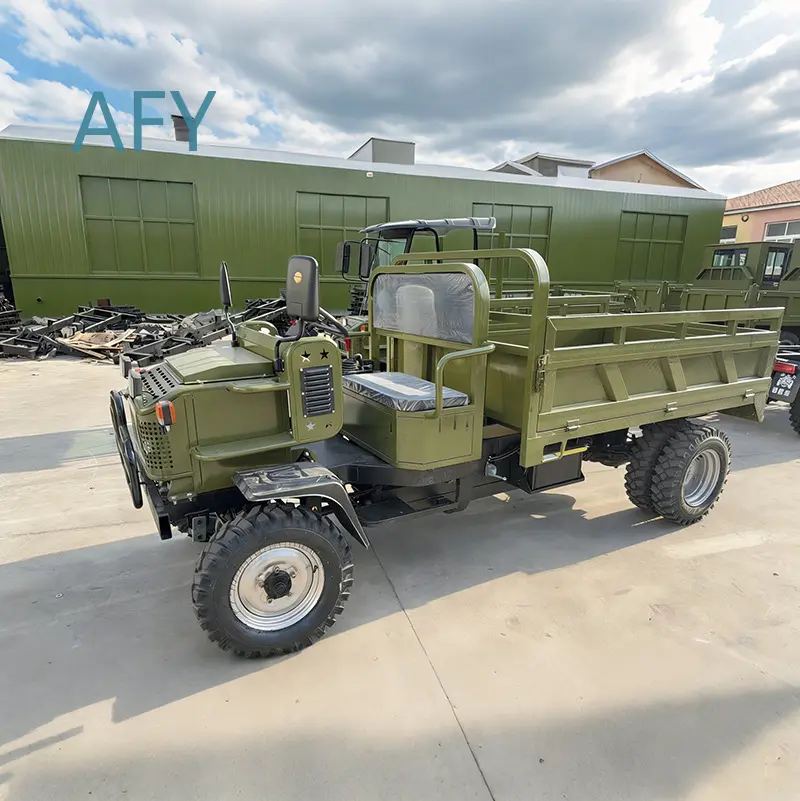
Hydraulic tipping can reduce shovelling when unloading loose or bagged material from an appropriate position. The product title identifies a hydraulic dump function, although the supplied media does not establish the cylinder arrangement, pump type, control method, maximum tipping angle or rated lifting capacity.
Request a diagram of the tipping mechanism and the manufacturer’s safe operating instructions. The vehicle should be stationary on firm, suitably level ground before tipping unless the manufacturer explicitly permits another method. Keep people clear of the rear and sides, observe overhead hazards and never work beneath a raised body without the specified mechanical maintenance support.
Cargo capacity and load planning
A cargo body may look spacious while reaching its mass limit before it is physically full. Dense materials such as wet soil, aggregate and fertiliser can create high axle loads quickly. Bulky feed, hay, produce or tools may reach the body’s volume limit first. Buyers need both a mass rating and internal bed measurements.
Ask for payload, gross vehicle mass, unladen mass, front and rear axle ratings and the data-plate location. Loads should be distributed evenly, kept within the side panels, secured where movement is possible and protected from loss during travel. Never carry people in the cargo body unless the machine was specifically designed and approved for that purpose.
Operator layout and controls
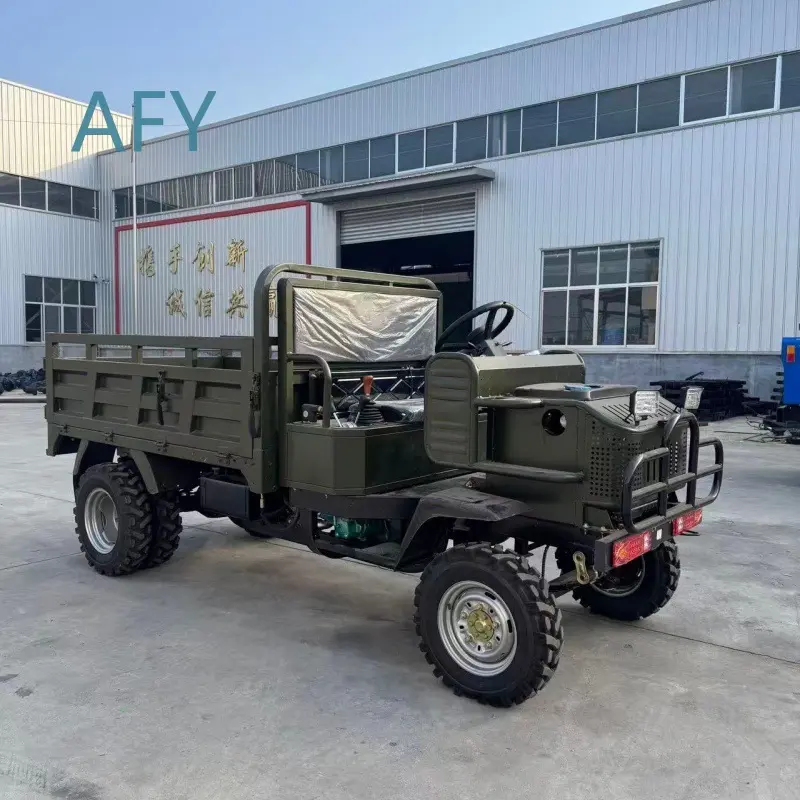
The photographs show a simple open operator station with a steering wheel, bench-style seating elements and exposed access steps. The exact seating capacity is not confirmed. Ask for a labelled control diagram covering starting, gears, four-wheel-drive selection, parking brake, hydraulic tipping, lighting and emergency shutdown.
Open agricultural vehicles may expose operators to weather, branches, dust and thrown material. Confirm whether a canopy, windscreen, cab or protective structure is available and whether any structure is certified for rollover or falling-object protection. Do not infer certification from appearance. Check handholds, steps, pedal layout, visibility, mirrors, seat adjustment and occupant-restraint requirements.
Tyres, suspension, steering and braking
Agricultural-pattern tyres are clearly visible, but their sizes, ratings and recommended pressures are not provided. Confirm front and rear sizes, ply rating, load index, tube or tubeless construction and replacement availability. Ask how tyre pressure should be adjusted for load and terrain without exceeding manufacturer limits.
Steering type, suspension, axle construction and brakes are equally important. Request stopping-distance information at rated mass, parking-brake capacity and service procedures. If the vehicle may work on slopes or tow anything, obtain explicit manufacturer limits. A visually robust chassis cannot substitute for documented ratings.
Watch the agricultural dumper walk-around
Potential farm and rural applications
- Moving bagged animal feed between storage and livestock areas.
- Transporting fertiliser, seed and crop inputs within a farm.
- Collecting fruit, vegetables or other harvested produce.
- Carrying fencing tools, posts and maintenance supplies.
- Moving mulch, compost or soil within documented payload limits.
- Supporting orchard and plantation operations on suitable tracks.
- Transporting hand tools and small equipment around rural estates.
- Light material movement for landscaping or rural construction support.
The exact use case should match the manufacturer’s permitted materials, payload and terrain limits. Applications involving livestock, hazardous substances, public roads or towing require additional controls and approvals.
Terrain, stability and operating considerations
Compact dimensions can help on narrow tracks, but a short vehicle carrying a raised or uneven load can also respond quickly to ruts and slopes. Travel with the body fully lowered, use a speed appropriate to visibility and surface conditions, and avoid sudden steering or braking. The operator should walk unfamiliar routes where hidden holes, soft shoulders or overhead branches may be present.
Before each shift, inspect tyres, wheel fasteners, steering, brakes, lights, hydraulic hoses, leaks, body hinges, pins, guards and fluid levels. Confirm that the cargo is secure and that the tipping path is clear. Reversing controls may include mirrors, a horn, a spotter or a camera depending on the final configuration and site rules.
Maintenance, parts and after-sales questions
Imported machinery is most valuable when routine service parts and technical information remain available. Request English-language operating, maintenance and parts manuals before payment. Ask for filter, belt, seal, hose, brake, bearing and electrical part numbers and identify parts that can be sourced locally.
Clarify warranty duration, covered components, labour responsibility, claim evidence, response time and who pays international freight for replacement parts. Obtain hydraulic-fluid, engine-oil, gear-oil and coolant specifications. Buyers planning several vehicles should consider a commissioning spares package and operator-maintenance training.
Product location, shipping and import considerations
Confirmed product location: Not specified in the supplied material.
The reviewed offer does not provide a universally applicable delivery price or destination list. Buyers should enter their delivery location and ask the supplier to confirm dispatch point, freight, loading, export packaging, customs documentation, insurance and total landed cost.
Confirm whether the vehicle ships assembled, partially dismantled or in a crate and whether it fits a standard container. Establish who handles port delivery, marine insurance, duties, taxes, destination unloading and inspection. Public-road use must not be assumed: local authorities may require registration, lighting, braking, emissions, identification or type-approval documents that the machine does not have.
Current seller offer — verified 31 October 2026
Commercial information may change with variant, quantity, destination and platform settings. The technical buyer’s guide remains useful if the offer is revised, replaced or withdrawn. Save the final product specification and supplier commitments with the order documents.
Buyer inspection and procurement checklist
- Confirm the exact vehicle shown in the quotation.
- Photograph the manufacturer, engine and chassis data plates.
- Verify rated payload, unladen mass, gross mass and axle ratings.
- Record overall and cargo-body dimensions.
- Confirm engine, cooling, starting and filtration specifications.
- Test transmission, four-wheel-drive selection and steering.
- Inspect brakes, parking brake, tyres, wheels and axles.
- Operate the hydraulic body through a complete cycle without load and under an approved test load.
- Inspect hoses, cylinders, pins, body hinges, chassis welds and guards.
- Check lights, battery, instruments, horn and electrical system.
- Confirm manuals, test reports, warranty and spare-parts list.
- Agree packing, loading, freight, insurance, customs and destination responsibilities.
- Calculate total landed and commissioning cost.
- Request a current pre-shipment inspection video of the exact unit.
Questions to ask before contacting the seller
- What is the exact manufacturer and model?
- Is 25HP the rated continuous engine output?
- Who makes the engine, and what are its cylinder, cooling and starting arrangements?
- Is four-wheel drive permanent or selectable?
- Which transmission, gear ranges and differentials are fitted?
- What are the rated payload, unladen mass and gross mass?
- What are the internal cargo-bed and overall vehicle dimensions?
- Which hydraulic ram, pump and maximum tipping angle are supplied?
- What brakes, steering and suspension are fitted?
- What tyre sizes, load ratings and pressures apply?
- How many approved operator or passenger positions are provided?
- Are a canopy, windscreen, mirrors, lights or enclosed cab available?
- Is the vehicle intended only for private-land use?
- Which certificates, data plates and test reports are supplied?
- Is outgoing inspection of the exact unit available by video?
- What warranty, manuals and spare-parts support are included?
- What customization options and lead time apply?
- Where will the product be dispatched from?
- Which countries or ports can the supplier ship to?
- What packaging and container arrangement will be used?
- Who pays freight, insurance, customs, duties and taxes?
- What is the complete landed cost to the buyer’s destination?
Who may find this vehicle useful?
A properly specified compact dumper may interest livestock farmers moving feed, orchard operators carrying harvested produce, plantation teams distributing tools and supplies, rural property managers and contractors handling light materials. Its value is strongest where the route is too narrow or informal for a conventional road truck but still suitable for wheeled machinery.
It is not a universal replacement for a tractor, UTV or registered truck. Buyers should compare payload, terrain ability, service support, operator protection, manoeuvrability and total landed cost with those alternatives. The best choice is the machine that fits the real work cycle and can be maintained locally.
Final assessment
The advertised combination of 25HP diesel power, four-wheel drive, compact proportions and hydraulic dumping is attractive for practical farm transport. The original media shows a straightforward olive-green utility vehicle with rugged tyres, open controls and a useful rear bed.
The purchase decision should rest on documented ratings rather than appearance. Manufacturer identity, payload, dimensions, transmission, braking, road status, product location and shipping terms remain essential confirmation points. A clear quotation, current inspection media, data plates and manuals will help turn an appealing concept into an accountable procurement decision.
Frequently asked questions
What is a 25HP 4WD agricultural dumper?
It is a compact diesel-powered farm utility vehicle advertised with four-wheel drive and a hydraulically tipping rear cargo body for moving materials around agricultural and rural properties.
What can this farm utility vehicle carry?
Potential loads include feed, fertiliser, harvested produce, tools and farm supplies, but only materials within the exact manufacturer-rated payload and cargo-body limits should be carried.
Is the engine diesel-powered?
The advertiser-supplied title identifies a 25-horsepower diesel configuration. Buyers should confirm the engine manufacturer, model, rated output, cooling and starting system.
Is the vehicle genuinely four-wheel drive?
The supplied product title describes four-wheel drive. Confirm whether it is permanent or selectable and ask the supplier to identify the transfer case and operating procedure.
How does the hydraulic cargo body unload materials?
The offer is described as having hydraulic dumping. The exact ram arrangement, tipping angle, controls and rated lifting capacity are not specified in the reviewed materials.
What is the confirmed payload?
No dependable payload figure was available in the supplied media. Request the manufacturer’s data plate and variant-specific specification rather than relying on figures for a similar vehicle.
Is it suitable for orchards and livestock farms?
Its compact body, cargo bed and agricultural tyres suggest possible use for farm transport, but suitability depends on dimensions, turning space, terrain, load, braking and the exact operating specification.
Can it operate on muddy farm tracks?
Four-wheel drive and agricultural tyres may support traction, but no vehicle can guarantee passage on every surface. Assess soil, gradient, drainage, tyre condition, load and recovery arrangements.
Can it be driven on public roads?
Road legality is not confirmed. Buyers must verify registration, lighting, braking, emissions, insurance and approval requirements at the destination before any public-road use.
Where is the product located?
A specific current product location was not confirmed in the supplied materials. Check the live offer and request the dispatch location in writing.
Does the supplier deliver internationally?
No universal destination list or dependable freight terms were confirmed. Enter the delivery destination on the platform and request a written shipping and landed-cost quotation.
What should an importer verify before ordering?
Confirm the exact variant, technical documents, export packaging, container plan, freight, insurance, customs paperwork, duties, destination inspection, warranty and spare-parts support.
Join the discussion
Where would a compact 4WD agricultural dumper provide the most value in your operation—livestock work, crop transport, orchard duties or rural construction? Share your experience or questions in the comment section below.
Sources and editorial information
- Advertiser-supplied product title, four unique photographs and complete 12.26-second product video, reviewed 31 October 2026.
- Affiliate destination — current commercial availability and seller information, reviewed 31 October 2026.
HSSE TIPS — Worksite Safety Hub
Every Task. Every Person. Home Safe.
Your experience matters
Share your thoughts on this page
Have a question, a useful experience or a suggestion? Add your input below.
Comments are public. Keep them respectful and relevant. Do not share contact details, confidential information or emergency reports.
Comments on this page
Loading comments…