Product Reviews · Commercial Vessels & Harbour Support · 6 min read
13.9m Harbour Tugboat Review: Explore a Compact Port Workboat
A useful workboat starts with a clearly defined job. The harbour, the tow, the operating area and the crew all matter. If you are exploring a compact tugboat for commercial work, this offer provides a specific vessel to discuss with the seller and your marine surveyor.
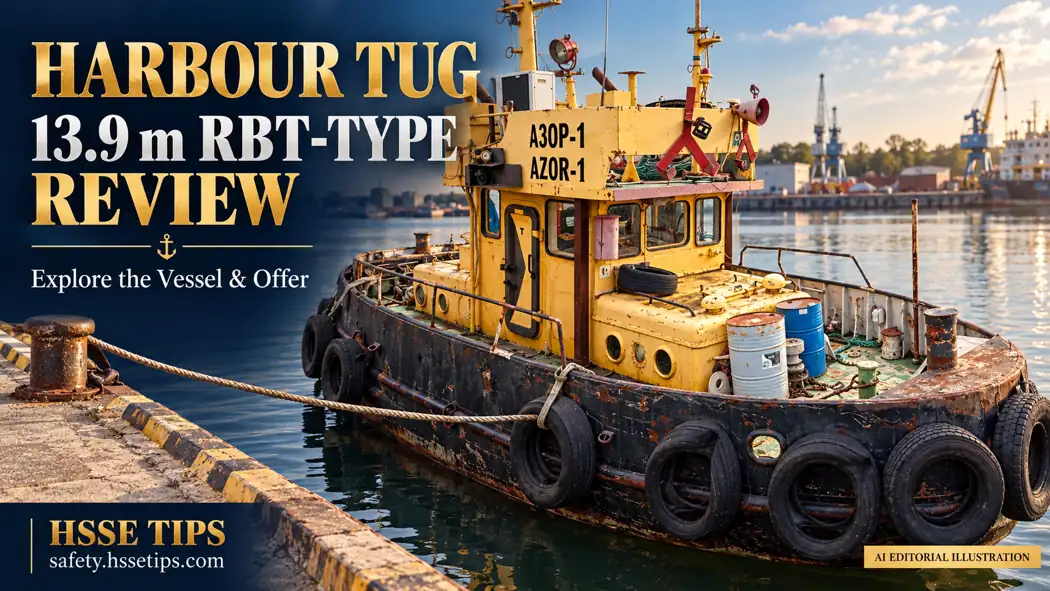
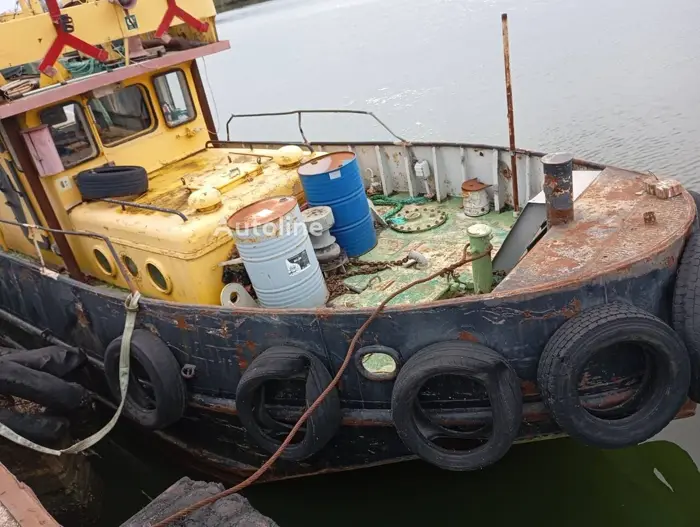
The linked listing describes an RBT-type harbour tug in Mykolaiv. Its photographs show a yellow wheelhouse, black hull, working decks and tyre fenders. The buying opportunity is to connect the vessel’s confirmed condition and documentation with the work you intend to do.
Review method: desk-based assessment of Autoline BR52661, including the seller’s Ukrainian description and photographs. We have not boarded, surveyed or operated the vessel. Separate classification-society guidance explains bollard-pull evidence; it does not certify this tug.
The advertised tugboat at a glance
| Type / build year | RBT-type harbour tug / 1988 |
|---|---|
| Reference / location | Autoline BR52661 / Mykolaiv, Ukraine |
| Asking price | US$105,000, reviewed 15 October 2026 |
| Length / beam | 13.9 m / 3.7 m |
| Side height / draught | 2.2 m / 1.6 m, as advertised |
| Propulsion | Two YaMZ-238 diesels; 300 kW combined |
| Facilities | Galley, toilet, 220 V diesel generator and air conditioning |
| Transaction described | Vessel together with an LLC; obtain the exact sale scope |
Use the listing reference when requesting information. Ask the seller to identify the vessel and registered owner with official records, and have a qualified adviser confirm how the proposed transaction would be structured.
What work should you discuss with the supplier?
Begin with the operation rather than a broad request for “a tug.” Describe the intended harbour, the objects to be moved, the expected working distances, available water depth and typical environmental conditions. Ask a competent marine professional to assess the vessel against that brief.
For harbour-support enquiries, explain whether the task involves moving a particular barge, assisting a defined floating unit or another approved towage activity. Include the tow’s dimensions, loading and connection arrangements. Suitability depends on the complete operation and the vessel’s current approved capabilities.
The advertised dimensions are useful for an initial berth discussion. Have the surveyor confirm the applicable draught and loading condition, then compare those with the intended operating area and access route.
Twin diesels: connect the machinery to measured performance
The propulsion details give a starting point for a machinery enquiry. Request engine identification, running hours, service records and information on the transmission, shafts, propellers and steering arrangement. Agree the inspection and demonstration scope with a marine surveyor.
For towing, ask for documented bollard pull and the corresponding test conditions. Engine power and bollard pull are different measurements: one describes machinery output; the other records the pull produced during a controlled test.
Tasneef’s tug bollard-pull rules describe a measured trial, its conditions and a resulting statement. This is general technical context. Ask your surveyor which performance evidence is appropriate for this vessel and intended work, including the approved towing arrangement and equipment ratings.
Deck layout and wheelhouse: use the photos to plan your inspection
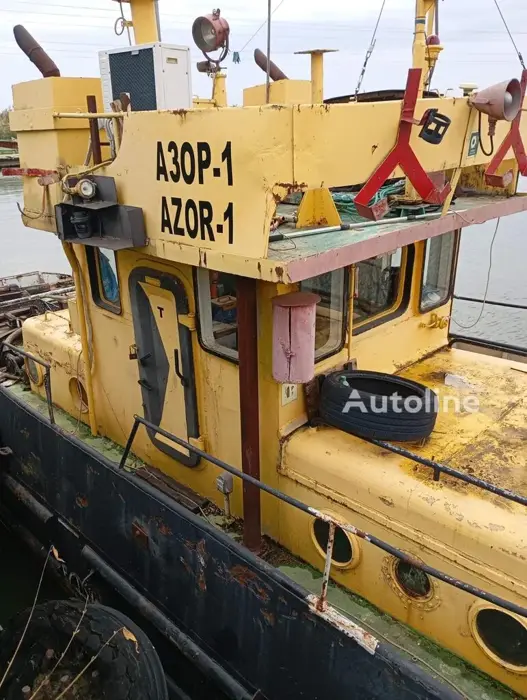
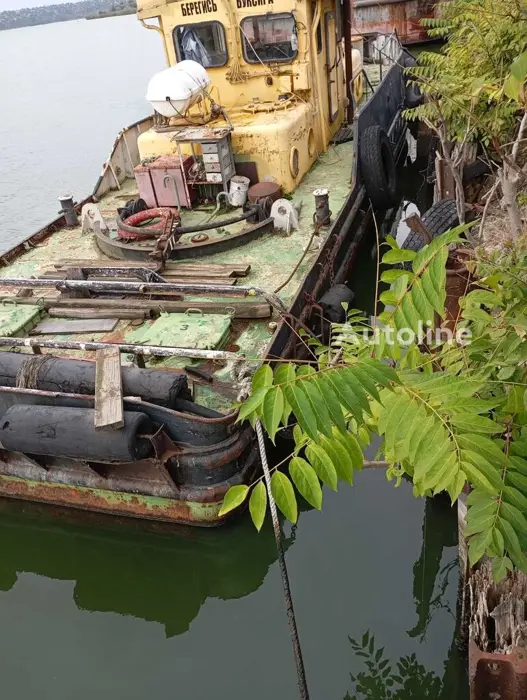
The actual photographs below help frame an onboard inspection. Ask for a current walkaround covering the working decks, wheelhouse, machinery spaces and all included equipment. Tie the imagery to the vessel identification and inspection date.
Discuss the proposed towing connections, deck access, crew positions and communication with the surveyor and intended operator. Have them assess the arrangements as a working system, with a documented plan for the particular task.
Service history and present documentation
The seller reports a 2018 overhaul with rewiring and hull reinforcement. It describes work until February 2022, followed by guarded berthing. It also says register documents exist but have not been renewed.
Request the overhaul records, drawings where applicable, survey reports and a current statement of document status from the relevant issuing authority. Have the surveyor identify the inspections, tests and documentation needed for the proposed service before planning operations.
The seller also mentions ice class and a five-mile coastal area. Treat those as particulars to verify in current documents, including any operating restrictions and conditions. They do not establish present approval for a voyage or job.
For the company-inclusive offer, have a qualified adviser review ownership, authority to sell, company records and the assets and obligations included. Ask for written confirmation of the exact structure and terms before agreeing the purchase.
Plan the survey around your intended use
Ask an independent marine surveyor to propose an appropriate pre-purchase survey. Discuss hull and underwater inspection, machinery, steering, electrical systems and the equipment needed for the intended service.
Include bilge and fire systems, communications, navigation equipment, lifesaving appliances and access arrangements in the agreed assessment. Let the surveyor and relevant authority define the applicable requirements for this vessel, operating area and crew.
A useful report should help you understand the vessel as inspected, the work to be completed and the documents required for the planned operation. Use that report to prepare a realistic handover and commissioning schedule.
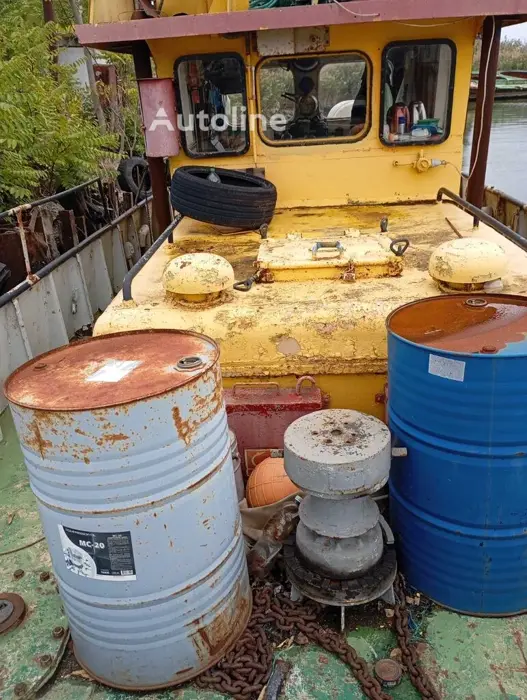
Photos, video and viewing arrangements
Four actual seller photos are included in this review. No verified vessel-specific demonstration video was found in the reviewed sources.
Request a dated video and arrange access with the seller. Agree any machinery demonstration or trial with competent personnel and the relevant parties. Ask a local maritime agent to confirm the inspection, berth and movement arrangements currently available.
OPEN THE OFFER AND REQUEST A CURRENT VESSEL WALKAROUND →
Prepare a focused commercial enquiry
State your intended work and destination. Request an itemised proposal covering the vessel and any company transaction, inspection access, documents, included equipment, agreed preparation and delivery arrangements.
If relocation is proposed, obtain a plan from a competent marine or transport specialist. Have the relevant parties confirm the vessel’s actual dimensions and mass, loading or towage method, permissions and insurance arrangements for the agreed movement.
Our view: make the next step specific
This offer gives a prospective workboat buyer a defined vessel to assess. The most useful next step is a clear operating brief, supported by current identification, survey evidence and a written commercial proposal.
Contact the seller with your intended use and bring the relevant marine specialists into the discussion. That gives you a practical basis for deciding how the vessel could fit your operation after the appropriate assessment and approvals.
Frequently asked questions
What should I send with my first enquiry?
Describe the intended task, operating area, tow or floating equipment involved, and desired handover location. Request the vessel documents and current inspection arrangements.
How should towing capability be assessed?
Have a competent marine professional review performance evidence, towing equipment, stability and the planned operation together. Request the relevant bollard-pull documentation rather than estimating capability from engine power.
What should the quotation identify?
The exact vessel, included equipment, transaction structure, documents, inspection arrangements, agreed preparation and delivery responsibilities.
Sources and editorial information
- Autoline BR52661 — seller particulars, Ukrainian description and photographs.
- Tasneef: Rules for the Certification of the Bollard Pull of Tugs — general technical reference, not vessel certification.
Reviewed 15 October 2026. Confirm current price, availability, particulars and terms directly with the seller. This article adds original enquiry and survey-planning guidance based on published material without claiming hands-on testing or current operating approval.
Explore more vessel and equipment reviews →
HSSE TIPS — Worksite Safety Hub
Every Task. Every Person. Home Safe.
Your experience matters
Share your thoughts on this page
Have a question, a useful experience or a suggestion? Add your input below.
Comments are public. Keep them respectful and relevant. Do not share contact details, confidential information or emergency reports.
Comments on this page
Loading comments…