Process Safety · Lesson 24 · 7 min read
Hydrogen Attack Can Weaken a Heat Exchanger While It Still Runs

A pressure boundary can look sound and remain in service while high temperature hydrogen attack (HTHA) is weakening the steel inside. In hot, high-pressure hydrogen service, the key question is whether the material is suitable for the conditions the equipment actually experiences—not only for the conditions on its design sheet.
How the damage develops
At elevated temperature, hydrogen can enter carbon steel. Within the metal, it reacts with carbon to form methane. Methane cannot diffuse out as readily; it accumulates, creates internal fissures, and can link those fissures into cracks. The steel loses strength until a vessel or exchanger ruptures. This is a long-developing damage mechanism with potentially sudden consequences.
Temperature and hydrogen partial pressure are central to the assessment. Partial pressure depends on the hydrogen fraction in the gas mixture, not just the total pressure. Local metal temperatures and process conditions can differ across an exchanger and change with fouling, operating mode or modifications. An assessment based only on design values or a single convenient reading may miss the most exposed location.
The Tesoro Anacortes warning
On 2 April 2010, a heat exchanger in the naphtha hydrotreater at the Tesoro refinery in Anacortes, Washington, catastrophically ruptured. Hydrogen and hot naphtha were released and ignited. Seven workers who were nearby during the nonroutine activity were fatally injured. The U.S. Chemical Safety and Hazard Investigation Board (CSB) concluded that long-term HTHA had severely damaged the carbon-steel exchanger.
The CSB found that the site had relied on predicted conditions and industry Nelson curves while key local operating conditions were not adequately verified. Its investigation also found that HTHA occurred in a region the applicable curve had indicated as safe. That finding does not make every hydrogen-service exchanger unsafe; it demonstrates why a curve alone is not proof of fitness for a particular pressure boundary.
Critical controls for hydrogen-service equipment
Identify the exposure. Keep an accurate register of carbon-steel vessels, exchangers and piping in elevated-temperature hydrogen service. Include parts of equipment where temperature or hydrogen partial pressure may be higher than at the instrument location.
Verify the actual envelope. Review measured and calculated temperature and hydrogen partial-pressure ranges for normal operation, startup, shutdown, fouling, upset and changed operating conditions. Where the data are missing, treat the assessment as unresolved rather than assuming the design case represents reality.
Prefer a resistant pressure boundary. For equipment at risk, assess replacement or redesign using materials demonstrated to resist HTHA at the verified conditions. The CSB’s 2016 safety alert specifically calls for replacement of carbon-steel process equipment operating above 400 °F (204 °C) and 50 psia hydrogen partial pressure, and for inherently safer alloys. Apply this as CSB guidance within a qualified, site-specific engineering assessment—not as a universal declaration that equipment below those values is safe.
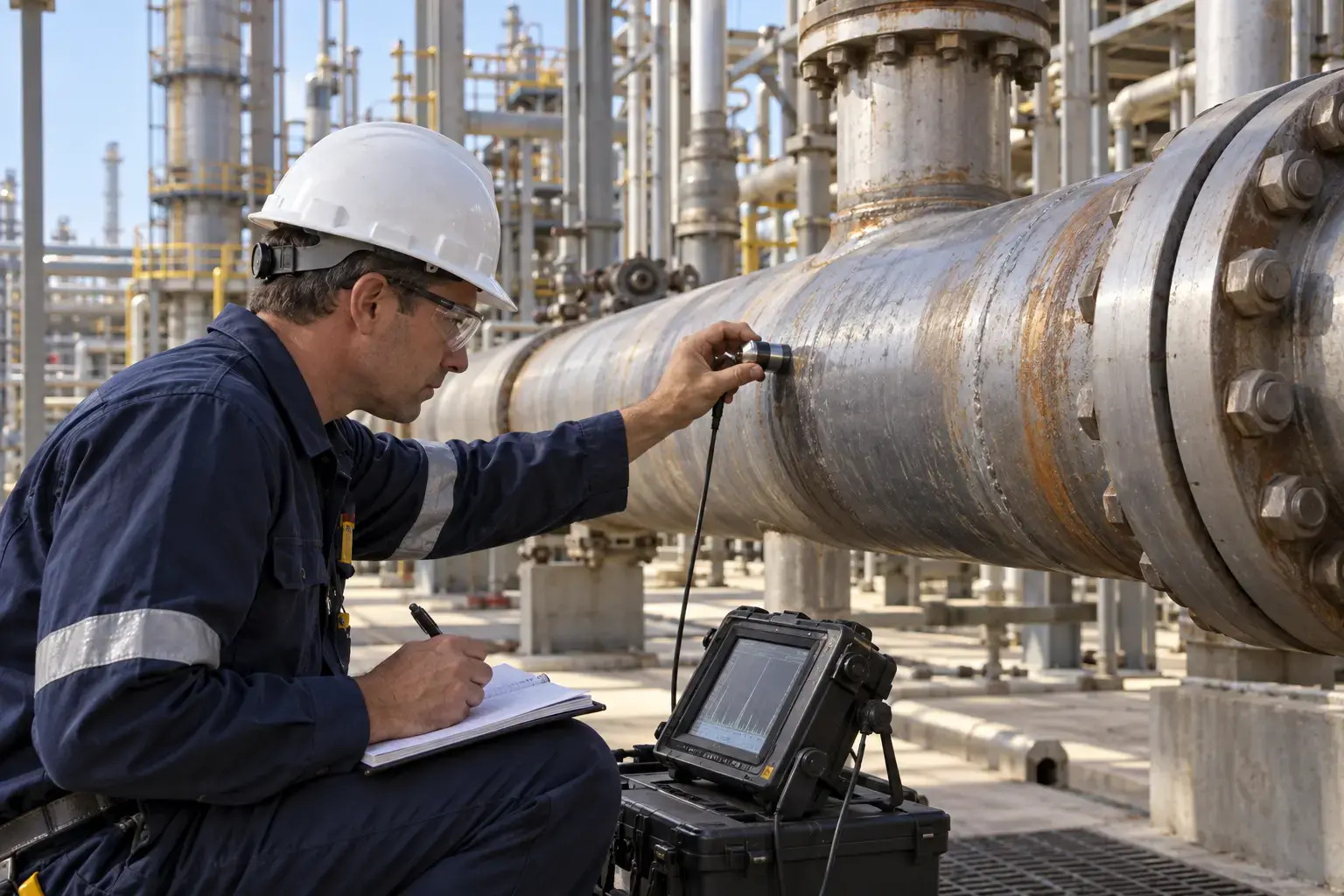
Use inspection as supporting evidence. A competent damage-mechanism review should set appropriate inspection techniques, locations and intervals. HTHA cracks can be highly localised and difficult to find; a clean inspection result must not replace sound material selection and verified process conditions.
Control changes and exposure. Changes in hydrogen concentration, pressure, temperature, heat transfer or operating sequence need a management-of-change review that revisits HTHA susceptibility. Plan hazardous nonroutine work to minimise personnel near equipment with an unresolved pressure-boundary risk, and define when the unit must be shut down rather than worked on live.
Watch the official CSB investigation video
The CSB’s Behind the Curve (released 28 October 2014) explains the Tesoro rupture, HTHA and the investigation’s material-selection lessons. Its animations are reconstructions, not live footage of the rupture.
A question for today’s team
Which carbon-steel pressure boundaries in hydrogen service depend on assumed temperatures or hydrogen partial pressures—and what evidence shows their material is suitable across the full operating envelope?
Your experience matters
Share your thoughts on this page
Have a question, a useful experience or a suggestion? Add your input below.
Comments are public. Keep them respectful and relevant. Do not share contact details, confidential information or emergency reports.
Comments on this page
Loading comments…