Process Safety · Lesson 20 · 7 min read
Dust You Cannot See Can Fuel the Next Explosion
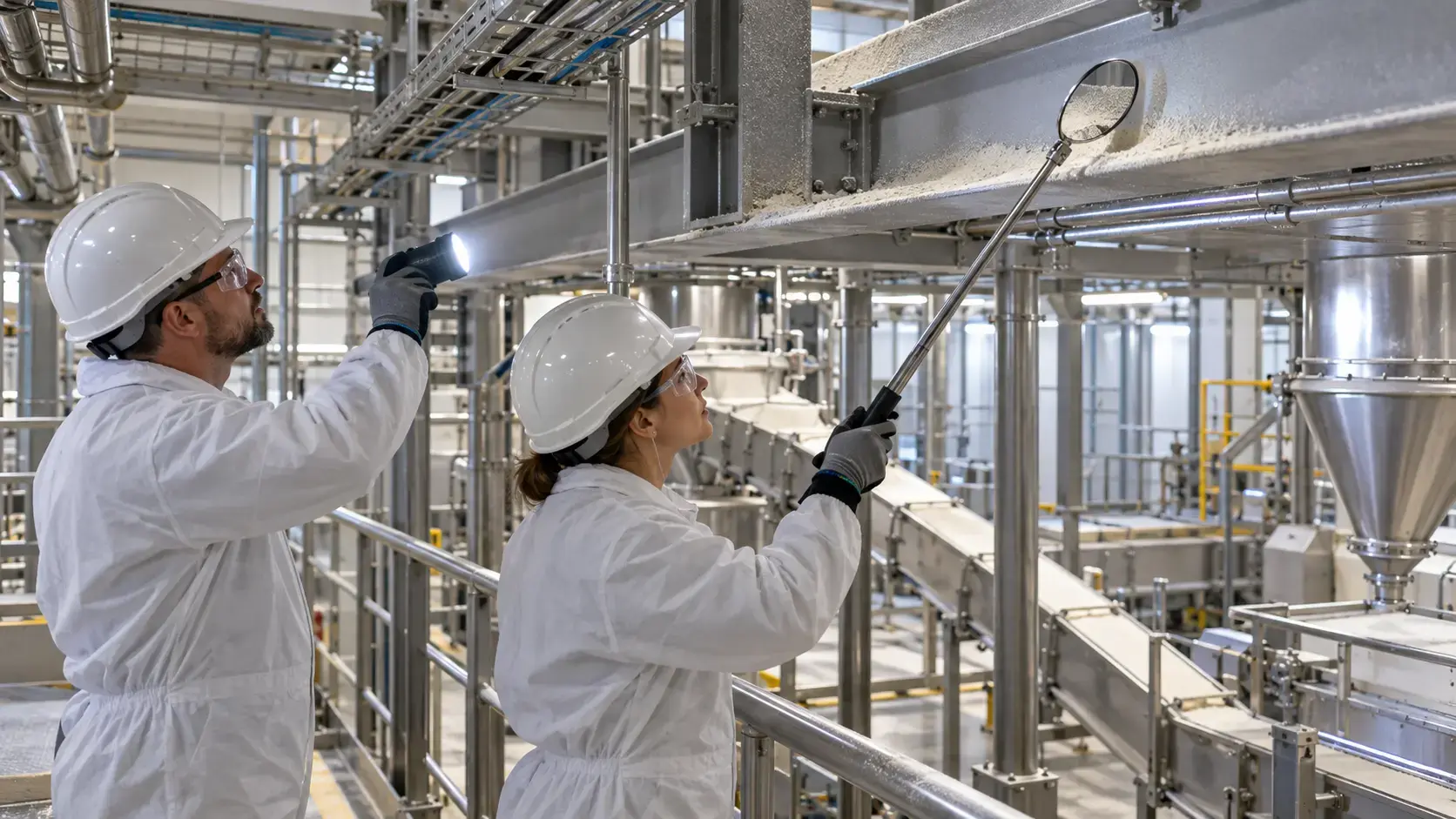
A clean floor does not prove that a combustible-dust hazard is controlled. Dust resting on beams, cable trays, lights, ducts and equipment can remain unnoticed until a pressure wave lifts it into the air and gives a small primary event enough fuel to become a chain of secondary explosions.
How settled dust becomes an explosion hazard
A combustible solid may burn slowly in a pile yet burn extremely rapidly when fine particles are dispersed as a cloud. A damaging dust explosion requires combustible dust, oxygen, an ignition source, dispersion and confinement. Processing, transfer and conveying can create the fine particles; a leak, vibration, compressed-air jet or initial blast can disperse them; and rooms, enclosures, ducts or equipment can allow pressure to rise.
The first event may be local. Its pressure wave can shake loose dust deposits across a much larger area. The newly airborne dust then ignites, producing a secondary explosion that lifts more deposits and propagates again. This is why thin, widespread layers on inaccessible surfaces may present a larger escalation hazard than one obvious pile at floor level.
The Imperial Sugar warning
On 7 February 2008, a combustible sugar-dust explosion and fire at the Imperial Sugar refinery in Port Wentworth, Georgia, killed 14 people and injured 36. The U.S. Chemical Safety and Hazard Investigation Board (CSB) determined that the initial explosion occurred in an enclosed steel belt conveyor beneath the sugar silos. Within seconds, secondary dust explosions propagated through the packing buildings.
The CSB found that sugar dust had escaped inadequately sealed and poorly maintained conveying equipment and accumulated on floors and elevated surfaces including conduit, piping, ceiling beams, light fixtures and equipment. The newly installed conveyor enclosure had no dust-removal system or explosion vents. The investigation concluded that the first overpressure dislodged accumulated dust, creating airborne fuel for the advancing fireball and cascading explosions.
The lesson is broader than sugar. Any facility handling a combustible particulate solid—including food, wood, plastics, chemicals, pharmaceuticals, coal or metals—must understand whether its dust can explode and prevent hazardous accumulations from becoming a hidden fuel inventory.
Critical controls that break the escalation chain
Know the dust. Do not assume a familiar product is harmless when finely divided. Use representative material testing and a competent dust-hazard analysis to establish explosibility and the design basis for prevention and protection. Reassess when particle size, moisture, formulation, throughput or equipment changes.
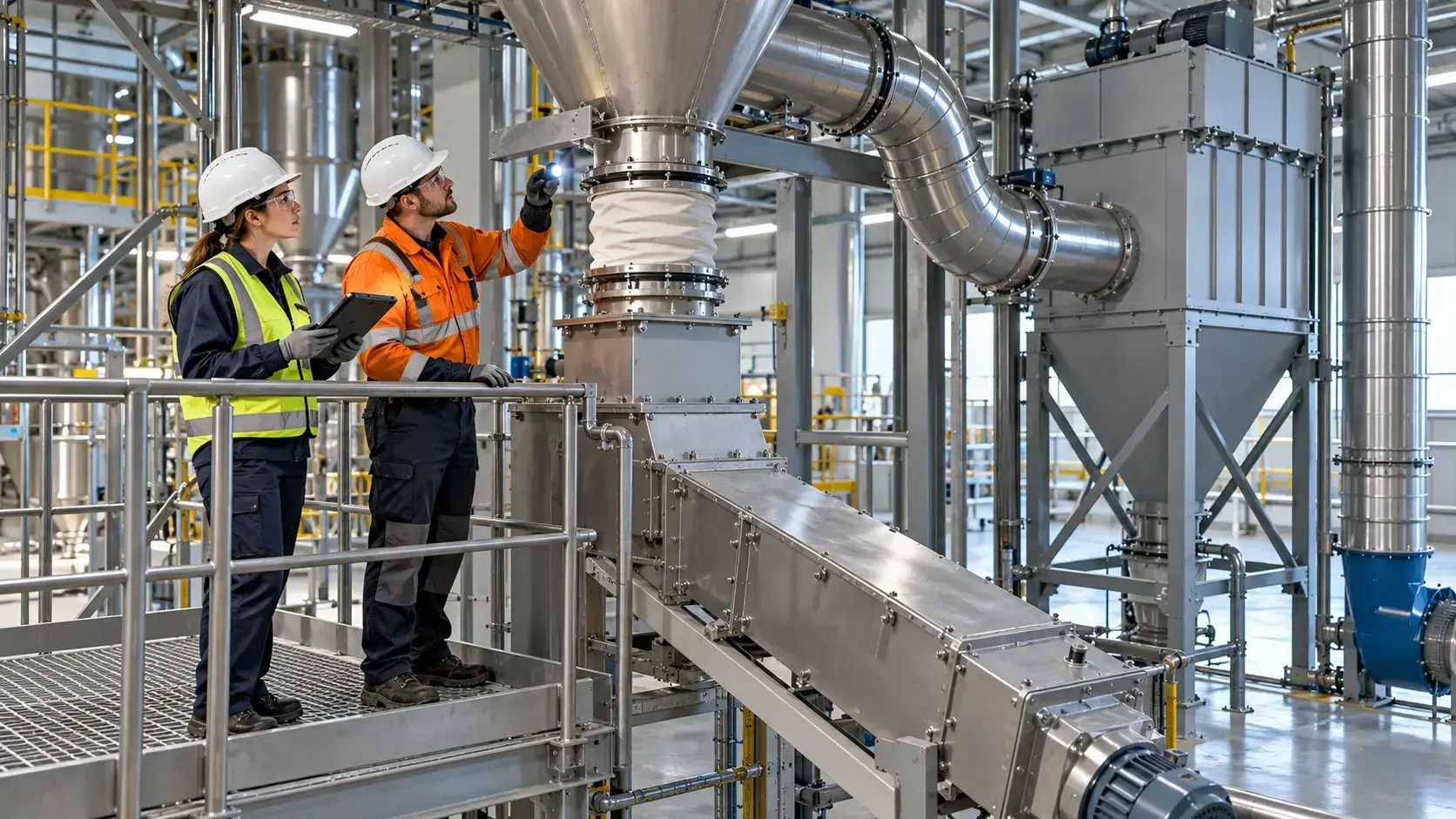
Prevent release at the source. Keep conveyors, transitions, transfer points and flexible connections sealed and maintained. Provide effective local dust extraction where dust is generated, and verify airflow, filter condition, differential pressure and safe discharge or collection. Treat recurring dust outside equipment as a loss of containment that requires correction—not merely more cleaning.
Inspect where routine cleaning does not reach. Include roof members, cable trays, suspended ceilings, ducts, light fittings and equipment tops in documented inspections. Provide safe access and lighting. Define trigger levels and ownership so findings create prompt corrective action.
Remove deposits without creating a cloud. Use cleaning methods and equipment suitable for the combustible material and hazardous location. Avoid uncontrolled dry sweeping or compressed-air cleaning that can disperse dust into an ignitable cloud. Plan shutdown, isolation and ignition control where cleaning could disturb significant deposits.
Limit the consequences. Where the hazard analysis requires it, use correctly designed deflagration venting or suppression, explosion isolation between connected equipment, and construction suited to the expected pressure. Locate relief discharge and collectors so that people are not exposed to flame, pressure or burning material.
Control ignition and change. Address overheated bearings, friction, hot work, electrical equipment, static discharge and other credible ignition sources. Apply management of change before enclosing a conveyor, increasing throughput, modifying extraction or altering housekeeping—the change may increase confinement, dust concentration or propagation paths.
Watch the official CSB investigation video
The CSB’s Inferno: Dust Explosion at Imperial Sugar explains how the primary event developed and how accumulated dust enabled the secondary explosions. It is directly relevant to dust containment, elevated-surface housekeeping and explosion propagation.
A question for today’s team
Which elevated or hidden surface above our process could hold enough combustible dust to become fuel when a pressure wave arrives—and when was it last inspected and safely cleaned?
Your experience matters
Share your thoughts on this page
Have a question, a useful experience or a suggestion? Add your input below.
Comments are public. Keep them respectful and relevant. Do not share contact details, confidential information or emergency reports.
Comments on this page
Loading comments…