Process Safety · Lesson 11 · 4 min read
A Relief Valve Cannot Protect Through a Closed Isolation
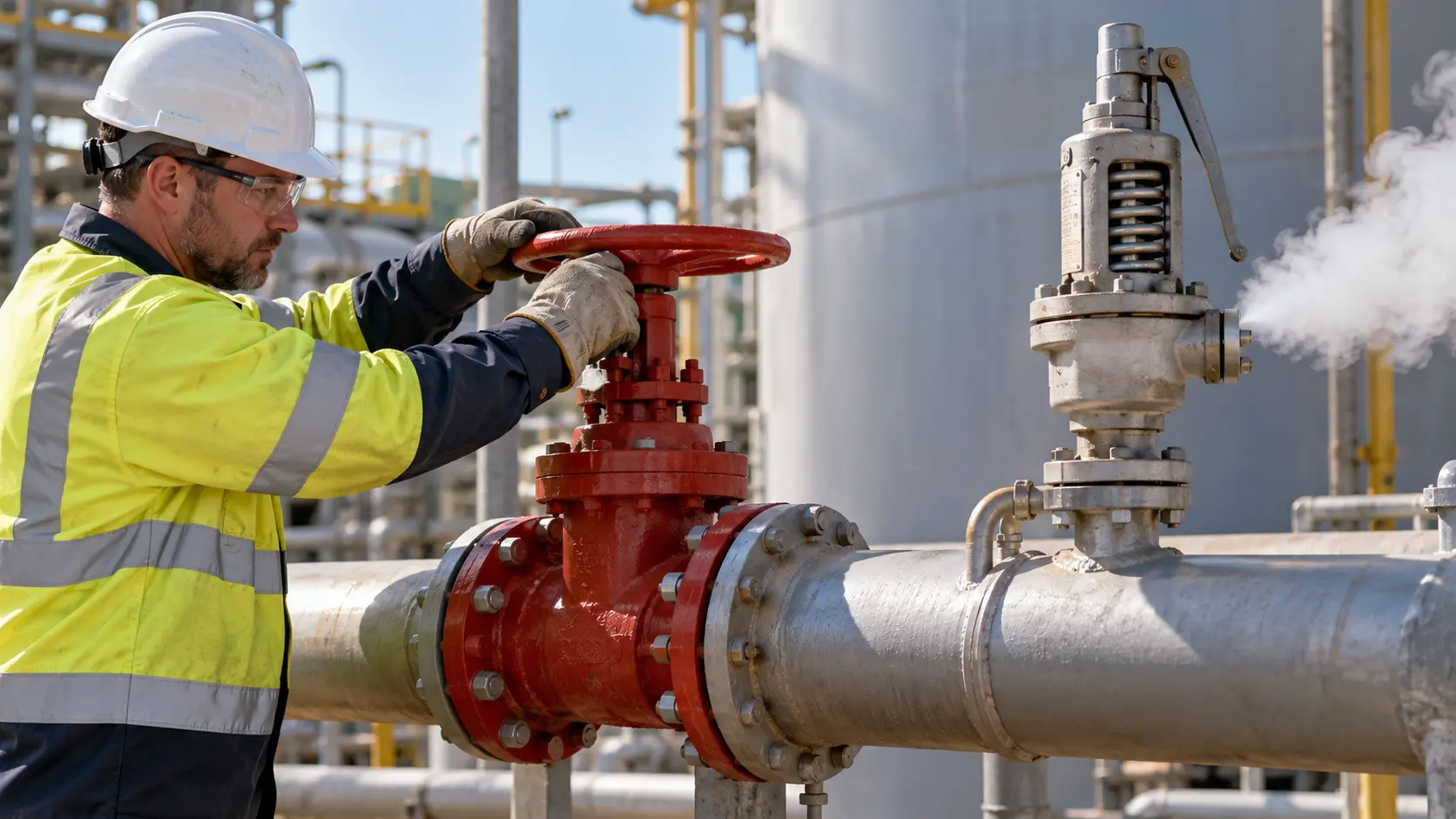
Pressure protection depends on a continuous, verified path from the equipment to its relief device. A closed block valve can silently defeat that barrier.
The path is part of the safeguard
A relief device is not protective merely because it appears on a drawing or carries a current inspection tag. Its inlet and discharge paths must be available in the operating configuration. Maintenance can require isolation, but the equipment then needs an approved safe state or an authorised alternative protection arrangement. The plant's own design basis and operating procedures govern the details.
The U.S. Chemical Safety Board investigated a fatal heat exchanger rupture at Goodyear in 2008. Workers had closed an isolation valve between the ammonia side of the exchanger and its relief device while replacing a rupture disk. The valve was not reopened. Subsequent heating and pressure rise contributed to rupture. This is a documented event, not a hypothetical example.
Make a closed valve visible to the whole team
Before an isolation is applied, identify what equipment loses protection and what other work or heat sources could pressurise it. Record the valve position and control it under the approved isolation and permit arrangements. If the relief path is unavailable, stop the affected operation or use a formally engineered and approved arrangement; a verbal promise to reopen it later is inadequate.
At handback, independently verify the required valve line-up, remove locks or tags only under the authorised sequence, update the plant status record and tell the incoming shift. Check the entire pressure boundary: a correct relief-valve set point is irrelevant if the connection to the protected volume is blocked.
A question for today's team
Which pressure relief device on our plant has a block valve or removable spool in its path, and how do we prove that its protected equipment cannot operate with that path unavailable?
WhatsApp-ready lesson
PROCESS SAFETY | 23 SEPTEMBER 2026 A relief valve cannot protect through a closed isolation. The safeguard includes the entire path from the protected equipment to a safe discharge point. Before isolating it, confirm the equipment's safe state and approved protection plan. On handback, verify the line-up in the field and transfer its status to the next shift. Team question: Which relief path on our plant could be unavailable without the control room knowing? Source: U.S. CSB, Goodyear heat exchanger investigation.
Your experience matters
Share your thoughts on this page
Have a question, a useful experience or a suggestion? Add your input below.
Comments are public. Keep them respectful and relevant. Do not share contact details, confidential information or emergency reports.
Comments on this page
Loading comments…