Process Safety · Lesson 13 · 4 min read
A Relief Device Needs a Safe Destination
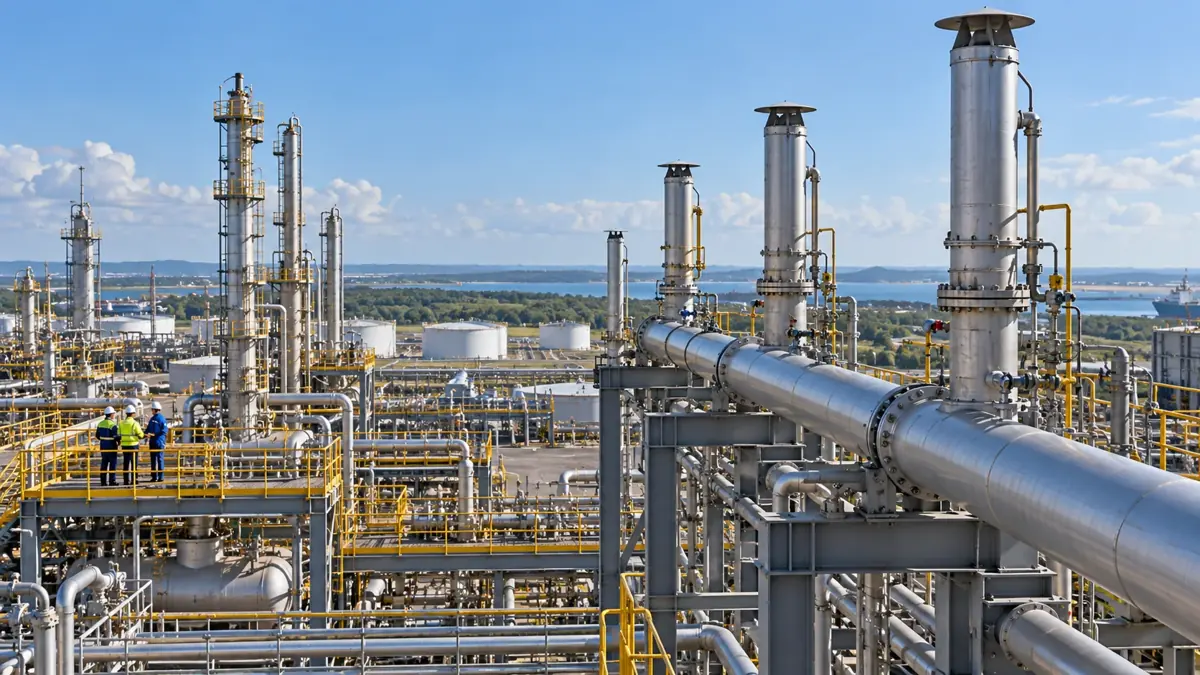
A relief valve can open exactly as designed and still produce a major accident if the discharged material reaches people or an ignition source.
Protection includes the consequence of discharge
Pressure relief protects equipment against overpressure. It does not automatically make the released material harmless. An emergency discharge can carry flammable vapour, toxic gas or liquid into places where people work. The system assessment must cover credible relief scenarios, the material and rate, discharge routing, dispersion, ignition and occupancy. A safe destination is a design and operating claim that needs evidence.
The U.S. Chemical Safety Board's safety alert on emergency discharges describes four incidents and urges facilities to evaluate where pressure-relief systems discharge. At the 2005 Texas City refinery disaster, a flooded tower relieved into a blowdown drum and atmospheric stack; a flammable cloud formed and ignited. The specific causes were multiple, but the discharge destination made escalation possible.
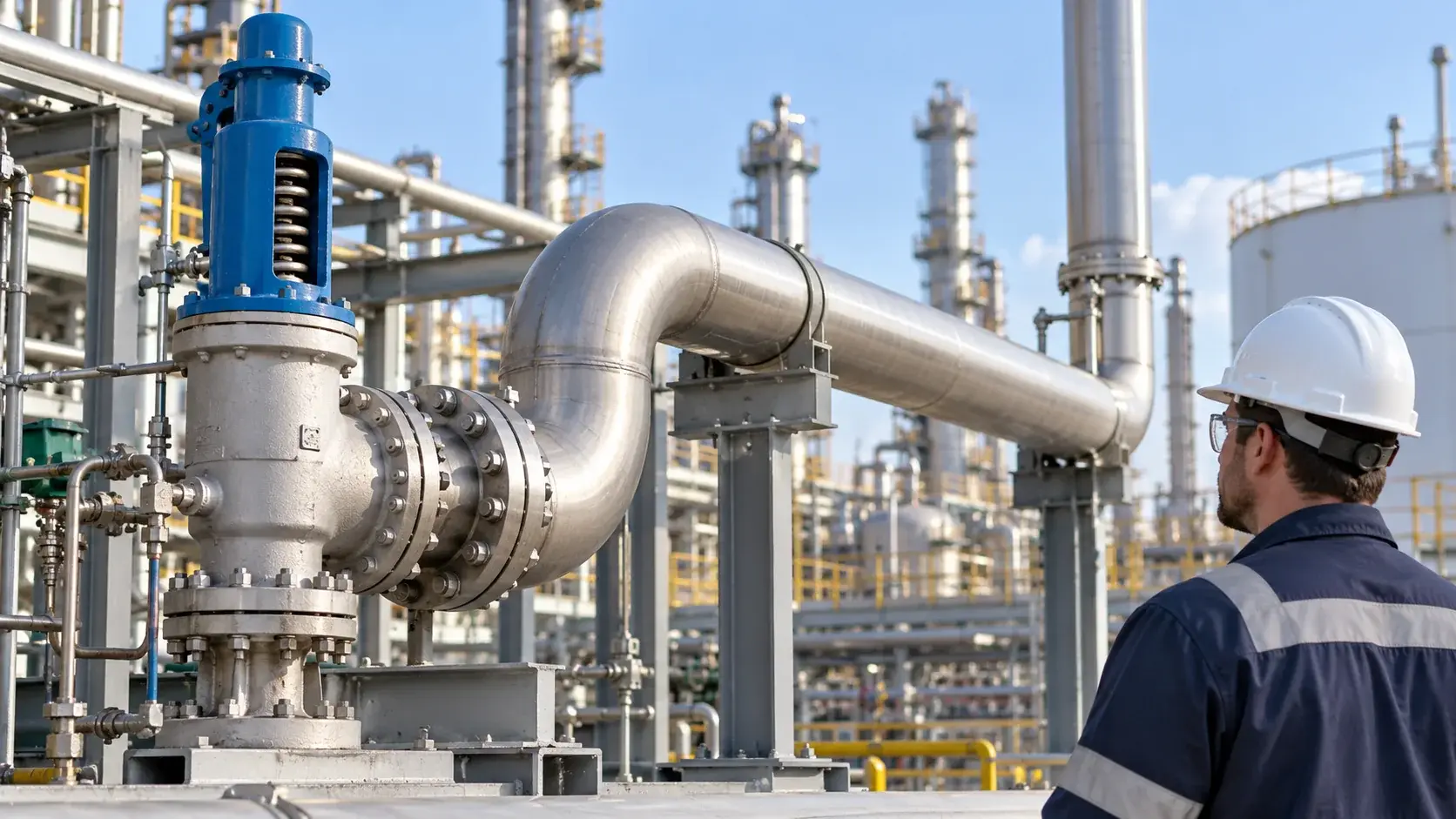
Check the complete disposal system
Confirm that the outlet remains available and suitable for the credible relief load. Examine shared headers, liquid carryover, backpressure, blocked outlets and maintenance configurations. Assess whether occupied buildings, muster points or temporary work locations lie in a potential exposure area. Changes to inventory, operating envelope, routing or nearby occupancy can invalidate an earlier study.
Where the existing route cannot be shown to be safe, escalate to qualified engineering and operations leadership for a documented risk assessment and approved controls. Do not treat a relief test certificate as proof that the discharge location is safe. Apply local standards and the plant's approved design basis.
Watch the documented case
The U.S. Chemical Safety Board’s updated Texas City animation traces the events leading to the 2005 refinery explosion, including the atmospheric discharge. The video documents a real incident; the images above are conceptual.
A question for today's team
If our most consequential relief device opened today, where would its discharge travel, and who has verified the people and ignition sources in that footprint?
WhatsApp-ready lesson
PROCESS SAFETY | 25 SEPTEMBER 2026 A relief device needs a safe destination. Opening at the correct pressure protects the vessel, but a discharge can still expose people or form a flammable cloud. Verify the complete outlet route, credible release rate, nearby occupancy and ignition sources. Reassess after process or site-layout changes. Team question: If our critical relief system operated today, where would the material go? Source: U.S. CSB, emergency relief discharge safety alert.
Your experience matters
Share your thoughts on this page
Have a question, a useful experience or a suggestion? Add your input below.
Comments are public. Keep them respectful and relevant. Do not share contact details, confidential information or emergency reports.
Comments on this page
Loading comments…