Process Safety · Lesson 30 · 7 min read
A Drain Valve Can Open a Path Beyond the Containment System
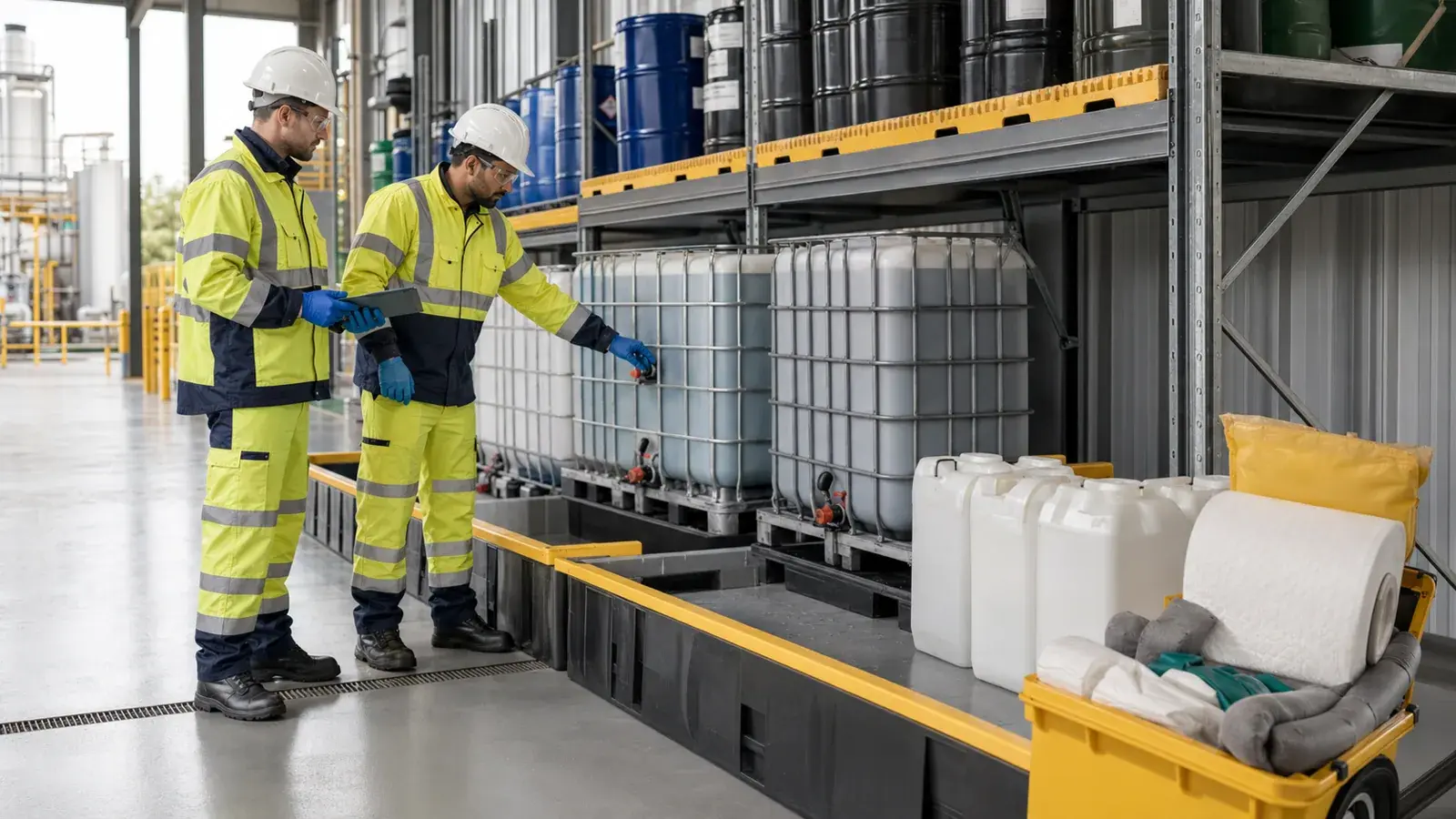
Secondary containment only works when the liquid remains inside it. A drain valve left open, an unsealed penetration or an incorrectly connected sump can convert a bund from a protective barrier into a route toward surface water, soil, occupied areas or another process unit.
Why the hazard can remain hidden
Containment areas need drainage because rainwater and wash water accumulate. That operational need creates a controlled opening in the barrier. Before water is released, its condition and destination must be understood, the receiving system must have capacity, and the valve must be returned to its required normal position.
The hazard is not limited to environmental harm. Flammable liquid entering an open drain can carry vapour to remote ignition sources. Incompatible chemicals may meet in a drainage system, while a fire can spread through inadequately protected routes. A drain therefore belongs in the process hazard picture, even when it is physically outside the main equipment.
A practical operating scenario
Hypothetical example: Heavy rain fills a tank bund during a transfer campaign. The drain is opened to remove apparently clean water, then attention shifts to an operating issue. A small flange leak develops inside the bund while the drainage path remains open. The original water-management task has now changed the consequence of the process leak.

Critical controls
Understand the dependency. Define the normal state and authority. Mark drain valves clearly, keep them in the specified secured position and control opening through an approved inspection, sampling and authorisation process. Never rely on memory to restore the barrier.
Verify the barrier. Verify destination and capacity. Trace where the liquid will go, confirm separators, sumps or treatment systems are available and suitable, and consider flammable vapour, chemical incompatibility and fire-spread pathways.
Control the operation. Inspect the full containment boundary. Check walls, floors, joints, penetrations, valves, seals and connected drainage. Record defects and prevent transfers or inventory conditions that exceed the impaired containment capability.
What strong leadership looks like
Bund water removal should be managed as an operating activity with ownership and completion criteria, not as housekeeping. Trends in open-drain events, high sump levels and containment defects provide early evidence of weakening loss-of-containment protection.
Supervisors should make the current barrier status visible at handover, connect related defects and deviations, and ensure that temporary operating arrangements have clear limits and escalation triggers. Where required evidence is missing, the conservative response is to stabilise the process and seek competent support rather than allow schedule pressure to decide.
Actions for today
- Choose one relevant safety-critical function and trace it from process hazard to final protective action.
- Check the latest inspection, test or operating evidence—not only the design intention or status label.
- Resolve any discrepancy through the approved defect, risk-assessment and escalation process.
Close the drainage task properly
Completion means more than stopping visible flow. Verify the valve is in its required position, apply the specified lock or seal, remove temporary hoses, update the log and tell the responsible operator that the containment boundary has been restored. If oily sheen, odour, abnormal pH or another sign of contamination is present, retain the liquid and follow the approved sampling and disposal route. During heavy rain, increased frequency must not weaken authorisation or verification; it makes disciplined ownership more important.
Team discussion question
If a leak occurred inside our largest containment area now, which drain, penetration or connected system could allow the material to escape the intended boundary?
Your experience matters
Share your thoughts on this page
Have a question, a useful experience or a suggestion? Add your input below.
Comments are public. Keep them respectful and relevant. Do not share contact details, confidential information or emergency reports.
Comments on this page
Loading comments…