Process Safety · Lesson 22 · 7 min read
A Cooling Failure Can Turn a Reaction Into a Runaway
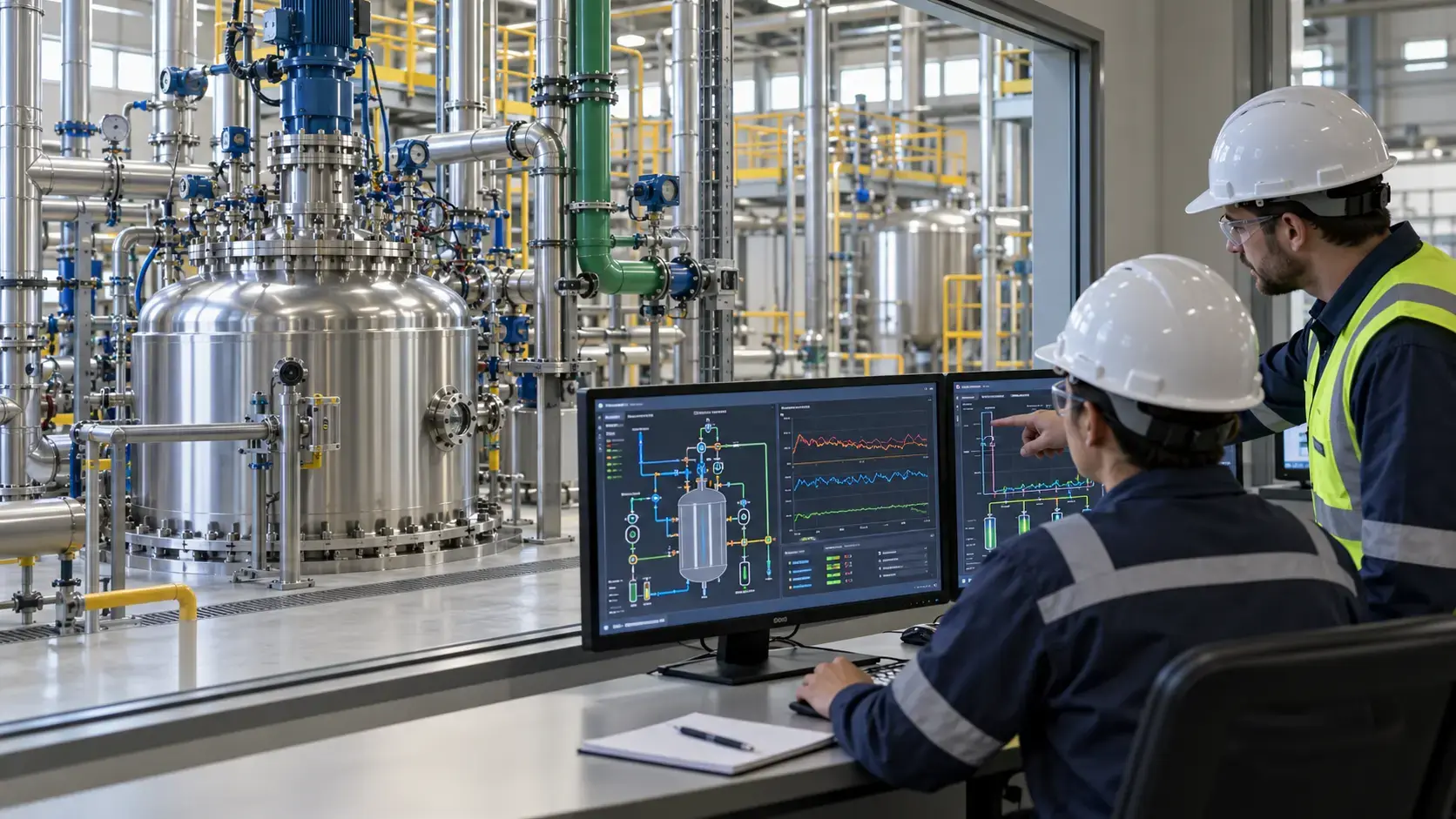
An exothermic reaction produces heat. If the process generates heat faster than the system removes it, temperature rises, the reaction accelerates and still more heat is released. This positive feedback can become a thermal runaway—raising temperature and pressure faster than operators, cooling systems or relief devices can control.
The hazard mechanism: heat creates more heat
Normal batch operation depends on a heat balance: reaction heat must remain within the removal capacity of the jacket, coil, condenser or other engineered system. A loss of cooling, reduced flow, fouled heat-transfer surface, failed agitator, wrong addition rate, contamination or mischarge can upset that balance.
As temperature rises, many reactions proceed faster. Faster reaction releases heat more quickly, which drives another temperature increase. Boiling and gas generation can then increase pressure. At still higher temperatures, an unintended secondary reaction or decomposition may begin, adding heat and non-condensable gas that were never present in normal operation.
The key danger is acceleration. An operator may have minutes—or less—between the first abnormal trend and conditions that exceed the vessel and its safeguards. A normal operating history does not prove the next loss-of-cooling event can be recovered.
The T2 Laboratories warning
On 19 December 2007, a batch reactor exploded at T2 Laboratories in Jacksonville, Florida, during production of a gasoline additive. Four employees were killed and 32 people were injured. The blast destroyed the plant and damaged surrounding businesses.
The U.S. Chemical Safety and Hazard Investigation Board (CSB) concluded that a desired exothermic reaction ran away after a cooling-system failure and led to a second, undesired exothermic reaction. The cooling system lacked redundancy and had no emergency cooling source. The pressure-relief system had been designed for normal operation and could not relieve the runaway reaction.
The CSB identified the root cause as failure to recognise the runaway-reaction hazard. It also found that no comprehensive hazard and operability study had been performed. Such an analysis should have examined loss of cooling, agitator failure, contamination and mischarging, and should have driven testing of reaction behaviour and the limits of cooling and relief systems.
Critical controls before the reaction begins
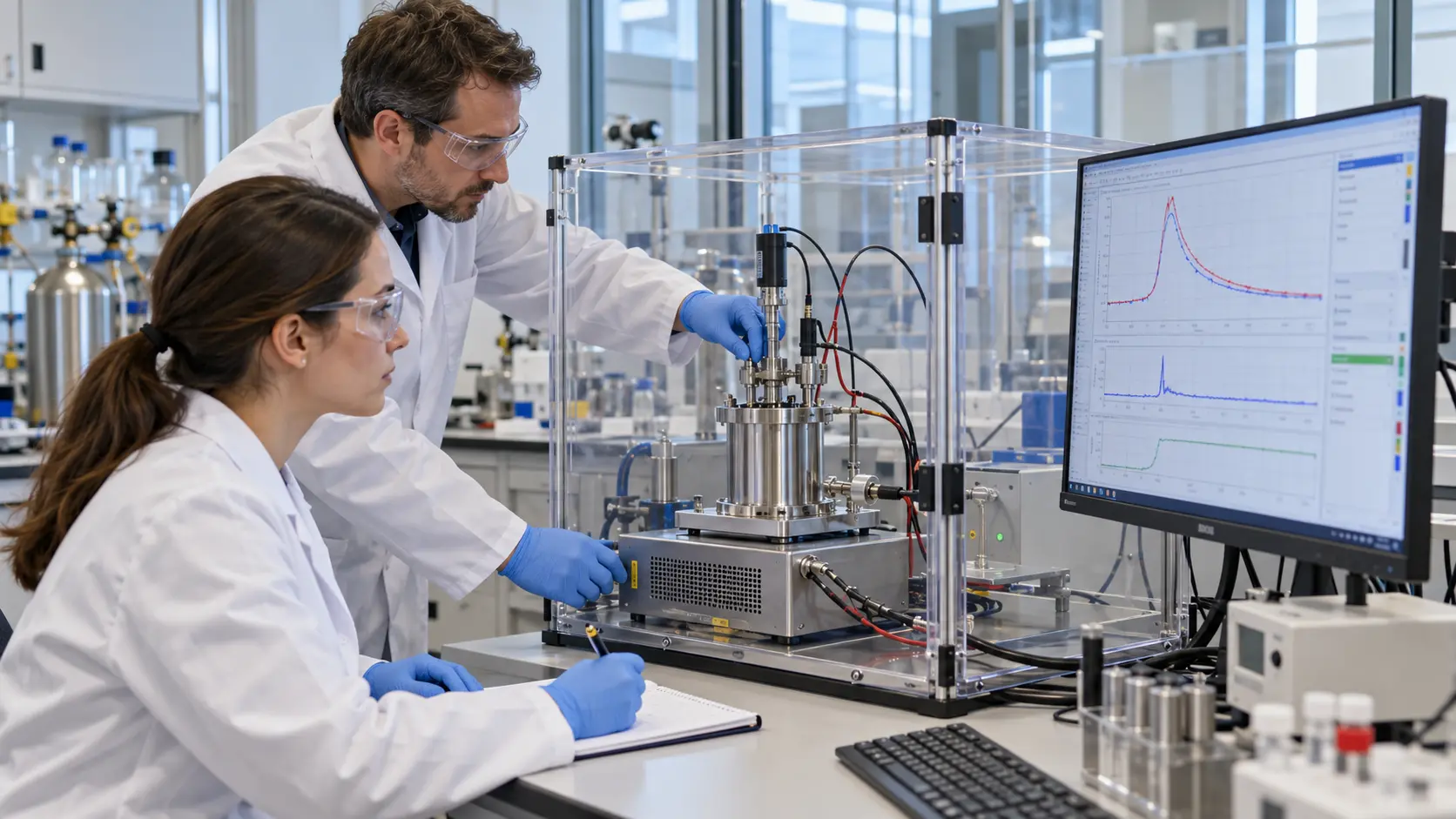
Characterise the chemistry. Use suitable screening and reaction-calorimetry methods to determine heat release, gas generation, reaction rate, accumulation, onset of secondary reactions and credible adiabatic temperature and pressure. Laboratory success alone does not establish full-scale safety; scale-up changes heat-removal performance and total energy inventory.
Analyse credible deviations. The process hazard analysis must examine loss or restriction of cooling, loss of agitation, excess heating, wrong sequence, rapid or excess addition, contamination, utility failure and delayed response. Revisit the analysis after recipe, batch-size, equipment, raw-material or control-logic changes.
Define a proven safe operating envelope. Establish approved limits for temperature, pressure, addition rate, inventory, agitation, coolant flow and other critical parameters. Procedures must state the early warning signs, the stop point and the actions operators can take while those actions are still effective.
Remove single-point dependence on cooling. Confirm cooling duty across the credible operating range, maintain heat-transfer surfaces and test the complete path—supply, valves, instrumentation, jacket or coil, return and utilities. Where risk requires it, provide independent or diverse cooling and verify that it remains available during a common utility failure.
Provide an independent means to halt or contain escalation. A high-temperature or high-rate-of-rise trip, feed isolation, emergency quench, inhibitor or dump system may be appropriate, but only where reaction testing and engineering demonstrate that the action is safe and fast enough. It must not share the same failure that defeats the basic control system.
Design emergency relief for the runaway case. Relief sizing must use credible runaway heat and gas-generation data, not normal-operation flow alone. Evaluate two-phase flow, downstream containment, discharge location and the effect of any secondary reaction. Relief is the last engineered defence, not a substitute for controlling the reaction.
Keep safeguards healthy and visible. Proof-test trips, cooling paths, backup utilities and emergency systems at defined intervals. Treat failed, bypassed or unavailable protection as a change in risk: restrict or stop operation until authorised compensating measures are in place.
Prepare people to act early. Operators need clear alarms, trend visibility, practised abnormal-response steps and the authority to stop additions or initiate the approved emergency response. Once a runaway is established, approaching the reactor can expose people to the very event the safeguards failed to contain.
Watch the official CSB investigation video
The CSB’s Runaway: Explosion at T2 Laboratories explains the incident sequence, the cooling-system vulnerability, the unrecognised reaction hazard and the limits of the pressure-relief system. It is directly relevant to reactive-hazard evaluation, scale-up and independent protection.
A question for today’s team
If cooling to our most energetic batch failed now, what independent action would stop or contain the reaction before temperature and pressure outran the equipment—and what test data proves it?
Your experience matters
Share your thoughts on this page
Have a question, a useful experience or a suggestion? Add your input below.
Comments are public. Keep them respectful and relevant. Do not share contact details, confidential information or emergency reports.
Comments on this page
Loading comments…