Process Safety · Lesson 21 · 7 min read
A Clear Gas Test Is Only Valid Where You Tested
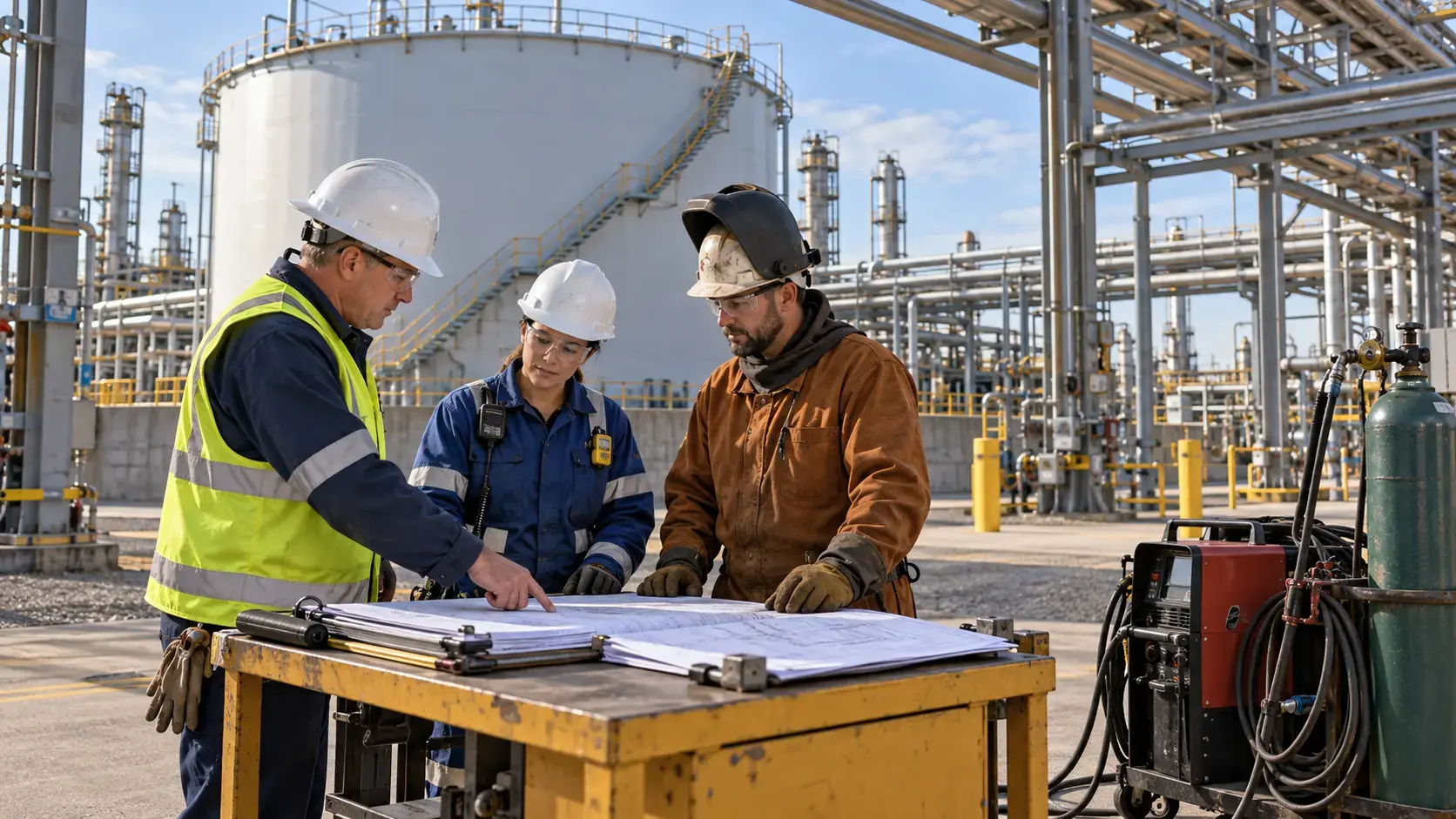
A gas detector measures the atmosphere that reaches its sensor. A zero reading beside a welding job cannot prove that a nearby tank, pipe or hidden space is free of flammable vapour. Before hot work begins, the team must identify every credible fuel-containing space, eliminate the hazardous atmosphere where practicable and test at locations that truly represent the risk.
Why a clear reading can create false confidence
Hot work supplies intense heat, sparks or molten material. A fire or explosion occurs when that ignition source reaches a flammable mixture. The mixture may be inside equipment even while the surrounding open air remains below the detector’s alarm level. Tank walls, pipework and covers can hide the vapour; they can also conduct heat or allow slag to reach openings and fittings.
Shutdown conditions can make the hazard less predictable. Cooling liquid may pull air into a vessel through a vacuum-relief device. Stopped extraction can allow vapour to accumulate. A changed valve position, residual liquid layer or isolated branch can alter the fuel inventory. The detector can report accurately at the workface while the dangerous atmosphere remains unmeasured elsewhere.
The control question is therefore not, “Did we get zero?” It is, “Did our hazard assessment identify every space that can contain fuel, and did our testing or engineered controls address those spaces?”
The DeRidder warning
On 8 February 2017, a foul-condensate tank exploded during a planned maintenance outage at the Packaging Corporation of America mill in DeRidder, Louisiana. Three contractors were killed and seven were injured. The tank separated from its base, travelled approximately 375 feet and passed over a six-storey structure before landing on process equipment.
The U.S. Chemical Safety and Hazard Investigation Board (CSB) found that the tank likely held water, a layer of flammable turpentine and a vapour space containing air and flammable vapour. Air entered the tank, including as its contents cooled during the outage, creating an explosive atmosphere. Hot work above the tank likely provided the ignition source.
Workers tested the platform and surrounding work area and found no flammable vapour. Continuous monitoring at ground level also did not identify the atmosphere inside the tank. The CSB reported that no one checked the tank’s internal atmosphere because the explosion hazard had not been recognised. The investigation stressed that this did not mean someone should simply open the tank to test it: the hazard should have been identified during planning and controlled using safer established methods such as purging, inerting and suitable fixed or remote sampling.
Critical controls before hot work is authorised
Use a cold-work alternative where practicable. Start by asking whether bolting, mechanical cutting, prefabrication, relocation or another non-ignition method can achieve the task. Eliminating the ignition source is stronger than depending on detection alone.
Map the complete hazard envelope. Review the equipment beneath, beside and connected to the job—not only the component being repaired. Include tanks, vents, drains, dead legs, pipe openings, wall penetrations, lower levels and the opposite side of metal surfaces. Consider where sparks, slag, heat and radiation can travel.
Understand the process condition during the job. Use current drawings, line-ups, inventories and operating knowledge. Examine how shutdown, cooling, draining, isolation, stopped ventilation or maintenance activities can introduce oxygen, retain liquid or allow vapour to migrate. Share this process knowledge with contractors before they accept the task.
Eliminate the flammable atmosphere where feasible. Drain, clean, purge, ventilate or inert equipment using an engineered procedure appropriate to the substance and vessel. Inerting controls combustion but can create a life-threatening oxygen-deficient atmosphere; it is not permission for entry. Verify isolation and prevent reintroduction of fuel or air for the duration of the work.
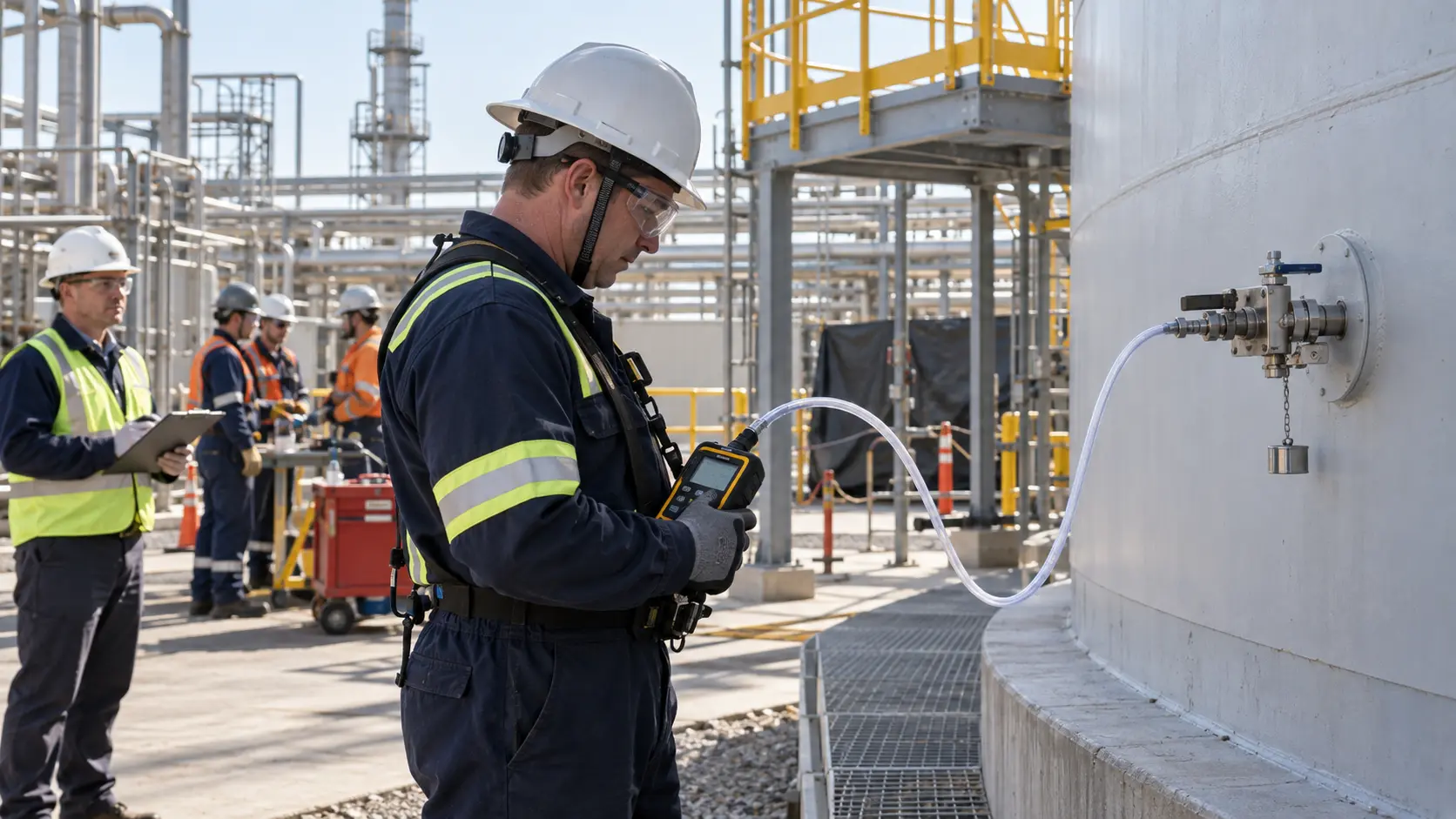
Make gas testing representative. Define what must be measured, where, when and by whom. Sample the workface and every relevant space that can safely be sampled, using suitable remote or fixed arrangements where opening equipment would create danger. Test at different elevations when vapour density or geometry can cause stratification. Confirm instrument selection, calibration status, bump test, sampling time and response limitations.
Monitor continuously and place the fire watch effectively. Conditions can change after the initial test. Position detectors and fire watches where they can observe the actual work and credible vapour-release paths, including elevated or multi-level locations. A monitor at ground level cannot represent every atmosphere above or inside equipment.
Stop when the basis changes. Suspend the permit if ventilation stops, line-up changes, readings rise, work moves, weather affects dispersion or another task alters the process. Reassess, re-test and re-authorise before restarting.
Watch the official CSB investigation video
The CSB’s Uncovered Hazards: Explosion at the DeRidder Pulp and Paper Mill explains how shutdown conditions, an unrecognised tank atmosphere and hot work combined. It is directly relevant to hazard analysis, representative gas testing and contractor communication.
A question for today’s team
Which nearby or connected vessel could contain a flammable atmosphere even if our detector reads zero at the workface—and how have we eliminated, isolated or representatively monitored that hazard before issuing the permit?
Your experience matters
Share your thoughts on this page
Have a question, a useful experience or a suggestion? Add your input below.
Comments are public. Keep them respectful and relevant. Do not share contact details, confidential information or emergency reports.
Comments on this page
Loading comments…