Environmental Management · HSSE Watch
WMO Climate Update 2026: Turn Warnings into Workplace Actions
Published
WMO release and article: 9 November 2026. Interim observation periods vary; global conditions do not replace local forecasts.
A forecast protects nobody until someone knows what to do with it. WMO’s new climate update is a reason to check that connection now: from an official warning to a named decision-maker, a work restriction and a verified recovery plan.
What changed on 9 November 2026?
WMO released its State of the Climate Update 2026 at COP31 on 9 November. It reports a January–September global temperature approximately 1.47°C above the 1850–1900 average, record global mean sea level and preliminary ocean-heat data pointing to another record. WMO forecasts that the developing El Niño will increase risks into 2027.
This is an interim global assessment, using data up to September where available—not the final full-year report or a forecast for an individual worksite. Some ocean figures are preliminary. The strongest future El Niño conditions remain a forecast, not an observed outcome.
Why this matters at work
The practical implications below are Worksite Safety Hub’s risk-management interpretation, not new WMO operating limits. A global signal should trigger a review of local exposure and decision arrangements. It does not justify inventing a universal temperature, wind or rainfall threshold.
Construction teams, farms, mines, ports, factories and offshore facilities have different vulnerabilities. Heat can affect people while low water availability challenges operations. Intense rainfall can expose weaknesses in drainage and containment. Coastal sites must consider water levels alongside local tides, surge information and access conditions. Check the combinations rather than treating each hazard as a separate form.
Five checks to make the warning useful
- Name the trusted source and owner. Identify the relevant national meteorological and hydrological services and local emergency authorities. Assign a person on each shift to receive, interpret and escalate alerts, with an out-of-hours backup.
- Connect alerts to specific tasks. Review heat-intensive work, exposed lifting, work at height, marine transfers, temporary works and travel. Set documented decisions using competent assessment, applicable requirements and equipment limits. Define who can suspend work without waiting for a routine meeting.
- Verify heat and welfare controls. Check shade or cooling, drinking-water access, recovery arrangements, workload scheduling and communication with isolated workers. Use occupational-health advice for individual needs; do not assume one rule suits everyone.
- Test water and environmental resilience. Review process-water dependencies, safe reduced-operation arrangements, drainage capacity and inspection, containment integrity and emergency access. Keep contaminated runoff separate from clean drainage where required. Have competent people assess changes to systems rather than improvising bypasses.
- Plan the restart. Specify the inspections, repairs and approvals needed after severe weather. A warning ending does not prove electrical systems, temporary structures, roads or pollution barriers are safe.
A short tabletop exercise
Ask a supervisor to describe what happens if the next shift loses its usual forecast channel while a local severe-weather alert is active. Who obtains the update? Which tasks pause? Who informs contractors and transport providers? What evidence permits restart?
Record gaps as actions with an owner and due date. Confirm closure by a test or inspection, not simply a revised document. Include environmental and maintenance representatives so the exercise covers assets and discharges as well as personal safety.
Leadership and toolbox questions
- Which warning changes our work today, and who makes that decision?
- What fails first if heat, water shortage or heavy rain exceeds our assumptions?
- Can contractors and night-shift staff explain the same stop and restart arrangements?
Key takeaway
Use the global update to challenge assumptions; use current local forecasts and competent assessments to control the job. The essential link is warning → owner → action → verified recovery.
Authoritative video
World Meteorological Organization – WMO: WMO State of the Climate Update 2026 - English. Publisher, title and direct URL verified in the embedded player on WMO’s official COP31 page on 9 November 2026. The global briefing is context, not a local operational forecast.
Sources and dates
- WMO: State of the Climate Update for COP31, 9 November 2026 ↗Primary source; publication dates and limitations are distinguished in the article.
- WMO release: state of the climate in 2026, 9 November 2026 ↗Primary source; publication dates and limitations are distinguished in the article.
- WMO official COP31 page and video ↗Primary source; publication dates and limitations are distinguished in the article.
Sources checked 9 November 2026. Source statements and original practical applications are distinguished above. Always consult current official advice and applicable local requirements.
Share the lesson
Open the separate 9:16 Pinterest poster
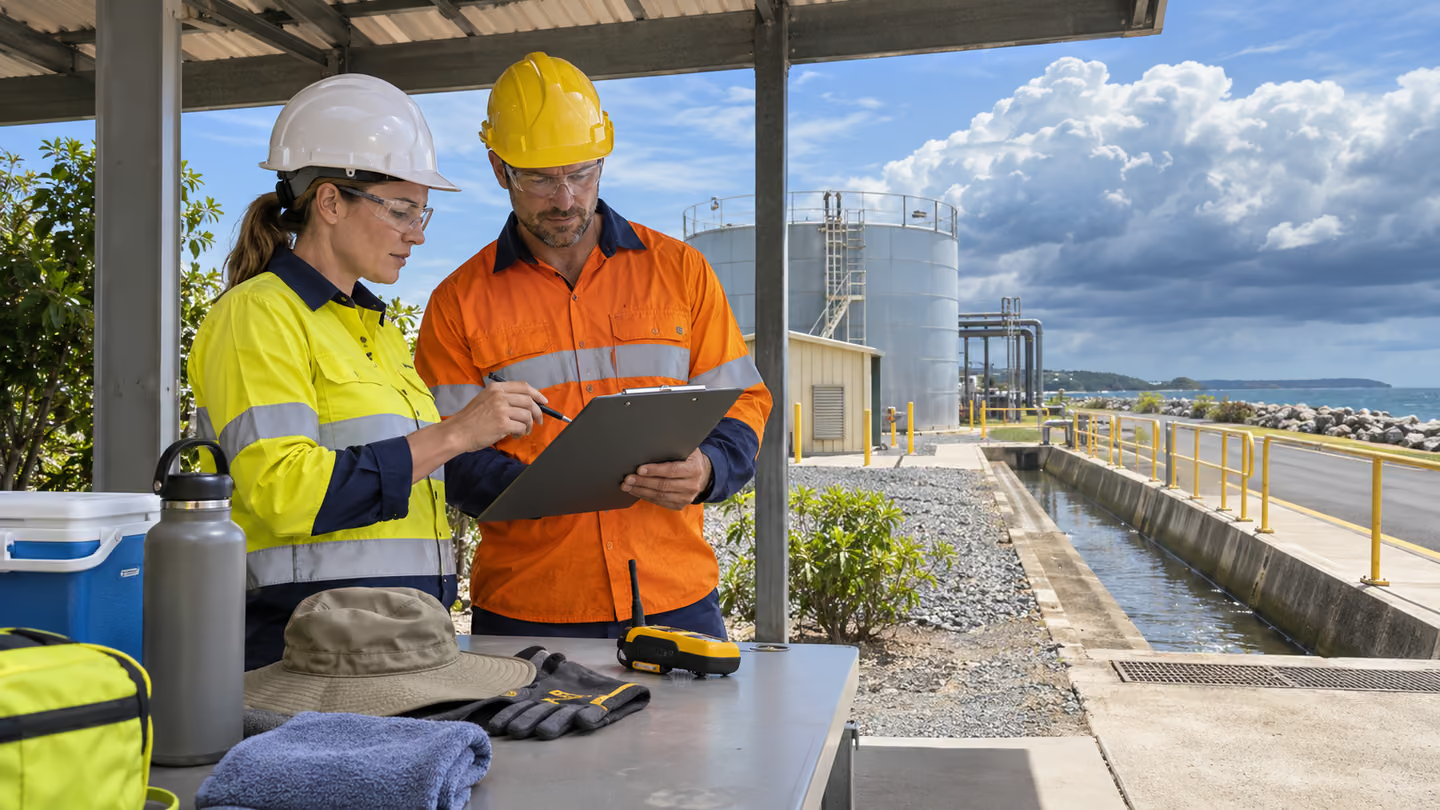
Illustrative planning scene, not an actual incident or a technical procedure. HSSE TIPS branding appears only in the designed poster footer.
Your experience matters
Share your thoughts on this page
Have a question, a useful experience or a suggestion? Add your input below.
Comments are public. Keep them respectful and relevant. Do not share contact details, confidential information or emergency reports.
Comments on this page
Loading comments…