Environmental Management · HSSE Watch
Oil Spill Response: Stopping the Leak Does Not Finish the Job
Published
Official update published 30 October 2026 at 19:19:50 UAE time · Original incident date and cause not established in this update
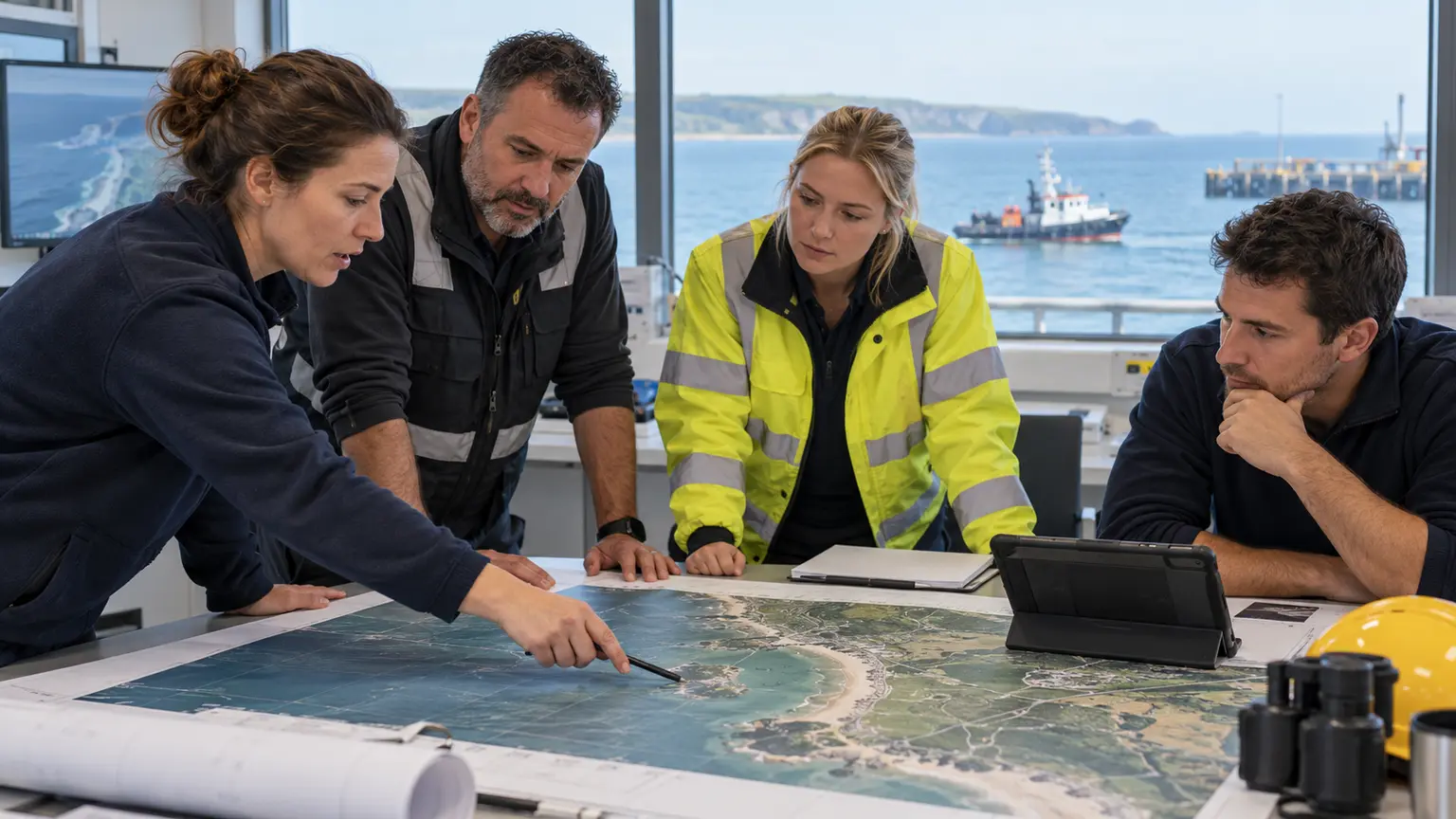
Stopping a release is an essential milestone. It is not the same as recovering the shoreline, demonstrating water quality or confirming that work and public access can resume safely. A UAE tanker-spill update shows why those decisions need separate evidence.
What the authorities reported
In a statement published by WAM on 30 October 2026 at 19:19:50 UAE time, UAE authorities said the source of the GEM NO. 2 tanker spill had been stopped and no new leakage had been detected in the latest field assessments. Vessel repairs, system restoration and structural assessment continued.
Satellite observations dated 30 October placed the slick mainly off Umm Al Quwain, with partial extension towards Ras Al Khaimah, Ajman and Sharjah. Surveying, monitoring and cleanup remained underway. Authorities said precautionary coastal closures did not necessarily establish pollution at every closed location.
The update does not establish the original incident date, cause or spill volume. This article does not attribute the incident to an attack or present a dated observation as a current slick boundary. Later authority instructions take precedence.
Why the distinction matters at a worksite
Marine terminals, ports, coastal utilities and offshore operators may need to manage a damaged asset, released material and affected services at the same time. IMO’s preparedness framework emphasizes coordinated response, competent resources, communications and exercises.
The following are original Worksite Safety Hub planning applications. They are not findings of failure by the UAE authorities, a dispersant prescription or instructions for handling this tanker.
Keep separate decisions visible
Use distinct acceptance questions for source stability, vessel integrity, environmental condition, worker access and operational restart. Name the competent decision-maker and the evidence needed for each. Avoid a single green status that can be mistaken for acceptance of everything.
When briefing leadership, state precisely what has improved and what remains unresolved. “No new leakage detected” describes an observation within a monitoring arrangement. It should not quietly become a claim that every exposure pathway has been removed.
Design monitoring around the decisions it supports
Ask what the team needs to know before changing an exclusion, reopening an intake or releasing an operational restriction. Have qualified specialists determine appropriate observations, sampling, quality checks and review intervals for the relevant receptors.
Keep location, collection time and limitations attached to the information. Bring observations from different sources into a controlled record without treating them as interchangeable. Where coverage is incomplete, record the uncertainty and the decision it prevents rather than filling the gap with reassurance.
Protect the people doing recovery work
Cleanup brings its own worksite risks. Assess the actual activities, access, marine conditions, vehicle movements, heat, fatigue and potential exposure before assigning people. Competent personnel must select the work method, equipment and protection for the material and conditions involved.
Include contractors and shift changes in briefings and accountability. Set stop criteria for changed weather, unsafe access, unexpected contamination or loss of essential support. Do not send untrained volunteers into affected areas or invite workers to investigate a damaged vessel outside authorized arrangements.
Plan waste and logistics before collection accelerates
Identify who accepts recovered material, how temporary storage is controlled and which authorized treatment or disposal route applies. Confirm capacity and transport arrangements before the collection rate creates an unmanageable backlog.
Record the material’s origin and movement so that a cleanup operation does not create a second, poorly documented environmental problem elsewhere. Have specialists assess segregation, storage compatibility and contamination-control arrangements. A convenient empty container is not automatically a suitable storage solution.
Use evidence—not appearance—for reopening
Agree the relevant authority and technical acceptance process in advance. A cleaner-looking beach or a smaller visible slick cannot, by itself, establish that every activity is suitable to resume. Equally, a precautionary closure should not be described as proof that contamination was measured everywhere.
Communicate restrictions clearly to workers, visitors and service providers. Assign responsibility for updating notices and withdrawing superseded information. Preserve the basis of the reopening decision and any continuing monitoring or limits.
Leadership and toolbox questions
- Which milestone have we achieved, and which decisions remain open?
- What observation or sample supports the next change in restriction?
- Can a contractor recognize the current stop criteria?
- Where will recovered material go, and who verifies acceptance?
- Who can authorize reopening, and on what evidence?
Authoritative learning video
ITOPF — 4. Shoreline clean-up. The publisher’s page, dated 3 March 2021, covers survey, planning and response choices. It is general training, not footage of GEM NO. 2 and not authority to undertake cleanup without competent direction.
Open the film on ITOPF’s official publisher page.
The publisher provides a Vimeo player, but third-party embedding on this site could not be verified: Vimeo’s metadata endpoint returned a domain restriction. No player is inserted here, and no unrelated footage is substituted.
Sources and dates
- WAM — UAE authorities’ GEM NO. 2 spill-response update ↗Published 30 October 2026, 19:19:50 +04:00. Statements from the responsible UAE authorities; observations are dated, not a live pollution map.
- IMO — Pollution preparedness and response ↗Existing international preparedness and coordination framework, not a new regulatory requirement or an incident investigation.
- ITOPF — 4. Shoreline clean-up ↗Official technical training film page dated 3 March 2021. General planning and survey learning, not UAE incident footage.
Sources checked 31 October 2026. Source statements and original practical applications are distinguished above. Always consult current official advice and applicable local requirements.
Share the lesson
Open the separate 9:16 Pinterest poster
Illustrative prevention visual, not an actual incident or a technical procedure. HSSE TIPS branding appears only in the designed poster footer.
Your experience matters
Share your thoughts on this page
Have a question, a useful experience or a suggestion? Add your input below.
Comments are public. Keep them respectful and relevant. Do not share contact details, confidential information or emergency reports.
Comments on this page
Loading comments…