Environmental Management · HSSE Watch
Ecosystem Restoration: Measure Recovery, Not Just Hectares
Published
UNEP public launch: 29 October 2026 · Repository report date: 21 October 2026 · Worksite Safety Hub article: 29 October 2026
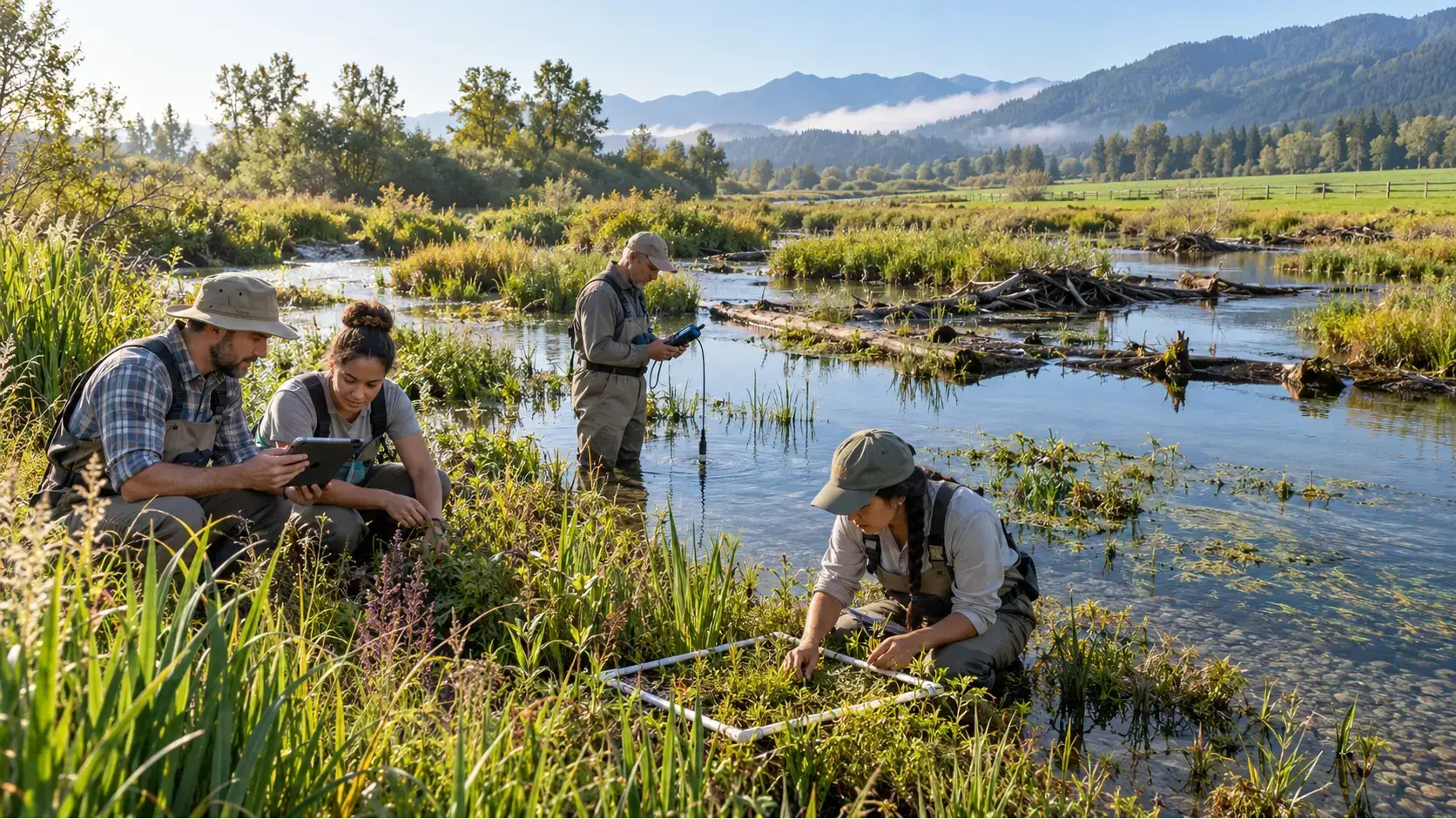
Restoration is not complete when trees are planted, earthworks finish or a hectare total is reported. Recovery must be shown through ecological condition, water, soil, habitat, species, resilience and lasting benefits for people. The first comprehensive global restoration stocktake gives organizations both evidence of progress and a warning against measuring activity as if it were outcome.
What the UN reported on 29 October 2026
The UN Environment Programme press release ↗ says 252 million hectares across 149 countries are documented as being under restoration, with more than one million green jobs associated with recognized restoration initiatives. The report is co-published by UNEP, the Food and Agriculture Organization of the United Nations and the Secretariat of the Convention on Biological Diversity.
The stocktake is the first assessment spanning all ecosystem types and multiple climate, biodiversity and land commitments. However, the documented area represents only 34% of the indicative global benchmark associated with the 2030 goal. Freshwater restoration is reported at about 5% of its benchmark and marine and coastal restoration at about 23%.
Annual restoration finance would need to rise more than fourfold, from about US$64 billion to US$296 billion by 2030. The report also cautions that limited aquatic reporting may underestimate some activity. Numbers therefore need context: they document reported action, not a universal audit proving that every listed hectare has recovered.
Why this matters to workplaces and projects
Infrastructure, energy, mining, agriculture, utilities, ports, manufacturing and property development can affect land, rivers, wetlands, coasts and species. Their environmental obligations may include avoidance, mitigation, remediation, rehabilitation, offsets or restoration. These terms are not interchangeable, and a project should use the definitions required by its permits, standards and jurisdiction.
Restoration work is also work. It can involve boats, vehicles, excavation, chainsaws, herbicides, remote travel, heat, water, wildlife, unstable ground and community interfaces. Environmental ambition must be delivered through safe work planning and controls.
1. Start with the mitigation hierarchy
Restoration should not be used to justify avoidable damage. First examine how impacts can be avoided and minimized, then apply the required remediation, rehabilitation, restoration or compensation measures. Record why the chosen location, method and objective are appropriate.
Prevent continuing pollution, erosion, invasive-species spread, altered drainage or uncontrolled access from undermining the restoration investment. A project cannot create durable recovery while the original pressure remains unmanaged.
2. Establish a defensible baseline
Define the pre-project condition and the reference condition the programme is trying to approach. Use suitable information on hydrology, soil, water quality, vegetation, habitat structure, species, land use, community needs and climate exposure. Record season, method, coverage and uncertainty.
A weak baseline can make ordinary seasonal change look like project success. Where historic data are limited, explain the limitation and use appropriate reference sites, traditional knowledge, imagery or staged surveys with competent ecological advice.
3. Set outcomes, not only activity targets
Planting counts, kilometres fenced and hectares treated are useful delivery measures, but they do not show whether an ecosystem functions. Add outcome measures such as native-species survival, vegetation structure, water quality, erosion control, habitat connectivity, invasive-species pressure, soil condition and use by appropriate indicator species.
Define the target, method, frequency, acceptable range and decision response before monitoring begins. Avoid selecting only indicators that are easy to count. The objective should describe what recovery means at that site and over what time period.
4. Design monitoring for decisions
Monitoring should answer whether the method is working, whether unexpected harm is occurring and when intervention is needed. Establish quality checks for sampling, instruments, data handling, photographs, coordinates and contractor reports. Protect sensitive species and community information.
Use trigger-action-response arrangements. For example, poor plant survival, deteriorating water quality, erosion, wildlife disturbance or invasive-species growth should prompt investigation and a defined corrective decision, not simply another annual report.
5. Include freshwater, marine and coastal gaps
The report identifies much slower documented progress in aquatic ecosystems. Organizations with water abstraction, discharge, drainage, shoreline, port or offshore interfaces should check whether their biodiversity planning overemphasizes terrestrial planting while water and coastal pressures remain unresolved.
Restore hydrology and physical processes where feasible rather than treating every issue as a planting problem. Obtain the required permits and competent specialist input before altering channels, wetlands, shorelines or seabed conditions.
6. Protect people doing restoration work
Plan field activities with the same discipline as other operational work. Assess access, vehicles, lifting, boats, water, remote communications, weather, heat, biological hazards, tools, chemicals and emergency response. Verify competence and supervision for contractors and seasonal workers.
Do not allow an environmental objective to weaken stop-work authority. Schedule work to avoid sensitive ecological periods while also managing human exposure. Confirm welfare, drinking water, first aid, accountability and rescue arrangements.
7. Respect rights and local knowledge
The UN report highlights secure tenure, meaningful participation and respect for the rights, knowledge and leadership of Indigenous Peoples and other rights-holders. Engagement should influence objectives, access, benefit sharing, monitoring and long-term stewardship—not occur only after the design is complete.
Identify land and resource users, avoid unsupported assumptions about consent and keep grievance and feedback routes accessible. Record commitments and explain how conflicting objectives will be resolved.
8. Plan for maintenance and handover
Recovery often takes longer than a construction contract or corporate reporting cycle. Define who controls invasive species, maintains structures, replaces failed planting, protects the site from renewed disturbance and funds monitoring after project teams leave.
Use staged acceptance based on ecological evidence, not a single completion certificate. Preserve raw data, methods, deviations and lessons so the receiving organization can continue adaptive management.
Leadership and toolbox questions
- What pressure caused degradation, and has it actually been controlled?
- What baseline and reference condition support our claim?
- Which indicators measure ecological function rather than activity?
- What result triggers investigation or a change in method?
- Have water, marine and coastal effects been overlooked?
- How are field workers and contractors protected?
- Whose rights, knowledge and long-term role shape the plan?
- Who funds monitoring and maintenance after handover?
Authoritative video
The UN Decade on Ecosystem Restoration at the halfway mark. UNEP links this directly from its official 29 October report explainer. It provides global context; it is not evidence that a specific project has succeeded.
Watch the verified video directly ↗.
Sources and dates
- UNEP — Nature is making a comeback, but the world must move faster ↗Official UNEP press release dated 29 October 2026. Primary source for the global totals, finance gap and ecosystem breakdown.
- UNEP Knowledge Repository — Restoration Progress Report: Nature’s comeback ↗Official report record dated 21 October 2026, authored by UNEP, FAO and the Convention on Biological Diversity and publicly launched on 29 October.
- UNEP — UN report shows nature is being restored at an unprecedented scale ↗Official explanatory article published 29 October 2026. Provides the benchmark, monitoring and participation context.
- UN Decade on Ecosystem Restoration at the halfway mark ↗Direct video linked by UNEP from its official report explainer. Embedded below using YouTube’s privacy-enhanced domain.
Sources checked 29 October 2026. Source statements and original practical applications are distinguished above. Always consult current official advice and applicable local requirements.
Share the lesson
Open the separate 9:16 Pinterest poster
Illustrative prevention visual, not an actual project, incident or technical operating procedure. HSSE TIPS branding appears only in the designed poster footer.
Your experience matters
Share your thoughts on this page
Have a question, a useful experience or a suggestion? Add your input below.
Comments are public. Keep them respectful and relevant. Do not share contact details, confidential information or emergency reports.
Comments on this page
Loading comments…