Incident Waste and Environmental Recovery
The Spill Is Not Finished When the Leak Stops
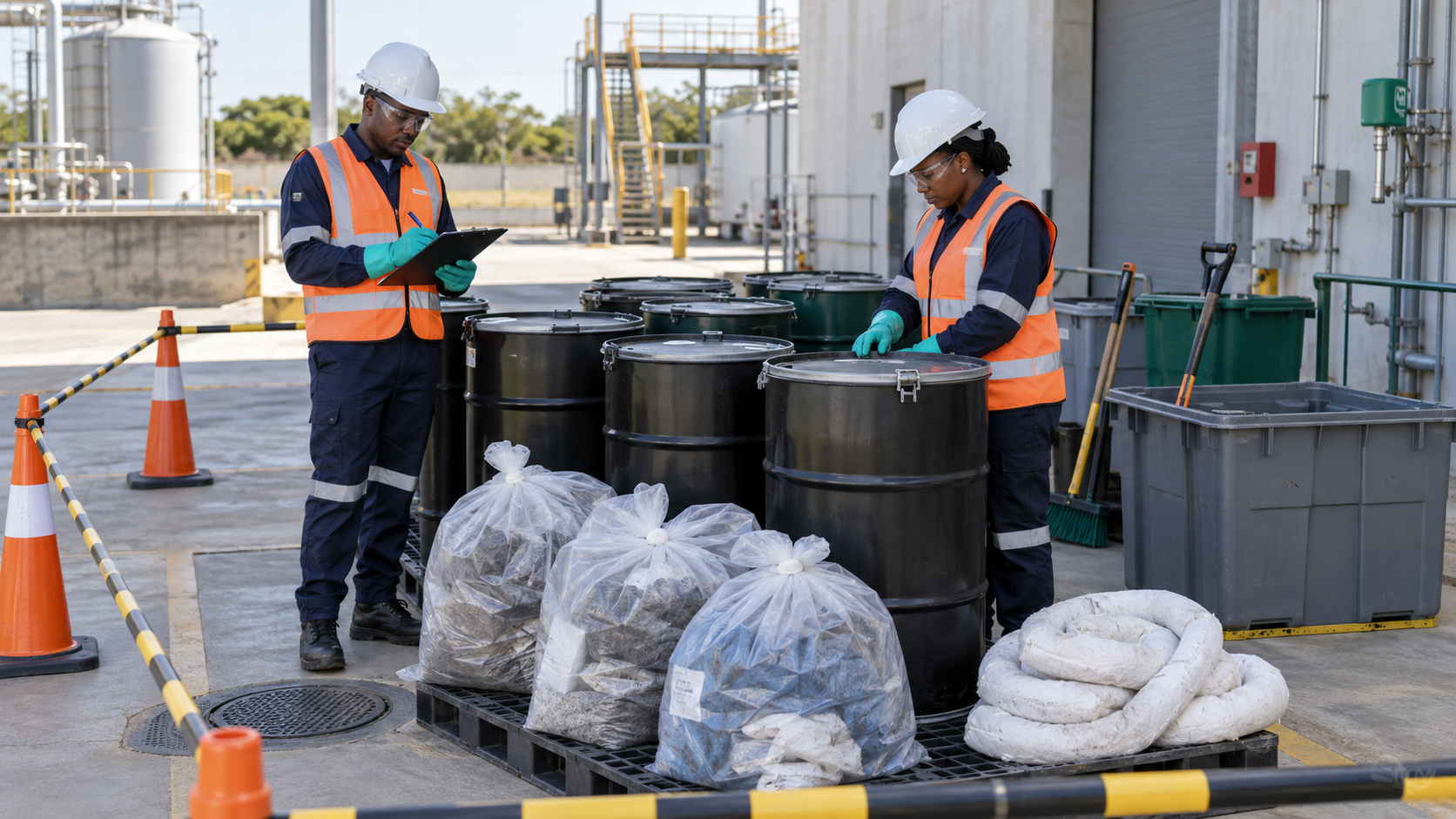
Stopping a release is only the first part of environmental recovery. Used absorbents, contaminated protective equipment, recovered liquid, soil, wash water and damaged materials can continue moving the hazard if they are mixed, left exposed or sent through an unverified route. A disciplined response plans for these materials from the beginning, keeps their identity and custody clear, and closes the incident only when every waste stream has reached an approved outcome.
Controls to confirm
- Include waste management in the incident plan before a release occurs: identify likely waste streams, compatible containers, safe staging capacity, responsible decision-makers and approved transport, treatment and disposal routes.
- Characterise and segregate recovered materials, keep containers closed, compatible and within suitable containment, label and document them through the approved process, and prevent rainwater, incompatible substances or ordinary waste from entering the controlled stream.
- Inspect the staging area and containers until removal, maintain traceable quantities and handover records, use authorised carriers and receiving facilities, and verify final acceptance before declaring environmental recovery complete.
Today’s action
Check one spill-response location today and confirm that its likely contaminated waste can be segregated, contained, documented and transferred through a verified route.
Waste and Materials Management During Emergency Response · U.S. Environmental Protection Agency
Daily HSSE updates
Subscribe for practical HSSE updates.
Subscribe for the daily message, selected HSSE news and occasional new-resource alerts from Worksite Safety Hub.