Dry Ice Storage and Carbon Dioxide Accumulation
Dry Ice Can Make a Small Room Unsafe
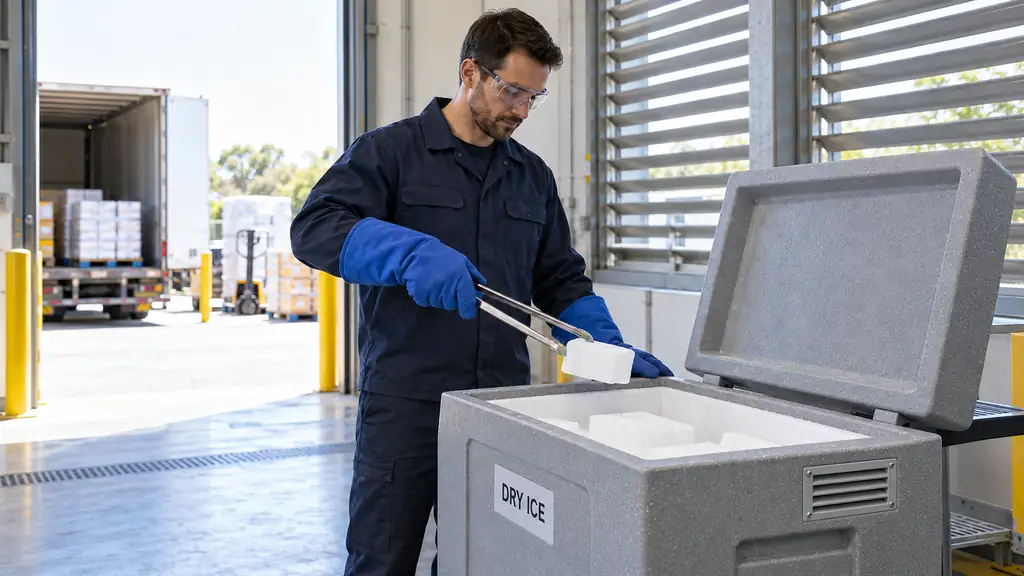
A delivery of dry ice keeps releasing carbon dioxide as the solid turns directly into gas. In a small or poorly ventilated room, that gas can build up to dangerous concentrations. Carbon dioxide itself cannot be seen or smelled, and high concentrations can harm people as well as displace oxygen. Treat the storage location as part of the job: an insulated box controls heat transfer, not the room’s breathing atmosphere.
Controls to confirm
- Choose a suitable ventilated location: assess the quantity, room, activity and possible gas accumulation before accepting the delivery. Keep quantities to the minimum needed and restrict access. Provide the ventilation and atmospheric monitoring identified by a competent assessment. Carbon dioxide enrichment and oxygen deficiency need separate sensors; an oxygen reading alone does not measure the carbon dioxide concentration.
- Use purpose-built vented storage: keep dry ice in a suitable insulated container that allows gas to escape, with the lid closed when not in use. Never transfer it into an airtight jar, bottle or unvented flask. Do not use an unventilated cold room, refrigerator or freezer as a storage solution. If a container is swollen or suspected to be pressurised, keep people clear and seek competent help rather than opening it yourself.
- Protect against extreme cold: only trained people should handle dry ice. Use suitable loose-fitting, thermally insulated gloves or dry-ice tongs, together with eye protection; never touch it with bare hands. Avoid leaning into the container. Plan disposal in a controlled, sufficiently ventilated location away from people and openings where gas could collect, following the supplier’s guidance and site procedure.
Today’s action
Before the next dry-ice delivery is accepted, check the approved storage location, ventilation, container and handling equipment against the risk assessment and supplier safety data sheet. Resolve any gap before placing it in storage.
Source guidance
Authoritative guidance checked 27 October 2026. Apply the legal requirements and approved procedures for your location.
- HSE — General hazards of carbon dioxide: invisible gas, health effects and accumulation
- BCGA — TIS 7: Safe transportation, storage, use and disposal of dry ice; ventilation, monitoring and suitable containers
- University of Edinburgh Health and Safety — Dry ice: handling, vented storage, cold protection and pressurised-container precautions
Future HSSE email updates
Register interest in HSSE email updates.
Record your interest in future Worksite Safety Hub messages, selected HSSE news and new-resource alerts. Email delivery is not connected yet.
Your experience matters
Share your thoughts on this page
Have a question, a useful experience or a suggestion? Add your input below.
Comments are public. Keep them respectful and relevant. Do not share contact details, confidential information or emergency reports.
Comments on this page
Loading comments…