Static Electricity Control During Flammable Liquid Transfer
Bond Before the Liquid Starts to Flow
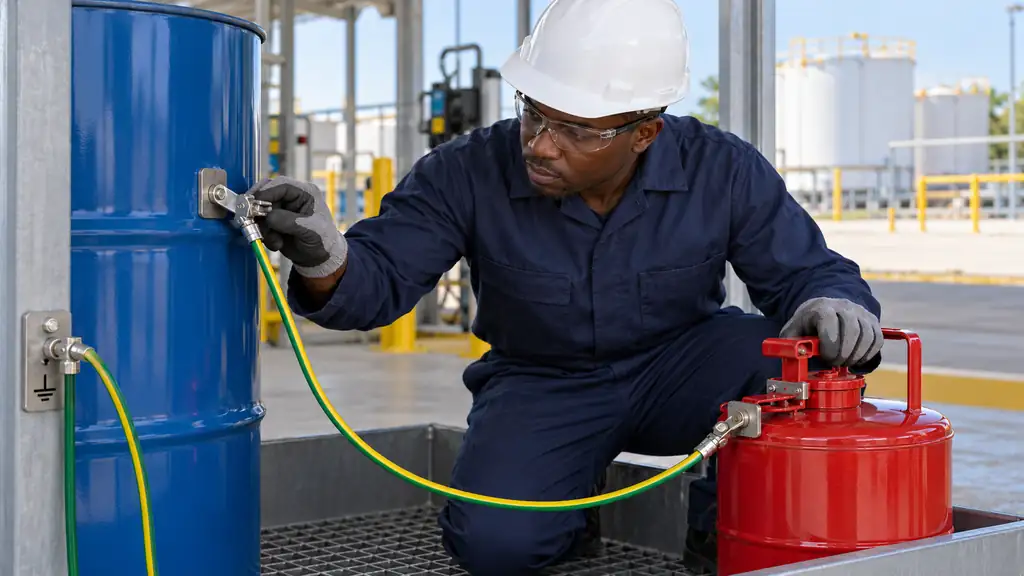
A flammable-liquid transfer can look quiet while an ignition source is developing. Pumping or pouring can build static charge; a discharge near an ignitable vapour-air mixture can start a fire. Before opening a container or starting a pump, check the complete transfer arrangement. A cable lying nearby is not evidence that the required electrical connections are effective.
Controls to confirm
- Verify bonding and earthing before transfer: for conductive containers, use the approved system to bond the dispensing and receiving equipment and connect it to the designated earth. Inspect leads and clamps, use the specified clean metal contact points, and confirm required continuity checks are current. Maintain the connections throughout the transfer; stop if a connection is lost.
- Use the assessed transfer method: select containers, hoses and pumps approved for the liquid and service. Follow the specified flow rate and filling arrangement to limit splashing and turbulence. An ordinary plastic container cannot be made safe simply by attaching a bonding clamp; refer non-conductive-container transfers for a competent assessment and an approved method.
- Control vapour and other ignition sources: use the designated ventilated dispensing area and the required hazardous-area equipment. Keep smoking, flames and unsuitable electrical equipment away, contain spills and close containers after use. Follow the safety data sheet and site procedure, including the specified protective clothing, gloves and eye protection.
Today’s action
Check one planned flammable-liquid transfer with the responsible operator. Trace the approved bonding and earthing connections, inspect their condition and confirm the transfer method; resolve any uncertainty before releasing the liquid.
Source guidance
Authoritative guidance checked 29 October 2026. Apply the legal requirements and approved procedures for your location.
Future HSSE email updates
Register interest in HSSE email updates.
Record your interest in future Worksite Safety Hub messages, selected HSSE news and new-resource alerts. Email delivery is not connected yet.
Your experience matters
Share your thoughts on this page
Have a question, a useful experience or a suggestion? Add your input below.
Comments are public. Keep them respectful and relevant. Do not share contact details, confidential information or emergency reports.
Comments on this page
Loading comments…