Habitat Connectivity
A Worksite Boundary Can Become a Wildlife Barrier
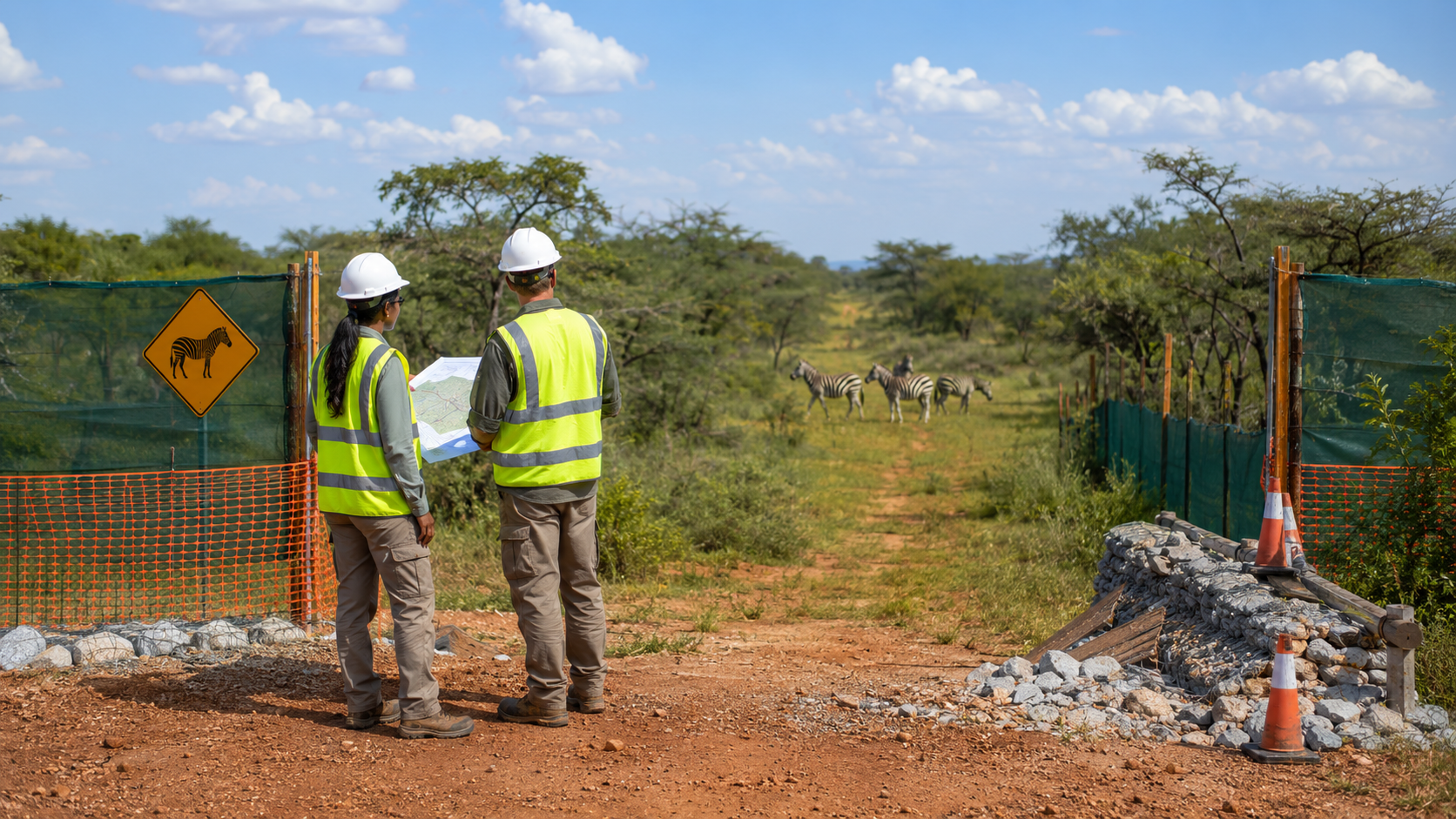
Temporary roads, fences, lighting and storage areas can interrupt routes that wildlife use to reach food, water and shelter. The impact may extend beyond the visible work footprint if animals are diverted into unsafe or unsuitable areas. Before changing site access or boundaries, understand the surrounding habitat and keep approved movement corridors functional.
Controls to confirm
- Identify sensitive habitats and known or likely wildlife routes before locating temporary roads, fencing, lighting or storage areas.
- Maintain approved crossing points and buffers, and control lighting, noise and vehicle movement where they could disturb wildlife movement.
- Monitor tracks, sightings and changed movement patterns, report concerns promptly and adjust the worksite plan with environmental specialists.
Today’s action
Walk the planned work boundary with the team and confirm that every approved wildlife corridor, buffer and crossing remains open and protected.
Collaring a Zebra to Track Its Record Migration · World Wildlife Fund
Daily HSSE updates
Subscribe for practical HSSE updates.
Subscribe for the daily message, selected HSSE news and occasional new-resource alerts from Worksite Safety Hub.