Lifting Sling Inspection and Selection
A Sling Tag Is a Starting Point, Not a Safety Check
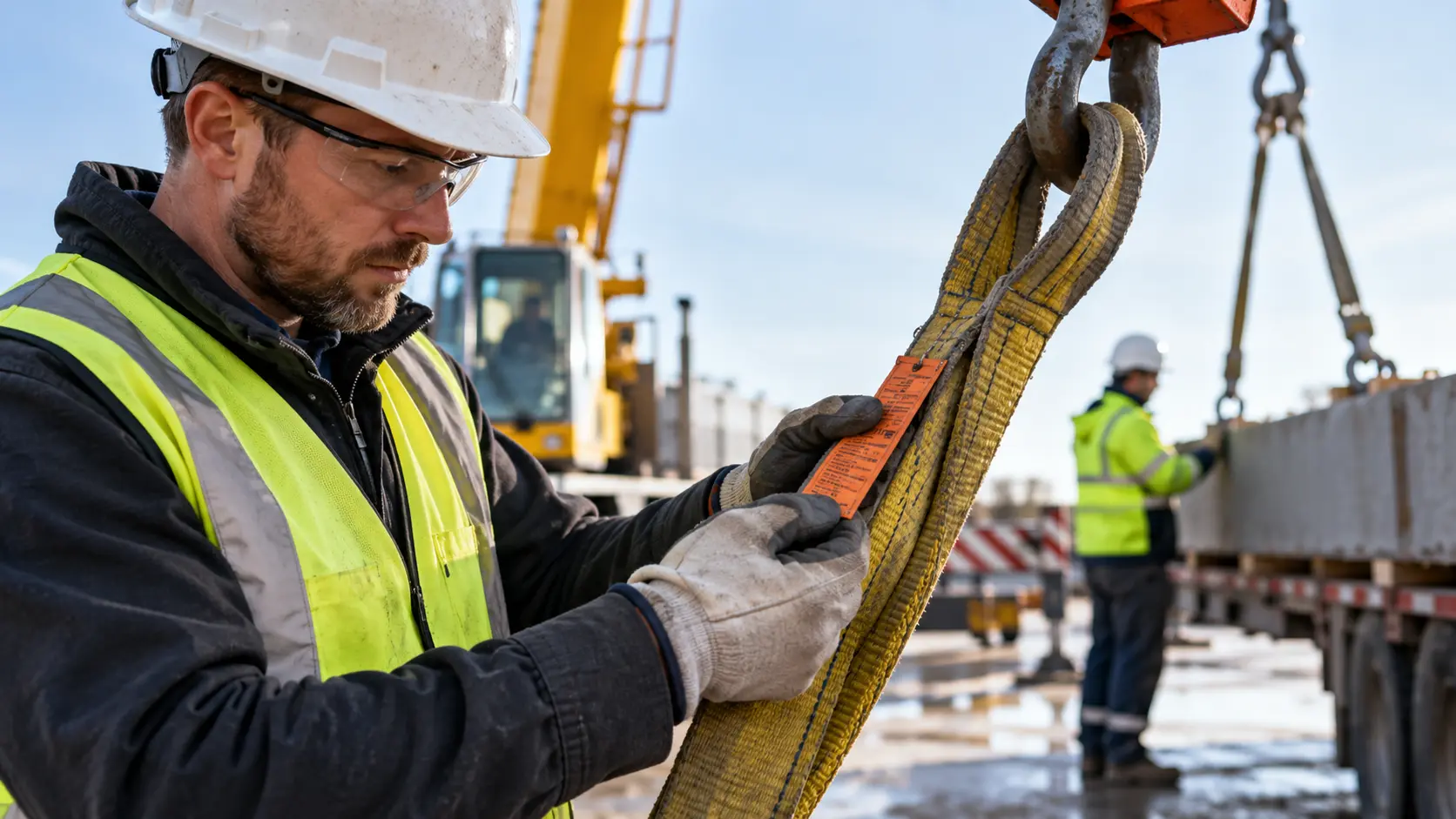
A marked lifting sling may still be unsafe if its webbing is cut, its stitching is worn, a fitting is distorted, or its capacity does not suit the load and rigging arrangement. A previous examination does not replace a check before today's lift. The lifting team should select the right accessory, inspect the sling and its connections, and remove defective equipment from service before the load leaves the ground.
Controls to confirm
- Confirm the lifting plan, load weight, centre of gravity, sling type, angle and connection points; check the sling's legible identification and rated capacity for the actual configuration, and stop if these cannot be verified.
- Have the designated competent person inspect each sling and its hooks, shackles and fastenings before use for cuts, abrasion, damaged stitching, heat or chemical damage, corrosion, deformation and other defects relevant to the material; repeat checks during use when conditions warrant.
- Immediately remove damaged or defective gear from service, identify it so it cannot be reused, and arrange assessment or replacement through the site's lifting-equipment process; keep people outside the lifting and landing zones throughout the controlled lift.
Today’s action
Before the next lift, ask the lifting team to verify the load and rigging arrangement, inspect every sling and connection, and quarantine any item whose condition or rating is uncertain.
Source guidance
Future HSSE email updates
Register interest in HSSE email updates.
Record your interest in future Worksite Safety Hub messages, selected HSSE news and new-resource alerts. Email delivery is not connected yet.
Your experience matters
Share your thoughts on this page
Have a question, a useful experience or a suggestion? Add your input below.
Comments are public. Keep them respectful and relevant. Do not share contact details, confidential information or emergency reports.
Comments on this page
Loading comments…