Overhead Power Line Clearance and Plant Access Planning
A Power Line Can Strike Before You Touch It
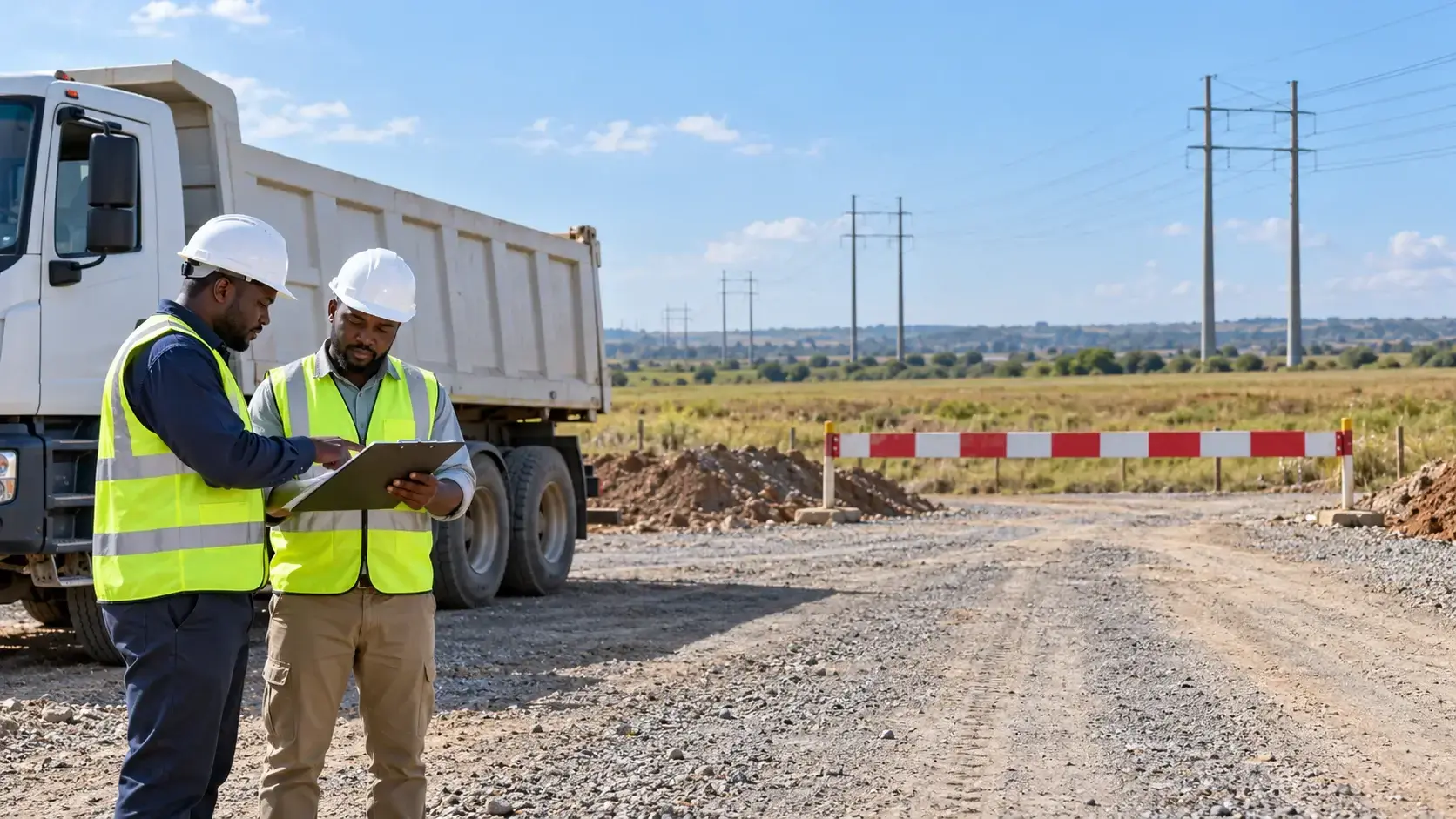
An overhead cable is part of the job even when the task is on the ground. A raised tipper body, extended boom or long tool can enter the danger area. Electricity can flash across a gap; avoiding physical contact is not enough.
Controls to confirm
- Plan with the line owner: identify lines along the work area and access routes, and treat them as live unless their owner confirms otherwise. Prefer rerouting the task or arranging diversion or isolation through the owner before work starts.
- Control the approach: obtain the required clearances from the line owner and establish the assessed barriers and controlled crossing points. Check the full height and reach of vehicles, loads and tools, including raised or extended positions; do not estimate safety by eye.
- Keep the controls effective: brief operators on the approved route, limits and supervision. Stop if barriers, equipment or the task change. Keep emergency contact details available; if equipment contacts a line, warn others away and follow the agreed emergency procedure.
Today’s action
Review one planned plant movement and its access route. Confirm overhead-line hazards and agreed controls before releasing the job.
Source guidance
Authoritative guidance checked 1 November 2026. Apply the legal requirements and approved procedures for your location.
Future HSSE email updates
Register interest in HSSE email updates.
Record your interest in future Worksite Safety Hub messages, selected HSSE news and new-resource alerts. Email delivery is not connected yet.
Your experience matters
Share your thoughts on this page
Have a question, a useful experience or a suggestion? Add your input below.
Comments are public. Keep them respectful and relevant. Do not share contact details, confidential information or emergency reports.
Comments on this page
Loading comments…