Underground Services and Safe Excavation
A Line on a Drawing Is Not a Located Service
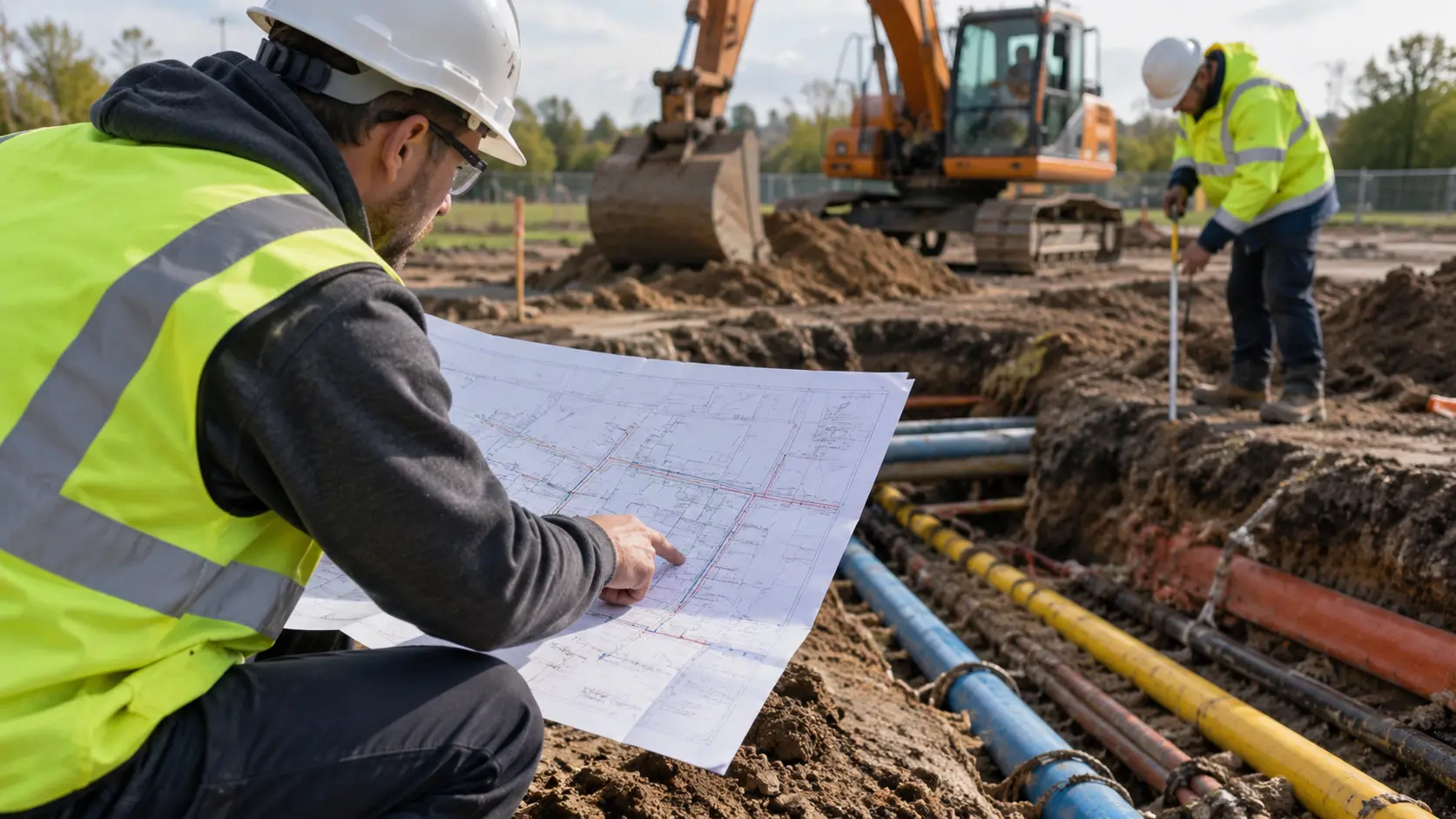
An excavation plan can show where a cable or pipe is expected, but the actual service may be offset, unrecorded or at a different depth. Striking it can cause electric shock, fire, a gas release, flooding or loss of critical supply. Before breaking ground, combine current service information with a competent site survey, mark what is found and use a controlled digging method that accounts for uncertainty.
Controls to confirm
- Obtain and review available service plans with the service owners and the work team; identify the proposed excavation limits, known uncertainties and a safe method before authorising ground disturbance.
- Have trained personnel use suitable locating equipment to detect and mark services at the site; repeat checks as the work advances and treat unexpected indications or unidentified lines as reasons to stop and reassess.
- Use the approved safe-digging method near suspected services, control mechanical excavation and expose services carefully; protect workers from trench collapse and keep a response plan for any damage or release.
Today’s action
Before the first cut today, compare the dig location with service plans and the marked site survey; stop if the information conflicts or is incomplete.
Source guidance
Future HSSE email updates
Register interest in HSSE email updates.
Record your interest in future Worksite Safety Hub messages, selected HSSE news and new-resource alerts. Email delivery is not connected yet.
Your experience matters
Share your thoughts on this page
Have a question, a useful experience or a suggestion? Add your input below.
Comments are public. Keep them respectful and relevant. Do not share contact details, confidential information or emergency reports.
Comments on this page
Loading comments…