Portable Lithium-Ion Battery Damage and Charging Control
A Damaged Battery Does Not Belong on the Charger
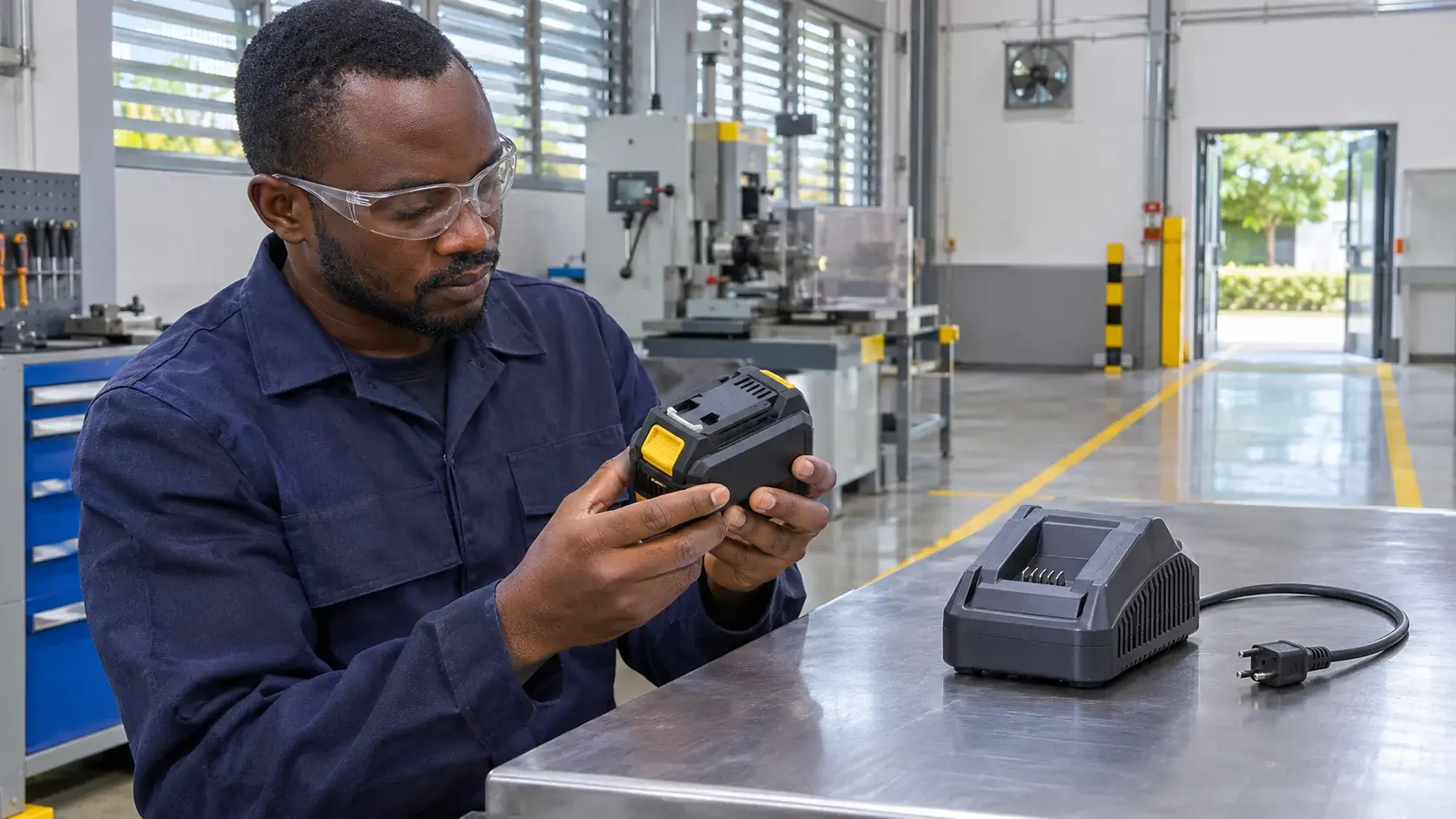
A cordless tool may still run after its battery has been dropped or damaged. That does not prove the pack is safe to recharge. Lithium-ion battery failure can release heat, fire and hazardous smoke; the charging decision starts with the pack's condition, not the charger light.
Controls to confirm
- Check before use or charging: look for damage, swelling, leaks or unusual heat. Remove a suspect pack from service and report it. Do not open, puncture or attempt to repair the battery casing.
- Match the equipment and location: use the battery and charger approved for the device and follow the manufacturer's temperature, charging and storage instructions. Keep the charging area clear of combustibles and escape routes; do not cover the charger or pack.
- Prepare for failure: know the site's battery incident procedure. If a pack hisses, vents, smokes or becomes unusually hot, keep clear, warn others and raise the alarm. Do not carry a failing pack through the workplace; let trained responders manage it.
Today’s action
Check one charging station and its packs. Confirm charger compatibility, clear surroundings and the process for taking a suspect battery out of service.
Source guidance
Authoritative guidance checked 5 November 2026. Apply the legal requirements and approved procedures for your location.
Future HSSE email updates
Register interest in HSSE email updates.
Record your interest in future Worksite Safety Hub messages, selected HSSE news and new-resource alerts. Email delivery is not connected yet.
Your experience matters
Share your thoughts on this page
Have a question, a useful experience or a suggestion? Add your input below.
Comments are public. Keep them respectful and relevant. Do not share contact details, confidential information or emergency reports.
Comments on this page
Loading comments…