Welding Fume and Breathing-Zone Exposure
A Clear View of the Weld Is Not Clean Air
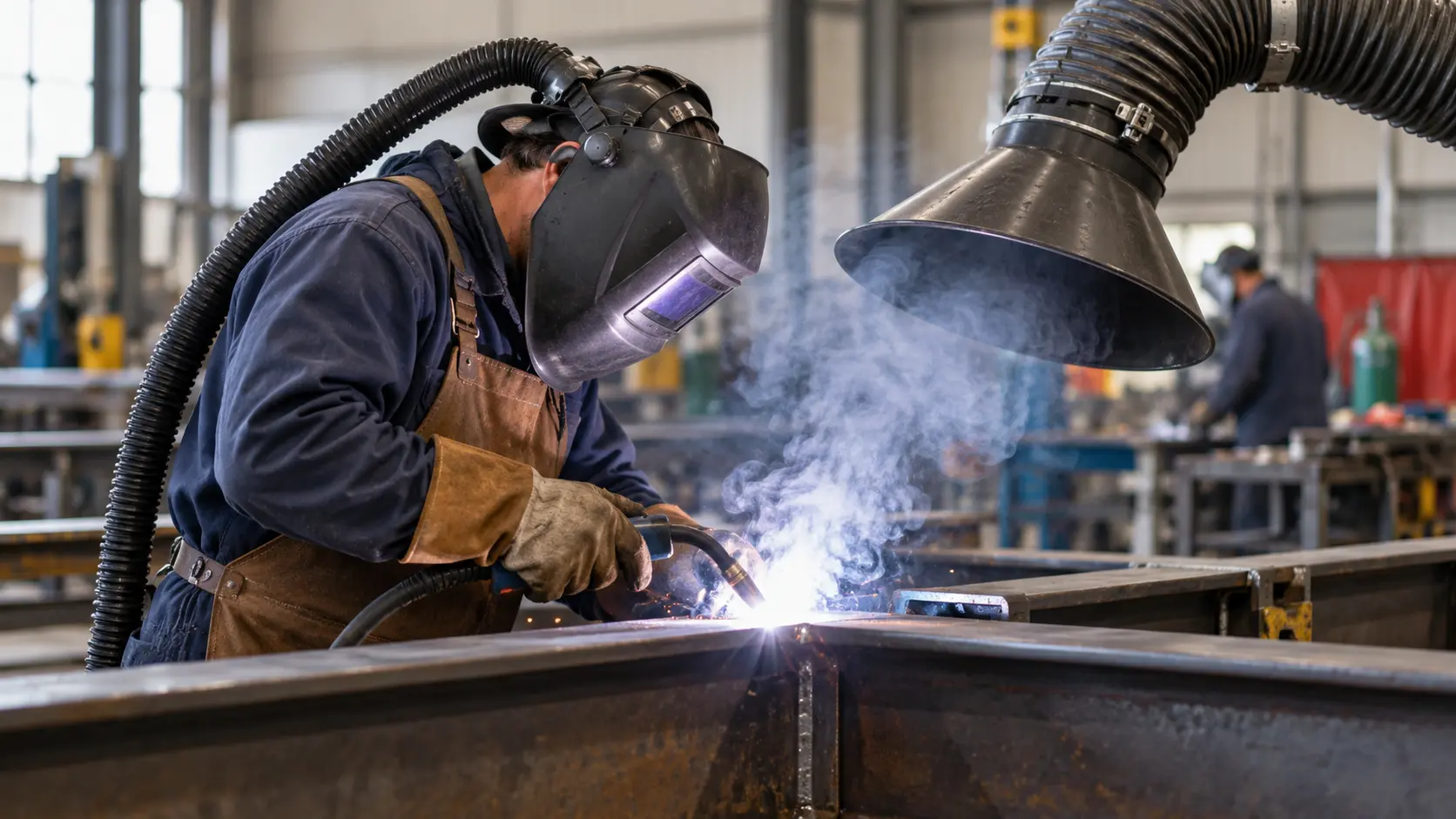
Welding fume can enter a worker’s breathing zone even when the work area looks open and the plume appears to drift away. Changes in position, airflow, material, coating or welding method can redirect the exposure toward the welder or nearby workers. Control the fume where it forms, check that the controls remain effective for the actual task, and never treat the absence of visible smoke as proof of clean air.
Controls to confirm
- Assess the metal, coatings, consumables, process, work location and nearby workers before starting; remove hazardous coatings safely where appropriate and choose a lower-fume method when practicable.
- Use suitable local exhaust ventilation or another effective engineered capture method close to the weld; confirm airflow and capture at the point of work, and position the welder so the plume does not cross the breathing zone.
- Where the assessment requires it, use correctly selected and fitted respiratory protection alongside source controls; keep others out of the fume path, report ineffective capture or symptoms, and stop to reassess if conditions change.
Today’s action
Observe one welding task today from a safe position and verify plume capture, worker position and protection for people working nearby.
Future HSSE email updates
Register interest in HSSE email updates.
Record your interest in future Worksite Safety Hub messages, selected HSSE news and new-resource alerts. Email delivery is not connected yet.
Your experience matters
Share your thoughts on this page
Have a question, a useful experience or a suggestion? Add your input below.
Comments are public. Keep them respectful and relevant. Do not share contact details, confidential information or emergency reports.
Comments on this page
Loading comments…